Adani Fraud Case Dropped: Trump Administration Halts Prosecution
Introduction
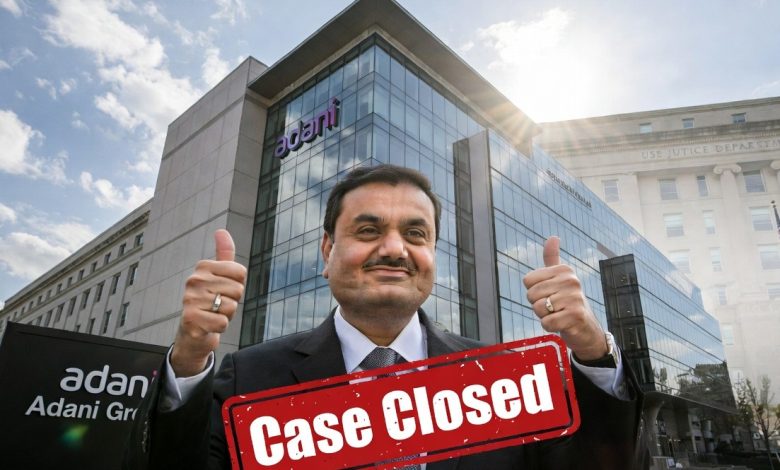
The Trump administration has moved to drop the indictment against Gautam Adani, the founder and chairman of the Adani Group, in a surprising turn of events. The U.S. Attorney’s Office in Brooklyn, New York, had initially brought the indictment in 2024, alleging a massive fraud and bribery scheme. However, recent filings indicate that the Department of Justice, under the Trump administration, has decided to halt further prosecution of the case. This decision has sparked considerable debate and raised questions about the motivations behind the move, as well as the implications for international business ethics and the fight against corruption.
Background of the Adani Case
Gautam Adani is a prominent Indian businessman, known for his significant wealth and influence in the Asian economy. As the head of the Adani Group, a diversified conglomerate with interests in energy, infrastructure, and logistics, Adani has often been compared to other business magnates like Mukesh Ambani. The Adani Group has been involved in numerous large-scale projects, contributing significantly to India’s economic growth. However, the company has also faced scrutiny over its business practices and environmental impact.
The legal troubles for Adani began in November 2024 when the U.S. Attorney’s Office in Brooklyn unveiled an indictment detailing a complex scheme involving bribery and fraud. The allegations centered around Adani Green Energy, a subsidiary of the Adani Group, and its efforts to secure approval for a major solar power plant project in India. The indictment painted a picture of corruption at the highest levels, with accusations of substantial bribes being paid to government officials to facilitate the project’s approval.
The Indictment Details
The indictment specifically accused Adani and several co-defendants of orchestrating a scheme to pay approximately $250 million in bribes to Indian government officials. These bribes were allegedly intended to ensure that Adani Green Energy would receive the necessary approvals to develop what was touted as India’s largest solar power plant. The contracts associated with this project were projected to generate around $2 billion in profits over a 20-year period, making the stakes incredibly high.
Prosecutors claimed that the bribes were disguised as legitimate business expenses and consulting fees, funneled through various shell companies and offshore accounts to obscure their true nature. The indictment included detailed financial transactions and communications that purportedly demonstrated the coordination and execution of the bribery scheme. The U.S. Attorney’s Office emphasized that the case was a prime example of how foreign corruption could have direct implications for international business and financial integrity.
Trump Administration’s Intervention
The decision by the Trump administration to drop the Adani case came as a surprise to many, especially given the extensive investigation and the detailed nature of the indictment. According to the court filing, the Department of Justice stated that it had “reviewed this case and has decided, in its prosecutorial discretion, not to devote further resources to these criminal charges against individual defendants”. The request was signed by Trent McCotter, principal associate deputy attorney general, and Joseph Nocella, the Brooklyn U.S. Attorney. Notably, the signatures of the line prosecutors who had been actively working on the case were absent, raising questions about the internal consensus on the decision.
The move has triggered speculation about the potential motivations behind the Trump administration’s intervention. Some suggest that it could be related to broader geopolitical considerations, particularly the strategic relationship between the United States and India. Others point to possible lobbying efforts by the Adani Group or its representatives, aimed at influencing the decision-making process within the U.S. government. Regardless of the exact reasons, the decision has cast a shadow over the commitment to combating international corruption and upholding the rule of law.
Legal and Procedural Aspects
The legal basis for the Department of Justice’s decision to drop the case rests on the principle of prosecutorial discretion, which grants prosecutors the authority to decide whether to pursue criminal charges in a particular case. This discretion is typically based on a variety of factors, including the strength of the evidence, the availability of resources, and the broader public interest. However, this discretion is not unlimited and is subject to judicial review, particularly when there are concerns about potential abuse of power or political interference.
In this instance, the absence of signatures from the line prosecutors assigned to the case raises questions about whether the decision was made independently by the Department of Justice or whether there was undue influence from higher-ups within the Trump administration. Legal experts have noted that it is unusual for prosecutors to drop a case of this magnitude without the full support of the investigative team, especially when the indictment had already been filed and significant resources had been invested in the investigation. The decision could potentially be challenged in court, particularly if there is evidence to suggest that it was based on improper considerations rather than the merits of the case.
Key Figures Involved
Several key figures are central to this case, starting with Gautam Adani himself. As the founder and chairman of the Adani Group, Adani’s leadership and business decisions have come under intense scrutiny. His vast wealth, estimated at over $100 billion, and his prominent role in the Indian economy make him a significant player in the global business arena.
Trent McCotter, the principal associate deputy attorney general, played a crucial role in the decision to drop the case. His signature on the court filing indicates that the decision was made at a high level within the Department of Justice. Joseph Nocella, the Brooklyn U.S. Attorney, also signed the request, although the absence of signatures from the line prosecutors suggests a possible division within the legal team.
The Indian government officials who allegedly received the bribes are also central to the case, although their identities have not been publicly disclosed. The indictment suggests that these officials held significant positions of power, enabling them to influence the approval process for the solar power plant project. Their involvement underscores the systemic nature of the alleged corruption and its potential impact on governance and the rule of law.
Adani Group’s Response
The Adani Group has consistently denied any wrongdoing and has maintained that the allegations are baseless and without merit. In response to the indictment, the company issued a statement asserting its commitment to ethical business practices and compliance with all applicable laws and regulations. The Adani Group has also stated that it will cooperate fully with any investigations and will vigorously defend itself against the charges.
Following the Trump administration’s decision to drop the case, the Adani Group has welcomed the move as a vindication of its position. The company has emphasized that the decision confirms its belief that the allegations were unfounded and that the indictment was politically motivated. However, the controversy surrounding the case is likely to persist, and the Adani Group may face continued scrutiny from regulators, investors, and the public.
Implications for Adani Green Energy
The allegations of bribery and fraud have had significant implications for Adani Green Energy, the subsidiary at the center of the controversy. The company’s reputation has been tarnished, and its ability to secure future projects and financing may be compromised. The controversy has also raised questions about the sustainability and ethical considerations of its business operations.
Despite the challenges, Adani Green Energy remains a major player in the renewable energy sector in India. The company has ambitious plans to expand its solar power capacity and contribute to India’s goals for clean energy and sustainable development. However, the company will need to address the concerns raised by the allegations and demonstrate its commitment to transparency and ethical business practices in order to restore trust and confidence among stakeholders.
Political and Economic Ramifications
The decision to drop the Adani case has broader political and economic ramifications, both in the United States and India. The move has been criticized by some as a sign of political interference in the justice system, undermining the independence of prosecutors and the rule of law. Others have defended the decision as a legitimate exercise of prosecutorial discretion, arguing that the Department of Justice has the authority to prioritize its resources and make decisions that are in the best interests of the United States.
In India, the case has fueled political debates about corruption and governance. Opposition parties have seized on the allegations to attack the ruling government, accusing it of turning a blind eye to corruption and protecting powerful business interests. The controversy has also raised questions about the effectiveness of regulatory oversight and the need for greater transparency and accountability in government decision-making.
The economic implications of the case are also significant. The Adani Group is a major investor in India’s infrastructure and energy sectors, and its business decisions have a direct impact on the country’s economic growth and development. The controversy surrounding the case could potentially deter foreign investment and undermine confidence in India’s business environment. Additionally, events such as these can affect international relations, as seen with the current tensions between Iran and the UAE.
Comparison with Previous Cases
To provide context, it’s useful to compare the Adani case with other instances where the U.S. Department of Justice has dropped indictments against foreign individuals or corporations. Often, such decisions are influenced by diplomatic considerations, resource allocation, or reassessment of evidence. For example, in cases involving sanctions violations or international trade disputes, the U.S. government may weigh the potential impact on foreign relations and national security before proceeding with prosecution.
However, the Adani case is unique in its scale and the level of detail provided in the indictment. The allegations of a $250 million bribery scheme are substantial, and the potential profits of $2 billion over 20 years highlight the magnitude of the alleged fraud. This sets it apart from more minor cases where the evidence may be less compelling or the stakes less significant.
Here is a comparison table:
| Case | Defendant | Allegations | Outcome | Key Factors |
|---|---|---|---|---|
| Adani Case | Gautam Adani | $250M bribery scheme for solar power plant approval | Indictment dropped | Political considerations, resource allocation |
| Siemens Bribery Scandal | Siemens AG | Widespread bribery of government officials globally | Settlement with U.S. DOJ | Cooperation with authorities, internal reforms |
| Petrobras Corruption Scheme | Petrobras | Bribery and kickbacks involving Brazilian oil company | Settlement with U.S. DOJ | Extent of corruption, impact on investors |
Future Outlook
The future of the Adani case remains uncertain. While the Trump administration has dropped the indictment, there is still the possibility that the case could be reopened in the future, particularly if new evidence emerges or if there is a change in political leadership. Additionally, the Adani Group may face continued scrutiny from regulators and investors, both in the United States and India.
The controversy surrounding the case is also likely to have a lasting impact on the reputation of the Adani Group and its business operations. The company will need to take proactive steps to address the concerns raised by the allegations and demonstrate its commitment to ethical business practices and compliance with all applicable laws and regulations.
The U.S. continues to struggle with maintaining relationships in the middle east. Recently, Britain cut ties with an Israeli tracking unit.
Expert Opinions and Analysis
Legal experts have offered varying opinions on the Trump administration’s decision to drop the Adani case. Some argue that the decision was a legitimate exercise of prosecutorial discretion, based on a careful assessment of the evidence and the broader public interest. Others have criticized the move as a sign of political interference in the justice system, undermining the independence of prosecutors and the rule of law.
Business analysts have also weighed in on the potential impact of the case on the Adani Group and the Indian economy. Some believe that the controversy could deter foreign investment and undermine confidence in India’s business environment. Others argue that the Adani Group is resilient and will be able to weather the storm, continuing to play a major role in India’s economic growth and development.
Ultimately, the long-term implications of the Adani case will depend on a variety of factors, including the actions of the Adani Group, the decisions of regulators and investors, and the broader political and economic context. It’s important to consider that even with the end of this case, Iran is still under scrutiny for its uranium enrichment.
Conclusion
The Trump administration’s decision to drop the indictment against Gautam Adani represents a significant development in a case that has raised important questions about international business ethics, corruption, and the rule of law. The move has sparked considerable debate and controversy, with legal experts, business analysts, and political observers offering varying perspectives on the potential implications.
While the immediate legal proceedings may have come to an end, the broader issues raised by the case are likely to persist. The Adani Group will need to address the concerns raised by the allegations and demonstrate its commitment to transparency and ethical business practices in order to restore trust and confidence among stakeholders. The case also serves as a reminder of the challenges involved in combating international corruption and the importance of upholding the independence of the justice system. The situation is further complicated by increasing global instability. For example, North Korea is enhancing its border artillery. As the world watches, the ramifications of this decision will continue to unfold, shaping the landscape of international business and governance. The U.S. also weighed a $20B deal to end the Iran war.
For more information, you can review the U.S. Department of Justice guidelines on prosecutorial discretion here.
For additional reading, consider how Elon Musk is dealing with issues at OpenAI. The Adani Group has also received scrutiny in light of their dealings with Iran. There is also the question about whether or not to provide veteran benefits to IDF volunteers.