Tesla SpaceX Merger: Musk Weighs Merits, Hurdles, and Vote 2026
Table of Contents
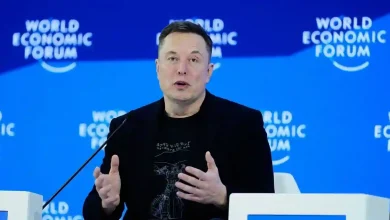
Tesla SpaceX merger momentum has officially become the centerpiece of Wall Street speculation following statements from Elon Musk, who conceded there is significant merit in consolidating his electric vehicle and aerospace enterprises into a unified industrial titan. Musk openly acknowledged that while industrial and engineering logic supports the move, the transaction remains outside his direct executive fiat. The path to consolidation is governed by strict fiduciary mechanisms designed to protect public market equity holders from self-dealing risks. As financial institutions parse the regulatory, legal, and operational consequences, the dialogue has transitioned from theoretical discussions into a high-stakes corporate governance conundrum.
Executive Summary: The Push for a Unified Tech Behemoth
The concept of uniting the world’s preeminent electric mobility automaker with the dominant commercial launch operator represents an unprecedented corporate consolidation. Advocates argue that integrating SpaceX’s rapid fabrication methods and satellite communication array directly into Tesla’s automotive and robotics architecture could yield generational cost advantages. Yet, because Musk serves as the chief executive and principal visionary across both firms, any transactional agreement must satisfy demanding legal tests. The ongoing strategic dialogue surrounding a consolidated entity, reminiscent of earlier cross-entity collaborations such as the SpaceX and Tesla manufacturing exchanges, reveals how deeply interwoven these commercial interests have already become.
Institutional investors on Wall Street have increasingly viewed this corporate synthesis as an inevitability rather than a distant novelty. Speculators anticipate that tying SpaceX’s capital-intensive launch infrastructure directly to Tesla’s robust operational cash flows could safeguard deep-space exploratory goals while supplying Tesla with unrivaled space-based connectivity networks. However, despite broad expectations that structural terms might emerge within the coming fiscal years, current discussions remain preliminary, and no definitive contractual framework has received formal sanction.
Corporate Governance: Two Special Committees and the Conflicted Party Dilemma
Central to the transactional challenge is the formation of two distinct, independent special board committees—one representing Tesla Inc. and the other representing Space Exploration Technologies Corp. Musk has classified himself as a legally conflicted party, barring him from participating in committee deliberations, pricing negotiations, or strategic vote formulations. This structural separation is designed to insulate the boards from breach-of-fiduciary-duty litigation under corporate law, particularly following historical Delaware Chancery Court rulings concerning related-party transactions.
These independent special committees are tasked with evaluating valuation parity, balance sheet exposure, capital allocation rights, and long-term shareholder risk. Because Tesla trades on the public market and SpaceX remains primarily an unlisted, highly valued aerospace powerhouse, defining the fair market value of privately traded aerospace assets demands exhaustive scrutiny. The committees must employ independent financial advisors and legal counsels to verify that any proposed share-swap or tender framework does not disproportionately favor private equity investors or executive insiders over retail TSLA stock owners, especially during times of broader market swings reflected across the Nasdaq Composite rebound.
The High Hurdle: Tesla Shareholder Voting Realities
Even if both independent special committees reach unanimous agreement regarding valuation multiples and corporate structuring, Musk has labeled the subsequent Tesla shareholder vote as an exceptionally high hurdle. Corporate charters and state corporate codes require substantial supermajorities or a strict majority-of-the-minority vote to ratify transactions involving controlling executives and affiliated entities. This gives institutional asset managers such as Vanguard, BlackRock, and State Street decisive leverage in dictating transactional conditions.
Investor attitudes toward the prospective merger are bifurcated. Growth-oriented shareholders view the incorporation of SpaceX—and its Starlink mega-constellation—as a vital moat against expanding global electric vehicle manufacturing competition. Conversely, risk-averse institutional managers express skepticism regarding SpaceX’s long-term capital intensity, launch liabilities, and speculative interplanetary exploratory mandates, fearing that massive development costs could dilute Tesla’s operational profitability and operating cash reserves.
Comparative Analysis: Tesla vs. SpaceX Corporate Metrics
Understanding the operational, balance sheet, and market profile of both entities illustrates the scale of this potential combination. The comparative dynamics underline why valuation harmony represents the central point of friction for independent advisors.
| Operational Metric | Tesla, Inc. (Public: TSLA) | SpaceX (Private: SPCX) |
|---|---|---|
| Primary Core Business | Automotive, Energy Storage, Autonomous Robotics | Orbital Launch Services, Satellite Broadband (Starlink) |
| Market / Private Valuation | Approx. $700 Billion – $900 Billion | Approx. $180 Billion – $220 Billion |
| Revenue Drivers | Vehicle Deliveries, Megapack Installations, FSD Software | Government & Commercial Launches, Starlink Subscriptions |
| Governance Jurisdiction | Texas (Redomiciled from Delaware) | Delaware (Shifting to Texas Corporate Code) |
| Capital Reinvestment Strategy | Automotive Gigafactories, Neural Network Training Clusters | Starship R&D, Direct-to-Cell Low-Earth Constellations |
| Cash Flow Characteristics | Strong Operational Free Cash Flow | High Operational Reinvestment; Capital-Heavy |
Technological Synergy: Starlink, FSD, Robotics, and Advanced Materials
Beyond capital engineering, the operational thesis for an amalgamated company centers on profound technical convergences. SpaceX’s Starlink network provides low-latency, resilient global data routing that can function as the redundant sensory and control backhaul for Tesla’s Full Self-Driving (FSD) fleet and Optimus humanoid robot platforms. In rural, isolated, or contested geographic operating environments where terrestrial cellular signals fail, space-linked automotive communication offers an unrivaled strategic moat, bridging gaps with next-generation processing infrastructure akin to the latest enterprise computing deployments seen with Nvidia Rubin debut hardware.
Metallurgy and automated manufacturing represent another frontier of immediate mutual benefit. SpaceX’s breakthroughs in stainless steel alloy metallurgy, developed explicitly for extreme stress and cryogenic thermal variance in the Starship series, directly inform structural engineering decisions inside Tesla’s commercial vehicle and industrial design pipelines. Cross-licensing agreements, while functional today, entail administrative friction, tax complexities, and intellectual property constraints that a total corporate merger would erase completely, offering integrated operational agility as markets assess fluctuations in Nasdaq 100 futures AI momentum.
Furthermore, launch capability guarantees Tesla immediate and exclusive priority for testing extreme materials, deploying orbital computational clusters, and exploring extraterrestrial robotics. With competitors in private aerospace like Blue Origin targets pressing forward with rapid launch cadences, a unified company ensures that Tesla’s machine learning architectures and SpaceX’s rocketry retain undisputed global primacy.
Starship Manufacturing and Industrial Scaling
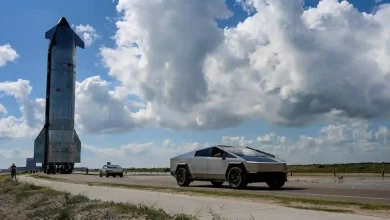
The industrial momentum driving orbital vehicle architecture, as evidenced throughout tests like Starship flight test 14, demonstrates SpaceX’s ability to manufacture heavy machinery at unprecedented speed. By synthesizing this aerospace manufacturing pace with Tesla’s automated gigafactory methodologies, the joint entity could optimize structural assembly lines across both terrestrial automotive and extra-atmospheric craft, positioning the enterprise far ahead of standard commercial space launch providers.
Wall Street Valuation: Capital Structures and Liquidity Mechanics
Valuing a combined entity requires navigating complex liquidity mechanics. SpaceX has historically leveraged tender offers to facilitate liquidity for private shareholders, staff engineers, and early-stage institutional investors. Absorbing SpaceX into Tesla through a comprehensive equity exchange would instantly make SpaceX equity liquid for private stakeholders, removing the need for a standalone SpaceX initial public offering.
However, investment banks warn that integrating a private aerospace business into a public index titan exposes the resulting conglomerate to new forms of balance sheet leverage. In modern tech financing, managing massive high-growth capital programs without disrupting public market valuations demands extraordinary discipline, especially as seen in alternative debt financing environments like CoreWeave debt sparks market vigilance. Ensuring that the merged entity retains an investment-grade debt profile will be a primary objective for the independent financial committees during transactional drafting.
Antitrust, SEC, and National Security Regulatory Review
The regulatory approval matrix for a Tesla-SpaceX business combination is vast and perilous. Any formal merger filing would trigger extensive reviews by the Federal Trade Commission (FTC), the Department of Justice (DOJ), the Securities and Exchange Commission (SEC), and the Committee on Foreign Investment in the United States (CFIUS). Because SpaceX operates as a critical United States national security defense contractor—deploying military payloads, operating encrypted communication arrays, and partnering closely with NASA and the Department of Defense—public scrutiny will be severe.
Tesla’s extensive operational and manufacturing presence in international markets, particularly China, creates an acute national security review point for U.S. defense authorities. Federal regulators will demand robust internal firewalls ensuring that sensitive orbital propulsion intellectual property, export-controlled under International Traffic in Arms Regulations (ITAR), remains strictly isolated from Tesla’s overseas manufacturing divisions and global engineering teams. Navigating these regulatory mandates without compromising the promised synergies will demand unprecedented legal craftsmanship.
Strategic Outlook: What Lies Ahead for TSLA and SPCX
The trajectory toward a merged Tesla-SpaceX entity represents the most ambitious corporate reconfiguration in modern industrial history. While Wall Street continues to model potential timelines extending through the close of 2027, the path remains fraught with procedural, legal, and operational checkpoints. Neither committee has reached agreement on foundational terms, and both boards must prioritize their respective shareholder classes above executive preferences.
If the hurdles are cleared, the resulting industrial and technological conglomerate would possess an unmatched competitive footprint spanning electric transportation, deep-space launch, satellite broadband, humanoid robotics, and edge intelligence. If the committees or shareholders reject the initiative, cross-company commercial partnerships and joint technological licensing will likely expand anyway, preserving Musk’s operational vision while leaving the legal entities distinct. For global investors and corporate strategists, the months ahead will reveal whether the independent committees can construct a bridge strong enough to unify these corporate giants.