Iran and the United States Clash at UN General Assembly 2026
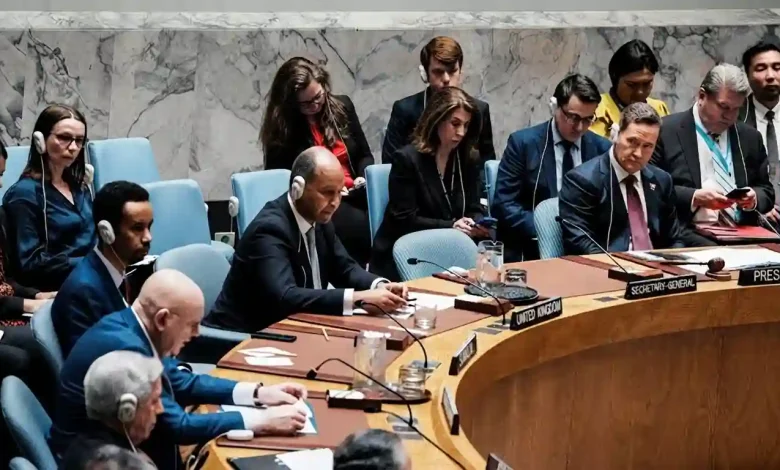
Table of Contents
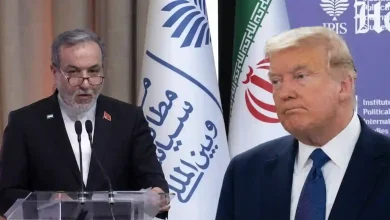
Iran and the United States remain separated by a profound diplomatic divide following heated addresses at the United Nations General Assembly, where Iranian President Masoud Pezeshkian forcefully rejected Washington’s coercive demands while a senior Iranian official insisted that avenues for negotiation must remain open. Addressing international delegations in New York, Pezeshkian directly challenged the harsh rhetoric deployed just a day earlier by US President Donald Trump, who used his rostrum appearance to warn that Washington was prepared to annihilate the Islamic Republic if military hostilities did not cease on American terms.
UN Diplomatic Crossroads in New York
The annual gathering at the United Nations General Assembly has long served as a pressure cooker for international statecraft, but this session was marked by extraordinary tension between Western powers and Tehran. The exchange follows months of armed friction across maritime corridors, strategic waterways, and regional outposts. Observers tracking the geopolitical fallout have observed how rapidly escalating threats can destabilize global commerce, particularly given recent developments where trump warns iran un actions could precipitate direct military engagements.
Despite the uncompromising speeches delivered in the General Assembly hall, senior Iranian officials speaking on background to international media acknowledged that total rupture of communications is untenable. A senior Iranian diplomat confirmed that backchannel exchanges through mutual intermediaries continue to assess possible parameters for a de-escalation framework. While public posturing remains fiercely adversarial, officials recognize that an unconstrained direct confrontation risks uncontrolled regional escalation.
President Masoud Pezeshkian Denounces Bullying Mentality
President Pezeshkian’s address emphasized national sovereignty, historical resilience, and international law. Rejecting American ultimatums, Pezeshkian declared that the Iranian nation has weathered decades of sanctions and aggression and would never capitulate to what he termed signs of a bullying mentality from the White House. He asserted that peace cannot be built on unilateral coercion or the denial of sovereign defensive rights.
Pezeshkian underscored that Tehran is prepared to negotiate a fair, reciprocal settlement that respects mutual sovereignty and provides genuine relief from debilitating economic embargoes. However, he cautioned that negotiations conducted under active military threats and existential ultimatums cannot yield durable peace. His speech resonated with several non-aligned nations that have voiced concern over aggressive unilateral sanctions regimes. The Iranian president stressed that lasting regional stability requires comprehensive agreements rather than transactional dictates imposed by external forces.
Donald Trump’s Annihilation Ultimatum
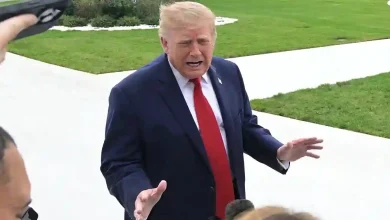
The fiery tone of Pezeshkian’s UN appearance was a direct response to Donald Trump’s address delivered twenty-four hours earlier. Trump utilized his platform to articulate a hardline stance against Tehran’s regional influence, ballistic missile stockpiles, and maritime activities. In characteristically blunt terms, the US president stated that failure by Iranian leadership to accede to American terms would result in complete annihilation, warning that US strike capabilities are fully deployed to enforce compliance.
The administration’s strategic posture reflects a broader pattern of maximum pressure, combining rigorous naval interdiction, secondary financial penalties, and direct military readiness. The friction has reached a point where political observers closely monitor diplomatic shifts, recalling similar flashpoints where trump warns iran of severe structural consequences if strategic commercial maritime routes are obstructed. The stark rhetoric presented to world leaders highlighted the severe deficit of trust separating both capitals.
Backchannel Diplomacy Amid Escalating Gulf Tensions
Behind the podium theatrics, subtle diplomatic maneuvers continue. According to Iranian officials, technical proposals have crossed diplomatic channels concerning potential maritime safeguards, inspection regimes, and sanctions sequencing. Iranian negotiators have insisted that any sustainable solution must dismantle sweeping commercial restrictions, a principle outlined in ongoing discussions regarding irans conditions reopen corridors to commercial shipping without asymmetric harassment.
American negotiators, meanwhile, demand binding caps on advanced missile production, verification protocols over nuclear enrichment sites, and an immediate cessation of proxy actions against international commerce. While the gap between these foundational positions remains wide, diplomats from neutral capitals argue that the willingness of both sides to exchange position papers confirms that neither government currently seeks a full-scale ground conflagration.
Key Stances: Tehran vs. Washington
The conflicting objectives between the two governments are summarized below, illustrating the primary structural obstacles confronting ongoing mediator talks:
| Diplomatic Issue | Washington Position (US) | Tehran Position (Iran) |
|---|---|---|
| Maritime Security | Demands unrestricted passage through the Persian Gulf and end of vessel seizures. | Links maritime passage to the lifting of naval blockades and sovereign regional oversight. |
| Sanctions Relief | Conditional upon irreversible concessions on ballistic weaponry and nuclear materials. | Demands immediate lifting of secondary financial penalties as a baseline requirement. |
| Regional Influence | Requires complete cessation of support for allied regional militias. | Maintains legitimate defensive alliances against foreign military occupation. |
| Negotiation Format | Preemptive compliance enforced through punitive deterrence and military threats. | Direct negotiations conditional on mutual respect without unilateral ultimatums. |
Strait of Hormuz and Global Energy Shocks
At the center of the dispute sits the vital transit artery of the Persian Gulf. Sustained naval drills, drone confrontations, and warning strikes have kept energy traders and freight insurers on edge. The vulnerability of maritime choke points has driven insurance premiums to record levels, with particular focus on how naval movements interact around the strait of hormuz iran 9 corridor. Commercial fleets have increasingly been forced to reroute or wait for coalition escorts, imposing heavy burdens on consumer economies across Europe and Asia.
These systemic disruptions reverberate far beyond maritime security, impacting macroeconomics and corporate forecasts worldwide. As fuel costs rise, financial markets frequently experience volatile bond swings and shifting domestic inflation expectations 2 across major industrialized countries. The interconnected nature of modern energy transit means that any miscalculation in the Gulf instantly transmits inflationary shocks to consumers worldwide.
Regional Mediation: Oman, Qatar, and Pakistan
Given the complete absence of formal bilateral diplomatic channels, external intermediaries play an essential function in preventing catastrophic miscalculation. Delegations in Muscat and Doha have facilitated repeated exchanges of technical annexes between American and Iranian interlocutors. These neutral hosts have worked tirelessly to draft compromise text addressing transit verification and phased embargo rollbacks, comparable to past regional dialogues such as when u s officials meet houthi representatives in oman 2026 to stabilize southern Red Sea waterways.
Concurrently, regional powers such as Pakistan and Turkey have engaged both sides to advocate for restraint, recognizing that a full outbreak of interstate conflict would cause severe economic devastation across their borders. Similar diplomatic shuttle missions were initiated when pakistan navigates fraught regional alliances to relay urgent de-escalation messages between Tehran and Gulf capitals. In international forums, Beijing has likewise urged an immediate cessation of coercive threats, mirroring earlier appeals where china urges iran and Western actors to avoid terminal escalations that paralyze global supply networks.
Strategic Outlook: War of Attrition or Breakthrough?
The coming weeks represent a perilous junction for Middle Eastern stability and international statecraft. With the rhetorical battle at the UN General Assembly drawing lines in the sand, President Pezeshkian and President Trump face immense domestic pressure to avoid appearing compliant. In Tehran, hardline defense establishments view concessions under threat as an existential trap, while in Washington, congressional factions demand uncompromising enforcement of red lines.
Nevertheless, the explicit confirmation by Iranian officials that diplomacy must continue indicates that both leadership structures perceive the immense catastrophic cost of total war. The primary question remains whether working-level negotiators can identify a mutually palatable off-ramp before an accidental encounter at sea or another fiery public ultimatum permanently closes the door on negotiated settlement. Until tangible agreements on maritime deconfliction and economic sanctions are formalized, the balance between diplomacy and catastrophe remains razor thin.