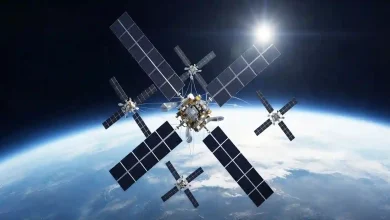
Saab Space Defense: Expanding Swedish Orbital Security Systems 2026

Table of Contents
Saab space defense initiatives have entered a pivotal stage of development as Swedish aerospace and security company Saab accelerates efforts to build integrated, resilient, and sovereign orbital assets. With international security dynamics rapidly shifting and critical national infrastructure increasingly tied to extraterrestrial networks, defense planners view orbit not merely as an operational enabler, but as a contested operational theater. The expanding reliance across military command hierarchies on space-based solutions for tactical communications, position-navigation-timing (PNT), multi-spectrum Earth observation, and ballistic early-warning telemetry has triggered unprecedented demand for sovereign systems capable of operating under contested electromagnetic and kinetic environments.
Saab Space Defense: Strategic Shift Toward Orbital Security
The contemporary battlespace demands frictionless integration between multi-domain operational theaters, spanning air, land, sea, cyber, and outer space. Saab’s strategic acceleration into the space domain represents a calculated expansion designed to bolster Sweden’s national security posture while opening wide-ranging commercial and tactical opportunities for the domestic industrial base. Historically celebrated for state-of-the-art combat aircraft like the JAS 39 Gripen, advanced sensor systems, radar technologies, and naval submarines, Saab is leveraging its heritage in high-reliability defense engineering to construct an end-to-end space ecosystem.
Modern military confrontations illustrate that tactical advantage hinges upon continuous situational awareness. When orbital assets are compromised, frontline commanders lose high-bandwidth communications, precision weapons guidance, and the ability to detect adversarial troop concentrations or missile launches. Recognizing these critical vulnerabilities, Saab has forged structured cooperation agreements that cover key technological verticals, including tactical microsatellite systems, dedicated polar launch infrastructure, distributed ground stations, continuous mission support services, and jam-resistant data connectivity solutions.
Marcus Wandt and the Vision for Coherent National Capability
Guiding this ambitious defense realignment is Marcus Wandt, Head of Strategy and Technology at Saab and an accomplished test pilot and European Space Agency (ESA) project astronaut. Drawing upon firsthand operational experience in orbit and extensive flight testing credentials, Wandt has articulated a cohesive vision for Nordic space resilience. “With space becoming increasingly important for defence and security, Saab wants to contribute to a stronger and more coherent Swedish capability in this domain,” Wandt noted when discussing the broader defense portfolio.
Wandt’s doctrine underscores the critical transition from passive space consumption—where armed forces merely purchase bandwidth or commercial imagery from foreign third parties—to active space architecture orchestration. In an era where adversaries deploy sophisticated electronic warfare suites and develop space weapons and defensive orbit countermeasures, relying entirely on foreign or unhardened commercial satellites creates critical vulnerabilities. Saab’s framework prioritizes high-assurance system survivability, rapid constellation replenishment, and modular orbital payloads designed to interface directly into national command and control networks.
Core Pillars of Sweden’s Evolving Space Architecture
Sweden’s orbital ambitions, spearheaded by Saab and partnered organizations, rest upon several interconnected pillars intended to establish end-to-end sovereign capacity. As aerospace threats grow more intricate, space-based solutions offer persistent vantage points that terrestrial radars and airborne early warning platforms cannot match in isolation.
Surveillance, Reconnaissance, and Early-Warning Capabilities
Persistent intelligence, surveillance, and reconnaissance (ISR) constitutes the operational backbone of modern tactical deterrence. Saab is applying its extensive sensor pedigree—derived from active electronically scanned array (AESA) radars and passive signals intelligence arrays—to miniaturized orbital platforms. These satellites are engineered to carry advanced synthetic aperture radar (SAR) payloads and electro-optical/infrared (EO/IR) optics capable of piercing dense cloud cover and functioning effectively through Arctic winter conditions. These orbital sensors serve as a vital tripwire system, monitoring northern maritime choke points, identifying electronic warfare emissions, and linking into regional air defense complexes.
Tactical Communications and Resilient Data Relays
Traditional terrestrial data trunks are acutely vulnerable to disruption, physical sabotage, and localized electronic jamming. By deploying resilient multi-orbit communications nodes, Saab aims to safeguard data continuity from the highest political command levels down to dispersed tactical infantry units. Standard commercial satellites often lack the physical radiation tolerance and military-grade encryption required to withstand state-sponsored cyber operations or focused radio-frequency interference. Through robust satellite integration protocols, Saab is establishing secure inter-satellite optical laser crosslinks and multi-band transponders capable of operating across contested spectral environments.
Launch Infrastructure and Ground Network Integration
Satellite hardware in orbit is only as valuable as the ground network and launch capabilities that support it. A crucial advantage for Sweden’s space strategy is its geographic location and access to high-latitude testing and launch hubs, most notably the Esrange Space Center near Kiruna. Operating in Arctic Scandinavia provides direct access to polar and Sun-synchronous orbits, bypassing the complex orbital maneuvers required from equatorial launch sites to cover high-latitude regions.
Saab’s cooperation agreements focus heavily on responsive space operations. In crisis scenarios, prolonged launch schedules are unacceptable. Armed forces require rapid reconstitution—the capability to launch replacement satellites within days or hours of an operational loss. By developing interoperable integration interfaces and partnering with commercial launch providers, Saab is positioning Swedish industry to support rapid-response missions that match modern commercial space launch ecosystems while maintaining rigorous military specifications.
Ground stations form the critical telemetry and control interfaces of this network. The agreements outline plans for distributed, highly automated antenna arrays that process and distribute raw downlinked data rapidly. Through automated mission-planning engines and edge-computing terminals deployed at ground nodes, data received from orbit can be scrubbed, formatted, and delivered directly into tactical military networks without manual processing bottlenecks.
Summary of Saab Space Defense Initiatives
The following table outlines the operational domains, technological objectives, and strategic impacts associated with Saab’s expanding defense initiatives in space:
| Capability Domain | Core Technology Focus | Operational Advantage | Strategic Impact |
|---|---|---|---|
| Tactical Surveillance (ISR) | Synthetic Aperture Radar (SAR) & EO/IR micro-satellites | Persistent day/night imaging through dense Arctic cloud cover | Rapid target detection and border monitoring |
| Resilient Communications | Laser inter-satellite links, anti-jam radio payloads | High-throughput, unjammable military communications | Assured command connectivity across dispersed forces |
| Responsive Launch | Standardized payload buses, polar trajectory alignment | Rapid replacement of disabled or degraded orbital assets | Elimination of launch backlogs during security crises |
| Ground Station Operations | Autonomous distributed antenna networks, edge processing | Real-time data ingestion, analysis, and tactical distribution | Direct sensor-to-shooter data pipelines for multi-domain units |
| Early-Warning Telemetry | Infrared launch detection, wide-area tracking algorithms | Immediate detection of high-velocity ballistic signatures | Enhanced survivability and intercept probabilities for regional air defense |
NATO Integration and Baltic Frontier Deterrence
Sweden’s accession to NATO has reshaped northern European security planning, placing greater emphasis on collective defense obligations across the Baltic Sea and Arctic regions. High-latitude surveillance poses distinct physics and geometry challenges; geostationary satellites sit low on the horizon at extreme northern latitudes, causing signal degradation and blind spots. A dedicated low-Earth orbit (LEO) constellation engineered by Nordic industry resolves these geometry issues, providing clear nadir views of strategic sea lines of communication.
As collective security frameworks evolve, bilateral and multilateral defense agreements are increasingly coordinated through strategic defense deals designed to align allied procurement priorities. Saab’s modular satellite architectures allow allied militaries to integrate specialized sensors into common satellite buses, lowering total ownership costs while increasing aggregate constellation density. Operating in lockstep with European allies, Saab’s orbital initiatives directly complement international programs leveraging dense low-Earth orbit satellite constellations to ensure redundancy against physical kinetic threats or anti-satellite (ASAT) missile systems.
This capability enhancement extends deterrence along NATO’s northern rim. Similar to ongoing multinational efforts focused on regional stability and Arctic defense agreements, orbital domain supremacy offers real-time monitoring of maritime corridors, air traffic patterns, and critical undersea infrastructure. By knitting together land, maritime, and orbital sensors, Sweden creates a formidable operational picture that deters hostile escalation across Northern Europe.
Industrial Ecosystem and Commercial Synergies
The industrial strategy articulated by Marcus Wandt relies on deep collaboration rather than closed proprietary development. The technological landscape of space has shifted: advancements in commercial off-the-shelf (COTS) microelectronics, additive manufacturing, and automated payload assembly have driven down production barriers. Swedish and broader European aerospace companies now have access to miniaturized, radiation-tolerant avionics that deliver performance profiles once restricted to multi-ton government satellites.
By establishing cooperation agreements across small and medium-sized enterprises (SMEs), university research departments, and established space contractors, Saab is fostering a domestic industrial base capable of sustaining long-term innovation. These partnerships encompass precision machining for optical mirrors, microwave assemblies for radar transmitters, and artificial intelligence models for automated downlinked image recognition. Furthermore, as military operations depend on reliable communications bridges, integrating these proprietary networks with tactical satellite communications providers guarantees secondary and tertiary pathways for data redundancy during peak conflicts.
The economic ramifications of this industrial mobilization are substantial. Investments in space-qualified manufacturing capacity generate high-skill engineering jobs, cultivate sovereign intellectual property, and create exportable aerospace subsystems. Because modern defense forces demand interoperability with civilian emergency management and environmental monitoring services, dual-use technologies developed under this program will support search-and-rescue teams, maritime ice navigation, and critical environmental tracking during peacetime.
Future Trajectory of European Space Warfare Readiness
Looking ahead, the line separating terrestrial combat networks from orbital space systems will disappear entirely. Future air defense systems, long-range fires, and autonomous maritime vessels will rely implicitly on real-time data fusion provided by spaceborne nodes. The initiatives advanced by Saab establish the groundwork for a scalable operational doctrine that adapts quickly to emerging orbital threats, including co-orbital inspection platforms, cyber interference, and high-altitude electromagnetic interference.
As the European Union and NATO continue to refine their space defense doctrines, Sweden is positioning itself not merely as an adopter of foreign technology, but as a premier capability provider. Saab’s collaborative framework guarantees that Swedish engineering directly influences international technical standards for satellite command, launch safety, and secure inter-satellite networking. Aligning sovereign defense readiness with broader NATO alliance commitments cements Sweden’s position as a capable security contributor across all domains.
Ultimately, space is no longer a tranquil sanctuary dedicated solely to scientific exploration; it is the high ground upon which modern deterrent stability rests. Through deliberate planning, technical leadership from figures like Marcus Wandt, and cohesive industrial partnerships covering satellites, ground stations, and launch mechanics, Saab is constructing an agile, integrated space defense capability capable of safeguarding national and allied sovereignty for decades to come.