U.S. sanctions against Iran: Tehran Vows Resistance as Bessent Unveils New Penalties 2026
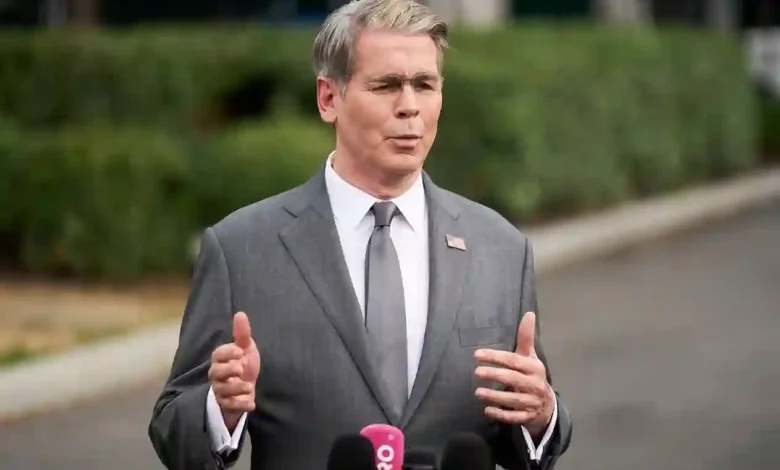
Table of Contents
U.S. sanctions against Iran have entered a critical and highly contentious phase, triggering a sharp and defiant response from Tehran after Treasury Secretary Scott Bessent unveiled a fresh round of targeted economic restrictions. On Monday, August 24, 2026, the U.S. Department of the Treasury introduced measures designed to squeeze Iran’s primary revenue streams, though the package conspicuously stopped short of the most crushing, total-isolation penalties. Almost six months into a regional conflict that has pushed Middle Eastern stability to its absolute limits, Washington continues to grapple with a multi-layered crisis it has struggled to decisively resolve. Despite the threat of intensified economic isolation, Tehran immediately pledged to fight back, expressing absolute confidence that its major international trading partners—specifically Beijing and Moscow—will actively resist the American pressure campaign. Concurrently, Iranian diplomatic figures noted that behind the aggressive rhetoric, Washington appears highly motivated to find an off-ramp and revive long-stalled negotiations.
This strategic divergence underscores a complicated diplomatic dance. On one hand, the U.S. administration must project strength and show a firm hand to deter regional proxies; on the other hand, the global economy remains vulnerable to volatile energy markets, prompting Treasury officials to tread carefully. This comprehensive report breaks down the newly introduced economic measures, examines Tehran’s strategic calculations, analyzes the diplomatic backchannels, and assesses the broader geopolitical consequences after nearly half a year of unresolved warfare.
Introduction to the New Economic Sanctions
The ongoing stand-off between Washington and Tehran has reached a critical juncture. The conflict, now entering its second half-year, has created immense pressure on the White House to find a lasting solution. Critics argue that the current administration’s strategy has been overly cautious, failing to prevent regional escalation while simultaneously suffering the economic blowback of disrupted maritime routes. Secretary Bessent’s latest move seeks to strike a delicate equilibrium: demonstrating a firm punitive stance to domestic audiences and international allies while avoiding a total shock to global energy supply lines. In the face of this updated sanctions list, Tehran’s response has been one of calculated defiance rather than capitulation. Iranian leaders view the measures as a sign of American weakness, interpreting the lack of maximum pressure secondary banking sanctions as evidence that Washington is running out of leverage.
Treasury Secretary Scott Bessent’s Strategic Restraint
Treasury Secretary Scott Bessent’s announcement on Monday represented a targeted expansion of existing programs, rather than a completely new embargo framework. The new measures focused heavily on secondary logistics networks, front companies operating in third-party jurisdictions, and specific facilitators of drone and missile production. However, by stopping short of the most punishing sanctions—such as a complete ban on all non-humanitarian transactions with Iranian banks or a blanket global embargo on third-party purchases of Iranian crude—the Treasury Department left a vital diplomatic window open. This restraint indicates that the United States is wary of pushing oil prices past sustainable limits, especially with domestic economic pressures continuing to weigh on the administration.
The Fine Line Between Economic Containment and Outright Blockade
From an operational standpoint, the current policy borders on a hybrid economic embargo. Observers monitoring the geopolitical landscape have noted that the escalating U.S. blockade on Iran has forced Tehran to rely increasingly on dark fleet tankers and sophisticated sanctions-evasion tactics. A total blockade would require direct kinetic action or secondary sanctions so severe that they would alienate major trade allies like India and Turkey. By maintaining a highly calibrated middle ground, the Treasury Department hopes to retain leverage at the negotiating table while continuing to slowly drain Tehran’s sovereign reserves.
Tehran’s Official Reaction and Defiance
Tehran’s official response was swift, combative, and strategically optimistic. Iranian state media and government spokespersons declared that the domestic economy has already built a powerful immunity to Western coercion. Having survived decades of various restrictions, Iran’s economic planners believe they are uniquely positioned to withstand this latest round of pressure. Observers analyzing the ongoing Iran war details note that the country’s military and political leadership has consolidated its domestic authority, framing the conflict as a defense of national sovereignty against Western imperialism. Tehran’s confidence is rooted in its highly diversified, sanction-resistant financial corridors that bypass Western clearinghouses entirely.
Diplomatic Resistance and Global Partnerships
The cornerstone of Tehran’s defiance is its deep strategic alliance with major global players who reject the unilateral authority of U.S. domestic law. By analyzing how Washington outlines Iran policy, it becomes evident that the U.S. is struggling to enforce a unified international front. Beijing remains the largest buyer of Iranian crude oil, importing millions of barrels daily through independent refineries that do not use the U.S. dollar. Moscow, similarly locked in its own confrontation with the West, has deepened its security and technological integration with Tehran. Consequently, Iranian officials remain confident that these critical trading partners will ignore the Treasury’s latest warnings, rendering the new sanctions highly limited in their practical impact.
The Broader Regional Conflict After Six Months
The sanctions announcement comes as the broader regional conflict approaches its six-month milestone. What began as a localized crisis has metastasized into a complex, multi-theater proxy war that the United States and its partners have struggled to resolve. Despite several high-level diplomatic missions and maritime security operations, regional escalation shows little sign of subsiding. In this highly charged environment, Tehran rejects U.S. negotiating tactics, stating that any meaningful dialogue must begin with the unconditional lifting of all economic embargoes. This diplomatic gridlock has only heightened anxieties across global markets.
Strategic Maritime Chokepoints and Military Escalation
As the economic pressure intensifies, the risk of kinetic retaliation in critical shipping lanes grows exponentially. Tehran has repeatedly hinted that if its economic lifelines are entirely severed, it will not hesitate to disrupt international trade. Earlier negotiations fell through when Iran refuses U.S. deal terms regarding shipping security, leading to a dangerous cycle of maritime standoffs. Influential figures within the establishment, such as prominent Iranian politician Ali Nikzad, have publicly warned that Western aggression will only stiffen the resolve of the Islamic Republic, potentially leading to increased tensions around the Strait of Hormuz. Any disruption in this vital chokepoint could trigger a devastating global energy crisis, which explains why Secretary Bessent opted against the most extreme financial measures.
Comparative Analysis of the New Sanctions Regime
To better understand the structural impact of Monday’s announcement, it is helpful to contrast the new targeted restrictions with the maximum-pressure policies implemented in previous geopolitical cycles. This comparison highlights the calculated limitations of the current Treasury Department strategy.
| Sanction Category | Target Scope | Stated Objective | Expected Economic Impact |
|---|---|---|---|
| Targeted Financial Sanctions | Specific regional financial entities and front companies | Disrupt proxy funding and drone manufacturing supply chains | Moderate localized pressure |
| Energy Logistics Controls | Dark fleet tankers and regional maritime facilitators | Limit illicit oil sales without shocking global markets | Moderate-high friction |
| Military & Tech Restrictions | Dual-use electronic and mechanical components | Slow down regional armaments production | Minimal short-term impact |
| Blanket Financial Embargo | All sovereign banking networks (Not implemented) | Total economic strangulation | Severe (Unrealized) |
The Backchannel Efforts: Is Washington Keen to Revive Talks?
Perhaps the most intriguing aspect of the current situation is Tehran’s assertion that Washington is privately eager to revive diplomatic negotiations. Despite the tough public stance, diplomatic sources suggest that U.S. representatives are actively seeking backchannel communications to de-escalate the six-month-old conflict. This paradox is a common feature of modern economic warfare: sanctions are often used as a mechanism to build leverage before returning to the negotiating table.
Tehran’s leadership is fully aware of this dynamic. By framing the sanctions as a sign of American desperation rather than strength, Iran’s diplomats are positioning themselves to demand major concessions in any future talks. However, the path to a peaceful resolution remains fraught with obstacles. Given the extensive regional escalation involving Oman and other neighboring states acting as intermediaries, the diplomatic landscape is incredibly fragile. Both sides must navigate domestic political pressures that limit their ability to compromise, making a breakthrough highly uncertain.
Global Trade Realities and Potential Sanction Evasion
As the global economy becomes increasingly fragmented, the efficacy of unilateral Western sanctions is facing unprecedented challenges. The rise of alternative financial networks, local currency trading agreements, and digital clearinghouses has provided sanctioned nations with viable workarounds. Iran’s ability to sustain its economy despite years of intense pressure demonstrates the limits of economic containment in a multipolar world. For Washington, the challenge is not just enforcing compliance, but doing so without alienating key international allies who rely on trade with the Middle East. Furthermore, the growth of alternative energy markets in Asia has ensured that Tehran’s crude exports continue to find willing buyers, effectively diluting the coercive power of the U.S. Treasury’s actions.
Conclusion
Ultimately, the latest round of U.S. sanctions represents a high-stakes geopolitical balancing act. By targeting key networks while avoiding the most destructive measures, Treasury Secretary Scott Bessent has attempted to maintain pressure on Tehran without triggering a catastrophic regional war or global economic shock. However, with Iran remaining defiant and confident in its international partnerships, the effectiveness of this strategy remains to be seen. As the conflict grinds past its six-month mark, both Washington and Tehran appear to be preparing for a prolonged struggle, even as they keep a cautious eye on potential diplomatic off-ramps. The coming weeks will be critical in determining whether these newly imposed sanctions will pave the way for a renewed diplomatic dialogue or push the region closer to an unchecked escalation.



2 Comments