Necrotizing enterocolitis: Noninvasive Light Scan May Save Premature Infants 2026

Table of Contents
Necrotizing enterocolitis is one of the most feared and devastating diagnoses encountered in modern neonatal intensive care units (NICUs). Striking suddenly and with little to no clinical warning, this life-threatening inflammation of the intestine predominantly targets premature infants, particularly those born weighing less than 1,500 grams (about three pounds, five ounces). With a mortality rate exceeding 20 percent, necrotizing enterocolitis (NEC) can quickly progress from subtle, mild symptoms such as abdominal distension and feeding intolerance to systemic sepsis, intestinal perforation, and tissue death. Up to five percent of all premature infants, and nearly ten percent of very-low-birth-weight neonates, will suffer from this condition. Traditionally, clinical teams have been forced to rely on serialized abdominal X-rays to detect the classic signs of advanced NEC, such as pneumatosis intestinalis or portal venous gas. However, by the time these radiographic indicators appear, the underlying intestinal tissue may already be irreversibly necrotic, necessitating emergent surgery to remove infected portions of the bowel. This surgical intervention, while life-saving, carries long-term consequences, including short bowel syndrome and developmental delays. This is why crucial updates in neonatal health and other public health areas, such as the childhood vaccine schedule, underscore the continuous drive for medical innovation and preventative safety measures to protect our most vulnerable patient populations.
Necrotizing :Understanding Necrotizing Enterocolitis in Neonatal Care
NEC represents a major pathological emergency in the neonatologist’s daily workflow. The precise biological etiology of the disease is still not fully mapped, though it is widely understood to result from a multifactorial cascade involving intestinal immaturity, mucosal barrier dysfunction, abnormal bacterial colonization, and systemic ischemia. When formula feeding is introduced in place of human breast milk, the risk of triggering NEC rises dramatically. The immature intestinal lining is highly susceptible to pathogenic bacterial overgrowth, which can cause local mucosal injury. As the inflammatory cascade accelerates, the bowel wall becomes highly permeable, allowing bacteria to translocate into the systemic circulation. This can trigger rapid septic shock and multi-organ failure. Because early-stage NEC symptoms mirror benign feeding intolerance, clinicians are frequently caught in a difficult position: treating every minor abdominal distension with aggressive therapy, or waiting for definitive radiological proof at the cost of precious time. While public health debates and school district policies often target environmental concerns such as school screen time, physiological crises occurring in the neonatal intensive care unit represent an entirely different level of urgency.
Necrotizing :The Physics and Physiology of Optical Spectroscopy Screening
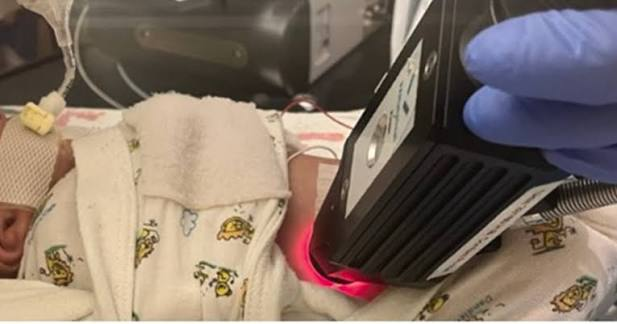
At its core, the newly proposed diagnostic method leverages broadband optical spectroscopy (BOS) to perform noninvasive tissue interrogation. By using a specialized optical probe to project visible and near-infrared light through the infant’s abdominal wall, clinicians can determine the physiological state of the underlying bowel tissue. Because different molecules absorb and scatter light differently depending on their chemical state, analyzing the reflected light provides real-time information about tissue oxygenation and metabolic status. Implementing high-tech screening platforms in the NICU requires serious administrative strategy, not unlike hospital networks performing an andrea orcel decoding of corporate and clinical processes to ensure high efficiency and risk mitigation. The sudden onset of NEC creates an operational urgency that mirrors security coordination during emergency crises, such as the emergency response after the dearborn mall shooting, where every second counts. With BOS, clinical teams can capture subtle shifts in intestinal tissue perfusion before systemic decompensation begins, allowing for preemptive medical management.
Necrotizing :Exploiting Abdominal Translucency in Premature Infants
One of the key physiological advantages that makes this technology feasible is the unique anatomy of premature infants. Neonates, particularly those born before 32 weeks of gestation, have extremely thin, fragile skin that lacks the dense keratin and subcutaneous fat layers found in older children and adults. This structural characteristic makes their abdominal walls partially translucent to light. Visible and near-infrared wavelengths can penetrate several centimeters into the peritoneal cavity, illuminating the underlying loops of the small and large intestines. When this light bounces back, it carries a detailed spectral signature of the intestinal microvasculature, providing an optical window into the gut’s health without requiring invasive procedures.
Necrotizing :Detecting Ischemia Through Intestinal Color Shifts
When intestinal tissue undergoes ischemic distress, cellular metabolism collapses due to the lack of oxygen. This leads to a severe drop in localized microvascular oxygen saturation, which chemically alters the absorption properties of hemoglobin. Oxyhemoglobin and deoxyhemoglobin have distinctly different light absorption spectra, and as tissue necrosis progresses, the intestines physically darken. This cellular and vascular color shift is immediately recognizable to pediatric surgeons during open laparotomy, but the goal of Dr. Goldstein’s team is to detect this darkening through the closed abdominal wall. By capturing these spectral deviations, broadband optical spectroscopy acts as a pre-symptomatic warning system, highlighting localized hypoxia before systemic clinical symptoms, such as abdominal wall erythema or shock, manifest.
Necrotizing :Analyzing the Lurie Children’s Hospital Pilot Study
Under the clinical leadership of pediatric surgeon Dr. Seth Goldstein and co-researcher Dr. Ashley Dodd, researchers at Ann & Robert H. Lurie Children’s Hospital of Chicago, in collaboration with Northwestern University, conducted a first-in-human pilot study to evaluate the safety and feasibility of BOS. The cohort consisted of 96 premature infants undergoing surveillance in the NICU. The primary objectives were to confirm that the optical probe could be applied to delicate newborn skin without causing thermal or mechanical trauma, and to assess whether the reflected light signals could reliably differentiate healthy bowel tissue from diseased tissue. Of the 96 infants monitored, the optical scans successfully identified all 10 babies who subsequently went on to develop clinically confirmed cases of necrotizing enterocolitis. This achieved a preliminary sensitivity rate of 100 percent, demonstrating that the optical signals of ischemic bowel are indeed detectable through the abdominal wall.
Necrotizing :The Role of Machine Learning in Diagnostic Classification
To translate raw optical data into a clear clinical diagnostic, the research team employed a sophisticated machine learning pipeline. The spectrometer captures reflected light across a broad range of wavelengths, resulting in millions of data points per scan. To process this high-dimensional spectral data, the team developed a novel machine learning model utilizing iterative principal component analysis (iPCA). This algorithm filters out ambient light and isolates the key wavelengths that correlate directly with tissue ischemia. Just as high-stakes systems require security protocols to detect and stop google cloud fraud, medical diagnostics need reliable validation algorithms to minimize false alarms and prevent unnecessary interventions. By training deep neural networks on these optimized wavelengths, the classifier distinguished NEC with a high degree of mathematical precision, paving the way for automated real-time alerts.
Necrotizing :Clinical Comparison of NEC Screening Modalities
To contextualize the potential of Broadband Optical Spectroscopy, it is useful to compare it with current diagnostic methods. Below is a comprehensive overview of how these tools compare across key parameters:
| Parameter | Abdominal X-Ray (Current Standard) | Clinical Assessment | Broadband Optical Spectroscopy (BOS) |
|---|---|---|---|
| Invasiveness | Low, but involves ionizing radiation | Noninvasive manual examination | Fully noninvasive light exposure |
| Detection Speed | Late-stage (requires visible gas) | Variable; depends on physical signs | Early-stage (detects pre-symptomatic ischemia) |
| Frequency | Intermittent (every 6–12 hours) | Intermittent (nursing rounds) | Continuous or frequent point-of-care |
| Objective Metrics | Visual interpretation of radiographs | Subjective palpation and observation | Quantitative spectral analysis |
Necrotizing :Addressing Challenges: Specificity, False Positives, and Overtreatment Risks
Despite the outstanding sensitivity demonstrated in the pilot study, the technology returned a substantial number of false positives. In a busy NICU environment, false alarms pose a significant clinical challenge. If the screening device incorrectly flags a healthy infant as having NEC, clinicians may prematurely halt enteral feeding, start unnecessary courses of powerful antibiotics, and order frequent, stressful radiographic monitoring. These interventions are not benign; withholding feeds can prolong hospital stays and increase the risk of central line-associated bloodstream infections. Advanced medical device R&D occasionally crosses paths with technological pipelines funded by the Defense Department, but infant bedside technology requires highly specialized, pediatric-centric refinement to ensure safety at the absolute micro-scale. Dr. Ravi Patel, director of neonatal clinical research at Emory University, noted that while the pilot study serves as an exciting proof-of-concept, further refining the specificity of the algorithm is essential before this technology can be safely integrated into standard practice.
Necrotizing :Future Directions: Handheld Bedside Devices and Larger Cohorts
To resolve the specificity issues and validate the initial findings, Dr. Goldstein and his colleagues are preparing to launch a large-scale, multi-center clinical trial in the coming year. This upcoming study will monitor a significantly larger cohort of premature infants, utilizing serial daily scans to track how the optical signals evolve over time. By obtaining continuous longitudinal data, the researchers hope to show that they can detect early signs of intestinal compromise hours before clinical symptoms present. Additionally, the engineering team is working to convert the bulky, benchtop spectrometer setup into a low-cost, handheld device. The vision is to make a plug-and-play probe that can sit at every NICU bassinet, allowing nurses to perform rapid, routine optical scans during regular diaper changes and feeding assessments.
Complementary Preventative Approaches in Neonatology
As the medical community eagerly awaits further trial data on broadband optical spectroscopy, researchers continue to pursue parallel avenues to prevent and manage necrotizing enterocolitis. Early dietary protection is essential, and just as school-aged nutritional policies favor healthy school lunches to promote lifelong gut development, neonates require optimized feeding protocols—such as prioritizing breast milk over formula feeding—to reduce their baseline risk for developing this life-threatening disease. Other clinical efforts are focusing on the introduction of highly specific probiotic strains to help establish a healthy, protective gut microbiome in preterm babies, and on identifying unique biomarkers in the infant’s blood or stool that could signal early gut inflammation. Because there are currently zero targeted pharmaceutical options to stop the progression of NEC once it has begun, noninvasive optical screening represents a vital, potential paradigm shift in the survival and long-term health of premature infants.