Rocket Lab Neutron Rocket Timeline Shifts: Pad Arrival in Q4
Table of Contents
Rocket Lab has updated its commercial strategy, signaling a key transition from an aggressive flight target to a launch pad delivery milestone for its upcoming reusable medium-lift launcher, the Neutron rocket. On Monday, August 10, 2026, the company released its second-quarter earnings report, revealing a subtle but critical shift in the wording used to describe the timeline of its flagship development project. Previously, management maintained that the rocket’s maiden launch was on track for late 2026. However, the updated guidance now targets delivering the vehicle to the launch pad in Virginia in the fourth quarter of 2026, rather than executing the actual flight during that same window. This revelation sent shares tumbling by approximately 7% in extended trading sessions, highlighting the intense pressure the company faces to deliver on its medium-lift promise. Investors are highly sensitive to these timeline adjustments because Neutron represents the cornerstone of Rocket Lab’s long-term business model. It is designed to allow the company to compete directly with SpaceX’s Falcon 9 for high-value commercial satellite constellations, civil-space opportunities, and highly lucrative national-security missions. When language pivots from “first launch” to “pad delivery,” seasoned observers recognize that actual orbital operations are increasingly likely to slip into early 2027.
Rocket Lab Adjusts Its Strategic Horizon
The transition of Neutron’s schedule has been a source of intense discussion among aerospace analysts and retail investors alike. Historically, space launch startups face massive friction when transitioning from small-scale launch vehicles to medium or heavy-lift systems. Rocket Lab, which has successfully established its Electron rocket as the industry standard for dedicated small satellite launches, is attempting to bridge this gap. However, the complexity of developing a brand-new, carbon-composite, liquid-methane-fueled launcher cannot be overstated. By shifting the goalpost for the end of 2026 from an orbital flight to merely getting the first-flight hardware to the pad, Rocket Lab is practicing risk mitigation, albeit at the expense of short-term market capitalization.
During the earnings call on Monday, CEO Sir Peter Beck emphasized that the company is taking a holistic view of the program. Rather than rushing a single vehicle to the pad to hit an arbitrary deadline, the engineering teams are focused on building a fully industrialized, repeatable manufacturing line. Beck noted that the real challenge is not just launching the first Neutron, but ensuring that the tenth, twentieth, and fiftieth launches can proceed at a high cadence. While this engineering-first philosophy is widely praised by long-term space enthusiasts, it does little to calm the nerves of short-term traders who had priced in a definitive 2026 maiden flight.
Financial Highlights of Q2 2026 vs. Market Sentiment
The market’s negative reaction to the timeline shift came despite an otherwise stellar financial performance for the second quarter. Rocket Lab reported a record-breaking Q2 2026 revenue of $234.1 million, representing a massive 62% year-over-year growth rate and beating the consensus Wall Street estimate of $232 million. Furthermore, the company’s backlog grew to an all-time high of $2.36 billion, an increase of 137% compared to the same period in the previous year. This massive backlog provides the company with exceptional revenue visibility for years to come, demonstrating that commercial and government customers remain highly confident in Rocket Lab’s ability to execute its missions.
However, the financial report also revealed areas of concern that exacerbated the post-earnings sell-off. The GAAP net loss for the quarter came in at $0.08 per share, slightly wider than the $0.07 loss projected by analysts. Additionally, Rocket Lab’s gross margin guidance for the third quarter of 2026 was set between 29% and 31%, which fell significantly short of the 37.6% margin expected by the market. This near-term margin compression is largely due to the heavy capital expenditures required to scale the Neutron production complex and complete qualification testing, as well as the integration costs of several strategic acquisitions. The stock market, behaving as a forward-looking mechanism, prioritized these margin challenges and the timeline slip over the record quarterly revenue.
Inside the Neutron Rocket: Specifications and Ambitions
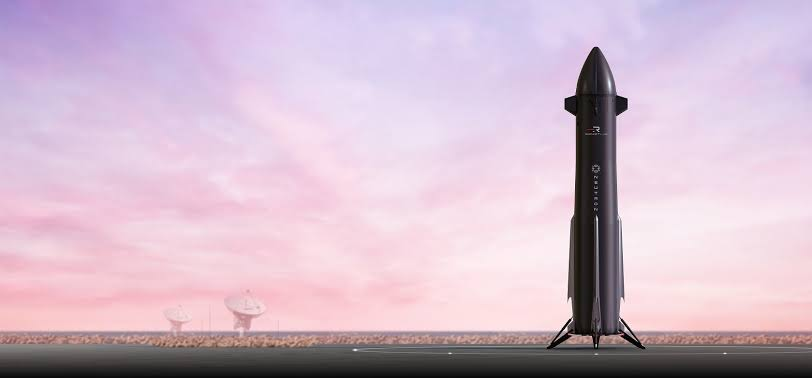
Neutron is a 43-meter-tall (141-foot) medium-lift launch vehicle designed to revolutionize the economics of space access. It features a unique, highly innovative structure made of a proprietary carbon-composite material, which makes it exceptionally lightweight yet structurally robust. Powered by the Archimedes engine—a liquid oxygen and liquid methane rocket engine developed entirely in-house—Neutron is designed from the ground up for rapid reusability. The first-stage booster is designed to return to the launch site, landing vertically on its integrated landing legs, without requiring a costly and logistically complex drone ship recovery.
One of Neutron’s most distinctive features is its “Hungry Hippo” fairing design. Unlike traditional rockets, where the fairing halves separate and fall into the ocean during flight, Neutron’s fairing halves remain permanently attached to the first-stage booster. They open to deploy the second stage and payload, and then close before the booster returns to Earth. This design entirely eliminates the need to recover fairings from the sea, significantly reducing refurbishment costs and turnaround times. With a payload capacity of approximately 13 metric tons to Low Earth Orbit (LEO) in a reusable configuration, Neutron is engineered specifically to deploy massive satellite constellations, which are becoming the dominant force in the modern space economy.
The Chronology of Delays and Engineering Milestones
The road to Neutron’s maiden flight has been marked by several high-stakes engineering milestones and setbacks. When the program was first announced in March 2021, the company initially targeted a debut launch as early as 2024. This aggressive timeline was later revised to 2025 as the sheer scale of the engineering challenges became apparent. However, a major setback occurred on January 21, 2026, when a first-stage fuel tank ruptured unexpectedly during a hydrostatic pressure loading test. The failure forced the engineering team to halt production, redesign certain structural components of the tank, and implement a new, faster manufacturing method to recover lost time.
Following the tank rupture, Rocket Lab updated its guidance in February 2026, targeting a launch in late 2026. While the company has made rapid progress since then, including successful hot-fire tests of the Archimedes engine and the completion of the secondary stage structural builds, the schedule remains incredibly tight. The latest update indicating a “pad delivery” rather than a “launch” in Q4 2026 is the logical outcome of these compounding delays. CEO Peter Beck has made it clear that safety and reliability must take precedence, establishing a consistent, long-term developmental tempo, echoing how complex systems benefit from a steady legacy planning and operational rhythm rather than rushing a half-prepared system into orbit.
Market Analysis: The Space Infrastructure Play
To fully understand Rocket Lab’s current positioning, one must analyze the broader economic and geopolitical landscape. The global aerospace industry is navigating a highly volatile period, marked by inflationary pressures and macroeconomic uncertainty. For instance, commercial aerospace supply chains have been impacted by rapid fluctuations in energy costs, with gas prices surging 30 percent in the US, driving up transportation, raw materials, and precision manufacturing costs. These rising operational expenses have squeezed margins across the defense and aerospace sectors, forcing companies to execute capital allocation strategies with extreme care.
Furthermore, Rocket Lab is operating within the complexities of a two-speed economy. In this environment, consumer-focused industries and retail sectors are experiencing stagnation, while deep-tech, defense, and sovereign national security sectors continue to receive massive capital injections. Rocket Lab has strategically capitalized on this dynamic by transforming itself from a pure-play launch provider into a vertically integrated space systems company. In Q2 2026, space systems—which includes satellite manufacturing, components, and software—accounted for an astounding 81% of the company’s total revenue. This diversification provides a sturdy financial cushion, insulating Rocket Lab from the inevitable delays associated with launching new rockets.
Strategic Implications for Civil and National Security Contracts
The delay of Neutron’s first flight carries significant strategic weight, particularly concerning lucrative government and national security contracts. The global demand for sovereign space access and robust defense-oriented satellite constellations has reached unprecedented levels. Much of this urgency is driven by a series of escalating global threats, which have triggered an increased emphasis on defense space-based assets in response to a worldwide caution issued by the US. As defense agencies seek to reduce their reliance on single-provider monopolies like SpaceX, Rocket Lab’s Neutron is positioned as the primary alternative.
These geopolitical dynamics are further complicated by regional conflicts and systemic vulnerabilities. For example, nations are increasingly concerned about domestic resilience and potential supply chain disruptions, not unlike the supply chain challenges impacting Californias food security. To mitigate these risks, defense programs are funding redundant space architectures. Rocket Lab recently secured a massive $397.2 million contract from the U.S. Space Force to deliver multiple Flatellite spacecraft for the Space-Based Airborne Moving Target Indicator (SB-AMTI) program, a mission that is ultimately intended to launch on the Neutron rocket. Any prolonged delay in Neutron’s development could disrupt these military deployment schedules, although the military has expressed ongoing support for Rocket Lab’s long-term roadmap.
To support these national security launches, Rocket Lab is continuing to build out its Launch Complex 3 at Wallops Island, Virginia. However, constructing high-tech orbital launch facilities is a massive logistical challenge that often intersects with local environmental and regulatory debates. These domestic infrastructure controversies can sometimes draw comparisons to the local opposition and regulatory hurdles observed in other high-profile construction efforts, such as the environmental disputes surrounding border wall waivers in Texas. Navigating these regulatory frameworks requires significant diplomatic and lobbying efforts from Rocket Lab’s management, particularly as state and federal policies continue to shift in response to domestic political battles, such as the ideological divides highlighted in the recent Indiana state senate race.
Despite these local and regulatory complexities, Rocket Lab is forging ahead with its infrastructure expansion. The company is actively preparing for potential scenarios involving heightened global geopolitical friction, which has previously escalated to the point of military strikes and logistical standoffs in key regions. In an era where space has officially been designated as a warfighting domain, having a secondary, fully sovereign medium-lift launch vehicle is a matter of critical national importance for the United States and its allies. Consequently, the Space Force and other civil agencies are highly incentivized to keep Rocket Lab well-funded and supported, even if the timeline slips slightly into 2027.
Financials and Program Milestones Comparison
To provide a clear overview of Rocket Lab’s current operational standing and the trajectory of the Neutron program, the following table compares key metrics from the recent Q2 2026 financial report against previous performance and projected future milestones.
| Metric / Milestone | Q2 2025 Performance | Q2 2026 Performance | Projected Milestones (Q4 2026 / Beyond) |
|---|---|---|---|
| Quarterly Revenue | $144.5 Million | $234.1 Million (Record) | Strong sequential growth projected for Q3 & Q4 2026 |
| Total Backlog | $995 Million | $2.36 Billion (Record) | Expected to expand with future Neutron contract signings |
| GAAP Gross Margin | 32.4% | 27.8% | Q3 Guidance: 29% – 31% (Wall Street expected 37.6%) |
| Net Loss Per Share | -$0.06 | -$0.08 | Narrowing expected as space systems segment scales |
| Neutron Timeline Goal | Maiden flight in late 2025 | Maiden flight in Q4 2026 | Launch pad delivery in Q4 2026; Maiden flight targeted 2027 |
| Key Active Contracts | Electron small-satellite manifests | USSF SB-AMTI ($397.2M), Kepler Communications | First commercial constellation deployment on Neutron |
Conclusion: Looking Beyond the Pad Delivery
While the 7% slide in Rocket Lab’s stock price reflects the market’s disappointment regarding the near-term timeline adjustment, the long-term investment thesis for the company remains highly compelling. A delay of several months or even a full year in the aerospace sector is relatively minor, especially when compared to the multi-year delays experienced by legacy providers developing rockets like Ariane 6 or Vulcan Centaur. Rocket Lab’s ability to maintain a robust, high-cadence launch schedule for its Electron rocket, while simultaneously generating record revenue from its space systems division, proves that it is far more resilient than other pure-play space startups.
Ultimately, the Neutron rocket is not just a commercial vehicle; it is a vital national asset and the key to Rocket Lab’s vertical integration strategy. By prioritizing qualification testing and ensuring that the vehicle is ready for full-scale production immediately after its maiden flight, Peter Beck’s engineering team is building a sustainable, long-term business. As the hardware moves toward final assembly at Launch Complex 3 in Virginia, the coming months will be critical. If Rocket Lab can successfully deliver Neutron to the pad in Q4 2026 and execute a flawless maiden launch shortly thereafter, the short-term market volatility of today will be nothing more than a minor blip in the company’s historic ascent.