Trump Predicts Quick End to Iran War Amid Weapons Supply Warnings 2026
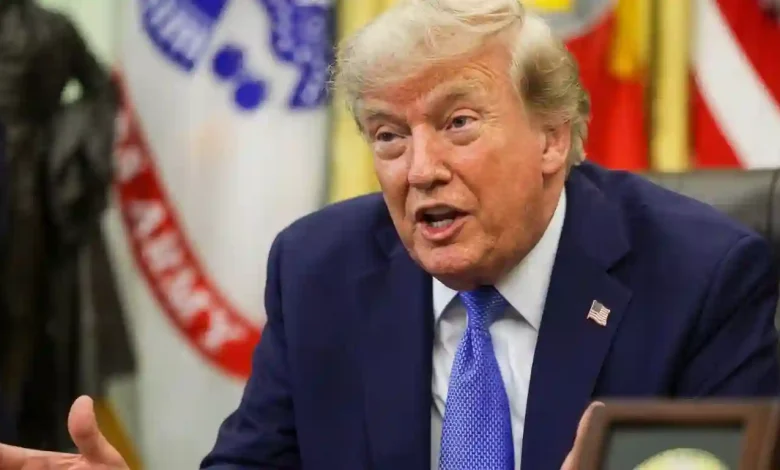
Table of Contents
Trump declared on Thursday that the military conflict between the United States and Iran is rapidly approaching its conclusion, offering an optimistic timeline even as concerns mount regarding critical military supplies. Speaking in the Oval Office, the President addressed reporters directly, stating that he believed Iran was nearing a breaking point under the weight of sustained American military operations. ‘I think it’s going to end pretty soon. I don’t think they can go much longer,’ Trump said, framing the five-month-long conflict as being in its final stages. However, this assertion of imminent victory is juxtaposed against stark admissions regarding the current state of U.S. munitions. While assuring the public that certain heavy-duty weaponry remains in virtually unlimited supply, Trump conceded that other essential weapon categories are experiencing tight inventories. This revelation has triggered an intense national debate regarding the strategic sustainability of prolonged high-intensity warfare in the Middle East and the readiness of the American defense industrial base.
Iran :The Oval Office Declaration: A War Nearing Its End?
The recent comments made in the Oval Office represent a significant shift in rhetorical strategy from the White House. For months, the administration has maintained a posture of overwhelming force, but the acknowledgment of weapon supply constraints marks a rare moment of transparency—or vulnerability, depending on the perspective of defense analysts. Trump’s optimistic timeline for the war’s conclusion is seen by many as an attempt to reassure an increasingly war-weary public. Since the collapse of regional stability earlier this year, the U.S. has engaged in heavy aerial and naval bombardments. However, declaring that Iran cannot ‘go much longer’ suggests that the administration is counting on the sheer economic and physical attrition of Tehran’s forces. This calculation hinges on whether the pressure has indeed crippled Iran’s command structures or if the Islamic Republic is merely biding its time, hoping to exploit U.S. supply vulnerabilities. Observers note that while the U.S. has maintained a relentless tempo, the strategic outcomes remain heavily contested, and the rhetoric of an imminent end may be aimed at smoothing over domestic anxieties before the upcoming mid-term elections.
Iran :Inside the Munitions Tightness: What Weapons Are Running Low?
In his address to reporters, the President sought to draw a clear distinction between the types of munitions currently in the U.S. inventory. He noted that the military possesses an almost ‘unlimited’ supply of certain highly powerful conventional weapons, likely referring to gravity bombs, unguided munitions, and standard artillery shells. However, he admitted that for more sophisticated systems, the situation is ‘a little bit tighter.’ This admission directly aligns with independent intelligence and defense reports indicating that months of continuous operations have placed an unprecedented burden on high-tech weapons programs. The U.S. military’s doctrine relies heavily on precision-guided munitions (PGMs) to minimize collateral damage and maximize strategic impact. However, the manufacturing pipelines for these advanced systems are notoriously slow and complex, making rapid replenishment a severe bottleneck during active, high-tempo conflicts. The disparity between abundant older systems and scarce modern PGMs highlights a fundamental vulnerability in the contemporary American way of war.
Iran :The Attrition of Long-Range Precision Missiles
Reports from international news agencies have underscored the severity of the depletion. It was revealed that the U.S. Army has utilized a vast portion of its global stockpile of highly accurate long-range missiles, including Army Tactical Missile Systems (ATACMS) and Precision Strike Missiles (PrSM). In the immediate aftermath of these strikes, military planners were forced to confront the reality that manufacturing cannot keep pace with consumption. This high rate of expenditure was the primary reason behind the recent temporary pause in airstrikes, which the administration initially framed purely as a diplomatic window. The logistical strain has raised alarms within the Pentagon, as a depleted stockpile not only limits options in the Iranian theater but also degrades U.S. deterrence posture globally, particularly in the Indo-Pacific and Eastern Europe. Defense experts warn that the intensive use of surface-to-air interceptors and precision land-attack cruise missiles has exposed deep-seated systemic weaknesses in the domestic defense supply chain.
Iran :Expanding the Defense Industrial Base: Patriot and Tomahawk Production
To counter these logistical deficiencies, the President announced that U.S. defense contractors are aggressively expanding their production footprint. This includes constructing several new manufacturing plants specifically dedicated to ramping up the assembly lines for Patriot air-defense interceptors and Tomahawk land-attack cruise missiles. These systems have been the workhorses of the conflict, intercepting incoming Iranian drone swarms and striking hardened military assets. However, building and certifying new aerospace manufacturing facilities is not an overnight solution. Industry analysts estimate that it could take anywhere from eighteen months to three years before these new plants are fully operational and contributing to the active inventory. Consequently, the military must rely on existing stockpiles and strategic rationing in the near term, a reality that complicates any plans for further escalation and forces the administration to look toward diplomatic exit strategies.
Iran :Strategic Behind-the-Scenes Tension: The Hegseth Dispute
The strain of the military campaign has not only affected supply lines but has also reportedly created friction within the highest levels of the administration. Reports have circulated regarding a tense exchange at Camp David between the President and Defense Secretary Pete Hegseth. Critics suggest that Trump’s sudden decision to halt certain military operations was driven by a realization that the U.S. was burning through irreplaceable assets far too quickly. While the administration officially maintains that the pause is part of a highly calculated tactical plan to pressure Tehran, insiders suggest that Hegseth has had to repeatedly warn of the spiraling costs of the conflict, which have already exceeded initial estimates by tens of billions of dollars. The Pentagon’s request for tens of billions in emergency supplemental funding to replace expended interceptors highlights the financial and material toll of the campaign. Although the White House has vehemently dismissed these reports of administrative discord as fictitious, the underlying pressure on both the defense budget and physical stockpiles remains an indisputable challenge.
Iran :Navigating the Geopolitical Stalemate in the Strait of Hormuz

A central focal point of both the military operations and the ongoing backchannel diplomatic negotiations is the vital waterway in the Persian Gulf. Securing the shipping lanes of the Strait of Hormuz has been a primary objective for the coalition, yet Iran has demonstrated a persistent capability to threaten commercial maritime traffic. This has resulted in a dangerous escalation of maritime hostilities, with commercial tankers being targeted and drone shootdowns reported off the coast of Oman. The administration’s stated goal is to secure a comprehensive agreement that guarantees the complete and unrestricted opening of the strait. However, achieving this without making significant concessions to Tehran is proving difficult. Iran’s leadership, fully aware of the logistical constraints facing the U.S. military, appears to be using its geographic leverage over the global oil supply to extract favorable terms, turning the waterway into a high-stakes bargaining chip.
Iran :The Economic Fallout and Shipping Disruptions
The consequences of the maritime blockade and high-tempo military operations have reverberated far beyond the Middle East, deeply impacting the global economy. Domestic consumers in the United States are facing mounting inflationary pressures driven by surging energy costs and disrupted shipping routes. Standard cargo transit has been rerouted, adding significant time and expense to international trade. The economic reality is putting additional pressure on the administration to find a swift resolution, as public patience for an expensive, open-ended war dwindles. The table below outlines the core economic and military metrics defining this stage of the conflict:
| Conflict Dimension | Key Resource / Metric | Strategic Status in August 2026 |
|---|---|---|
| Military Munitions | Precision Guided Missiles (ATACMS, PrSM) | Severely depleted; manufacturing expansion underway. |
| Air Defense | Patriot & THAAD Interceptors | Tight supply; $18 billion requested for rapid replenishment. |
| Maritime Status | Strait of Hormuz Navigation | Contested; subject of intense backchannel negotiations. |
| Financial Cost | Direct Defense Expenditures | Estimated near $37.5B to $50B; emergency funding sought. |
| Economic Impact | Global Oil & Inflation | Elevated energy prices; shipping delays impacting supply chains. |
The Leaker Hunt: White House Response to Stockpile Inaccuracies
Compounding the strategic difficulty is the President’s intense frustration with internal leaks regarding military readiness. Following detailed media reports exposing the extent of the munitions depletion, Trump took to social media to aggressively dispute the severity of the shortage while simultaneously demanding severe punishment for those responsible. He asserted that the United States still possesses ‘massive amounts’ of ammunition and that the disclosures were designed to weaken America’s hand at the negotiating table. Describing the leaks as ‘treasonous,’ the administration has launched an aggressive internal investigation to identify the sources. Officials argue that publicizing inventory deficits directly undermines diplomatic efforts by signaling to Tehran that the U.S. cannot sustain high-intensity operations indefinitely. This hunt for leakers underscores the highly sensitive nature of military logistics in modern statecraft, where information is as critical a weapon as the missiles themselves.
Is Diplomacy or Escalation Next?
As the conflict enters this critical juncture, the international community is watching closely to see if diplomacy can triumph over the threat of further devastation. While the President remains publicly confident that Iran’s resistance will soon collapse, the material realities of depleted precision stockpiles and economic inflation may force a pragmatic pivot. The current diplomatic window, marked by backchannel talks and regional mediation, offers a potential exit ramp. However, any lasting agreement will require complex compromises regarding regional security, nuclear programs, and maritime freedom of navigation. Should these negotiations falter, the risk of a renewed, even more destructive phase of the conflict remains dangerously high. The coming weeks will determine whether the administration’s optimistic predictions of a rapid end materialize, or if the United States remains entangled in a costly and protracted regional stalemate.