Iran claims Ukrainian Caspian Sea attack killed sailor 2026
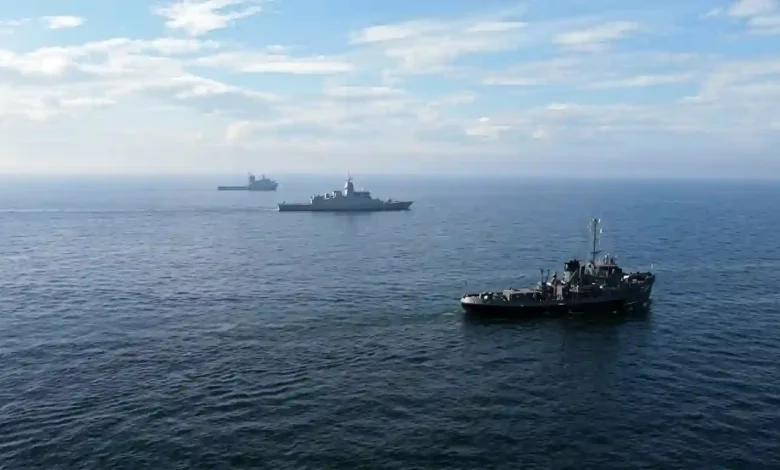
Table of Contents
Iran claims that a Ukrainian military strike on an Iranian commercial vessel in the Caspian Sea has killed a sailor and injured another, marking a dramatic and unprecedented expansion of European conflict dynamics into Central Asia. This sudden maritime confrontation coincides with a sharp rise in tensions across the Middle East, as the United States State Department simultaneously condemns escalating violence by ‘all parties’ in the occupied West Bank. Together, these two developments illustrate the deeply interconnected and globalized nature of modern conflict. While Kyiv is increasingly pushing its long-range offensive capabilities into the crucial strategic waters of the Caspian Sea, the occupied West Bank is experiencing some of its most severe instability in recent years, with widespread raids, mass detentions, and violent skirmishes between Israeli settlers and Palestinian communities.
The sudden geographical spread of these crises highlights how isolated local conflicts are morphing into a singular, highly integrated global confrontation. In the north, the Caspian Sea—historically considered a secure and remote backyard for joint Russian and Iranian economic partnerships—is now an active frontline. In the Levant, the West Bank represents a historical powder keg that continues to destabilize the broader region. The diplomatic fallout from both theaters is immense, with regional powers warning of unchecked escalations that could drag major global players into direct military confrontations.
The Midnight Attack on the Caspian Sea Vessel
According to official statements from the Iranian Ministry of Foreign Affairs, the overnight drone strike occurred early on Saturday, resulting in a sudden and powerful explosion aboard an Iranian commercial cargo ship navigating the Caspian Sea. The blast instantly killed one sailor and inflicted serious injuries on another crew member. While Tehran has historically maintained a posture of diplomatic distancing from the active European combat zone, this direct strike on its merchant shipping has forced a dramatic shift in its rhetoric. Local authorities immediately characterized the incident as a highly provocative ‘act of aggression’ that directly targeted civilian trade. The attack marks a milestone in Ukrainian long-range capabilities, proving that Kyiv can now project military power thousands of miles away into a secure inland sea.
Prior to this northern escalation, the region witnessed consecutive days of intense military pressure, including U.S. strikes on Iran that targeted southern military facilities and proxy networks. The drone strike in the north complicates an already volatile environment, especially as hostilities escalate and the tentative U.S.-Iran ceasefire collapses in different sectors. While direct military pressure continues to mount, the Washington-Tehran dialogue remains fragile but operational as both sides seek to prevent a total descent into regional war.
Tehran’s Diplomatic Protest and Summoning of Kyiv’s Envoy
Following the incident, the Assistant Foreign Minister and Director General for Eurasia, Manouchehr Moradi, officially summoned Ukraine’s chargé d’affaires in Tehran to lodge an extremely strong protest. Moradi conveyed that the Islamic Republic views the strike as a blatant violation of international law, specifically pointing to Article 2(4) of the United Nations Charter, which prohibits the threat or use of force against the territorial integrity or political independence of any state. Iranian Foreign Minister Abbas Araghchi also held an emergency telephone conversation with Kaja Kallas, the European Union’s High Representative for Foreign Affairs, demanding that the international community hold Kyiv accountable. Tehran warned that any future attacks on its citizens or property will not go unanswered, asserting that it possesses the full legal right to defend its sovereign national interests. This northern security threat exposes vulnerabilities for Tehran, particularly since the Strait of Hormuz conflict escalates periodically, disrupting traditional energy supply lines.
Kyiv’s Perspective: Sanctioned Cargo and Long-Range Strikes
In Ukraine, President Volodymyr Zelenskyy seemingly acknowledged the operation, celebrating what he termed ‘very strong results’ with long-range strikes in the Caspian Sea. Zelenskyy noted that Ukrainian forces successfully targeted several vessels involved in transporting vital military cargo linked to Iran, as well as a prominent Russian warship operating in the area. Concurrently, the Ukrainian Security Service (SBU) released a statement on Telegram confirming that targeted drone operations had been executed against specific cargo vessels that are currently under international sanctions. According to Kyiv’s intelligence apparatus, these targeted ships were actively being utilized as a strategic logistics bridge to transport military hardware, including Iranian-manufactured Shahed drones and ammunition, to assist the Russian military effort in Ukraine.
This northern security threat exposes vulnerabilities for Tehran, particularly as the Caspian Sea has become an increasingly vital alternative trade corridor for Tehran, especially as the U.S. blockade on Iran has heavily restricted southern maritime transit. With global maritime corridors already suffering disruptions, including the ongoing Red Sea shipping crisis, the extension of active conflict zones to the inland Caspian Sea presents a severe risk.
The Strategic Geopolitics of the Caspian Sea
The Caspian Sea is an inland body of water bordered by five nations: Russia, Iran, Azerbaijan, Kazakhstan, and Turkmenistan. For centuries, its geographic isolation made it virtually immune to Western naval projection, turning it into a secure geopolitical sanctuary. However, the ongoing war in Ukraine has transformed the Caspian into a crucial logistics corridor. Commercial shipping lanes across this inland sea allow Russia and Iran to trade directly without interference from international blockades. By hitting vessels in this specific region, Ukraine is not only attempting to disrupt the flow of military cargo to Russia but is also signaling that no geographic sanctuary is entirely safe from its domestic drone technology.
These strikes come at a highly sensitive diplomatic juncture. Even as local diplomatic efforts proceed, Trump’s massive attack threat against Iranian infrastructure remains a critical element of Washington’s foreign policy leverage. Market analysts warn that the geographical spread of military engagements could trigger further instability in energy prices, similar to when gasoline prices climb globally due to geopolitical tensions.
Bypassing Blockades: Why the Caspian Ports Matter to Iran
Iran’s northern ports along the Caspian coast, such as Amirabad and Anzali, have experienced a massive surge in commercial traffic over the last few years. These northern routes provide a lifeline for the Iranian economy, allowing the exchange of agricultural goods, industrial machinery, and energy products with Russia. Because the southern maritime trade routes are heavily policed by Western coalitions, the northern corridor represents a vital economic safe haven. A sustained Ukrainian threat in the Caspian Sea could severely disrupt this economic lifeline, adding unprecedented domestic pressure on Tehran’s leadership. The risk of a complete shutdown of these northern trading veins is forcing Iranian planners to reconsider their maritime defense architecture and invest in stronger air defense systems along their northern territorial borders.
Russian Satellites and Gulf Intelligence Claims
Adding a further layer of complexity to the Caspian incident, President Zelenskyy accused Russia of actively sharing its advanced satellite surveillance observations with Tehran. Zelenskyy claimed that Moscow has been tracking U.S. military installations and Gulf state facilities since early July, passing the raw intelligence data directly to Iran to help direct precision strikes in the Middle East. These allegations, if verified, represent a profound deepening of the military alliance between Russia and Iran, showing that the strategic partnership extends far beyond the mere trade of single-use attack drones into the realm of real-time intelligence sharing. This technological cooperation represents a massive challenge for Western defense planners, who must now account for Russian orbital assets directly aiding Iranian regional operations.
Escalating Violence in the Occupied West Bank
While northern waters face new military threats, the occupied West Bank is witnessing an intense surge in violence that has prompted sharp warnings from international observers. Over the past several days, Israeli military operations and settler-led raids have escalated drastically across multiple Palestinian towns and villages. The Palestinian Authority has warned that the unchecked expansion of illegal settlements, combined with highly aggressive military incursions, is rapidly pushing the territory toward a state of complete collapse. Local communities are increasingly organizing civilian defense units to confront these raids, creating a highly volatile cycle of retaliatory violence that threatens to ignite a broader uprising across the entire region.
The U.S. State Department’s Multi-Lateral Condemnation
In response to the deteriorating security situation, the United States State Department issued a formal statement condemning the rising violence ‘by all parties’ in the West Bank. A State Department spokesperson emphasized that Washington is in continuous, regular dialogue with regional partners to discuss practical measures to restore stability and security. The spokesperson highlighted that a stable and secure West Bank is essential for Israel’s long-term national security and aligns with the current administration’s strategic objective to foster a sustainable peace framework in the region. However, critics argue that the ‘all parties’ framing oversimplifies a highly asymmetrical conflict characterized by state-supported settler expansion, arguing that the statement avoids holding the primary aggressors directly accountable.
Raids, Detentions, and the Humanitarian Toll in Tell
The human cost of this escalation is vividly illustrated by recent events in the northern West Bank town of Tell, located near Nablus. For consecutive days, Israeli occupiers, heavily protected by army units, raided the town, razing agricultural land and installing unauthorized mobile structures. In the ensuing clashes, four Palestinian residents were killed, and four others sustained critical injuries. During the intense confrontation, two Israelis were also killed in a shooting incident. Concurrently, Israeli security forces executed massive sweeping operations across the West Bank, detaining at least 70 Palestinians in a series of highly coordinated raids, while separate attacks by illegal occupiers left at least eight other Palestinians injured. These actions have drawn widespread condemnation from human rights organizations, who warn of a mounting humanitarian crisis and a systemic failure of local security protocols.
Comparative Geopolitical Impact: Caspian Sea vs. West Bank
When analyzed side-by-side, the Caspian Sea attack and the West Bank escalation reflect two distinct yet interconnected dimensions of a fractured global order. The Caspian incident represents a direct clash between a European state (Ukraine) and a Middle Eastern power (Iran), demonstrating how localized conflicts can spill across vast geographic boundaries through advanced technological warfare. Conversely, the West Bank escalation represents a localized, highly asymmetric territorial struggle that continues to draw in global superpowers like the United States due to its profound implications for regional stability. As both crises continue to unfold, the international community faces the daunting task of managing multiple, overlapping geopolitical flashpoints that threaten to reshape the global security landscape.
Geopolitical Summary Table
| Feature / Dimension | Caspian Sea Incident | West Bank Escalation |
|---|---|---|
| Geographic Theater | Caspian Sea (Inland body of water bordering Iran & Russia) | Occupied West Bank (Tell, near Nablus, and other towns) |
| Primary Actors | Iran vs. Ukraine (with Russian strategic undercurrents) | Israeli military/occupiers vs. Palestinian residents |
| Direct Casualties | 1 Iranian sailor killed, 1 crew member injured | At least 4 Palestinians killed, multiple injured; 2 Israelis killed |
| Primary Accusations | Tehran accuses Kyiv of aggression and violating UN Charter Article 2(4) | Palestinian authorities condemn land confiscation; US condemns violence by “all parties” |
| Key Diplomatic Actions | Iran summons Ukraine’s chargé d’affaires; appeals to EU and UNSC | US State Department issues direct statements and holds regional dialogues |
| Strategic Impact | Threatens northern trade routes; links Middle East tensions to European war | Threatens long-term stability; undermines prospects for a two-state solution |