Voting Rights March on Washington Announced for August 2026
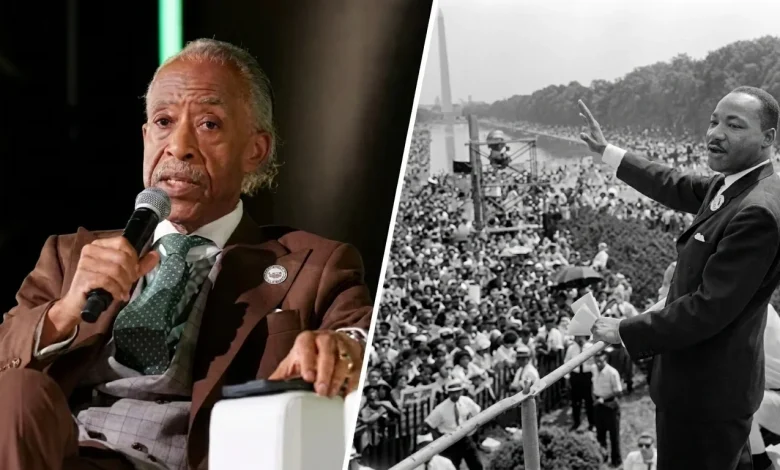
Table of Contents
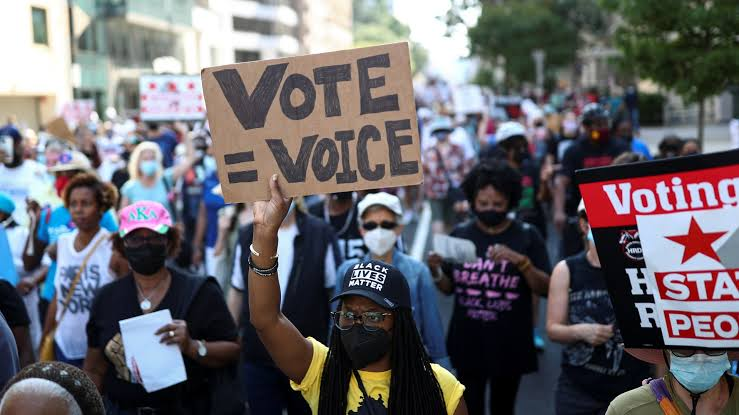
Voting rights coalition leaders have officially announced plans for a major march in Washington, D.C., scheduled for August 28, 2026. This announcement, made in Chicago, comes in response to a string of federal court decisions that civil rights groups argue have systematically eroded historical protections against racial discrimination in elections. Led by the Reverend Al Sharpton’s National Action Network (NAN), the coalition includes Martin Luther King III, Arndrea Waters King, and a diverse array of labor, civil, and human rights organizations. Under the banner “March on Washington 2026: Defend the Vote,” the upcoming demonstration is poised to become one of the most significant political gatherings of the decade. This collective outcry has been prompted by a long line of judicial developments that advocates claim hollow out the very core of the Voting Rights Act of 1965.
A Historic Call to Action: The March on Washington 2026
Organizers envision the demonstration as both a mass protest and a coordinated legislative pressure campaign. The central goal is to urge federal lawmakers to enact statutory protections that bypass judicial rollbacks. Over the last decade, advocates have repeatedly urged Congress to pass federal voting protections, but these efforts have consistently stalled. For instance, the voting rights Senator Warnock sounds alarm speech highlighted the existential threat to federal oversight when local jurisdictions began enacting restrictive voting protocols. The August 28 demonstration will serve as a physical manifestation of this ongoing alarm, drawing together hundreds of thousands of voters, community organizers, faith leaders, and labor advocates from across the country to demand action.
With political temperatures running high ahead of critical national elections, organizers believe that direct public mobilization is the only way to break the legislative gridlock in Washington. The coalition has declared that the event will not merely be a retrospective commemoration of historical civil rights victories, but a forward-looking mandate for reform.
The Legal Catalyst: The Demise of Section 2 in Louisiana v. Callais
The immediate catalyst for the 2026 march is a highly controversial ruling delivered by the U.S. Supreme Court on April 29, 2026, in the case of Louisiana v. Callais. In a 6–3 decision, the conservative majority struck down a majority-Black congressional district in Louisiana, ruling that the state legislature’s reliance on racial demographics to construct the map constituted an unconstitutional racial gerrymander under the Equal Protection Clause. This decision represented a dramatic reinterpretation of Section 2 of the Voting Rights Act of 1965, which has historically been utilized to challenge electoral maps that dilute minority voting power.
By restricting the circumstances under which states can consciously draw districts to ensure equitable minority representation, the Court has effectively made it much more difficult to challenge racially discriminatory boundaries. Civil rights advocates, legal scholars, and progressive lawmakers have decried the ruling, viewing it as the latest and perhaps most devastating blow to the legislative crown jewels of the civil rights movement.
Breaking Down the Louisiana v. Callais Ruling
To understand the magnitude of the 2026 march, it is essential to examine the legal mechanics of the Louisiana v. Callais decision. Section 2 of the Voting Rights Act was originally designed to prevent states from implementing voting practices that result in a denial or abridgment of the right to vote on account of race. Over the decades, this has been interpreted to require the creation of majority-minority districts when racial polarization in voting would otherwise prevent minority communities from electing candidates of their choice. However, as noted in the official database of The Supreme Court of the United States, the conservative majority has increasingly prioritized colorblindness over remedial racial representation.
In the majority opinion for Louisiana v. Callais, the Court ruled that compliance with the Voting Rights Act does not automatically provide a compelling state interest that justifies the intentional use of race as the predominant factor in map-making. This creates a regulatory catch-22 for mapmakers who are forced to balance the mandates of Section 2 with the court’s strict limits on racial considerations. The decision has effectively dismantled decades of bipartisan legal consensus, leaving minority representation highly vulnerable.
The Broader Fallout for Voting Maps and Representation
The consequences of this ruling are already reverberating across state capitals. With the legal threshold for establishing a Section 2 violation significantly raised, several Southern states have begun reviewing their congressional and legislative maps with an eye toward dismantling districts that favor minority voters. As new officials are appointed to legislative seats across various state assemblies, the partisan makeups of these bodies are shifting, which directly impacts the map-drawing process. Activists warn that without a legislative remedy, the 2026 midterms could see a massive reduction in Black and Latino representation in the House of Representatives.
This is not isolated to any single region; we have seen instances of highly contentious partisan redistricting efforts in states like Maryland, where boundaries are redrawn to minimize political competition. Under the new judicial paradigm, state legislatures are granted immense latitude to reshape districts under the guise of partisan advantage, even if those actions heavily dilute minority voting power.
Bridging the Past and Present: The 63rd Anniversary of MLK’s Speech
Scheduled for August 28, the “March on Washington 2026: Defend the Vote” carries deep symbolic weight. August 28, 2026, marks the 63rd anniversary of the historic 1963 March on Washington for Jobs and Freedom, the legendary demonstration where the Reverend Dr. Martin Luther King Jr. delivered his iconic “I Have a Dream” speech. By aligning the 2026 march with this historic date, organizers are deliberately drawing a direct line between the original struggle against Jim Crow disenfranchisement and the modern battle against sophisticated electoral barriers.
Martin Luther King III, Dr. King’s eldest son, emphasized this connection in a national statement, declaring, “Defending the vote means defending the foundation of our democracy. Sixty-three years after my father stood at the Lincoln Memorial, we are called to march again, not only in remembrance, but in action.”
The Legacy of 1963 vs. the Realities of 2026
While the 1963 march focused on securing the basic franchise and dismantling legal segregation, the 2026 demonstration addresses systemic, structural obstacles that are often far more subtle but equally effective at reducing minority political power. These modern challenges include stringent voter identification laws, the closure of polling places in predominantly minority neighborhoods, limits on mail-in and early voting, and aggressive voter roll purges.
These conflicts are mirroring a broader trend in the legal system where constitutional principles are tested. Similar to how individuals initiate civil rights legal battles within educational environments to demand equality, voting rights advocates are targeting the courts as the primary venue for seeking justice. However, with the federal judiciary increasingly hostile to progressive voting protections, the battleground has expanded to public mobilization and the streets of the nation’s capital.
Key Coalitions Mobilizing for the Demonstration
The National Action Network has successfully assembled a broad and potent multi-racial coalition to coordinate the logistics of the march. Alongside NAN and the Drum Major Institute, major organizations such as the NAACP, the National Urban League, and the League of United Latin American Citizens (LULAC) have pledged their full resources. Organized labor is also playing a critical role, with major unions mobilizing their memberships to travel to Washington, D.C.
By uniting labor rights, civil rights, and electoral advocacy, the coalition aims to recreate the broad-based solidarity of the original civil rights movement. Organizers are also focusing heavily on engaging youth organizations, climate justice groups, and immigrant advocacy networks, recognizing that voting access is the common denominator that unites all progressive legislative agendas.
Political and Legislative Counter-arguments
As civil rights leaders prepare for a massive turnout, the political debate surrounding the Supreme Court’s redistricting decisions remains highly polarized. Conservative lawmakers and conservative legal organizations have vigorously defended the Supreme Court’s recent rulings. They argue that the practice of deliberately drawing districts based on racial demographics violates the principle of colorblindness enshrined in the U.S. Constitution.
According to this perspective, redistricting plans that prioritize race are inherently divisive and run counter to the goal of a post-racial society. Proponents of the Callais decision maintain that electoral maps should be drawn based on geographic proximity, community boundaries, and political subdivisions, rather than race-conscious metrics.
Proponents of the Ruling vs. Civil Rights Leaders
This intellectual and political divide highlights the core philosophical disagreement over how to achieve true equality in America. Opponents of race-conscious mapping argue that the Voting Rights Act was intended to be a temporary measure to correct historical injustices, not a permanent mandate for racial quotas in legislative bodies. They claim that minority candidates are increasingly capable of winning in districts that are not majority-minority, rendering Section 2 protections obsolete.
Civil rights leaders have countered this narrative with intense criticism. Rev. Al Sharpton famously characterized the Supreme Court’s recent jurisprudence as “a bullet in the heart of the voting rights movement.” Activists argue that the conservative-majority courts have consistently favored a literalist and state-centric approach, echoing previous legal battles over federal protections where executive authority and state-level policy overrides were upheld at the expense of vulnerable populations.
Comparative Analysis of Voting Rights Legislation
To contextualize the current crisis, it is helpful to look at how voting rights jurisprudence has evolved over the past several decades. The table below illustrates the key milestones, the specific legal issues at stake, and how they have impacted minority political power.
| Year | Key Milestone / Ruling | Primary Legal Issue | Impact on Voting Rights Protection |
|---|---|---|---|
| 1965 | Voting Rights Act Passed | Established Section 5 (preclearance) and Section 2 (anti-discrimination) | Provided robust federal protection and historic increases in minority voter registration. |
| 2013 | Shelby County v. Holder | Struck down Section 4(b) coverage formula for federal preclearance | Deactivated Section 5, allowing states to change election rules without federal review. |
| 2021 | Brnovich v. DNC | Interpreted Section 2 limits regarding state voting restrictions | Narrowed the ability of plaintiffs to challenge discriminatory voting rules under Section 2. |
| 2026 | Louisiana v. Callais | Challenged majority-Black district under Equal Protection Clause | Weakened Section 2 protection against map dilution; struck down majority-Black district. |
Mobilization and Economic Realities of Modern Civil Rights
Organizing a modern march of this scale presents unique technological and logistical challenges. To reach younger demographics and maintain momentum, modern civil rights organizers have increasingly relied on digital outreach. This shift highlights the growing social media impact on youth, which has been both an organizing superpower and a source of extensive legal scrutiny regarding modern safety standards. By using digital platforms, the National Action Network hopes to coordinate decentralized local chapters and facilitate transportation for thousands of attendees.
However, organizing efforts must also navigate the material economic realities facing working-class Americans. For many working-class families, the logistical realities of traveling to protest or even to vote are compounded by broader economic volatility challenges. Rising daily costs make participation in democracy a disproportionately heavy burden for marginalized groups, meaning that the coalition must also raise substantial funds to subsidize travel and lodging for attendees from across the country.
The Road to August 28: What to Expect in Washington
Despite overwhelming public outcry from organizers, legislative solutions face an uphill battle in a deeply divided Congress. The political gridlock, underscored by intense congressional leadership debates, has effectively foreclosed any immediate possibility of passing the John Lewis Voting Rights Advancement Act. Nevertheless, organizers believe that the mass gathering on August 28, 2026, will send an unmistakable signal to both major political parties.
As the nation approaches another consequential electoral cycle, the “March on Washington 2026: Defend the Vote” represents a vital effort to reclaim the moral high ground of the American democratic experiment. By converging on the Lincoln Memorial steps, a new generation of advocates hopes to reaffirm that the right to vote remains the ultimate guardian of all civil liberties.