Kent Carpenter Shot Dead in Philippines: Task Force Probes Killing
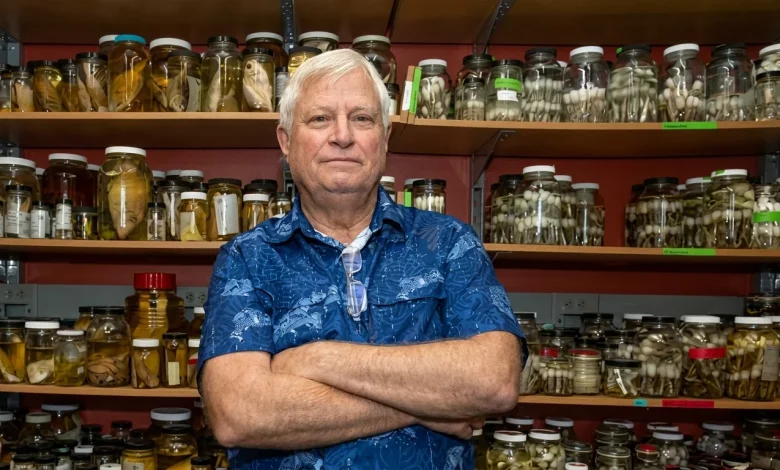
Table of Contents
Kent Carpenter, a highly distinguished American marine biologist who dedicated his life to documenting and protecting the richest coral reef ecosystems in the world, has been tragically shot dead in his home in the central Philippines. This devastating news has sent shockwaves through both the international scientific community and the local population of Negros Oriental province, where Dr. Carpenter had made a second home. The 73-year-old scholar, celebrated for his peerless contributions to tropical marine ecology, was in his residence in the quiet coastal town of Sibulan on the night of July 12, 2026, when masked intruders breached the property. According to local police reports, a swift and brutal home invasion ended with the scientist losing his life instantly to a gunshot wound to the head, leaving behind a profound legacy and a highly complex criminal investigation.
While news of tragedies involving expats can sometimes draw parallels to Regal Princess crewmember dies reports or other isolated overseas incidents, this specific crime has deeply shaken both the local community and global academia. Dr. Carpenter’s untimely death occurs just months before his planned retirement in September, cutting short a fifty-year career that fundamentally reshaped how the world prioritizes marine conservation. As the Philippine National Police (PNP) mobilize specialized resources to crack the case, details are beginning to emerge regarding the final moments of Dr. Carpenter’s life, the subsequent police action, and the deep sorrow felt by his academic peers across the globe.
The Fatal Incident in Sibulan
The coastal municipality of Sibulan, known for its tranquil beaches and proximity to academic hubs like Dumaguete City, became the scene of a horrifying crime on Sunday night. Dr. Carpenter was inside his residence in Purok 3, Barangay Ajong, accompanied by his 34-year-old Filipina partner. According to law enforcement officials, the residence, situated along the scenic coast of Negros Oriental, was targeted by three unidentified men wearing face coverings and bonnets. The men forced their way into the house at approximately 11:30 PM, disrupting a quiet evening as the couple sat watching television.
Details of the Home Invasion
The speed and violence of the home invasion caught the household completely off guard. Upon gaining entry, one of the three armed perpetrators drew a handgun, pointed it at Dr. Carpenter, and fired a single shot directly into his head. The renowned marine biologist died instantly at the scene. The suspects then proceeded to ransack the immediate vicinity, seizing several valuable items, including a laptop, an unspecified sum of hard cash, and a personal backpack, before fleeing into the night. Such sudden deaths of foreigners in scenic areas are always shocking, recalling situations like the tragic Grand Canyon hiker deaths where nature or crime abruptly cuts lives short, prompting intense domestic and international scrutiny.
A Partner Named as Person of Interest
In the initial aftermath of the shooting, Dr. Carpenter’s companion served as the primary witness, recounting the harrowing events to the police. She was also treated for unspecified injuries sustained during the violent encounter. However, the investigation took a major turn on Wednesday when the Negros Oriental Police officially identified her as one of the primary “persons of interest” (POIs) in the ongoing homicide probe. Investigators have confirmed that they are exploring all angles, including the possibility of an inside job or alternative motives beyond a simple burglary. This development has added a layer of complexity to an already high-profile international case.
Furthermore, details emerged from the police regional office indicating that the companion had allegedly been subjected to a sexual assault during the execution of the crime. She is currently under the care of the Women and Children Protection Desk of the local police, where forensic and medical evaluations are being conducted. The investigation into this personal tragedy happens amidst a backdrop where trust and security are vital, much like high-stakes public concerns ranging from healthcare crises to administrative policies like the Endangered Species Act rollback under the Trump administration, which also ignited debates over protection and vulnerability.
SITG Carpenter: The Police Investigation
Recognizing the gravity of the incident and Dr. Carpenter’s international standing, the Philippine National Police have established a specialized task group named “Special Investigation Task Group (SITG) Carpenter”. This task force is charged with coordinating the search for the perpetrators, verifying witness statements, and analyzing the physical evidence recovered from the home in Barangay Ajong. Directed by Brig. Gen. Romano Cardiño, the regional police force has vowed to spare no effort in bringing those responsible to justice.
Valuables Stolen and Forensic Backtracking
SITG Carpenter is composed of a multidisciplinary team of legal and law enforcement experts. This includes personnel from the Negros Oriental Police Provincial Office (NORPPO), the Criminal Investigation and Detection Group (CIDG), the Scene of the Crime Operatives (SOCO), and the Provincial Anti-Cybercrime Team. The anti-cybercrime unit has been specifically tasked with tracking the digital footprint of the stolen laptop, which may contain critical research, communication logs, or geolocation data that could lead to the suspects. Just as state officials work around the clock to contain unexpected biological or viral public safety hazards—such as when a lettuce outbreak of cyclosporiasis occurs—SITG Carpenter is leaving no stone unturned in examining forensic biological evidence at the crime scene.
At present, investigators are performing extensive backtracking and forward-tracking operations. This involves reviewing closed-circuit television (CCTV) footage from surrounding areas in Sibulan, interviewing potential witnesses who may have spotted suspicious individuals in Barangay Ajong before the 11:30 PM break-in, and reconstructing the exact movements of the suspects. The town of Sibulan, positioned along the coastal corridor, represents a strategic transit point, not unlike international maritime zones where security forces combat threats like when a narcoterrorist boat strikes US military craft in high-stakes confrontations.
Who Was Dr. Kent E. Carpenter?

Dr. Kent E. Carpenter was far more than an expatriate academic living in the Philippines; he was a global titan in the field of marine biology and conservation. Born in 1953, Carpenter arrived in the Philippines at the age of 22, shortly after graduating from the Florida Institute of Technology with a Bachelor of Science in Marine Biology. Assigned by the Peace Corps to the Philippine Bureau of Fisheries and Aquatic Resources, he was tasked with leading coral reef research across the country’s vast archipelago. This early experience initiated a life-long love affair with the marine ecosystems of Southeast Asia, which eventually culminated in a PhD in Zoology from the University of Hawaiʻi in 1985.
Pioneering the ‘Center of the Center’ of Marine Biodiversity
Throughout his five-decade career, Dr. Carpenter published numerous landmark papers, but none were as revolutionary as his mapping of nearly 3,000 marine species in the Philippine archipelago. His meticulous research proved that the central waters of the Philippines—specifically the Verde Island Passage (VIP)—represent the absolute epicenter of the world’s marine shore-fish biodiversity. Dr. Carpenter famously coined the phrase “Center of the Center” of marine biodiversity to describe this unique marine corridor. This scientific breakthrough completely altered how global conservation organizations, including the International Union for Conservation of Nature (IUCN), prioritize their environmental funding and protection strategies.
Whenever a prominent figure dies under violent or unexplained circumstances, there is a global call for meticulous justice, echoing similar cases where police investigate death of beloved figures under highly suspicious circumstances. Dr. Carpenter’s research was not just academically prestigious; it also carried enormous geopolitical significance. His extensive documentation of reef systems and marine life in the West Philippine Sea provided critical, high-quality scientific data that backed the Philippines’ legal arguments in its historic 2016 South China Sea arbitral ruling. By proving the ecological value and fragile nature of these reefs, his work helped protect sovereignty through the power of science.
An Academic Legacy at Old Dominion and Silliman
Since 1996, Dr. Carpenter had been a beloved Professor of Biological Sciences at Old Dominion University (ODU) in Norfolk, Virginia. He also served as the director of ODU’s Global Marine Species Assessment, where he led a comprehensive review of the conservation status of approximately 20,000 marine species. In the Philippines, he was an adjunct professor and senior research associate at Silliman University’s Institute of Environmental and Marine Sciences (IEMS) in Dumaguete City, fostering deep ties with Filipino students and local conservationists.
In any complex system, whether dealing with ecological networks or investigating high-level corporate and political conspiracies, the truth requires painstaking dedication, similar to how investigators unravel complex blackmail allegations in elite legal battles. Dr. Carpenter’s scientific rigor was legendary. He had two distinct fish species named in his honor: the “Carpenter’s flasher wrasse” (Paracheilinus carpenteri) and the “Carpenter’s Yellowtop Jewelfish” (Meganthias carpenteri), ensuring his name will live on in taxonomy books forever.
Security Dynamics and Challenges for Expatriate Researchers
The tragic slaying of Dr. Carpenter has raised serious questions regarding the security of international scientists and academics who choose to conduct field research in developing nations. While the central Philippines is celebrated for its warm hospitality and breathtaking biodiversity, it also presents unique security risks for expatriates living in secluded coastal areas. The vulnerability of researchers, who often live in rural communities to remain close to their study sites, makes them easy targets for criminal elements.
Just as medical institutions analyze systemic gaps, highlighted by studies on cancer disparities in the US, ecological institutions also face challenges in funding and protecting their scientists on the ground. When research institutes place highly specialized minds in remote regions, they must account for local security situations, socio-economic disparities, and the coordination of security measures with local municipal police forces.
The Scientific Community Mourns a Monumental Loss
Following the news of his death, tributes have poured in from around the globe. Organizations such as the Advocates of Science and Technology for the People (Agham), Silliman University, and Old Dominion University have released moving statements honoring Dr. Carpenter. “He dedicated his career to expanding our understanding of the world’s bodies of water and protecting some of its most vulnerable ecosystems,” said ODU President Brian Hemphill. Colleagues remember him not only as a brilliant researcher but as a generous mentor who treated his students as equals and consistently empowered local Filipino scientists to lead conservation efforts.
As the scientific community grieves, the focus remains firmly on Negros Oriental authorities. The US Embassy in Manila has been notified, and pressure is building on the Philippine government to deliver swift justice. Dr. Kent Carpenter spent his life giving a voice to the voiceless depths of our oceans; today, the global scientific community demands that his own voice is not silenced by a senseless act of violence.
| Key Fact Category | Details & Specifications |
|---|---|
| Victim | Dr. Kent E. Carpenter, age 73 |
| Date of Incident | Sunday, July 12, 2026, approximately 11:30 PM |
| Location | Barangay Ajong, Sibulan, Negros Oriental, Philippines |
| Primary Affiliations | Old Dominion University (Norfolk, VA), Silliman University (Philippines) |
| Major Scientific Achievement | Identified the Verde Island Passage as the “Center of the Center” of global marine shore-fish biodiversity |
| Investigation Task Group | SITG Carpenter (led by PNP, NORPPO, CIDG, and cybercrime units) |
| Stolen Property | A laptop, cash, and a backpack |