Gates Epstein Testimony 2026: Unpacking the Blackmail Revelations
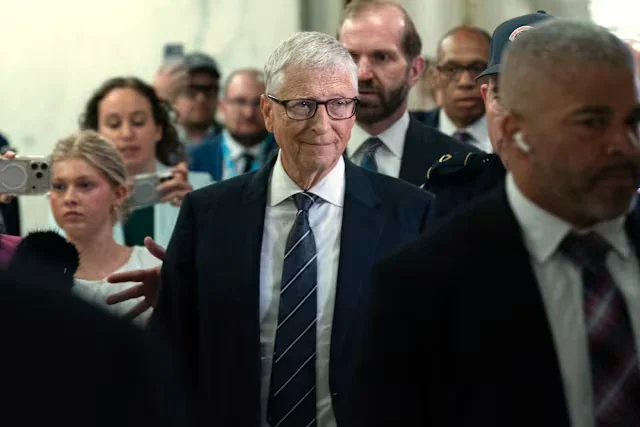
Gates, the Microsoft co-founder and world-renowned philanthropist, recently sat for an intensive, hours-long deposition where he detailed his past connections to convicted sex offender Jeffrey Epstein. The newly released transcript of his closed-door testimony before the House Oversight Committee sheds significant light on how the late financier attempted to weaponize personal information to gain leverage over one of the world’s wealthiest figures. According to the document, Epstein sought to exploit his knowledge of multiple extramarital affairs that Gates engaged in during his marriage to Melinda French Gates. While Gates insisted that he was never directly blackmailed, the nature of his interactions with Epstein suggests a calculated effort to manipulate him through veiled threats.
Testimony:The Congressional Testimony of Bill Gates
The release of the full transcript of Gates’ interview with congressional investigators on June 10, 2026, marks a pivotal moment in the ongoing federal investigation into Epstein’s extensive network of influential associates. For years, the public had been aware of a connection between Gates and Epstein, which Gates had previously categorized as a “huge mistake” dedicated solely to fruitless philanthropic discussions. However, the details revealed in the transcript paint a much more complex and troubling picture. Gates’ testimony, spanning nearly six hours, directly addresses allegations that Epstein sought to use intimate details of Gates’ personal life to rehabilitate his own ruined reputation in the aftermath of his 2008 sex crimes conviction.
During the congressional inquiry, lawmakers confronted Gates with internal communications, emails, and financial records recovered from Epstein’s estate and the Department of Justice’s files. The documents suggest that Epstein was deeply interested in establishing a proprietary relationship with the Gates Foundation and using Gates’ global influence to build an image of legitimacy. In his testimony, Gates admitted that he now recognizes Epstein’s true motives, acknowledging that the financier attempted to wrap himself in the prestige of highly respected individuals to deflect public scrutiny and bypass legal accountability.
Testimony:Behind the Closed-Doors Hearing
The interview was conducted in a highly secure, closed-door environment, reflecting the sensitivity of the matters being discussed. Members of the House Oversight Committee pushed Gates on why he maintained communications with Epstein from 2011 until approximately 2014, a period that began long after Epstein had been registered as a sex offender. Gates explained that his rationale was based entirely on the prospect of securing billions of dollars in global health funding. Epstein had proposed a structure that would leverage the Gates Foundation’s operational expertise to channel massive donations from other ultra-wealthy individuals.
Despite these extensive discussions, no philanthropic funding ever materialized. Gates told investigators that as time went on, he began to realize that Epstein’s proposals were empty promises. However, by the time Gates cut ties with Epstein in late 2014, the financier had already gathered sensitive details about Gates’ private conduct—information that Epstein would later attempt to use as leverage.
Testimony:The Extramarital Affairs Disclosed Under Oath
In his testimony, Gates was forced to address highly sensitive aspects of his personal life, ultimately admitting to multiple extramarital affairs. These disclosures provide crucial context to the leverage Epstein believed he held over the tech billionaire. While Gates had previously admitted to foundation staff that he had been involved in two affairs, his congressional testimony expanded on these admissions, confirming a third relationship and identifying the individuals involved by name.
Gates confirmed that he had informed Melinda French Gates about these relationships prior to 2013, well before their highly publicized divorce in 2021. He emphasized that none of the women were introduced to him by Epstein, debunking theories that Epstein had intentionally orchestrated these affairs to compromise him. Instead, Epstein discovered the infidelities through secondary channels and actively sought to weaponize them after the fact.
Testimony:Mila Antonova and Karima Nigmatulina
Two of the women named in the testimony are Russian citizens: Mila Antonova, a professional bridge player, and Karima Nigmatulina, a nuclear physicist. Gates explained that he met Antonova at a bridge tournament in 2009, and the two subsequently engaged in a brief relationship. Epstein later crossed paths with Antonova when she was seeking funding for a bridge-related business venture. Although Epstein did not invest in her business, he paid for her tuition at a software coding school, a financial favor that he would later attempt to use against Gates.
The second relationship involved Karima Nigmatulina, a highly accomplished nuclear scientist. Gates’ association with Nigmatulina was also discovered by Epstein. In both cases, Epstein kept detailed records of his communications with the women and his knowledge of their interactions with Gates. The tech mogul admitted to lawmakers that Epstein appeared to maintain a friendly relationship with Antonova, using that familiarity to stay informed about her life and her connection to Gates.
Dr. Alice Jacobs Nesselrodt and the Extent of Infidelities
In addition to the two Russian nationals, Gates acknowledged a prior relationship with Dr. Alice Jacobs Nesselrodt, a Harvard-trained medical entrepreneur. When shown a confidential document from Epstein’s files referencing Dr. Jacobs as a topic that “must remain between us,” Gates confirmed that his affair with her likely fell into that category of sensitive information. This third disclosure highlights the systematic manner in which Epstein collected files on Gates’ personal life, creating a ledger of secrets that could be deployed whenever Gates resisted his financial overtures.
How Jeffrey Epstein Acquired Leverage
The mechanisms by which Epstein acquired this sensitive information have been a primary focus of congressional investigators. Gates’ testimony suggests that Epstein did not rely on complex surveillance operations; instead, he exploited his connections within Gates’ inner circle. The chief source of Epstein’s intelligence appears to have been individuals closely associated with the administration of Gates’ personal and philanthropic ventures.
The systematic tracking of Gates’ movements, travel schedules, and personal meetings allowed Epstein to piece together a clear picture of Gates’ private infidelities. Investigators released emails showing that Epstein kept meticulous tabs on Gates’ travel, particularly his international trips to cities like London, where some of these private meetings took place. By inserting himself into the operational structure of Gates’ life, Epstein created a web of dependency and access.
The Role of Science Adviser Boris Nikolic
A crucial figure in this narrative is Dr. Boris Nikolic, who served as a science adviser to the Gates Foundation and was a close associate of Gates. According to Gates’ testimony, Nikolic was aware of the extramarital affairs, including specific private meetings in Europe. Emails released by the Justice Department show that when Nikolic was preparing to leave his position at the foundation, he sought Epstein’s counsel on negotiating a favorable financial exit package.
During these discussions, Epstein drafted a highly controversial email on behalf of Nikolic. The draft contained explicit references to facilitating Gates’ private trysts and assisting him with obtaining drugs. While Gates testified that he does not believe Nikolic actually sent the email or personally attempted to blackmail him, he described the draft as evidence of Epstein “musing” on how to use a mixture of facts and lies to gain leverage. The draft email was clearly designed to strengthen Nikolic’s negotiating position by threatening to expose Gates’ personal conduct if a generous package was not provided.
The “Contemplated Blackmail” and the Draft Emails
The most damning evidence of Epstein’s tactics comes from communications in which he directly referenced Gates’ personal relationships. Gates told the committee: “He never blackmailed me, but looking at these emails, it raises a serious probability that he contemplated blackmailing me”. This statement summarizes the delicate line Gates walked during his testimony, acknowledging the coercive nature of Epstein’s behavior while asserting that he did not submit to direct threats.
The draft emails represent a classic pressure tactic. By writing drafts that combined verifiable facts—such as Gates’ real relationships with Antonova and Nigmatulina—with sensationalized or false claims, Epstein created a weapon that could destroy Gates’ public reputation. Whether Epstein ever intended to send these specific emails or simply used them to intimidate Gates during private discussions remains a central question of the congressional investigation.
Reimbursement Requests as a Re-Engagement Tactic
In December 2014, after Gates had explicitly severed all ties with Epstein, he received a request from the financier demanding reimbursement for the tuition fees Epstein had paid on behalf of Mila Antonova. Gates refused to pay the sum, interpreting the request as a transparent attempt to force him back into communication. Gates recalled telling Epstein: “Look, if you think you’re going to get more money out of this, it’s not going to happen, and if that means you go out and talk to people about things, I will just bear the pain of that and deal with it”. This exchange demonstrates that Gates was fully aware of the threat of public exposure but chose to accept the potential damage rather than allow Epstein to maintain a hold over him.
Confronting the Fallout and the Divorce from Melinda French Gates
The fallout from Gates’ association with Epstein has been profound, both personally and professionally. The relationship is widely understood to have played a critical role in the breakdown of Gates’ 27-year marriage to Melinda French Gates. Melinda has previously described her own brief meeting with Epstein as “chilling,” noting that she felt he was personified evil and immediately questioned why her husband was associating with him.
The public release of the emails and the subsequent congressional testimony have forced Gates to repeatedly address the damage done to his reputation. At a town hall meeting with foundation staff following the initial release of the emails, Gates apologized for the connection, stating: “I did nothing illicit. I said nothing illicit.” Despite these reassurances, the revelation of multiple extramarital affairs and the potential for blackmail have cast a shadow over his legacy as a global philanthropist.
The Legacy of Philanthropy and Public Apologies
As Gates seeks to move past the controversy, his primary focus remains on the work of his foundation. He has expressed deep remorse for ever meeting Epstein, stating under oath that he wishes they had never crossed paths. “If the time I spent with Epstein lent him any credibility, I am deeply sorry,” Gates told lawmakers. The lesson of this saga serves as a cautionary tale of how even the most powerful individuals can be targeted by sophisticated bad actors seeking to exploit personal vulnerabilities for social and financial gain.
The table below summarizes the key individuals identified in the congressional testimony and their connection to the investigation:
| Individual | Role / Profession | Connection to the Testimony | Key Details |
|---|---|---|---|
| Jeffrey Epstein | Convicted Sex Offender (Deceased) | Attempted to use Gates’ personal affairs to gain leverage | Drafted emails, requested expense reimbursements as a re-engagement tactic |
| Boris Nikolic | Former Science Adviser | Alleged source of Epstein’s knowledge on Gates’ affairs | Drafted exit negotiation emails referencing Gates’ infidelities |
| Mila Antonova | Russian Bridge Player | Had an extramarital affair with Bill Gates | Met Gates at a tournament in 2009; Epstein offered to pay her coding school tuition and later sought reimbursement |
| Karima Nigmatulina | Russian Nuclear Physicist | Had an extramarital affair with Bill Gates | Revealed in testimony as one of the relationships Gates disclosed to Melinda |
| Dr. Alice Jacobs Nesselrodt | Harvard-trained Medical Entrepreneur | Had an extramarital affair with Bill Gates | Identified as the “doctor” mentioned in testimony; relationship occurred prior to 2010 |