Bill Pulte Named Acting DNI: Trump’s Intelligence Shake-Up
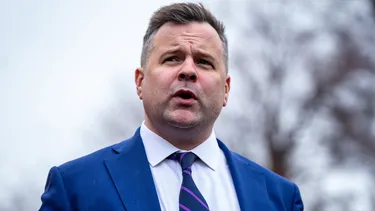
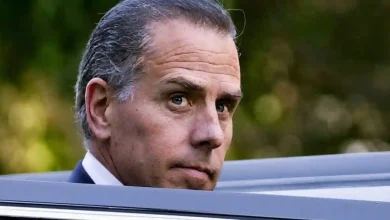
Bill Pulte, the administration’s chief housing regulator, who is due to take over as acting director of national intelligence by the end of the month, has Trump’s ear, shares his sense of urgency and is a regular presence at the White House and at Trump’s properties in Florida, according to sources familiar with the matter. President Donald Trump’s sudden announcement that he is tapping the Federal Housing Finance Agency (FHFA) Director to assume the role of Acting Director of National Intelligence (DNI) has sent shockwaves through Washington. The decision comes on the heels of Tulsi Gabbard’s resignation, leaving a critical vacancy at the apex of the U.S. intelligence community. Pulte, a 38-year-old businessman and scion of a prominent homebuilding empire, will dual-hat his responsibilities, retaining his grip on the nation’s mortgage giants, Fannie Mae and Freddie Mac, while simultaneously taking command of the country’s most powerful espionage and surveillance systems.
The appointment has immediately polarized lawmakers and national security veterans alike. For supporters, Pulte represents a trusted ally who brings private-sector efficiency and unwavering loyalty to a presidency that has often clashed with the “deep state.” For critics, however, placing a real estate investor with zero intelligence, military, or foreign policy experience at the helm of 18 separate intelligence agencies is not only unprecedented but dangerous. Former intelligence officers who served under both Republican and Democratic administrations worry about the implications of having a highly partisan figure, known for using his regulatory office to target political opponents, holding unfettered access to the nation’s most sensitive secrets.
The Unprecedented Appointment of Bill Pulte
The decision to appoint Bill Pulte as acting DNI has redefined the boundaries of political appointments in the modern era. Historically, the Office of the Director of National Intelligence (ODNI) has been led by individuals with deep-seated foreign policy, military, or intelligence credentials. This is not merely a matter of tradition; by law, the DNI is expected to have “extensive national security expertise.” Pulte’s resume, which features private equity management and housing regulation, is entirely devoid of such experience.
Despite this, President Trump has expressed absolute confidence in Pulte’s capability. In a post on Truth Social, the President highlighted Pulte’s experience managing over $10 trillion in assets at Fannie Mae and Freddie Mac as proof of his capability to handle “the most sensitive matters in America.” According to insiders, the bond between Trump and Pulte has grown incredibly tight over the past year. Pulte is a frequent flyer on Air Force One and a regular fixture at Mar-a-Lago. “Trump is always with Pulte and always saying we’re running out of time to get things done,” a source told reporters, underscoring the sense of urgency that unites the two men as the administration pushes its agenda forward.
Who Is Bill Pulte? From Real Estate Heir to Housing Regulator
To understand how Bill Pulte arrived at the precipice of leading the U.S. intelligence apparatus, one must look at his meteoric rise within both business and politics. Born into the wealthy Pulte family—founders of the massive residential developer PulteGroup—Bill Pulte did not content himself with merely inheriting wealth. After graduating from Northwestern University with a degree in broadcast journalism, he founded Pulte Capital, a private equity firm, and engaged in high-profile philanthropic endeavors. He later gained internet fame for his “Twitter Philanthropy,” where he gave away money directly to followers, building a massive digital platform and cultivating a populist brand.
In March 2025, Trump nominated Pulte to lead the Federal Housing Finance Agency (FHFA). Upon confirmation, Pulte immediately asserted control, appointing himself chairman of Fannie Mae and Freddie Mac. His tenure has been marked by an aggressive stance on restructuring the secondary mortgage market and investigating what he claims is widespread mortgage fraud. However, his actions have frequently blurred the lines between regulatory oversight and political warfare, transforming a traditionally low-profile technocratic post into a highly politicized battleground.
A Clash of Credentials: No Intelligence, Military, or Security Background
The core of the controversy surrounding Pulte’s new appointment lies in his lack of national security credentials. Unlike past DNI directors who have commanded troops, negotiated treaties, or run clandestine operations, Pulte’s expertise is in real estate finance and market capitalization. The transition from managing mortgage liquidity to overseeing global counterterrorism operations, satellite surveillance, and cyber warfare is a chasm that critics argue cannot be easily crossed.
In his new role, Pulte will oversee agencies including the CIA, NSA, DIA, and the National Counterterrorism Center. These agencies operate on highly technical and classified databases, requiring a nuanced understanding of geopolitical friction points—from the ongoing conflict in the Middle East and Russia’s war in Ukraine to rising tensions with China. Critics argue that placing a novice in this role during a period of global instability compromises the quality of intelligence analysis presented to the President and leaves the nation vulnerable to strategic miscalculations.
Weaponizing Housing Finance? The History of Mortgage Fraud Allegations
What worries national security veterans even more than Pulte’s lack of experience is his track record of using his official position to target the President’s critics. Since taking over the FHFA, Pulte has leveraged his office to issue extraordinary mortgage fraud allegations against several high-profile Democrats and independent officials. Among those targeted are New York Attorney General Letitia James, California Senator Adam Schiff, Federal Reserve Governor Lisa Cook, and former Representative Eric Swalwell.
Pulte’s referrals led to a short-lived indictment against Letitia James, which was eventually dismissed, and fueled Trump’s attempts to fire Fed Governor Lisa Cook—a move currently being challenged in the Supreme Court. Lawmakers have accused Pulte of abusing his regulatory powers. The Government Accountability Office (GAO) is currently investigating whether Pulte misused federal resources to carry out a campaign of political retribution. The prospect of an official with a demonstrated willingness to weaponize a housing agency gaining access to the immense surveillance power of the ODNI has raised major alarm bells on Capitol Hill.
Institutional Backlash: Former Intel Officials Raise Red Flags
The reaction from the intelligence community has been one of deep concern. Former intelligence officers have publicly warned that Pulte’s appointment signals a disregard for the traditional boundaries of the nonpartisan civil service. By placing a fierce loyalist with no background in spycraft at the top of the hierarchy, Trump is seen as sending a clear message that loyalty is prized far above expertise.
“Frighteningly, he’s got more of a platform at the ODNI than he did as a housing regulator,” remarked Representative Jim Himes, the ranking Democrat on the House Intelligence Committee. Himes warned that the potential for “mischief” is vast, given the array of surveillance tools and global spy networks that will now fall under Pulte’s purview. Concerns are also mounting that Pulte could use sensitive intelligence files to target political opponents, justify federal oversight of elections, or purge career intelligence professionals who do not strictly adhere to the administration’s political directives.
Why This Appointment Matters: The Future of the Intelligence Community
The Office of the Director of National Intelligence was created after the September 11 attacks to prevent intelligence failures by integrating the nation’s disparate security agencies. It was designed to act as an objective, nonpartisan broker that could deliver “unvarnished truth to power.” When the DNI is perceived as a political instrument, the entire foundation of national security decision-making is threatened.
If intelligence is tailored to fit political narratives rather than objective reality, the consequences can be catastrophic. Historically, politicized intelligence has led to massive foreign policy blunders. Under Pulte’s leadership, there is a risk that the ODNI’s outputs will be viewed with skepticism not only by Congress but also by international allies who rely on secure, trustworthy intelligence-sharing agreements with the United States.
Comparing Bill Pulte and Former DNI Directors
To highlight just how unusual Pulte’s appointment is, the table below compares his background with several of his predecessors who have held the position of Director of National Intelligence over the last two decades.
| Director Name | Tenure | Primary Background Before DNI | National Security / Intel Experience |
|---|---|---|---|
| John Negroponte | 2005–2007 | Foreign Service / Diplomacy | Extensive (Ambassador, National Security Council) |
| James Clapper | 2010–2017 | Military Intelligence (USAF Lieutenant General) | Over 40 years of military and intelligence leadership |
| Dan Coats | 2017–2019 | U.S. Senate / Diplomacy | Senate Intelligence Committee, Ambassador to Germany |
| John Ratcliffe | 2020–2021 | Legal / U.S. House of Representatives | House Intelligence Committee, U.S. Attorney |
| Tulsi Gabbard | 2025–2026 | Military / U.S. House of Representatives | U.S. Army Reserve Officer, House Homeland Security Committee |
| Bill Pulte (Acting) | June 2026–Present | Real Estate / Finance / FHFA Director | None (Zero military, intelligence, or diplomatic background) |
Legal and Political Challenges on the Horizon
Pulte’s dual-role appointment is already prompting legal scrutiny. Critics are questioning whether his continuation as head of the FHFA while acting as DNI violates the Federal Vacancies Reform Act or other statutory limits on executive appointments. The Dual Officeholding Ban and other federal regulations may face challenges as legal watchdog groups prepare to file lawsuits against the administration’s maneuvers.
Furthermore, his ongoing battles with Congressional oversight committees are expected to intensify. The House and Senate Intelligence Committees will undoubtedly demand that Pulte testify regarding his plans for the ODNI, his role in ongoing investigations, and his management of the FHFA. This parallel track of aggressive executive action and legal pushback mirrors other hot-button legal controversies, such as when defense lawyers challenge suicide watch for Trump assassination suspect citing due process violations, reflecting a broader trend of civil liberties battles playing out in the federal courts. This comes at a time when the administration is already dealing with severe legal setbacks elsewhere; recently, several grants halted by Trump administration were deemed unconstitutional by federal courts, showing a pattern of aggressive executive actions being checked by the judiciary.
The Broader Context of Second-Term Appointments
The appointment of Bill Pulte is not an isolated event; rather, it is part of a broader strategy by the second Trump administration to place loyalists in key operational nodes of the federal bureaucracy. Unlike the first term, where more traditional establishment figures were chosen to guide national security, the second term has seen a concerted effort to bypass institutional norms. This has been a central theme in debates surrounding the administration’s long-term planning, much like how Harris’s 2028 ambitions stir debate over the 2024 election postmortem, showcasing how both major political parties are re-evaluating their strategies and institutional boundaries in a deeply polarized climate.
As the administration moves forward, the focus remains on speed and loyalty. With Trump repeatedly warning that “we’re running out of time,” appointments like Pulte’s are designed to dismantle what the administration views as bureaucratic obstacles. Whether this strategy succeeds in transforming the government or results in systemic failures and legal crises remains to be seen. In the meantime, the intelligence community braces for a period of unprecedented transformation under a leader whose primary qualification is his absolute devotion to the President’s vision.
For more detailed coverage on the unfolding debate and the reaction from lawmakers, you can read the latest reports on the appointment at Al Jazeera.