Anti-Weaponization Fund Abandoned by Trump Administration
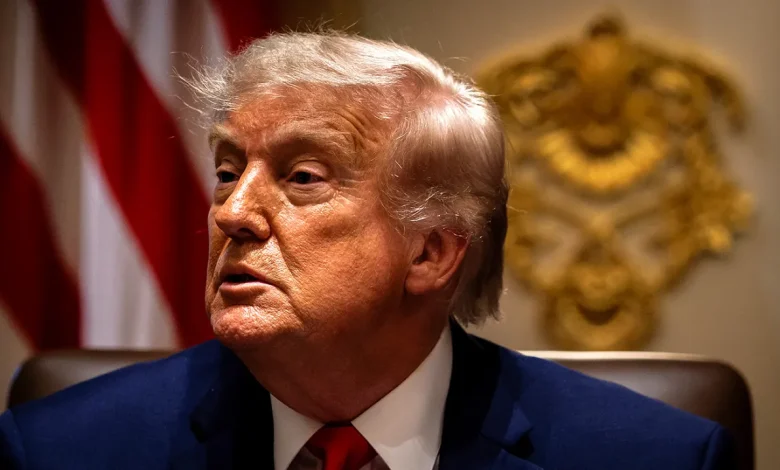
Anti-Weaponization fund initiatives have officially been dismantled by the Department of Justice (DOJ), marking a dramatic policy reversal for the Trump administration. On Tuesday, Acting Attorney General Todd Blanche publicly confirmed that the federal government is abandoning plans to establish a controversial $1.8 billion program intended to compensate individuals who claimed they were targeted by the “weaponization” of law enforcement under the Biden presidency. Testifying before the House Appropriations subcommittee, Blanche stated unequivocally: “We are not moving forward with the fund, period.”
This abrupt pivot comes after a federal district judge temporarily blocked the creation of the fund. While the Justice Department released a statement on Monday expressing that it “disagrees strongly with the decision” but would “abide by the Court’s ruling,” the administration’s backpedaling has quickly escalated. The demise of the fund represents a substantial victory for a bipartisan coalition of lawmakers and civil rights groups who argued the program was a constitutional overreach and a political “slush fund” designed to reward key allies of the president, including those involved in the January 6, 2021, Capitol riot. As the Trump administration faces a series of legal defeats in its first few months, this development highlights the persistent check of the judiciary over aggressive executive actions.
The Rise and Fall of the $1.8 Billion Payout Program
The establishment of the program was first unveiled in mid-May 2026 as an unprecedented effort by the Trump administration to redress what it termed “lawfare” and politicized federal investigations. The planned program, which was slated to receive $1.776 billion in initial capital, was designed to provide monetary compensation and formal apologies to individuals who claimed their civil rights were violated by biased government actions.
The funding mechanism chosen for this initiative was the federal Judgment Fund—a perpetual congressional appropriation managed by the Treasury and Justice Departments to settle legal claims against the United States without requiring direct, case-by-case congressional authorization. Critics immediately raised alarms, arguing that using the Judgment Fund to establish a broad, discretionary compensation system bypassed the constitutional power of the purse held by Congress. Opponents asserted that the administration was attempting to establish a shadow welfare program for political loyalists under the guise of legal settlements. This bypass of normal legislative channels bears strong structural similarities to previous executive actions, such as when controversial grants halted by Trump administration directives were challenged and subsequently deemed unconstitutional by federal courts.
Settlement Roots: The IRS Tax Leak Lawsuit
To understand how this multi-billion-dollar initiative materialized, one must look at its origin in the settlement of Donald J. Trump v. Internal Revenue Service. This high-profile civil lawsuit was originally filed by Donald J. Trump, Donald Trump Jr., Eric Trump, and the Trump Organization against the Treasury Department and the IRS. The legal action stemmed from the unlawful 2019 leak of the Trump family’s tax returns by a former government contractor.
Under the terms of the settlement agreement reached in May 2026, the Trump plaintiffs agreed to drop their pending lawsuit, along with administrative claims regarding the FBI raid on Mar-a-Lago and the investigation into Russian electoral interference. In exchange, the federal government did not pay direct financial damages to the Trump family, but instead issued a formal apology and agreed to establish the $1.776 billion “Anti-Weaponization Fund” to hear and settle similar weaponization claims from other citizens. However, the circular nature of the settlement—where the president’s personal lawsuit was resolved by committing billions of taxpayer dollars to a fund overseen by his own political appointees—immediately drew allegations of systemic self-dealing and collusion.
| Key Dimension | Details & Specifications |
|---|---|
| Fund Name | The Anti-Weaponization Fund |
| Proposed Capitalization | $1.776 Billion / $1.8 Billion |
| Funding Source | Federal Judgment Fund (Perpetual Appropriation) |
| Legal Origin | Settlement of Donald J. Trump v. IRS (2019 Tax Return Leak) |
| Primary Goal | Compensate individuals claiming federal “weaponization” or “lawfare” |
| Key Opponents | Bipartisan coalition (Senate Republicans and House Democrats) |
| Key Judicial Action | Temporary injunction by Judge Leonie Brinkema (Eastern District of Virginia) |
| Current Status | Officially scrapped by DOJ, as testified by Acting AG Todd Blanche |
Judicial Roadblocks: Why the Federal Courts Stepped In
The primary legal vulnerability of the fund was its lack of a clear statutory basis, which invited swift litigation from watchdog organizations and private citizens. Federal courts quickly intervened, raising profound questions about the constitutional limits of executive settlement authority. This intervention is part of a broader judicial trend of blocking sweeping administrative maneuvers, mirroring instances where tariffs deemed illegal were struck down by federal judges determined to enforce constitutional boundaries.
Judge Leonie Brinkema’s Virginia Injunction
On Friday, May 29, 2026, U.S. District Judge Leonie Brinkema of the Eastern District of Virginia issued a temporary restraining order blocking the Justice Department from proceeding with the fund’s creation. The injunction was granted in response to a lawsuit brought by a coalition of public interest groups, including Democracy Forward, who represented individuals previously investigated or targeted by the DOJ under various administrations.
The plaintiffs successfully argued that the fund violated the U.S. Constitution because it was structured to discriminate on a partisan basis, effectively operating as a political payout program that lacked judicial review or congressional oversight. Judge Brinkema’s order effectively froze any disbursement of funds, ensuring that no taxpayer money could be distributed before a full trial on the merits of the case. The DOJ’s social media statement on Monday, June 1, acknowledged the setback, stating that while they strongly disagreed with the court’s view, they would halt operations and abide by the ruling.
Fraud and Collusion Concerns in Florida
Simultaneously, the legal foundation of the entire program began to crumble in a Florida federal court. U.S. District Judge Kathleen Williams, who presided over the underlying IRS lawsuit in the Southern District of Florida, raised the prospect of reopening the case due to what she termed “grievous allegations” of collusion.
The sudden judicial inquiry was initiated after a group of 35 former federal judges filed an extraordinary motion, submitting that the settlement was “a product of collusion and is itself a fraud on the Court.” Legal scholars noted that the settlement bypassed normal adversarial processes, with the Justice Department—led by Trump’s former defense attorney, Acting AG Todd Blanche—readily agreeing to establish a massive fund to settle the president’s personal claims. This structural overlap raised severe ethical conflicts, leaving the administration’s legal defense deeply compromised in the eyes of the court.
Congressional Showdown: Blanche’s Defiant Testimony
Faced with insurmountable legal hurdles and an escalating budget standoff in Congress, Acting Attorney General Todd Blanche appeared before the House Appropriations subcommittee on Tuesday, June 2, 2026, to defend the DOJ’s fiscal year budget. The hearing quickly transformed into a fierce interrogation regarding the administration’s compliance with the court orders.
Blanche’s testimony represented a sharp departure from the aggressive rhetoric previously used by the department. In response to sharp questioning, Blanche confirmed that the DOJ would not attempt to resurrect the fund, even if future court rulings cleared a path to do so. While Blanche maintained that the philosophical intent behind the fund—to support victims of government overreach—was still vital, he conceded that the administrative infrastructure of the $1.8 billion program was officially dead.
Representative Grace Meng’s Pressing Questions
The most dramatic exchange of the hearing occurred between Blanche and Representative Grace Meng, a New York Democrat. Meng pressed the Acting Attorney General to clarify the exact nature of the department’s concession.
“Not moving forward ever?” Meng asked, seeking to pin down a definitive timeline.
“Correct,” Blanche responded.
Despite this verbal guarantee, Meng and other committee members expressed profound skepticism. Lawmakers pointed out that the Trump administration’s legal apparatus has a history of aggressive maneuverings and unpredictable pivots, often illuminated in other high-profile legal battles, such as the widely watched Elon Musk OpenAI trial. To ensure that the administration was not merely putting the program on pause until public attention waned, Meng demanded that the commitment be delivered in writing.
The Refusal to Put the Rescission in Writing
Blanche flatly declined to put his commitment in writing, leading to a tense, circular debate with lawmakers. He argued that the official transcript of the congressional hearing was sufficient and binding.
“Why do I need to put something in writing if I’m telling you what we’re doing?” Blanche asked during the hearing.
Meng countered that because the program was formally established through written DOJ press releases and legal settlements, any rescission must also be documented in writing. “I’m just concerned because you’re not under oath,” Meng noted, emphasizing that without a formal, written administrative order, there was little to prevent the DOJ from quietly resuming payouts under a different name. The refusal to provide written confirmation has left critics highly suspicious, prompting accusations that the administration is leaving a backdoor open for future payouts.
Bipartisan Backlash and Legislative Resistance
While Democrats were vocal in their condemnation, the death blow to the program came from within the Republican Party itself. A significant faction of Senate Republicans grew deeply alarmed by the potential political fallout of the fund, viewing it as a massive liability that threatened to derail the administration’s broader policy goals.
Senate Republicans Threaten Immigration Budgets
The primary leverage used to force the administration’s hand was the pending budget for the Department of Homeland Security (DHS). Key Senate Republicans, including Senate Majority Leader John Thune and Senators Thom Tillis, Bill Cassidy, and John Cornyn, refused to move forward with critical funding for Trump’s aggressive border enforcement agencies as long as the $1.8 billion fund remained active.
Republican lawmakers were particularly concerned that the fund’s vague criteria could allow taxpayer dollars to be funneled to J6 defendants, including those convicted of assaulting police officers. To avoid the catastrophic public relations disaster of funding individuals convicted of violent crimes against law enforcement, these senators demanded a firm guarantee that the program would be permanently mothballed before they would approve DHS funding. “The way to ensure the Trump retribution fund is more than mostly dead would be for Congress to put a stake through it,” Senator Cornyn posted on social media, indicating that some lawmakers still favor passing explicit legislation to permanently outlaw the fund.
Democrats Demand Guardrails Against Independent Payouts
On the other side of the aisle, Senate Minority Leader Charles E. Schumer and other leading Democrats dismissed Blanche’s verbal promises as entirely untrustworthy. “To anyone who takes the constantly lying Todd Blanche at his word — I have a bridge to sell you,” Schumer declared on the Senate floor, highlighting the deep trust deficit in Congress.
Democrats pointed out that even without a centralized “Anti-Weaponization Fund,” the DOJ retains the independent legal authority to settle individual lawsuits through the Judgment Fund without congressional approval. Watchdog groups noted that the administration has already settled several high-profile claims brought by key political allies. These developments demonstrate a pattern of executive-driven payouts that operate completely outside traditional legislative oversight, reinforcing the need for statutory guardrails. The broader debate over accountability and unchecked power is unfolding alongside other major corporate and civil conflicts, such as the highly publicized JPMorgan executive lawsuit, demonstrating that institutional checks are increasingly vital in modern American governance.
Systemic Fallout: What Happens to the Claims Now?
The cancellation of the centralized program has left hundreds of potential claimants in a state of legal limbo. According to reports published by TIME Magazine, attorney Peter Ticktin, who represents hundreds of January 6 defendants, stated that the scrapping of the dedicated fund will not deter his legal efforts. Ticktin confirmed that he plans to continue filing individual civil lawsuits for damages against the federal government, arguing that if the administration cannot provide a streamlined administrative fund, it must instead settle these cases individually through the courts.
This strategy suggests that the battle over “weaponization” payouts is far from over. It merely shifts from a centralized, highly visible administrative agency to a fragmented series of courtroom battles across the country. Whether the Trump administration will attempt to quietly settle these cases using the Judgment Fund remains the central question for congressional watchdogs, who are now drafting legislation to permanently strip the DOJ of the ability to pay out damages to anyone convicted of crimes related to the Capitol attack.