Monsignor Stephen Rossetti Removed as Exorcist Over UFO Claims
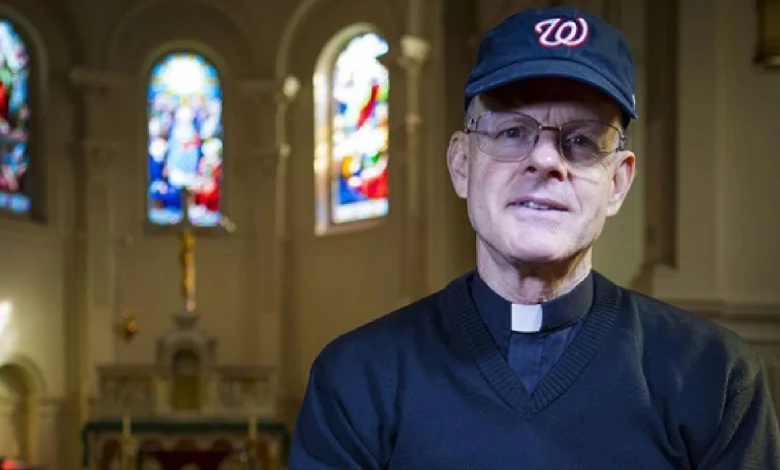
Monsignor Stephen Rossetti, a widely recognized figure in Catholic deliverance ministry and a veteran clinical psychologist, has been officially removed from his position as an exorcist for the Roman Catholic Archdiocese of Washington. The dramatic announcement, made on June 3, 2026, by Cardinal Robert McElroy, Archbishop of Washington, sent shockwaves through the Catholic community and the broader public fascinated by spiritual warfare. Along with stripping Rossetti of his exorcist faculties, Cardinal McElroy declared that the archdiocese is entirely severing its affiliation with the St. Michael Center for Spiritual Renewal, a Washington-based nonprofit organization led by Rossetti. This decisive action underscores a growing tension within the modern Church: the boundary between orthodox theological teachings and the sensationalist interpretations of unexplained modern phenomena, specifically unidentified flying objects (UFOs) and unidentified anomalous phenomena (UAPs).
The Sudden Dismissal of a High-Profile Exorcist
The institutional distancing of a senior cleric of Rossetti’s stature represents a highly unusual and public disciplinary action in modern ecclesial governance. Exorcism is traditionally conducted in absolute secrecy, with practitioners operating under strict nondisclosure rules to protect the privacy and mental health of the afflicted. However, the St. Michael Center and Rossetti built a massive, public-facing digital platform designed to address charismatic Catholics who view spiritual struggles as a literal war between good and evil. Over the years, this ministry grew in popularity, but the convergence of demonic themes and modern UFO pop culture ultimately proved too disruptive for the church hierarchy. Cardinal McElroy’s rapid intervention indicates that the archdiocesan leadership viewed Rossetti’s public commentary as a major theological departure from the cautious, scientifically grounded methodology the Catholic Church officially mandates.
The Theological Clash: UFOs, Aliens, and Demonic Deception
The theological clash at the heart of this controversy centers on a Facebook video published by Monsignor Rossetti on May 29, 2026, titled “Aliens and the Demonic”. In the broadcast, Rossetti drew a direct line between contemporary UFO sightings and the activity of malevolent spirits. Cardinal McElroy was unequivocal in his condemnation of this perspective, stating that Rossetti’s comments “linking UFOs to demonic presence and the Center’s recent use of social media gravely undermine the Church’s very precise teaching on the devil, demons and exorcism”. This public rebuke highlights how the archdiocese views such connections as not only speculative but spiritually dangerous. The public’s growing fixation on anomalous aerial events has surged following recent government disclosures and military reports. However, Catholic authorities argue that translating this cultural curiosity into literal demonology risks introducing superstition into established dogma. Managing such complex messaging and public perception often reflects the deep systemic difficulties institutional organizations face when addressing public uncertainty, similar to when the WHO data access concerns rise as US navigates global health information gaps.
Rossetti’s Perspective on Demonic Hide-and-Seek
During his May 29 address, Rossetti warned his digital audience of what he characterized as a hidden threat behind the modern fascination with extraterrestrial life. He explained his theory by drawing on his years of experience as an active exorcist dealing with spiritual oppression. “There’s a danger here,” Rossetti remarked. “As an exorcist, I wanted to raise that danger. And that is that demons like to hide… They don’t want us to know what they’re doing because they’re more effective when we don’t realize it”. According to Rossetti, demons are masters of psychological and physical manipulation, capable of influencing human perception to lead individuals astray. “They can kind of get into your head, you know, and manipulate things in the world to influence us to do evil,” he added. He then explicitly stated his personal belief: “It’s my personal belief that probably many if not most of these UFO sightings are in fact demons”. While Rossetti clarified that a person can remain a faithful Catholic while believing in life on other planets, he emphasized his personal view that intelligent biological extraterrestrial life does not exist, leaving spiritual deception as his primary explanation for UFOs.
The Archdiocese’s Stance and the Preservation of Magisterium Teaching
Cardinal McElroy’s decision to remove Rossetti stems from a desire to protect the integrity of Catholic Magisterium teachings. Catholic doctrine regarding the demonic is highly structured, precise, and cautious. According to the Catechism of the Catholic Church, demons are fallen angels who possess intellect and free will but are strictly limited in their physical reach. Exorcism is considered a solemn, sacramental rite that requires extreme caution, medical evaluation, and episcopal authorization. The Church historically actively discourages the casual or speculative attribution of physical anomalies—such as unexplained lights in the sky—to preternatural or supernatural forces. By linking the highly debated, physical phenomena of UFOs to demonic manifestations, Rossetti’s comments were seen by the archdiocesan hierarchy as introducing sensationalism into a ministry that demands absolute discretion and theological rigor. Over-spiritualizing the physical world can mislead the faithful, turning their focus away from Christ and toward a superstitious fixation on cosmic forces.
Institutional Distancing and Severing of Affiliations
The administrative fallout extended beyond Rossetti’s personal role, directly impacting the St. Michael Center for Spiritual Renewal. Founded as a Catholic nonprofit, the center has spent years conducting spiritual education workshops, offering prayers, and training clergy, religious, and laity in Catholic deliverance ministry. Until recently, resources from the center were prominently featured on the Archdiocese of Washington’s official website, acting as a primary point of contact for Catholics seeking assistance with spiritual disturbances. Following the June 3 announcement, all references, links, and direct affiliations were systematically purged from the archdiocesan portal. In his statement, Cardinal McElroy specifically targeted the center’s “recent use of social media,” indicating that its digital outreach had drifted away from approved ecclesial guidelines. Regulating the public messaging of affiliated ministries is a critical form of risk management for the modern Church hierarchy. This type of strict institutional oversight mirrors the defensive strategies employed by major secular administrative bodies facing systemic volatility, such as how the Fed’s Treasury buys echoed risks of 2008 in the financial sector.
Who is Monsignor Stephen Rossetti? A Look at His Broad Ministry
Monsignor Stephen Rossetti is not a fringe figure; rather, he has been an influential and highly visible priest in the United States for several decades. A graduate of the United States Air Force Academy, he subsequently pursued advanced academic paths, earning a doctorate in clinical psychology from Boston College, alongside multiple theological and ministerial degrees. From 1993 to 2009, Rossetti served as the President of the Saint Luke Institute in Silver Spring, Maryland, a renowned facility specializing in the psychological treatment and rehabilitation of Catholic clergy. He has also served as a research associate professor at the Catholic University of America, written several books including “Diary of an American Exorcist,” and even served as the chaplain for the Washington Nationals baseball team. Given his extensive credentials in both psychology and theology, his public statements carry significant weight. His transition from treating clergy to leading a charismatic-leaning deliverance ministry with over 148,000 Instagram followers created a powerful platform, which ultimately brought him into direct conflict with the archdiocese’s leadership.
Comparing Views: Extraterrestrial Claims vs. Church Orthodoxy
To understand the theological divide that prompted this major institutional shift, it is helpful to contrast the public claims made by Monsignor Rossetti with the established, traditional teachings of the Catholic Church and the specific objections raised by the Archdiocese of Washington.
| Theological Topic | Monsignor Stephen Rossetti’s Claims | Official Catholic Teaching / Archdiocesan Stance |
|---|---|---|
| Nature of UFO/UAP Sightings | Believes many or most UFO sightings are actually demonic apparitions. | Demands extreme empirical and theological skepticism; physical events are not casually labeled preternatural. |
| Demonic Activities and Disguises | Argues that demons prefer to hide under the guise of extraterrestrials to manipulate human minds. | Acknowledges demonic spiritual warfare, but rejects assigning specific physical phenomena to demons without church-vetted investigations. |
| Possibility of Extraterrestrial Life | Does not personally believe in alien life, though notes it is theoretically permissible for Catholics to believe in it. | Theological neutral; several Vatican astronomers have stated that alien life would not contradict Church doctrine. |
| Social Media and Ministry Outreach | Utilizes Facebook, Instagram (148k+ followers), and YouTube to discuss active spiritual warfare. | Demands precise adherence to Catholic Magisterium; warns against sensationalizing the occult on digital platforms. |
Broader Implications for Contemporary Catholic Demonology
The clash between Rossetti and Cardinal McElroy is indicative of a broader conversation happening within contemporary Christianity regarding unexplained anomalous phenomena. As governments around the world release more classified files on UAPs, several prominent Christian thinkers and traditionalist exorcists—including Father Chad Ripperger—have suggested that modern “alien” encounters and abduction narratives share structural characteristics with historical reports of demonic oppression and possession. These figures argue that as society secularizes, the demonic manifests in ways that align with modern mythology, such as extraterrestrials, to bypass traditional religious defenses. However, the official Church leadership remains deeply wary of this trend. Pop-culture fascination with the occult or alien life can easily distort genuine faith. Humanity’s innate desire to uncover hidden truths often leads to speculative theories. This drive is visible throughout human history, from looking at cosmic anomalies down to earthly explorations, such as the accidental discovery of a secret underground city in Turkey. The Church insists that while physical and historical mysteries are fascinating, they must not be conflated with the precise, spiritual realities of demonic warfare.
Monsignor Rossetti’s Contrite Response and “Staying in the Boat”
Following his sudden removal, Monsignor Rossetti released a statement on the St. Michael Center’s website expressing deep sadness but emphasizing a spirit of obedience and contrition. “I ask forgiveness for any ways that I have not been faithful to the teachings of the Church’s Magisterium, particularly in the cited video on ‘aliens and the demonic,'” Rossetti stated. He affirmed his commitment to Catholic ecclesial authority, writing, “I believe it is of the utmost importance to be obedient to the Church and I will continue to endeavor to subject all that I do and the Center to be thus obedient”. Rossetti concluded his message by encouraging his followers to remain loyal to the Church hierarchy, repeating his familiar, reassuring ministry catchphrase: “Stay in the boat!”—a traditional reference to the Barque of Peter representing the Catholic Church. While Rossetti expressed complete submission to the archdiocese’s decision, the St. Michael Center announced plans to continue its deliverance and spiritual renewal ministry outside the official jurisdiction of the Archdiocese of Washington. For those looking to explore orthodox Catholic teachings on this subject, the St. Michael Center for Spiritual Renewal provides resources, though it now operates independently of the Archdiocese of Washington.
Conclusion: The Boundaries of Public Ministry in the Modern Age
The removal of Monsignor Stephen Rossetti highlights the delicate balance that modern religious figures must maintain when leveraging social media to discuss sensitive theological matters. In an era dominated by rapid digital communication and viral content, the temptation to address sensational public topics like UFOs through a spiritual lens is high. However, the Catholic Church’s centuries-old tradition of caution, intellectual rigor, and institutional control remains a powerful counterweight to contemporary digital trends. Cardinal McElroy’s swift action serves as a definitive reminder that high-profile ministers, regardless of their credentials or social media following, are ultimately subject to the strict governance of the Church’s Magisterium. As public curiosity surrounding the unexplained continues to grow, the Catholic hierarchy remains committed to drawing a clear, uncompromising line between verified spiritual doctrine and modern speculative mythologies.