Irbil Training Deaths: 5 Shocking Details as US and UK Soldiers Die in Iraq
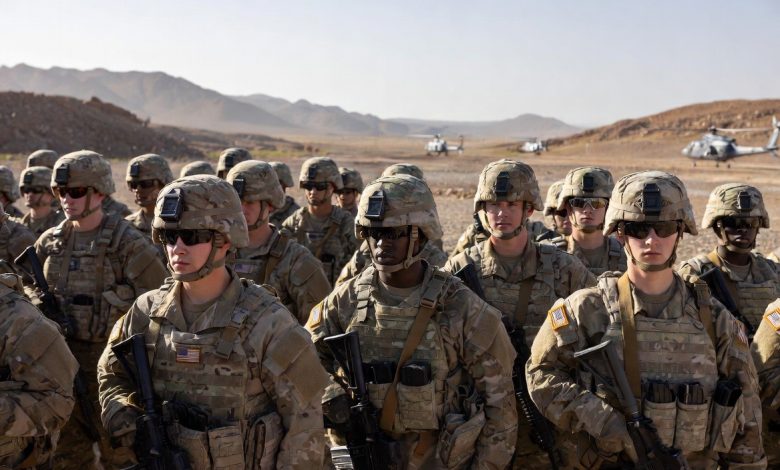
Irbil, the capital of the semiautonomous Kurdish region of northern Iraq, became the focus of global defense concerns after a tragic training exercise accident claimed the lives of both an American and a British soldier. On Sunday, May 31, 2026, the fatal event transpired at an air base in the city, where both the United States and United Kingdom maintain a persistent military presence to assist local forces. In coordinated announcements, the U.S. Army and the British Ministry of Defence confirmed the fatalities, setting off investigations and renewing attention on the strategic, yet high-risk, role that Western coalition troops play in northern Iraq. As both nations mourn their service members, the incident highlights the complex environment in which these forces operate, even outside of direct combat scenarios.
The Tragic Incident at the Irbil Air Base
The air base at Irbil has long served as a vital hub for Operation Inherent Resolve, the U.S.-led international coalition tasked with advising, assisting, and enabling partner forces to maintain the enduring defeat of ISIS. The joint training exercise was designed to enhance operational readiness and integration between allied forces. However, what was intended to be a routine drill turned fatal. The base has previously been a focal point of regional security friction, but the loss of life during this exercise was entirely non-combat-related. Joint training maneuvers are a daily component of life for coalition forces deployed to northern Iraq, ensuring that the complex web of air-and-land coordination remains flawless. The tragic outcome of Sunday’s events emphasizes that even under the most controlled conditions, tactical exercises carry substantial risk.
While specific tactical details of the incident remain classified or under active investigation, military representatives have clarified that the deaths were not the result of hostile enemy action. This distinction is critical given the highly volatile security environment in northern Iraq. Over the past year, the region has seen fluctuating tensions, which have sometimes culminated in direct threats to Western infrastructure. For instance, the broader regional escalation, highlighted by the fallout of the ongoing Iran-U.S. conflict, has frequently placed bases like Irbil on high alert. To have lives lost in a training exercise rather than direct combat is a somber reminder of the inherent dangers of military service.
Details Surrounding the Training Accident
The announcement of the training accident was delivered through coordinated yet separate military communications. The U.S. Army confirmed the incident via its official channel on X, expressing deep regret over the loss of the American soldier. The brief statement highlighted that the circumstances surrounding the training accident are under investigation by the relevant authorities. Simultaneously, the British government confirmed the loss of its service member. Defence Secretary John Healey addressed the House of Commons, expressing his condolences and confirming that the accident took place during joint maneuvers.
Military training operations in Northern Iraq are notoriously rigorous, often involving live-fire exercises, heavy machinery, helicopter maneuvers, and complex urban warfare simulations. These activities are essential for maintaining the sharp combat readiness required to survive in a highly dynamic theater of operations. In Northern Iraq, where geography can be as hostile as any geopolitical actor, maintaining physical and tactical agility is paramount, yet this intensity occasionally results in profound tragedy. Investigators are expected to look into equipment functions, communication protocols, and environmental factors to identify what triggered the double fatality.
Withholding Identities and Respecting Families
Out of respect for the families of the fallen, both the U.S. and U.K. militaries have implemented strict protocols regarding the release of personal details. The U.S. Army’s official policy dictates that a soldier’s identity must be withheld until at least 24 hours after next-of-kin notification has been successfully completed. This standard operating procedure ensures that families receive the news directly from military casualty officers rather than through social media or news outlets.
The U.K. Ministry of Defence similarly requested a “period of grace” on behalf of the British soldier’s family. In an official statement, the MoD noted that the family had been notified but requested privacy and time to process the tragedy before further details—such as the soldier's name, rank, unit, and the specific nature of the training accident—are made public. This collaborative discretion is a hallmark of the deep-seated professional respect between the coalition partners, reflecting a shared understanding of the profound personal toll of military loss.
Geopolitical Context of the Kurdish Region
To understand why U.S. and British forces are stationed at the Irbil air base, one must examine the complex geopolitical landscape of northern Iraq. Unlike the federal territory governed directly by Baghdad, the Kurdistan Regional Government (KRG) has maintained a semiautonomous status since the early 1990s. The Kurds have historically been one of the most reliable and pro-Western allies in the region.
The U.S. has strategically nurtured its relationship with the Peshmerga—the military forces of the Kurdish region. During the height of the war against the Islamic State, the Peshmerga played an indispensable role in halting the group's advance and reclaiming key territory. Even as the U.S. reduces its overall footprint in central and southern Iraq, maintaining a robust presence in Irbil remains a top priority. This relationship is further cemented by diplomatic investments. In December, the U.S. officially inaugurated a massive, state-of-the-art consulate compound in Irbil. This diplomatic expansion underscores Washington’s long-term commitment to the Kurdish region, signaling that the partnership extends far beyond temporary counter-terrorism campaigns.
The Strategic Importance of Iraqi Kurdistan
The strategic positioning of Iraqi Kurdistan makes it an invaluable asset for Western intelligence and power projection. Nestled between Turkey, Iran, and Syria, the KRG territory serves as a geographic buffer and a critical launching pad for operations across the region. For the U.K., maintaining forces in Irbil is part of its global defense strategy, despite recent domestic political pressure and policy adjustments, such as when Britain's strategic recalibration in the Middle East altered other intelligence operations in the region.
The presence of U.S. and British troops at Irbil Air Base serves several functions:
- Deterrence: Signalling to regional adversaries, including various militia groups, that the coalition remains committed to regional stability.
- Counter-terrorism: Serving as a rapid-reaction hub to target remnant ISIS cells operating in the disputed territories between Baghdad and Erbil.
- Capacity Building: Training and equipping the Peshmerga to transition them into a modernized, institutionalized defense force.
US Troop Reductions and the Fight Against ISIS
In recent years, the U.S. military has steadily reduced its active troop count in Iraq. This drawdown is part of a broader transition from active combat operations to an “advise, assist, and enable” mission. Baghdad and Washington have engaged in prolonged bilateral talks regarding the future of the global coalition's presence, with Iraqi nationalist factions pushing for a complete withdrawal of foreign troops.
However, the complete removal of Western forces remains highly controversial. Analysts warn that an abrupt departure could create a security vacuum, allowing ISIS to reconstitute its networks. The group has shown a persistent ability to conduct low-level insurgent attacks, particularly in rural, mountainous, and disputed areas. By retaining a concentrated presence in the semiautonomous Kurdish region, the U.S. hedges against these security risks. This regional posture is supported by other strategic assets in the Middle East, such as the deployment of U.S. fighter jets to the UAE, which provides comprehensive air cover and rapid-response capabilities across the Gulf and Levant.
Balancing Security Commitments Amid Regional Instability
The military deaths in Irbil come at a time of heightened regional tension, where Western forces must balance local training missions with active defensive postures. While the training accident was non-combat related, the physical environment in which these soldiers operate is unforgiving. High summer temperatures, rugged terrain, and the constant threat of indirect fire from regional militias make every deployment highly stressful.
Furthermore, domestic political debates in the United States and the United Kingdom continue to influence military funding and deployment strategies. In the U.S., legislative debates frequently touch upon the scope of military benefits and international partnerships. For instance, discussions surrounding policies affecting U.S. veteran benefits highlight how the domestic political landscape views foreign military service and coalition cooperation. For soldiers stationed in remote outposts like Irbil, these legislative decisions directly impact their long-term security, healthcare, and post-service transition.
Comparative Analysis of Military Incidents
Training accidents are an unfortunate but persistent reality of military life. To put the Irbil incident into perspective, it occurred nearly a month after another high-profile tragedy involving American troops. In early May, two U.S. soldiers died during an off-duty recreational hike in Morocco after participating in “African Lion,” a prominent annual multinational military exercise. They were reported missing on May 2 and were later found at the bottom of a cliff.
The following data table compares recent non-combat training and off-duty fatalities involving Western coalition forces:
| Date | Location | Incident Type | Nationalities Involved | Mission/Exercise Context |
|---|---|---|---|---|
| May 2, 2026 | Morocco | Off-duty hiking fall | United States (2) | Exercise African Lion (Multinational) |
| May 31, 2026 | Irbil, Iraq | Joint training accident | US (1), United Kingdom (1) | Operation Inherent Resolve (Coalition) |
| March 2026 | Irbil, Iraq | French soldier killed in drone strike | France (1) | Counter-terrorism Coalition |
This comparative view emphasizes that despite advanced technology and rigorous safety protocols, the operational environments of modern deployments present continuous, life-threatening risks.
The Broader Impact on US-UK Defense Cooperation
The loss of an American and a British soldier in the same training event highlights the seamless integration—and shared risks—of the “Special Relationship.” For decades, the U.S. and the U.K. have operated side-by-side in global hotspots. In Iraq, their combined efforts have been essential in stabilizing a country plagued by decades of conflict.
Joint training exercises are the bedrock of this cooperation. They allow soldiers from different nations to practice tactical maneuvers, synchronize communication systems, and establish personal bonds of trust. When a tragedy of this scale occurs, it is felt deeply across both militaries. Joint investigations will be conducted to determine the root cause of the accident, whether it stemmed from mechanical failure, human error, or environmental factors. The findings will likely be used to update safety protocols across both the U.S. Army and the British Armed Forces to prevent future occurrences.
Future Outlook for Foreign Forces in Iraq
As investigations continue into the Sunday incident, the future of the U.S. and coalition presence in Iraq remains at a critical crossroads. The Iraqi government under Prime Minister Mohammed Shia al-Sudani has sought to balance the demands of pro-Iran factions wanting foreign forces out with the practical security needs of the country.
The Kurdish regional government, however, remains vocal in its desire for a continued Western military presence. The Kurds view the U.S. and U.K. forces not just as a shield against ISIS, but as a political guarantee of their autonomy within a federal Iraq. The death of these two soldiers serves as a somber reminder of the human cost associated with maintaining these strategic alliances. While troop numbers may fluctuate, the geopolitical necessity of the Irbil air base ensures that, for the foreseeable future, Western forces will remain deeply embedded in the security architecture of northern Iraq.
For further developments on coalition strategies in the region, refer to the official reports provided by the Associated Press, which continues to monitor military movements and official inquiry releases.