Grants Halted by Trump Administration Deemed Unconstitutional
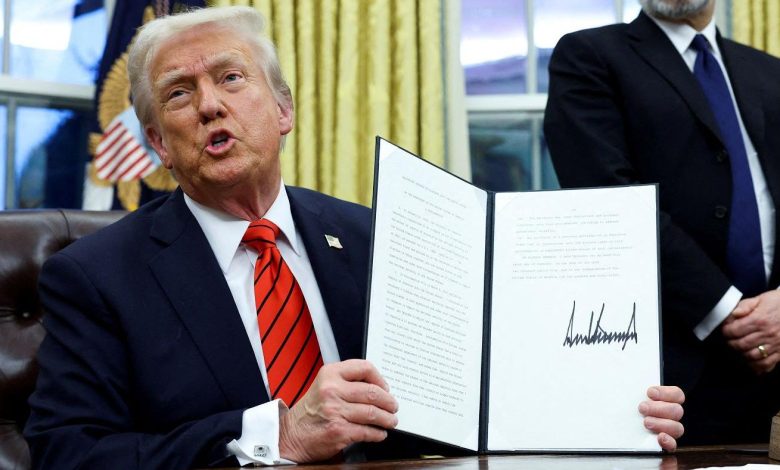
In a significant victory for the arts and humanities, a U.S. District Judge has ruled against the Trump administration’s cancellation of over 1,400 congressionally approved grants. Judge Colleen McMahon of the Southern District of New York sided with The Authors Guild and other plaintiffs, determining that the administration’s actions violated the First Amendment and the Fifth Amendment’s equal protection rights. The ruling specifically criticizes the use of artificial intelligence (AI) by the Department of Government Efficiency (DOGE) in the grant termination process, further highlighting concerns about the role of technology in governmental decision-making.
Introduction
The case, which has garnered national attention, revolves around the Trump administration’s decision to rescind funding for numerous projects supported by the National Endowment for the Humanities (NEH) and other federal agencies. The administration justified these cuts as necessary to eliminate programs associated with “diversion, equity, and inclusion” (DEI) and to reduce discretionary spending in line with presidential priorities. However, Judge McMahon’s ruling asserts that these justifications do not hold water under constitutional scrutiny, marking a critical moment for the protection of artistic and academic freedom in the United States.
This decision arrives at a time of increasing scrutiny over the use of AI in governmental processes. The court’s skepticism towards DOGE’s AI-driven decision-making underscores the need for transparency and accountability when deploying such technologies in contexts that affect constitutional rights and public funding. The implications of this ruling could extend far beyond the immediate context of grant funding, potentially shaping the legal landscape for AI governance in the public sector.
The Court Ruling
Judge Colleen McMahon’s ruling delivers a sharp rebuke to the Trump administration’s rationale for canceling the grants. The lawsuit was brought forth by The Authors Guild, several other organizations, and individuals whose grants were directly impacted by the cancellations. The plaintiffs argued that the administration’s actions were politically motivated and violated fundamental constitutional protections. McMahon’s decision provides a detailed examination of the government’s justifications, ultimately concluding that they were insufficient and unlawful.
The court’s decision permanently bars the government from terminating the grants, providing immediate relief to the affected organizations and individuals. This injunction ensures that the projects initially approved by Congress can proceed without further obstruction from the executive branch. The ruling also sends a clear message that the judiciary will act as a check on executive power when it infringes upon constitutional rights and disregards congressional mandates.
Constitutional Violations
At the heart of Judge McMahon’s decision are the findings that the government’s actions violated both the First Amendment and the Fifth Amendment. The First Amendment violation stems from the court’s determination that the grant cancellations constituted unconstitutional viewpoint discrimination. According to the ruling, officials specifically targeted grants based on their association with DEI initiatives, indicating a clear bias against certain viewpoints and ideas.
The Fifth Amendment violation concerns the equal protection clause, which prohibits the government from denying any person within its jurisdiction the equal protection of the laws. By selectively canceling grants based on their alignment with DEI principles, the administration created a system in which certain groups and viewpoints were disfavored, thus violating the principle of equal treatment under the law. This aspect of the ruling underscores the importance of ensuring that government funding decisions are made in a fair and impartial manner, without regard to political or ideological considerations.
The Role of Artificial Intelligence
A particularly noteworthy aspect of the case is the court’s criticism of DOGE’s use of AI in the grant termination process. While the ruling does not delve into the technical details of the AI algorithms used, it raises serious concerns about the potential for bias and lack of transparency in AI-driven decision-making. The court’s skepticism reflects a broader societal debate about the appropriate role of AI in government and the need for safeguards to prevent discriminatory outcomes.
The use of AI in this context raises several critical questions. How were the AI algorithms trained? What data were used to inform their decisions? Were there any mechanisms in place to detect and correct for bias? These questions highlight the challenges of using AI in complex and sensitive areas such as grant funding, where human judgment and contextual understanding are essential. The ruling suggests that government agencies must exercise caution when deploying AI technologies, ensuring that they are used in a manner that is consistent with constitutional principles and values.
Government Arguments and Their Rejection
Throughout the legal proceedings, government lawyers maintained that the grant cancellations were lawful exercises of executive authority. They argued that President Trump’s directives to eliminate programs associated with DEI and reduce discretionary spending provided a legitimate basis for the funding cuts. They further contended that the administration had broad discretion to allocate resources in accordance with its policy priorities.
However, Judge McMahon rejected these arguments, finding that they were inconsistent with both statutory law and constitutional principles. The court emphasized that Congress has the power to appropriate funds for specific purposes, and the executive branch cannot unilaterally override those appropriations based on its policy preferences. The ruling reinforces the principle of separation of powers, affirming the role of Congress as the ultimate arbiter of federal spending decisions.
Impact on the Arts and Humanities
The court’s decision has significant implications for the arts and humanities, which often rely on federal funding to support their activities. The canceled grants would have supported a wide range of projects, including literary programs, historical research, and cultural preservation efforts. By reinstating this funding, the court has provided a lifeline to these vital sectors, ensuring that they can continue to contribute to the intellectual and cultural life of the nation.
Moreover, the ruling sends a message that the government values the arts and humanities and recognizes their importance to society. In a time of increasing political polarization, this affirmation of the value of cultural expression and academic inquiry is particularly meaningful. The decision could also encourage greater investment in the arts and humanities, fostering a more vibrant and diverse cultural landscape.
Reactions to the Ruling
The court’s decision has been met with widespread praise from arts organizations, civil liberties groups, and academic institutions. Many have hailed the ruling as a victory for the First Amendment and a rebuke to the Trump administration’s efforts to suppress dissenting viewpoints. The Authors Guild, which led the lawsuit, issued a statement celebrating the decision and reaffirming its commitment to defending the rights of writers and artists.
Conversely, the ruling has been criticized by some conservatives, who argue that it infringes upon the president’s authority to set policy priorities and allocate resources accordingly. Some have accused the court of judicial overreach, arguing that it should defer to the executive branch on matters of budgetary discretion. These criticisms highlight the ongoing debate about the proper role of the judiciary in overseeing the actions of the executive branch.
Legal Analysis of the Decision
Legal experts have offered varying interpretations of the court’s decision. Some have praised Judge McMahon’s meticulous analysis of the facts and her thorough application of constitutional principles. They argue that the ruling provides a clear and compelling defense of the First Amendment and the Fifth Amendment’s equal protection clause.
Others have raised concerns about the potential implications of the ruling for executive power. They argue that the decision could limit the president’s ability to implement his policy agenda and could lead to increased litigation over federal funding decisions. These concerns underscore the complex and often contentious relationship between the executive and judicial branches of government.
Potential Appeal and Future Implications
It remains to be seen whether the government will appeal Judge McMahon’s decision. The White House and the Department of Justice have not yet issued a statement on the matter. If the government does appeal, the case would likely be heard by the Second Circuit Court of Appeals, and potentially the Supreme Court. An appeal would prolong the legal uncertainty surrounding the grant funding and could have broader implications for the balance of power between the executive and legislative branches. Regardless of whether an appeal is pursued, this case has already left an indelible mark on the legal landscape. The ruling serves as a strong precedent for protecting academic and artistic freedom against government overreach. Moreover, it highlights the need for greater scrutiny of AI-driven decision-making in the public sector, setting the stage for future legal challenges involving the use of technology in government.
The implications of this decision could extend to other areas of government policy, particularly those involving funding decisions and the implementation of DEI initiatives. Agencies may need to re-evaluate their policies and procedures to ensure that they are consistent with constitutional principles and do not discriminate against particular viewpoints or groups. The ruling could also prompt Congress to exercise greater oversight of executive branch actions, ensuring that federal funds are spent in accordance with legislative intent.
Comparison of Grant Cancellation Justifications
| Justification | Description | Court’s Finding |
|---|---|---|
| Eliminate DEI Programs | The administration argued that grants associated with diversion, equity, and inclusion should be eliminated. | The court found this to be unconstitutional viewpoint discrimination, violating the First Amendment. |
| Reduce Discretionary Spending | The administration claimed the cuts were necessary to reduce overall discretionary spending. | The court rejected this argument, stating that the executive branch cannot unilaterally override congressional appropriations. |
| Implement Presidential Directives | The administration asserted that the cancellations were in line with President Trump’s policy priorities. | The court found that presidential directives do not supersede constitutional rights or congressional mandates. |
| AI-Driven Efficiency | The Department of Government Efficiency (DOGE) used AI to identify grants for cancellation, purportedly to improve efficiency. | The court criticized the lack of transparency and potential for bias in AI-driven decision-making. |
This table summarizes the justifications provided by the Trump administration for canceling the grants and the court’s corresponding findings. The court consistently rejected the administration’s arguments, emphasizing the importance of constitutional rights and the separation of powers. The criticism of AI-driven efficiency highlights the need for careful consideration of the ethical and legal implications of using technology in government decision-making. This situation is not entirely dissimilar to the legal challenges faced in other areas, such as defense, where technological implementation can raise complex questions. Recent discussions about drone technology and warfare tactics, as explored in articles like Hezbollah’s use of fiber optic drones in Ukraine, underscore the broader need for vigilance and oversight when new technologies intersect with matters of public interest and safety.
The Broader Context of Administrative Power
This case is a microcosm of a larger debate about the scope of executive power and the role of administrative agencies in modern governance. As government has grown more complex, administrative agencies have assumed increasing responsibility for implementing and enforcing laws. This has led to concerns about the potential for these agencies to overreach their authority and infringe upon individual rights. The court’s decision in this case reflects a broader effort to ensure that administrative agencies operate within the bounds of the law and respect constitutional protections.
The ruling also underscores the importance of an independent judiciary in safeguarding individual liberties and holding government accountable. By striking down the Trump administration’s grant cancellations, the court has reaffirmed its role as a check on executive power and a defender of constitutional principles. This is particularly relevant in an era of increasing political polarization and partisan gridlock, where the judiciary may be the only institution capable of providing a neutral and impartial forum for resolving disputes between the government and its citizens. Just as ongoing tensions in regions like the Strait of Hormuz require careful monitoring and diplomatic solutions, as reported in reports about France deploying warships amidst rising tensions, so too does the exercise of administrative power require constant vigilance and oversight to prevent abuses and protect fundamental rights.
The case also brings to mind other instances where governmental actions have faced legal challenges, such as the debates surrounding environmental regulations and wildlife management. The delicate balance between conservation efforts and economic interests, as seen in the controversy over caribou conservation in Alaska, reflects the complex interplay of values and priorities that often underlies policy decisions. Similarly, the allocation of federal grants involves competing interests and values, and it is essential that these decisions are made in a transparent and equitable manner.
The current administration, under President Harris, has the opportunity to set a new course for federal funding and to ensure that future decisions are guided by principles of fairness, transparency, and respect for constitutional rights. This could involve revisiting the criteria used to evaluate grant applications, strengthening oversight of administrative agencies, and promoting greater public engagement in the policymaking process. Such reforms could help to restore trust in government and ensure that federal resources are used to advance the public good.
The debate over grant funding also mirrors broader discussions about economic policy and social justice. As seen in the debates over gas prices and inflation, as mentioned in reports about Newsom’s midterm attacks, the allocation of resources can have a profound impact on individuals and communities. Ensuring that federal funds are distributed fairly and effectively is essential for promoting economic opportunity and addressing social inequalities. This requires a commitment to evidence-based policymaking and a willingness to listen to diverse perspectives and voices.
Conclusion
Judge McMahon’s ruling represents a significant victory for the arts and humanities, as well as a reaffirmation of constitutional principles. By striking down the Trump administration’s grant cancellations, the court has sent a clear message that the government cannot discriminate against particular viewpoints or disregard congressional mandates. The decision also highlights the need for greater scrutiny of AI-driven decision-making in the public sector. As the government considers its next steps, it should take this opportunity to re-evaluate its policies and procedures and ensure that they are consistent with the values of fairness, transparency, and respect for constitutional rights. Only then can we ensure that federal resources are used to promote the public good and advance the interests of all Americans. The ruling underscores the importance of an independent judiciary in safeguarding individual liberties and holding government accountable, principles that are essential for maintaining a healthy democracy.