Newsom’s Midterm Power Play: How $4.30 Gas and Soaring Fertilizer Costs Are Shaking Red States
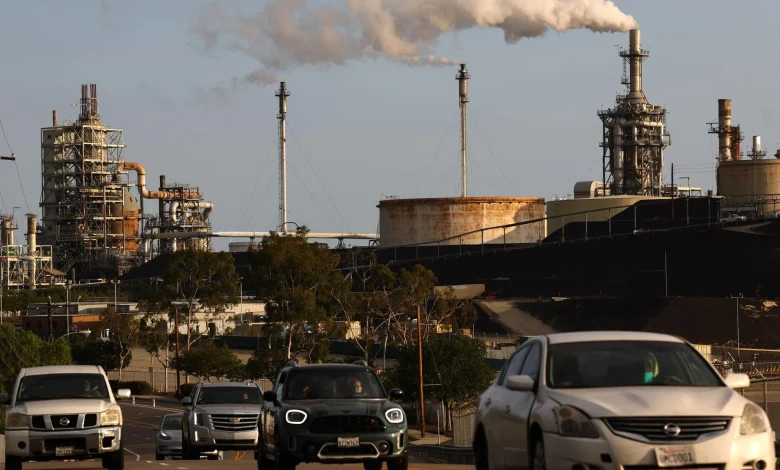
In the high-stakes world of modern governance, politics has increasingly begun to resemble a grand strategy simulation, where resource management and systemic leverage dictate the winner of the ‘meta-game.’ As a gaming industry historian and critic, I have spent decades analyzing how complex systems—whether they be the intricate loops of a 4X strategy game or the volatile supply chains of hardware manufacturing—respond to external shocks. Today, we are witnessing a real-world iteration of this phenomenon. Governor Gavin Newsom’s recent maneuvers, framed against the backdrop of $4.30 gasoline and skyrocketing fertilizer costs, represent a calculated ‘Power Play’ that is sending shockwaves through the Red State ‘servers’ of the American Heartland. This is not merely a political story; it is a masterclass in leveraging economic mechanics to rebalance a national map.
Introduction: The Grand Strategy of the Golden State
To understand the current political landscape, one must view it through the lens of ‘systemic friction.’ In gaming terms, when a developer adjusts the cost of a core resource, it ripples through every player’s strategy. California, under Newsom, has often acted as the lead developer for the American political experience. By embracing aggressive climate policies and regulatory frameworks, Newsom is essentially ‘patching’ the California economy in ways that force other states to adapt or suffer performance hits. The current crisis—defined by a $4.30 average for regular unleaded and fertilizer costs that have nearly doubled—is the latest ‘expansion pack’ in this ongoing struggle for dominance.
Breaking Down the California Meta
The ‘meta’ refers to the most effective tactics available in a given environment. Currently, Newsom is playing a game of high-risk, high-reward environmentalism. By maintaining high gas prices through specialized fuel blends and carbon taxes, he is attempting to force a transition to an electric vehicle (EV) infrastructure. While this might be a viable ‘late-game’ strategy for a tech-heavy state like California, the sudden export of these costs via supply chain interdependencies is creating a massive ‘debuff’ for Red States that rely on traditional combustion and intensive agriculture.
A History of Resource Management and Political Leverage
Historically, California’s power was rooted in its ability to be a self-contained ecosystem. From the Gold Rush to the birth of the Silicon Valley hardware boom, the state controlled its own ‘spawn points’ for wealth. However, as any historian of the gaming industry knows, power shifts when the core architecture changes. In the 1990s, we saw the ‘Console Wars’ between Sega and Nintendo; today, we see a ‘Resource War’ between the coastal technocracies and the inland agrarian economies.
From Silicon Valleys to Central Valleys
The history of this friction dates back to the early environmental mandates of the 1970s, which established California as a regulatory outlier. This move gave California the ‘First Mover Advantage.’ By setting its own standards, it forced national manufacturers—from carmakers to tech giants—to build for the California ‘spec.’ This historical precedent is what allows Newsom to exert influence far beyond his borders. When California’s internal gas prices surge to $4.30, it isn’t just a local issue; it signals a shift in national logistics that forces Red State governors to play defense against an economic ‘meta’ they didn’t help design.
Deep Dive: The $4.30 Gas Benchmark and the Fertilizer Crisis
Let’s look at the raw data of this power play. The $4.30 gas price is a critical threshold. In economic simulation terms, this is the ‘break-even’ point where traditional logistics become inefficient. For California, which has a high concentration of high-income ‘players,’ this is a manageable hurdle. However, for the Red States—the ‘resource nodes’ of the nation—this price point represents a systemic threat to their primary industry: agriculture.
Why Nitrogen is the New Microchip
Just as the gaming industry ground to a halt during the semiconductor shortage, the American Heartland is currently facing a ‘Fertilizer Crunch.’ Fertilizer production is heavily dependent on natural gas—the same energy source Newsom is pivoting away from. As California disincentivizes fossil fuel extraction and refining, the price of nitrogen-based fertilizers (Ammonia, Urea) has skyrocketed. For a farmer in Nebraska or Iowa, fertilizer isn’t just a cost; it is the ‘mana’ required to cast the spell of a successful harvest. When the cost of this ‘mana’ increases by 200%, the entire Red State strategy collapses.
The Logistics of the Supply Chain Simulation
If we view the United States as a massive multiplayer online (MMO) environment, Newsom is essentially manipulating the ‘auction house.’ By driving up the cost of energy inputs, California is making it more expensive for Red States to produce the goods that California consumes. This creates a paradox: Red States are seeing higher nominal revenues for their crops, but their ‘net gold’ (profit margin) is shrinking due to the rising costs of gas and fertilizer. It is a classic ‘gold sink’ designed to drain the coffers of political rivals.
GEO: Exporting Volatility to the Red States
The geographical impact of this power play cannot be overstated. We are seeing a ‘Regional Rebalancing’ that mirrors the way game servers are merged or split. The Red States, particularly those in the Midwest and the South, are being forced into a ‘Resource Trap.’ They produce the food and fuel, but the ‘Rules of Play’ are being written in Sacramento and D.C.
The Midwestern Buffer Zone
States like Ohio, Indiana, and Missouri are the frontline of this economic skirmish. These states have large manufacturing bases that are highly sensitive to energy costs. When gas hits $4.30, the cost of transporting parts for everything from automobiles to gaming consoles increases. Newsom’s ‘Midterm Power Play’ uses these costs as a wedge, forcing Red State governors to either subsidize their own industries (draining their reserves) or allow the costs to be passed to voters, leading to potential ‘player churn’ at the ballot box.
Future: The Final Boss or a New Campaign?
As we look toward the next ‘expansion’—the 2024 Presidential cycle—Newsom’s current strategy suggests he is preparing for a ‘Final Boss’ encounter. By proving he can dictate the economic terms of the Red States from the comfort of the Golden State, he is positioning himself as the ultimate ‘Game Master.’ However, every strategy has a counter-play. The Red States are already beginning to ‘mod’ their own economies, seeking energy independence through local deregulatory patches and forming ‘Guilds’ (inter-state compacts) to bypass California’s influence.
Predictive Modeling for the 2024 Expansion
Our analysis suggests that if gas prices remain above the $4.00 mark and fertilizer costs do not stabilize, we will see a ‘hard reset’ in the political allegiances of the working class. Newsom is betting that the transition to a Green Meta will be completed before the agrarian ‘player base’ can effectively revolt. It is a race against the clock, much like a timed quest in an RPG. If he succeeds, he redraws the map; if he fails, he faces a ‘Game Over’ at the hands of an economically disenfranchised Heartland.
FAQ
Q: Why does Governor Newsom have such an impact on gas prices in other states?
A: Because California is the largest sub-national economy in the world, its regulatory decisions force national supply chains to adjust. When California limits refining capacity or increases taxes, the ‘ripple effect’ increases costs for the entire national network.
Q: How do fertilizer costs affect the average gamer or tech consumer?
A: High fertilizer costs lead to food inflation. When ‘living costs’ go up, discretionary spending on luxury items like hardware, software, and subscriptions goes down. It’s a direct hit to the ‘consumer meta.’
Q: Is $4.30 gas a permanent ‘patch’ or a temporary event?
A: It appears to be a systemic shift. While prices fluctuate, the ‘base code’ of California’s energy policy is designed to keep carbon-intensive fuels expensive to encourage an EV transition.
Q: What is the ‘Red State Counter-Play’?
A: Red states are focusing on ‘Supply-Side Buffs’—reducing state taxes on fuel, increasing local energy production, and creating economic zones that are resistant to California’s regulatory reach.