Jonathan Rinderknecht Pleads Not Guilty: Trial Begins for Devastating California Wildfire
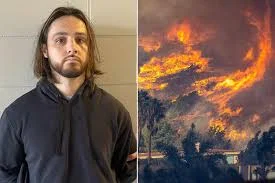
Jonathan Rinderknecht, a 29-year-old resident, has entered a plea of not guilty to the charges leveled against him concerning the ignition of what has been tragically dubbed one of the most destructive wildfires in California’s storied history. The catastrophic blaze, which erupted with brutal force on January 7, 2025, in the picturesque yet vulnerable hillside communities of Pacific Palisades and Malibu, claimed the lives of 12 individuals and left an indelible scar across the landscape and the hearts of countless residents. As the legal proceedings gather momentum, with Rinderknecht’s high-stakes trial slated to commence on June 8, the case promises to be a pivotal moment in the ongoing battle against wildfires and the quest for accountability.
Prosecutors contend that Rinderknecht initiated a separate fire on January 1, a full week before the major conflagration, which they assert smoldered undetected deep within the intricate root systems of the dry California terrain. This initial, unseen inferno, they argue, lay dormant and destructive before reigniting with devastating ferocity seven days later. This complex narrative, detailing the defendant’s alleged actions and their catastrophic consequences, forms the bedrock of the prosecution’s case. However, Rinderknecht’s defense attorneys vehemently counter these claims, positing that their client is being unjustly targeted as a convenient scapegoat for what they describe as a profound failure on the part of the Los Angeles Fire Department (LAFD) to fully extinguish the earlier, January 1 blaze. The pretrial memo, filed by the U.S. Attorney’s Office on April 29, offers a glimpse into the prosecution’s meticulous strategy, including startling details regarding Rinderknecht’s alleged state of mind on the eve of the initial fire, setting the stage for a dramatic and deeply scrutinized legal battle.
The Pacific Palisades-Malibu Wildfire: A Tragedy Unfolds
The wildfire that tore through the Pacific Palisades and Malibu regions in January 2025 stands as a grim testament to the destructive power of nature, exacerbated by human actions and systemic vulnerabilities. These areas, known for their breathtaking ocean views and exclusive properties, are also nestled in a high-risk wildland-urban interface, a zone where undeveloped wildland vegetation meets urban development. This interface creates a highly combustible environment, especially during California’s increasingly severe fire seasons.
Initial Ignition and Undetected Burn
Central to the prosecution’s argument is the concept of a ‘sleeper fire’ or ‘holdover fire.’ They allege that Jonathan Rinderknecht started a fire on January 1, 2025, which, rather than being immediately visible and actively burning, burrowed itself into the complex subsurface environment. This could involve smoldering within dry root systems, dense leaf litter, or subterranean peat layers—conditions common in drought-stricken California landscapes. Such fires can linger for days, or even weeks, sometimes appearing to be extinguished on the surface, only to reignite with catastrophic potential when conditions become favorable, such as a shift in winds, a drop in humidity, or an increase in ambient temperature. The seven-day lag between the alleged initial ignition and the massive flare-up is a critical component of the prosecution’s timeline and causality argument. Understanding the mechanics of such deep-seated fires is crucial for fire suppression efforts, and the defense’s counter-argument hinges on the LAFD’s alleged failure to detect and fully neutralize this underlying threat.
The Devastating Impact
The re-emergence of the fire on January 7 quickly escalated into a raging inferno, sweeping through thousands of acres, obliterating homes, and tragically taking the lives of 12 people. The sheer scale of destruction was immense, with properties reduced to ash, vital infrastructure damaged, and ecological habitats decimated. Beyond the immediate physical damage, the psychological toll on survivors and affected communities has been profound. Displacements, economic losses, and the trauma of witnessing such widespread destruction ripple through society long after the flames are extinguished. The human element of this tragedy, particularly the loss of life, elevates the legal proceedings against Jonathan Rinderknecht to a matter of significant public interest and profound emotional weight. The economic repercussions, including billions in property damage and recovery costs, further underscore the gravity of the situation, drawing parallels to other large-scale economic disruptions caused by unforeseen events China’s economic cracks exposed by the Iran war and commodity shocks.
Jonathan Rinderknecht: The Defendant and the Allegations
At the center of this legal maelstrom is Jonathan Rinderknecht. His age, 29, places him in a demographic often scrutinized in criminal cases, and the charges he faces are among the most serious imaginable. The prosecution is tasked with proving beyond a reasonable doubt that Rinderknecht not only started the initial fire but that this act directly led to the devastating January 7 blaze.
Prosecution’s Strategy and Pretrial Memo
The April 29 pretrial memo filed by the U.S. Attorney’s Office serves as a strategic roadmap for the prosecution. These legal documents are designed to outline the evidence, legal theories, and potential witness testimony that will be presented during the trial. For a case of this magnitude, the memo would likely detail forensic evidence linking Rinderknecht to the January 1 ignition site, potentially including accelerant detection, witness statements, digital footprints, or other circumstantial evidence. It would also elaborate on expert testimony regarding fire behavior, the nature of holdover fires, and the direct causal link between the initial alleged act and the subsequent catastrophic event. The prosecution’s objective is not merely to establish that a fire was started, but that it was done so with criminal intent or egregious negligence that directly resulted in the loss of life and property. They must build a narrative strong enough to overcome the defense’s challenges to the causal chain and the LAFD’s role.
Rinderknecht’s Alleged State of Mind
A particularly intriguing and potentially crucial aspect of the prosecution’s case, as hinted in the pretrial memo, concerns Rinderknecht’s alleged ‘state of mind’ on the night before the first fire began. In criminal law, intent or ‘mens rea’ is often a critical component for conviction, especially in serious charges like involuntary manslaughter or arson with resulting death. The prosecution might argue that Rinderknecht acted recklessly, negligently, or even with malicious intent. Details about his psychological state, any prior behaviors, or statements made around the time of the alleged ignition could be introduced to demonstrate a culpable state of mind. This could involve examining personal communications, mental health evaluations (if available and admissible), or witness observations of Rinderknecht’s demeanor and actions. Such evidence aims to paint a picture of motive or extreme disregard for public safety, a strategy often employed in high-profile cases involving severe consequences similar to the complexities seen in high-stakes negotiations and breakdowns.
The Defense Strategy: Scapegoat for Failure
Jonathan Rinderknecht’s defense team has adopted an aggressive strategy, arguing that their client is being unfairly targeted and scapegoated. This approach seeks to deflect culpability by pointing fingers at institutional failings, specifically those of the Los Angeles Fire Department.
Scrutinizing the Los Angeles Fire Department
The core of the defense’s argument rests on the assertion that the LAFD failed in its duty to fully extinguish the initial January 1 blaze. This isn’t merely a claim of oversight; it suggests a significant dereliction of duty or a systemic flaw in emergency response protocols. The defense will likely scrutinize the LAFD’s response logs, incident reports, and post-fire assessments from January 1. They may call expert witnesses on firefighting techniques, fire behavior, and incident command to testify about what constitutes a ‘full extinguishment,’ especially in complex environments prone to holdover fires. Was the area properly surveyed? Were all hot spots identified and addressed? Were sufficient resources deployed? These questions will be central to undermining the prosecution’s direct causal link between Rinderknecht’s alleged actions and the final tragic outcome. The defense may argue that even if Rinderknecht did start the first fire, the subsequent catastrophic event was not his fault but a foreseeable consequence of the LAFD’s inadequate response. This could potentially shift the narrative, introducing reasonable doubt regarding the direct causation of the fatalities and widespread destruction.
Implications of a Failed Extinguishment
If the defense can successfully demonstrate that the LAFD’s failure to fully extinguish the January 1 fire was an intervening cause that broke the chain of causation between Rinderknecht’s alleged actions and the January 7 catastrophe, it could significantly weaken the prosecution’s case, particularly regarding the more severe charges. Such an argument would raise critical questions about public agency accountability, resource allocation, and emergency preparedness in wildfire-prone regions. This aspect of the trial transcends Rinderknecht’s personal culpability, placing a spotlight on broader governance and policy issues, reminiscent of policy crises that expose vulnerabilities in national strategies. The outcome could set precedents for how responsibility is apportioned in future wildfire events, impacting fire department protocols, training, and legal liability across California and beyond. It highlights the intricate balance between individual responsibility and institutional efficacy in preventing and mitigating natural disasters.
A Timeline of Events and Key Dates
To provide clarity on the sequence of events, a chronological summary of the key dates involved in the Jonathan Rinderknecht wildfire case is essential:
| Date | Event | Significance |
|---|---|---|
| January 1, 2025 | Alleged initial ignition by Jonathan Rinderknecht | Start of the fire, purportedly smoldering undetected. |
| January 7, 2025 | Major flare-up of the wildfire in Pacific Palisades and Malibu | Catastrophic re-ignition, leading to widespread destruction and fatalities. |
| January 7, 2025 onwards | Fire suppression efforts, evacuations, and emergency response | LAFD and other agencies battle the blaze. |
| Date Unknown (Post-January 7) | Investigation into the cause of the fire begins | Forensic analysis and witness interviews to determine origin. |
| Date Unknown (Post-Investigation) | Jonathan Rinderknecht arrested and charged | Formal legal proceedings initiated against the defendant. |
| Date Unknown (Post-Arrest) | Jonathan Rinderknecht pleads not guilty | Formal denial of culpability, setting the stage for trial. |
| April 29, 2026 | Pretrial memo filed by the U.S. Attorney’s Office | Outline of prosecution’s strategy, including state of mind details. |
| June 8, 2026 | Trial of Jonathan Rinderknecht set to begin | Commencement of courtroom proceedings and presentation of evidence. |
The Broader Context: California Wildfires and Accountability
The Jonathan Rinderknecht case is not an isolated incident but rather unfolds against the backdrop of California’s worsening wildfire crisis. The state has been grappling with increasingly frequent and intense fire seasons, driven by a confluence of factors including climate change, prolonged droughts, forest management practices, and expanding human development into high-risk areas. The legal repercussions of these fires often extend beyond the immediate devastation, raising complex questions about responsibility, prevention, and punitive measures. The public demands accountability, and such trials serve as a critical mechanism for achieving it, or at least attempting to. Furthermore, the economic strain on emergency services and local governments from these recurring disasters is immense, leading to debates over funding, policy, and infrastructure investment. Efforts to enhance early detection systems, improve land management, and educate the public on fire safety are continually being refined, yet the sheer scale of the challenge remains daunting. For instance, the ongoing global challenges, such as communities trapped in crossfire zones, illustrate how even well-resourced nations struggle with mitigating the human impact of large-scale crises.
Legal Precedents and Future Implications
The outcome of Rinderknecht’s trial could establish significant legal precedents for future wildfire-related prosecutions. A conviction, especially if it hinges on the ‘holdover fire’ theory and a strong showing of Rinderknecht’s state of mind, could strengthen the legal framework for prosecuting individuals accused of causing wildfires, even if the direct link to the eventual catastrophe is delayed or complex. Conversely, if the defense successfully casts doubt on the LAFD’s response, it could prompt a re-evaluation of how fire agencies are held accountable for their actions and omissions in preventing secondary ignitions. This trial touches upon criminal liability, civil liability for damages, and potentially the liability of public agencies. The legal interpretations and judicial decisions in this case will undoubtedly influence future legislative efforts regarding wildfire prevention, response, and the distribution of responsibility among individuals, corporations, and governmental bodies.
Community Response and Resilience
In the wake of such a devastating event, the affected communities of Pacific Palisades and Malibu have embarked on a long and arduous journey of recovery and rebuilding. The collective resilience of residents, supported by aid organizations and government programs, often shines brightest in these darkest hours. However, the emotional scars run deep, and the demand for justice is palpable. The trial of Jonathan Rinderknecht is more than just a legal proceeding; it is a moment for the community to seek answers, understand what transpired, and hopefully find some measure of closure. Public engagement with the trial proceedings will be intense, with every detail scrutinized by a populace eager to prevent similar tragedies in the future. The implications of this trial extend beyond the courtroom, touching upon the social fabric, environmental policy, and the very definition of justice in the face of widespread calamity. For more information on wildfire prevention and safety, visit the National Fire Protection Association (NFPA) website.
The Road Ahead: A Landmark Trial
As June 8 approaches, all eyes will be on the Los Angeles courthouse where Jonathan Rinderknecht’s trial is set to unfold. This case represents a critical intersection of individual culpability, institutional responsibility, and the escalating challenge of wildfires in California. The prosecution faces the difficult task of proving intent or gross negligence and establishing an unbroken chain of causation despite the time lag and the defense’s vigorous counter-arguments regarding LAFD failures. The defense, on the other hand, must convince the jury that their client is being unfairly blamed for an outcome that was either beyond his control or attributable to a larger systemic breakdown. The detailed analysis of fire forensics, expert testimonies, and the legal interpretation of ‘state of mind’ will be paramount. Regardless of the verdict, the Jonathan Rinderknecht trial will serve as a powerful and somber reminder of the devastating consequences of wildfires and the complex, multifaceted challenges inherent in preventing them and holding those responsible accountable.