U.S. Military Strikes Escalate in Caribbean Amid Drug War, Deaths Mount
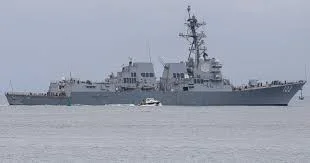
U.S. Military Strikes on alleged drug-trafficking vessels in the Caribbean Sea and Eastern Pacific Ocean have intensified in recent weeks, underscoring the Trump administration’s unwavering commitment to its “narcoterrorism” campaign, despite ongoing global conflicts. The latest incident on Monday saw two more fatalities, adding to a grim toll that now exceeds 188 lives since early September. This aggressive posture, characterized by the destruction of suspected smuggling boats, continues to draw both staunch defense from Washington and sharp criticism from human rights advocates and international legal experts.
Escalation in the Caribbean and Pacific
The campaign, primarily conducted by U.S. Southern Command (SOUTHCOM), has seen a notable surge in activity, with lethal operations spanning vast swathes of international waters. These strikes are part of a broader strategy initiated months before the high-profile capture of then-Venezuelan President Nicolás Maduro in January, who now faces drug trafficking charges in New York. The administration justifies these actions as essential to disrupting illicit drug flows and combating what it terms “narcoterrorism” in the Western Hemisphere, arguing that such measures are vital for national security. Military officials repeatedly state that the targeted vessels are operating along known smuggling routes, often sharing aerial videos—such as the one posted on X following Monday’s explosion—showing vessels engulfed in flames after being hit.
The geographic scope of these operations is extensive, covering critical maritime corridors in the Caribbean Sea and extending into the Eastern Pacific Ocean, areas historically utilized by drug cartels for transshipment. This sustained presence represents the largest U.S. military deployment in the region in generations, reflecting a strategic pivot towards a more kinetic approach to counter-narcotics efforts. Unlike traditional interdiction methods focused on boarding, searching, and arresting, these strikes often result in the complete destruction of vessels and the deaths of those aboard. The rationale provided is that these targets are linked to designated terrorist organizations, thereby legitimizing military engagement under a counter-terrorism framework. However, this classification remains a point of significant contention.
The “Narcoterrorism” Doctrine and Its Origins
The conceptual framework underpinning these aggressive actions is the administration’s “narcoterrorism” doctrine. This approach conflates drug trafficking with terrorism, enabling the application of military force under authorities typically reserved for armed conflict. President Trump’s administration has explicitly characterized its fight against cartels as a counterterrorism operation, thereby altering the traditional rules of engagement for anti-drug efforts. This redefinition marks a significant departure from previous U.S. counter-narcotics strategies, which largely operated under a law enforcement paradigm, emphasizing interdiction, arrest, and prosecution rather than lethal strikes.
A Shift in Strategy
Historically, U.S. anti-drug operations in Latin America, such as Operation Martillo, have relied heavily on interagency cooperation and partnerships with regional nations, with the U.S. Coast Guard playing a prominent role in boardings and seizures. The shift towards designating drug cartels as “foreign terrorist organizations” (FTOs) provides the administration with expanded powers, including sanctions, asset freezes, and crucially, the option for direct military force. This strategic evolution is detailed in the National Drug Control Strategy, which explicitly supports kinetic strikes against “narcoterrorists” to dismantle their criminal enterprises and stop the flow of illicit drugs. The administration argues this robust approach is necessary to combat increasingly sophisticated transnational criminal organizations that pose a direct threat to U.S. national security.
Mounting Casualties and Lack of Evidence
The human cost of this intensified campaign is substantial. With over 188 reported deaths since early September, the operations raise profound questions about accountability and transparency. While U.S. Southern Command consistently states that intelligence confirms vessels are involved in drug trafficking, a consistent point of contention is the military’s failure to provide concrete evidence that any of the vessels were indeed carrying drugs, or that individuals on board posed an imminent threat justifying lethal force. Critics, including human rights organizations and former military personnel, argue that the absence of such evidence transforms these strikes into extrajudicial killings. Amnesty International and other human rights bodies routinely highlight concerns about the arbitrary deprivation of life in such operations.
Calls for Investigation
The United Nations High Commissioner for Human Rights, Volker Türk, has condemned these strikes as violating international human rights law, calling them “unacceptable” and demanding immediate cessation. Türk emphasized that counter-narcotics efforts are law enforcement matters, where lethal force is permissible only as a last resort against an imminent threat to life. UN experts have further warned that the repeated and systematic nature of these attacks, often against small civilian vessels without apparent attempts to apprehend individuals or provide concrete evidence, raises serious concerns about the commission of potential international crimes. These bodies have called for prompt, independent, and transparent investigations into all reported attacks and urged the U.S. to ensure all counter-narcotics operations respect international law.
Summary of U.S. Anti-Narcotics Maritime Operations (September 2025 – May 2026)
| Metric | Details | Source & Context |
|---|---|---|
| Total Reported Deaths | >188 individuals | U.S. military statements, news reports |
| Operation Start Date | Early September 2025 | Trump administration directive |
| Primary Operating Areas | Caribbean Sea, Eastern Pacific Ocean | U.S. Southern Command (SOUTHCOM) AOR |
| Nature of Strikes | Kinetic strikes (destruction of vessels) | Videos show explosions engulfing vessels |
| Justification | Combating “narcoterrorism”; vessels on known smuggling routes | Trump administration’s counter-terrorism framework |
| Evidence Provided | No specific intelligence on individuals or cargo presented publicly | Criticism from UN, human rights groups, legal experts |
| International Legal Stance | Violates international human rights law (UN Human Rights Chief) | UN officials state these are extrajudicial killings |
The Maduro Capture: A Pivotal Event
The series of escalating maritime strikes predated by several months and then ran concurrent with a significant event in regional geopolitics: the January raid that led to the capture of then-Venezuelan President Nicolás Maduro. Maduro was subsequently flown to New York to face long-standing drug trafficking charges, to which he has pleaded not guilty. This bold operation, described by former President Trump as a “brilliant operation” and a potential blueprint for other Latin American countries, marked an unprecedented direct intervention against a sitting head of state.
Legal Ramifications
Maduro’s indictment in 2020 by the U.S. Department of Justice alleged his involvement with the Revolutionary Armed Forces of Colombia (FARC) in a “narcoterrorism conspiracy” to smuggle cocaine. His capture, alongside his wife Cilia Flores, who also faces charges, has brought to the forefront complex questions of international sovereignty and the extraterritorial application of U.S. law. While the U.S. cites the Maritime Drug Law Enforcement Act (MDLEA) and the Drug Trafficking Vessel Interdiction Act (DTVIA) for extraterritorial jurisdiction, particularly against unregistered or semi-submersible vessels, the direct apprehension of a foreign leader on foreign soil remains highly controversial. This event, however, demonstrates the administration’s willingness to pursue its anti-narcotics agenda with extreme measures, linking it directly to high-level political targets in the region. The legal complexities of such actions are immense, particularly concerning the sovereignty of other nations, even those whose leaders are accused of criminal activity.
International Law and Controversy
The legal basis for these U.S. military strikes has been vehemently challenged by international legal experts and human rights organizations. At the core of the debate is whether these operations constitute legitimate acts of war or law enforcement actions. The U.S. government views these strikes as part of an “armed conflict” against designated “narco-terrorist” organizations. However, critics argue there is no recognized international armed conflict in the Caribbean or Eastern Pacific that would justify such military-grade lethal force. Instead, they contend that international human rights law should govern these encounters, which strictly limits the use of lethal force to situations where there is an imminent threat to life.
Human Rights and Maritime Law Violations
Under the United Nations Convention on the Law of the Sea (UNCLOS), generally, ships on the high seas are subject to the exclusive jurisdiction of their flag State. While UNCLOS provides exceptions for universal crimes like piracy, illicit drug trafficking is not included in this exception, meaning that obtaining flag State consent is usually required for interdiction. The 1988 UN Convention against Illicit Traffic in Narcotic Drugs and Psychotropic Substances encourages international cooperation but does not explicitly authorize unprovoked lethal attacks on vessels without due process. Critics assert that the deliberate destruction of vessels and killing of individuals without judicial process or concrete evidence of an imminent threat amounts to extrajudicial killings and potential international crimes. Organizations like Human Rights Watch have called on other states to push back against these actions, warning that complicity through intelligence sharing or logistical support could also incur legal responsibility. This situation highlights a growing chasm between the U.S. administration’s interpretation of its counter-narcotics mandate and established international legal norms.
Geopolitical Context and Regional Impact
The escalating U.S. military operations in Latin American waters are not occurring in a vacuum. The prompt mentions the “Iran war” as a backdrop, indicating that despite significant commitments in other theaters, the Trump administration has maintained, and even intensified, its focus on the Western Hemisphere. This suggests a strategic decision to project strength and assert dominance in a region historically considered within the U.S. sphere of influence.
The Iran War and Resource Allocation
The persistence of the Caribbean strikes amid the ongoing conflict with Iran highlights a remarkable allocation of resources and strategic priorities. While a major conflict in the Middle East typically demands immense military focus and resources, the administration has demonstrated its capacity and willingness to wage a multi-front campaign against perceived threats. This dual focus underscores a comprehensive national security doctrine that views “narcoterrorism” as a threat on par with state-level adversaries, demanding military-grade responses. The ability to maintain such extensive operations simultaneously raises questions about the long-term sustainability and the potential strain on military assets and personnel. Furthermore, the perceived success or failure of these operations could influence future U.S. foreign policy decisions regarding military interventions and resource distribution globally.
Stoking Regional Tensions
Beyond the direct impact of the strikes, the aggressive tactics and the unilateral nature of some operations have undoubtedly stoked regional tensions. Latin American leaders, while often grappling with their own drug-related challenges, have not uniformly embraced Washington’s militarized approach. Mexico, for instance, has expressed alarm over leaked reports of potential U.S. drone strikes within its territory and has insisted that such interference must not be repeated. The “Shield of the Americas” initiative, launched by President Trump with various Latin American and Caribbean leaders, aims to coordinate intelligence sharing and military cooperation against cartels. However, the absence of key regional powers like Brazil, Mexico, and Colombia at this summit signals a lack of universal consensus and potential resistance to what some perceive as an infringement on national sovereignty. The detention of former President Maduro, in particular, set a contentious precedent, intensifying the debate over U.S. interventionism and potentially destabilizing regional political landscapes. The implications extend to critical maritime choke points, where U.S. unilateral actions could be mirrored or challenged, echoing broader blockade scenarios like those seen in the Strait of Hormuz.
The Path Forward: Scrutiny and Sustainability
The continuation of these U.S. military strikes in the Caribbean and Pacific presents a complex array of challenges and considerations for the international community. The immediate human cost, the erosion of international legal norms, and the potential for unintended regional destabilization are significant concerns. The administration’s unwavering stance, coupled with the increasing death toll and persistent lack of transparent evidence, suggests that the campaign will likely continue, if not escalate further, as indicated by the “narcoterrorism” designation and the broader strategy articulated in the National Drug Control Strategy.
Increased scrutiny from international bodies, human rights organizations, and allied nations is crucial. The calls for independent investigations into these killings are growing louder. The long-term efficacy of a strategy heavily reliant on lethal force also remains questionable. While kinetic strikes may disrupt individual shipments or temporarily deter certain actors, historical precedent suggests that drug trafficking networks are highly adaptable, often finding new routes and methods in response to increased enforcement. A holistic approach, addressing socio-economic factors, corruption, and demand reduction, is widely advocated by international drug policy experts as a more sustainable solution than purely military operations. The reliance on a “war on drugs” rhetoric, first popularized by President Richard Nixon, has consistently faced criticism for its emphasis on law enforcement and interdiction over public health and treatment, yielding “devastating consequences” globally.
Ultimately, the balance between national security objectives and international legal obligations will continue to be tested. The precedent set by these aggressive U.S. military strikes in Latin American waters, particularly in the context of the Maduro capture and the ongoing broader discussions about military options, will have lasting implications for maritime law, human rights, and geopolitical stability in the Western Hemisphere and beyond. A sustained global dialogue and adherence to established international frameworks will be essential to navigate these turbulent waters and ensure that counter-narcotics efforts do not inadvertently lead to a greater humanitarian and legal crisis.