Lebanon Border: IDF Stabilizes New Israeli Lines
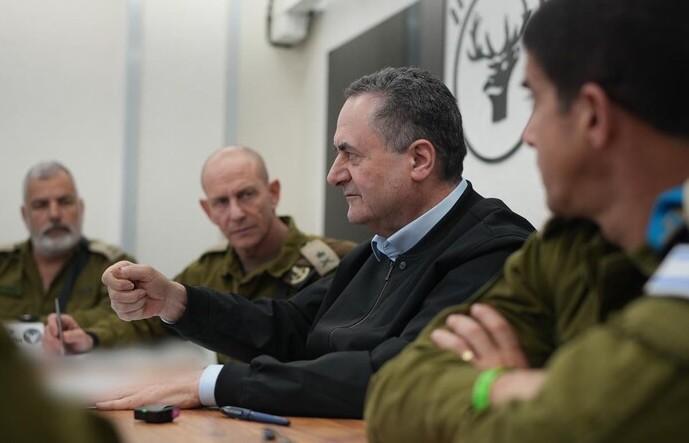
Lebanon is currently experiencing a profound and controversial territorial transformation as Israeli Minister Amichai Chikli publicly confirmed that the Israel Defense Forces (IDF) are systematically dismantling infrastructure in the southern region. The explicit objective, according to Chikli, is to stabilize the new border line of the State of Israel. This unprecedented declaration fundamentally alters the political and military landscape of the Middle East, signaling a departure from the traditional deterrence paradigm and moving toward active geographic and structural reconfiguration. The implications of physically reshaping the border environment extend deeply into international diplomacy, sovereignty disputes, and regional stability. This comprehensive analysis explores the multifaceted dimensions of Israel’s infrastructure destruction campaign, the strategic reasoning behind establishing a new demarcation, and the extensive ramifications for the Lebanese populace and the broader international community.
Lebanon Border Stabilization: The Core Strategy
The concept of stabilizing a new border line represents a significant evolution in Israeli military doctrine regarding its northern front. Historically, Israel has relied on the established Blue Line, heavily monitored by international peacekeepers under the UNIFIL mandate, to serve as the de facto boundary following the withdrawal from southern Lebanon in 2000. However, persistent cross-border skirmishes and the entrenchment of militant factions have prompted a strategic reassessment within the Israeli defense establishment. Minister Amichai Chikli’s comments illuminate a shift from reactive defense to proactive territorial conditioning. By clearing extensive tracts of land and dismantling both civilian and dual-use infrastructure, the IDF aims to create an operational buffer zone. This strategy is designed to deny adversaries the physical cover and logistical networks necessary to launch surprise incursions or short-range projectile attacks against northern Israeli communities. The stabilization effort is not merely about drawing a line on a map; it involves terraforming the immediate operational environment to ensure absolute visual and tactical dominance for Israeli forces, thereby redefining the security architecture of the region.
Infrastructure Destruction in Southern Lebanon
The scale of infrastructure destruction in southern Lebanon is staggering, reflecting a methodical military engineering campaign rather than collateral battle damage. Reports indicate that entire neighborhoods, agricultural facilities, access roads, and communication nodes have been leveled. The IDF’s Combat Engineering Corps has utilized heavy machinery, controlled demolitions, and aerial bombardment to flatten structures suspected of housing subterranean tunnel shafts, weapons caches, or observation posts. This systematic approach ensures that the landscape is rendered inhospitable for militant re-infiltration. The resulting devastation has prompted intense debate regarding proportionality and military necessity. Observers note that while the IDF justifies the clearing as essential for neutralizing asymmetric threats, the erasure of civilian infrastructure fundamentally alters the livability of southern Lebanon. As entire grids of electricity, water supply, and transportation are systematically dismantled, the prospect of post-conflict reconstruction becomes a monumental challenge, effectively enforcing a demilitarized zone through sheer infrastructural eradication.
Minister Amichai Chikli’s Strategic Statements
Minister Amichai Chikli’s articulation of the IDF’s objectives provides unprecedented clarity on the political directives guiding the military operations. By explicitly stating that the goal is to stabilize the new border line of the State of Israel, Chikli has moved away from ambiguous diplomatic language, framing the conflict in stark territorial terms. His statements suggest a consensus within certain factions of the Israeli government that the previous security arrangements, including UN Security Council Resolution 1701, have irrevocably failed to protect Israeli sovereignty. Chikli’s rhetoric is geared towards domestic reassurance, projecting strength and a decisive resolution to the northern threat. However, internationally, his words have been interpreted as a provocative admission of unilateral border modification. The term new border line implies a permanent or semi-permanent alteration of the status quo, challenging the internationally recognized boundaries and setting the stage for protracted diplomatic and legal confrontations at the United Nations and other global forums.
IDF Operational Goals and Border Security
The operational goals of the IDF in this theater are intrinsically linked to the broader mandate of ensuring the safe return of displaced residents to northern Israel. To achieve this, the military establishment has calculated that the threat of anti-tank guided missiles (ATGMs) and cross-border raids must be structurally eliminated. The destruction of infrastructure serves as a physical manifestation of this goal. By extending the line of sight and removing potential ambush points, the IDF significantly degrades the tactical advantages previously held by entrenched militants. Furthermore, operations such as the recent ground maneuvers where the IDF eliminates 1400 Hezbollah members underscore the intensity of the kinetic engagements preceding the infrastructure clearance. The operational blueprint involves a phased progression: initial kinetic strikes to eliminate active combatants, followed by sweeping engineering operations to dismantle the physical footprint of militant networks, ultimately leading to a fortified, technologically augmented border perimeter that requires fewer active troops to defend.
| Strategic Phase | Primary Objective | Military Tactics Applied | Geopolitical Outcome |
|---|---|---|---|
| Pre-2023 Deterrence | Maintain Blue Line status quo | Targeted retaliatory airstrikes, deterrence | Fragile stability under UNIFIL oversight |
| Immediate Escalation Response | Neutralize imminent cross-border threats | Artillery barrages, drone strikes, special ops | Elevated regional tensions, civilian displacement |
| Current Stabilization Doctrine | Establish new defensive demarcation | Systematic infrastructure destruction, buffering | Deep sovereignty crisis, unilateral border shift |
Geopolitical Implications of a New Border Line
The geopolitical shockwaves of establishing a new border line in southern Lebanon cannot be overstated. This unilateral action challenges the foundational principles of territorial integrity that govern international relations. Regional powers, particularly those aligned against Israel, view this development as an aggressive expansionist move rather than a defensive necessity. The redrawing or stabilizing of lines without bilateral agreements threatens to ignite broader regional conflicts, drawing in allied state and non-state actors. Furthermore, the situation complicates ongoing backchannel negotiations and ceasefire efforts. The stark reality of the changing physical borders adds complex layers to diplomatic discussions, as seen when Lebanon seeks ceasefire extension amid the realization that the ground reality has fundamentally shifted. The international community, particularly Western allies of Israel, finds itself in a precarious position, balancing the recognition of Israel’s right to secure its borders against the imperative to uphold international norms regarding sovereign territory and military occupation.
International Law and Sovereign Territory Concerns
The intersection of military necessity and international law forms the crucible of the current debate surrounding Israel’s actions in Lebanon. Article 51 of the UN Charter guarantees the right to self-defense, a principle Israel invokes to justify its operations against non-state actors operating from Lebanese soil. However, the Geneva Conventions impose strict limitations on the destruction of civilian property, mandating that such actions must be absolutely necessary for military operations. Legal scholars and human rights organizations argue that the wholesale leveling of villages to create a buffer zone may violate the principles of distinction and proportionality. The concept of stabilizing a new border line exacerbates these concerns, as it hints at the annexation or long-term occupation of sovereign Lebanese territory. The legal ramifications are profound, potentially exposing military commanders and political leaders to international scrutiny and investigations regarding violations of the laws of armed conflict.
Impact on Local Populations and Displacements
The human cost of the infrastructure destruction campaign is immense, resulting in the mass displacement of Lebanese civilians from the southern regions. As the IDF clears areas to establish the new border stabilization zone, tens of thousands of families have been forced to flee northward, creating a severe humanitarian crisis within Lebanon. The destruction of homes, schools, hospitals, and economic hubs means that even in the event of a cessation of hostilities, the displaced populations have nothing to return to. The situation is further exacerbated by the severe restrictions placed on movement, highlighted by reports that 55 Lebanese villages closed by Israel, effectively sealing off vast swaths of the southern territory. This blockade not only prevents the return of civilians but also obstructs humanitarian aid organizations from delivering vital supplies, compounding the suffering of those caught in the crossfire.
Demographic Shifts Across the Blue Line
The systematic clearing of the border region is instigating long-term demographic shifts that will reshape the socio-political landscape of Lebanon for generations. The depopulation of the south removes the traditional social fabric that has existed for centuries, replacing it with a militarized wasteland. This internal migration strains the already fragile economic and infrastructural capacity of northern Lebanese cities and regions hosting the internally displaced persons (IDPs). The demographic upheaval also has deep political ramifications within Lebanon’s complex sectarian system. The influx of predominantly Shia refugees into Sunni, Christian, and Druze majority areas has the potential to alter local power dynamics and ignite sectarian friction. The anger and disenfranchisement of the displaced populations are fueling intense domestic political debates, culminating in unprecedented internal criticism, as evidenced when Lebanon President Joseph Aoun slams Hezbollah for provoking a conflict that resulted in the catastrophic loss of southern territories.
Military Tactics Overview: Beyond Traditional Warfare
The military tactics employed in stabilizing the new border line represent a paradigm shift from traditional mechanized warfare to advanced territorial engineering and area denial operations. The IDF is leveraging a combination of overwhelming aerial supremacy, precision-guided munitions, and heavily armored engineering units equipped with specialized bulldozers and explosives. The primary tactical objective is not merely the defeat of enemy combatants, but the permanent alteration of the physical environment. By flattening topographical advantages and destroying the extensive network of subterranean tunnels that took decades to build, the military ensures that the area cannot be re-militarized stealthily. Furthermore, the integration of continuous drone surveillance, AI-driven targeting systems, and autonomous border patrol units allows the IDF to maintain a stranglehold on the newly established buffer zone with minimal forward troop deployment, thereby reducing the risk of casualties while maximizing territorial control.
Assessing Hezbollah’s Remaining Capabilities
Despite the immense scale of the IDF’s infrastructure destruction and targeted elimination campaigns, assessing the remaining capabilities of militant factions, specifically Hezbollah, remains a complex intelligence challenge. While the destruction of forward operating bases and launch sites in southern Lebanon has undeniably degraded their immediate tactical threat to northern Israel, the organization maintains a deep strategic reserve. Their arsenal of long-range precision missiles, largely stationed deeper within Lebanese territory or embedded in civilian infrastructure in urban centers like Beirut and the Bekaa Valley, continues to pose a formidable strategic deterrent. The loss of the southern border infrastructure forces a tactical adaptation; militants are likely transitioning to mobile, shoot-and-scoot rocket deployments and relying more heavily on advanced drone swarms to penetrate Israeli airspace. The ongoing conflict thus transforms into a strategic war of attrition, where the physical loss of territory in the south is countered by the continuous threat of asymmetrical strikes from deeper within the Lebanese interior.
Future Diplomatic Prospects and Regional Stability
The future diplomatic prospects for the region appear exceedingly bleak in the wake of the unilateral stabilization of a new border line. Traditional peacekeeping mechanisms, which relied on mutual consent and the sanctity of the Blue Line, have been rendered obsolete by the facts on the ground. Any future diplomatic settlement will have to contend with the physical reality of a decimated southern Lebanon and an expanded Israeli security perimeter. The international community faces the daunting task of mediating a conflict where one side has physically erased the previous boundaries of engagement. For regional stability, this development serves as a dangerous precedent. The normalization of infrastructure destruction as a legitimate means of border stabilization could inspire similar tactics in other contested regions globally. Ultimately, the quest for a stabilized border through military engineering may provide short-term tactical security for Israel, but it guarantees long-term strategic volatility, ensuring that the geopolitical fault lines of the Middle East remain perpetually fractured and volatile.