Lebanon Seeks Ceasefire Extension at Washington Talks
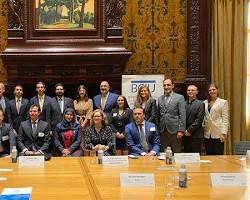
Lebanon Enters Washington Talks with Clear Demands
The Lebanese negotiating team arrives in the United States capital carrying the weight of a nation shattered by relentless warfare. Their primary objective—a month-long truce extension—is designed to provide a crucial window for emergency responders, international aid organizations, and the displaced populace to assess the unprecedented damage. Diplomats representing Beirut emphasize that a brief, days-long pause is entirely insufficient to address the logistical nightmares created by the widespread destruction of roads, hospitals, and communication networks. By securing a guaranteed thirty-day cessation of violence, the Lebanese government hopes to pivot from crisis management to strategic, long-term diplomatic engagement. This extended timeframe is critical for cooling tempers on the ground and allowing international mediators to draft sustainable frameworks for peace. The delegation’s mandate is crystal clear: no permanent resolution can be achieved while the threat of imminent violence hangs over the civilian population.
The Push for a Month-Long Truce Extension
Why exactly one month? Negotiators argue that a thirty-day window represents the minimum viable period required to organize large-scale humanitarian convoys and safely navigate the treacherous, unexploded ordnance-littered terrain of southern Lebanon. Furthermore, a month-long extension would synchronize with upcoming international donor conferences, providing a stable backdrop against which financial pledges for reconstruction could be confidently secured. The push for this specific duration underscores a strategic shift: Lebanese officials are attempting to force a transition from military posturing to diplomatic statecraft. This timeline also places the onus on the international community, particularly the United States, to guarantee compliance and monitor troop movements during the delicate transition phase, ensuring that the truce is not merely a tactical pause for rearmament.
President Aoun’s Strategic Plea and Diplomatic Maneuvering
In the lead-up to the talks, President Aoun delivered a powerful national address calling for a complete halt to Israeli aggressions, phrasing that sets a definitive tone for the delegation’s mandate. In a move highlighting the complex web of international alliances, Aoun explicitly thanked former U.S. President Donald Trump for creating an opportunity we must not waste. This statement suggests intensive back-channel communications and an acknowledgment of the unique leverage that American diplomatic channels hold over the region’s trajectory. President Aoun’s remarks are a calculated effort to unify a fractured domestic political landscape while simultaneously appealing to Washington’s desire for a definitive foreign policy victory in the Middle East. It is worth noting the stark contrast between this proactive diplomatic engagement and the diplomatic friction at previous summits, demonstrating a renewed, desperate urgency to end the bloodshed at all costs. Aoun faces immense domestic pressure from a population weary of perpetual crisis, an economy in freefall, and a political system notorious for its gridlock. Delivering a tangible victory—such as the one-month ceasefire extension and the beginning of an Israeli withdrawal—is imperative for his administration’s survival and for preventing the Lebanese state from collapsing entirely into a collection of warring sectarian factions.
The Humanitarian Crisis and the Toll of Conflict
Beyond the high-level political maneuvering lies a humanitarian catastrophe of staggering proportions. The statistics emerging from the conflict zones paint a grim picture of civilian suffering. Families have been violently uprooted, generations of wealth and property have been vaporized in a matter of seconds, and the psychological trauma inflicted upon the youngest citizens will likely echo for decades to come. The Washington talks are not occurring in a sterile diplomatic vacuum; they are set against the harrowing backdrop of overflowing morgues, overwhelmed medical facilities, and a desperate populace begging for basic necessities like clean water, reliable electricity, and life-saving medical supplies.
The Rising Death Toll and UN Condemnation
According to verified reports, at least 2,294 people have been killed in Lebanon since the onset of the current conflict. This tragic figure continues to climb daily as rescue workers slowly excavate the rubble of densely populated civilian neighborhoods. The sheer scale of the devastation has drawn intense scrutiny and fierce backlash from the international community. United Nations Human Rights experts have issued blistering condemnations, stating unequivocally that the deliberate destruction of homes is a weapon of war and a form of collective punishment. By defining the destruction of civilian homes in these stark terms, these experts are providing vital legal ammunition that the Lebanese negotiators will undoubtedly leverage in Washington. The concept of collective punishment is strictly prohibited under the Geneva Conventions. When an occupying force systematically levels civilian infrastructure to create a sterile buffer zone, it violates the fundamental principles of proportionality and distinction in armed conflict. For the thousands of families mourning their lost relatives, the pursuit of international justice is deeply intertwined with the pursuit of peace.
The Litani River and the Displacement Crisis
The geographical focal point of the immediate crisis remains the territory south of the Litani River. This historic waterway has long served as a symbolic and strategic boundary in Lebanese-Israeli relations. Currently, tens of thousands of Lebanese civilians who fled the area in terror are stranded in makeshift shelters, schools, and crowded apartments further north. Israeli military directives have explicitly warned these displaced residents not to return to their homes below the Litani, effectively creating a massive demographic void and a permanent refugee crisis within Lebanon’s own sovereign borders. The inability of citizens to safely return to their ancestral lands, tend to their farms, and rebuild their communities is a primary driver of the Lebanese negotiating team’s urgency in Washington.
Israel’s Strategic Occupation of Border Villages
The situation on the ground significantly complicates the potential diplomatic pathways. Israel has systematically occupied a continuous belt of border villages, establishing a heavily fortified military presence that significantly alters the pre-conflict status quo. This occupation is not merely a temporary holding pattern but appears to be a calculated, long-term effort to create a formalized military buffer zone aimed at permanently neutralizing cross-border threats. The Lebanese delegation heads to Washington viewing this occupation as an illegal annexation of sovereign territory, demanding an unconditional, immediate withdrawal as an absolute prerequisite for any permanent peace treaty or normalization of border relations.
Implications of the Buffer Zone Below the Litani
The establishment of a deep buffer zone through the deliberate blockade of numerous border villages fundamentally rewrites the security architecture of the Levant. From the Israeli perspective, this zone is framed as a necessary, unavoidable defensive measure to protect its northern communities from sudden incursions and relentless rocket fire. However, from the Lebanese perspective, it is a blatant, unacceptable violation of national sovereignty that actively prevents agricultural production—a cornerstone of the southern economy—and violently displaces indigenous populations. The Washington talks will undoubtedly clash violently over the interpretation and legality of this ongoing occupation, with Lebanon demanding nothing less than a full return to the internationally recognized Blue Line.
Collective Punishment and the Destruction of Infrastructure
The systematic clearing of these border areas has involved the total leveling of entire residential neighborhoods, ancient agricultural fields, and essential municipal infrastructure. Independent observers and human rights advocates note that the destruction goes far beyond any reasonable tactical military necessity, echoing the UN’s dire warnings of illegal collective punishment. By intentionally rendering these border villages completely uninhabitable, the occupying forces ensure that even if a diplomatic agreement is miraculously reached in Washington, the sheer logistical barriers to civilian return will be insurmountable for years. This scorched-earth approach forces the Lebanese government to not only negotiate aggressively for the return of the land but also to secure billions of dollars in international aid just to make the land basically livable once again.
| Negotiation Element | Current Status / Data | Lebanese Objective at Washington Talks |
|---|---|---|
| Ceasefire Duration | Temporary, fragile pauses | Minimum one-month extension to allow for aid and diplomacy |
| Human Cost | At least 2,294 casualties, vast displacement | Immediate humanitarian relief, end to collective punishment tactics |
| Territorial Integrity | Israeli occupation of southern border villages | Complete withdrawal to internationally recognized borders |
| Litani River Zone | Civilians barred from returning south | Safe, guaranteed return of displaced populations to their homes |
| Reconstruction | Widespread deliberate destruction of infrastructure | International funding commitments and security guarantees for rebuilding |
Goals for Reconstruction and Long-Term Stability
Should the Washington talks prove successful in securing the vital one-month extension and a firm commitment to a phased withdrawal, the monumental, generational task of reconstruction will immediately commence. Lebanese negotiators are acutely aware that a cessation of violence without a robust, fully funded financial recovery plan will inevitably lead to massive civil unrest and the rapid resurgence of militant factions eager to capitalize on pervasive poverty and civilian despair. Therefore, securing preliminary, binding commitments for a multilateral international reconstruction fund is quietly sitting atop the delegation’s secondary agenda as they meet with global power brokers.
Clearing the Path for National Rebuilding
Rebuilding southern Lebanon is not merely about pouring concrete and laying asphalt; it is fundamentally about restoring the torn social fabric of a deeply traumatized nation. The demands being prepared for Washington include the immediate deployment of international engineering corps to clear thousands of unexploded ordnance, the rapid reconstruction of destroyed water and electrical grids, and the provision of massive, sustained psychological support for the returning populations. Lebanon aims to use the high-profile Washington platform to forcefully remind the world that true, lasting security in the volatile Middle East cannot possibly be achieved while an entire region remains smoldering in ruins.
The Global Geopolitical Landscape and Regional Repercussions
The ultimate outcome of tomorrow’s critical talks will resonate far beyond the immediate borders of Lebanon and Israel. The localized conflict is intimately intertwined with the broader ceasefire dynamics between regional powers, making Washington’s mediation efforts a critical, high-stakes test of its enduring diplomatic influence in the modern Middle East. If the United States fails to broker this highly requested extension, it risks signaling to the international community a profound loss of diplomatic leverage, potentially inviting other ambitious global powers to aggressively step into the mediation void and reshape the region’s future according to their own strategic interests.
Economic Ripple Effects and the Global Energy Market
While the overwhelming human tragedy is rightly the paramount concern, the prolonged, unpredictable instability in the Levant also sends continuous shudders through global financial and logistical networks. The persistent threat of a wider regional escalation has historically caused massive volatility in energy markets and shipping rates. A successful, binding negotiation in Washington would inject a much-needed dose of stability into these nervous markets, assuring global investors that a catastrophic major conflagration can be avoided. The Lebanese delegation deeply understands that framing their desperate plea for peace in the broader context of global economic stability may resonate much more strongly with pragmatic international policymakers who are weighing the costs of intervention.
The Historical Context of the 2006 War and UNIFIL’s Mandate
To truly grasp the gravity of the current diplomatic crisis, one must look back to the immediate aftermath of the 2006 war, which culminated in the landmark United Nations Security Council Resolution 1701. This historic resolution established the fragile parameters for peace that are currently unraveling at a terrifying pace. The United Nations Interim Force in Lebanon (UNIFIL) was officially tasked with maintaining a strictly demilitarized zone south of the Litani River. However, the ongoing, intense conflict has rendered UNIFIL’s mandate exceptionally difficult to execute, with international peacekeepers frequently caught in the deadly crossfire. The Lebanese delegation will fiercely argue in Washington that reinforcing Resolution 1701 requires a totally comprehensive approach, not just temporary military containment. The erosion of the 2006 agreement highlights the urgent, undeniable need for a renewed, enforceable diplomatic framework—one that the requested one-month ceasefire is specifically intended to initiate.
What to Expect from the Washington Negotiations
As the various delegations gather in the capital, the atmosphere is expected to be incredibly tense and highly charged. Lebanon’s clear, uncompromising ask—a one-month truce extension as a starting point—serves as a critical litmus test for the viability of any lasting peace in the modern era. President Aoun’s calculated strategy relies heavily on immense international pressure eventually overriding local, short-term military objectives. However, breaking the stubborn deadlock over the occupied border villages and the Litani River exclusionary zone will require unprecedented diplomatic creativity and raw political willpower. The global community watches with bated breath, knowing full well that the failure of these talks could easily precipitate a wider, catastrophic regional conflagration, plunging the entire Levant back into the absolute darkest days of conflict, while a hard-fought success could finally open the heavy door to profound healing, massive rebuilding, and a long-overdue end to the heartbreaking toll of this endless war.