TACO Trade Fuels U.S. Stocks to Record Highs Amid War

TACO Trade dynamics have fundamentally rewired the psychology of the global financial markets, creating an unprecedented scenario where U.S. stocks are surging to record highs despite the looming shadow of international warfare and disrupted global supply chains. As the conflict rages on and the critical Strait of Hormuz remains heavily blockaded, traditional market fundamentals suggest that equities should be plummeting. Yet, all three major U.S. indexes have staged a miraculous bounce back, rocketing above their pre-missile strike levels. The underlying reason for this staggering rally is a newly coined trading philosophy that Wall Street has enthusiastically embraced. It is a strategy built not on earnings reports or interest rate projections, but on a behavioral analysis of the current U.S. administration. Traders have openly adopted what they refer to as the “TACO” trade, a surprisingly candid acronym that stands for “Trump Always Chickens Out.” This singular thesis has transformed moments of geopolitical terror into massive buying opportunities, fundamentally altering how institutional and retail investors approach risk management in 2026.
TACO Trade: The Phenomenon Driving U.S. Markets
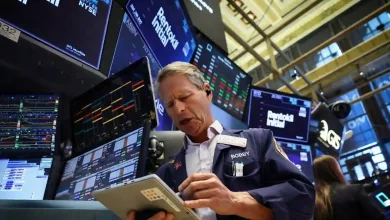
The TACO trade is not merely a passing joke on financial message boards; it has become a hardened, algorithmic reality on trading desks across Manhattan and beyond. Every time the markets sell off hard in response to a dramatic escalation—such as the first barrage of missiles flying in the Middle East—the immediate instinct of the modern trader is to wait for the inevitable political walk-back. The administration has established a predictable pattern: tough rhetoric followed by backchannel de-escalation or policy reversals designed specifically to placate a panicked stock market. When stocks dip, the universally accepted move is to buy aggressively rather than panic. This reflexive buying has created a synthetic floor under the S&P 500, the Nasdaq Composite, and the Dow Jones Industrial Average. Analysts utilizing global financial market data have noted that the speed of these recoveries is historically unprecedented, driven entirely by the assumption that political leadership will ultimately prioritize market stability over prolonged military engagement.
How Wall Street Decoded the Trump Reversal
Wall Street’s ability to decode the Trump reversal has turned political unpredictability into a highly profitable, predictable cycle. Quantitative funds have programmed their trading bots to scan news feeds for specific keywords indicating diplomatic softening. When the initial shock of a military strike hits the wires, the algorithms sell, creating a brief but violent dip. Within hours, human traders and sentiment-tracking programs begin accumulating positions, anticipating the customary press conference or social media post that signals a retreat from the brink of total war. This dynamic means that traditional safe-haven assets, such as gold or government bonds, are being bypassed in favor of high-beta tech stocks and speculative retail equities. The market has collectively decided that geopolitical threats are transient, but the administration’s fear of a sustained bear market is permanent. This realization has emboldened portfolio managers to take on extraordinary levels of risk, fully confident that the “Trump put” is effectively underwriting their aggressive long positions.
The Emoji That Defines Institutional Sentiment
Nothing illustrates the sheer audacity of this market environment better than the internal communications of elite financial institutions. At one prominent oil derivatives firm, employees have logged roughly one hundred taco emojis in their internal Slack channels since the war commenced. This digital shorthand represents the exact moment traders identify a geopolitical bluff and execute their buy orders. It highlights a profound shift in institutional culture; whereas previous generations of traders might have reacted to a Middle Eastern conflict with solemn risk-off strategies, today’s market participants view global instability through a lens of extreme cynicism and opportunistic greed. The taco emoji is the modern equivalent of ringing the bell at the New York Stock Exchange—a signal that the panic is over, the political walk-back is imminent, and the time to leverage up has arrived. This casual dismissal of physical world consequences in favor of financial engineering is the defining characteristic of the 2026 bull market.
U.S. Indexes Rebound Despite Global Chaos
Despite the harrowing realities on the ground, the U.S. indexes have rebounded with ferocious intensity. After sliding hard in March, when the reality of the conflict first crystallized, the markets quickly identified the administration’s pattern of retreat. The subsequent rally has been nothing short of breathtaking. To understand the magnitude of this recovery, one must examine the stark contrast between the physical economy and the financial economy. Supply chains are buckling, shipping insurance premiums are skyrocketing, and diplomatic channels are freezing, as detailed in reports regarding how Iran halts U.S. talks over blockade and Trump demands. Yet, the stock market remains completely detached from these grim realities. Investors are actively pricing in a “best of both worlds” scenario: massive deficit spending to fund the military apparatus, coupled with an eventual diplomatic capitulation that will reopen global trade routes. This cognitive dissonance has propelled the Dow, S&P, and Nasdaq to stratospheric valuations, defying all conventional metrics of risk and reward.
Magnificent 7 Add $2.5 Trillion in Eight Days
The tip of the spear in this monumental market rally has been the so-called Magnificent 7. In a stunning display of concentrated capital flows, these mega-cap technology companies added an astonishing $2.5 trillion in market value over just eight days. This surge is driven by the perception that massive tech conglomerates are largely insulated from physical supply chain shocks, such as the ongoing maritime crisis. Investors view companies like Apple, Microsoft, and Nvidia as digital fortresses, capable of generating massive cash flows regardless of who controls the Middle Eastern shipping lanes. Furthermore, continuous advancements in artificial intelligence are providing an independent catalyst for growth, as seen in comprehensive Apple 2026 innovation news and AI integrations. The market has decided that the AI revolution is too important to be derailed by geopolitical skirmishes. Consequently, capital that would normally flee to safety is instead pouring into the tech sector, creating a self-fulfilling prophecy of endless valuation expansion.
Retail Investors Join the Rally: The Robinhood Surge
It is not just the institutional professionals who are participating in the TACO trade; the retail investor class has returned to the market with a vengeance. After being battered by inflation and economic uncertainty over the past few years, the average retail trader is now chasing the geopolitical dip with unprecedented aggression. A prime example of this phenomenon is a 30-year-old Amazon delivery driver in Dallas. Watching the market tank in the days immediately following the U.S.-Israel strike on Iran, he boldly decided to put a substantial chunk of his life savings into Robinhood shares. His reasoning, summarized by a stark “F*ck it,” perfectly encapsulates the nihilistic optimism of the modern retail investor. He was entirely correct in his assessment. Robinhood shares surged an unbelievable 31% in a single week, rewarding his audacious risk-taking and validating the retail thesis that bad news is actually the ultimate buy signal.
The Mentality of Main Street Investing
The mentality of Main Street investing has fundamentally shifted from careful wealth accumulation to speculative momentum trading. The “F*ck it” philosophy is rooted in a deep sense of economic fatalism; many young investors feel that traditional paths to wealth, such as homeownership and conservative index investing, are mathematically impossible in the current inflationary environment. Therefore, they are willing to take massive, concentrated bets on high-volatility assets during moments of maximum global panic. The democratization of finance through mobile brokerages has armed millions of retail traders with the ability to instantly execute trades based on push notifications and social media trends. When they see the institutional algorithms buying the TACO trade dip, they piggyback on the momentum, amplifying the market’s upward trajectory and forcing short sellers into brutal, capital-destroying squeezes.
| Market Metric / Asset | Pre-Strike Level | March Panic Low | Current Record High | Rebound Performance |
|---|---|---|---|---|
| S&P 500 Index | 5,200 | 4,950 | 5,450 | +10.1% |
| Magnificent 7 Market Cap | $13.5 Trillion | $12.2 Trillion | $14.7 Trillion | +$2.5 Trillion |
| Robinhood (HOOD) | $18.50 | $15.20 | $19.91 | +31.0% |
| Crude Oil (WTI) | $82.00 | $85.00 | $98.00 | +15.2% |
Macro Disconnect: Oil Prices and The Strait of Hormuz
While the equity markets celebrate, the macroeconomic reality remains incredibly perilous. The most glaring disconnect between Wall Street and the physical world is occurring in the energy markets. The Strait of Hormuz, a critical chokepoint for global oil shipments, is still actively blocked by military forces. This is not a theoretical threat; the disruption is absolute, as documented by reports that the Strait of Hormuz is closed again with Iran citing a U.S. blockade. Historically, the closure of this vital waterway would trigger an immediate and sustained collapse in global equities due to the catastrophic implications for energy costs and manufacturing. Yet, the 2026 market simply does not care. Traders are aggressively betting that the administration will eventually capitulate to demands to ensure the flow of oil resumes before the domestic economy implodes. This high-stakes game of chicken is keeping the stock market afloat, even as the foundational pillars of the global economy begin to fracture under the weight of the blockade.
$98 Oil and Falling Global Stockpiles
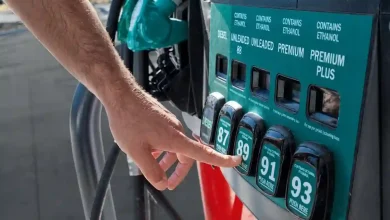
The consequence of this blockade is acutely visible in the price of crude oil, which is currently sitting ominously at $98 a barrel. Global stockpiles are falling fast, and the strategic reserves of Western nations are being depleted at an unsustainable rate. The energy crisis is spilling over into other commodities as well, creating secondary inflation spikes across the globe, similar to how the Hormuz closure sparked an 11% surge in EU natural gas futures. Despite the soaring cost of energy inputs—which inevitably compresses corporate profit margins and reduces discretionary consumer spending—equity analysts are continuously revising their earnings targets upward. The assumption is that once the TACO trade plays out and the political walk-back occurs, oil prices will instantly normalize. However, this assumption ignores the structural damage being done to energy infrastructure and the long-term geopolitical realignments that will persist long after the current conflict technically concludes.
Consumer Confidence Plummets as Markets Soar
The ultimate paradox of the current financial environment is the massive divergence between asset prices and the actual well-being of the population. Consumer confidence is currently in the gutter, plumbing depths not seen since the height of the 2008 financial crisis or the darkest days of global lockdowns. Everyday citizens are feeling the crushing weight of $98 oil at the gas pump, skyrocketing grocery bills due to supply chain disruptions, and pervasive anxiety about the escalating global war. Yet, none of this misery matters to the stock market right now. Wall Street algorithms do not measure human suffering; they measure liquidity, momentum, and the probability of a political reversal. As long as the “Trump Always Chickens Out” thesis holds true, the market’s answer to every bad headline, every missed mortgage payment, and every geopolitical disaster is exactly the same: aggressively buy the dip and wait for the inevitable rescue.
Will the Bull Run Survive the War’s End?
As the TACO trade continues to dominate market dynamics, a critical question looms over the horizon: nobody knows if the fundamentals can hold this up once the war actually ends. The current rally is built on the adrenaline of crisis and the expectation of political intervention. If the conflict concludes and the geopolitical premium is removed from the market, investors will be forced to confront the actual economic damage wrought by months of blockades, depleted oil stockpiles, and crushed consumer confidence. Will the Magnificent 7 continue to justify their multi-trillion dollar valuations when the broader economy enters a recessionary hangover? Can retail investors maintain their “F*ck it” bravado when liquidity dries up and corporate defaults begin to rise? For now, the market refuses to look that far ahead. The trading desks in New York and the delivery drivers in Dallas are united in their singular focus: riding the geopolitical volatility to maximum profit, confident that the ultimate backstop—the TACO trade—will never fail them.