Hormuz Cables Threat: Cuts Risk 97% of Global Web Traffic
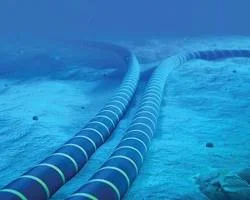
Hormuz strait undersea infrastructure represents one of the most critical, yet perilously fragile, technological chokepoints on the planet. While global attention frequently fixates on the surface-level transit of oil tankers through this narrow waterway, a far more invisible and arguably more vital commodity flows just beneath the waves: digital data. At least seven major submarine cable systems traverse the Strait of Hormuz, collectively carrying over 97% of the intercontinental internet traffic that binds the Middle East, Asia, and Europe. In an era where digital connectivity underpins every facet of modern civilization—from real-time financial markets to synchronized military operations—the prospect of a deliberate severance of these lines presents a catastrophic global threat. This comprehensive analysis delves deep into the architecture, vulnerabilities, and catastrophic implications of a synchronized attack on the Hormuz cable nexus.
The Strategic Importance of Undersea Networks
The contemporary global economy is inextricably tethered to the uninterrupted flow of fiber-optic light. Unlike satellites, which suffer from inherent latency limitations and bandwidth constraints, submarine cables utilize Dense Wavelength Division Multiplexing (DWDM) to transmit petabytes of data across oceans at nearly the speed of light. The physical geography of the Middle East dictates that the most efficient routing between European data centers and Asian tech hubs passes directly through the Red Sea, across the Arabian Peninsula, and through the Persian Gulf via the Strait of Hormuz. This concentration of infrastructure transforms a geographical bottleneck into a digital Achilles’ heel.
Analyzing the 7 Major Cable Systems
To fully grasp the magnitude of the vulnerability, one must examine the specific optical networks resting on the seabed of the Strait of Hormuz. These cables are marvels of modern engineering, consisting of optical fibers encased in layers of protective steel wire, copper power sheathing, and high-density polyethylene. Despite their robust construction, their convergence in such a narrow, heavily trafficked corridor amplifies the risk. Below is a detailed breakdown of the primary systems operating within this maritime chokepoint.
| Cable System Name | Estimated Capacity (Tbps) | Primary Landing Points | Strategic Significance |
|---|---|---|---|
| FALCON | 2.56 Tbps | Oman, UAE, Iran, Kuwait | Provides critical ring-topology redundancy within the Persian Gulf. |
| SEA-ME-WE 3 | 0.02 Tbps (Legacy) | Global (39 countries) | One of the longest cables; serves as a vital legacy backup route. |
| SEA-ME-WE 4 | 4.6 Tbps | France, Egypt, UAE, India | Core transit line for consumer internet and corporate enterprise data. |
| SEA-ME-WE 5 | 24.0 Tbps | Italy, Saudi Arabia, UAE, Singapore | High-capacity backbone supporting massive cloud computing demands. |
| TGN-Gulf | 1.2 Tbps | Oman, UAE, Qatar, Saudi Arabia | Essential for localized financial services and enterprise connectivity. |
| TW1 (Transit Wire 1) | 1.28 Tbps | UAE, Pakistan, Oman | Crucial link integrating South Asian networks into the Middle Eastern hub. |
| MENA (Middle East North Africa) | 5.76 Tbps | Italy, Egypt, Saudi Arabia, Oman | Provides alternative low-latency routes avoiding the highly congested Red Sea. |
Why 97 Percent of Global Traffic Relies on This Chokepoint
The staggering statistic that 97% of intercontinental digital traffic relies on subsea cables is a testament to the unparalleled efficiency of fiber optics. The Strait of Hormuz, in particular, acts as a primary conduit because terrestrial alternatives across the Middle East are historically fraught with geopolitical instability, bureaucratic red tape, and challenging topographies. Telecommunications consortiums prefer the legally unambiguous and physically stable environment of the seabed. However, the physical narrowing of the Strait—barely 21 miles wide at its narrowest point—forces these disparate cable systems into a dense, overlapping web. If an event were to compromise this tight corridor, the cascading failure would overwhelm the remaining global network, leading to packet loss, severe latency, and outright disconnection for hundreds of millions of users.
The Anatomy of a Deliberate Cable Cut
While submarine cables are occasionally damaged by accidental anchor drags or natural seismic events, the engineering protocols account for these isolated incidents. Network traffic is dynamically rerouted using Border Gateway Protocol (BGP) mechanisms. However, a deliberate, coordinated attack designed to sever multiple cables simultaneously falls outside the scope of standard redundancy planning.
Vulnerabilities in Shallow Waters
The bathymetry of the Strait of Hormuz introduces severe operational vulnerabilities. The average depth of the strait is roughly 90 meters, making the seabed exceptionally accessible compared to the abyssal plains of the mid-Atlantic. In deep waters, cables rest safely miles beneath the surface, requiring specialized deep-sea equipment to reach. In the shallow waters of Hormuz, the cables are within the operational range of basic commercial submersibles, autonomous underwater vehicles (AUVs), and even sophisticated commercial diving operations. Furthermore, the rocky and uneven seabed means cables cannot always be deeply buried using submarine plows, leaving them exposed on the ocean floor and highly susceptible to targeted mechanical trauma.
Potential Threat Actors and Capabilities
The geopolitical tinderbox surrounding the Strait of Hormuz elevates the threat of asymmetric sabotage. Nation-state actors, rogue naval elements, or highly organized non-state entities could execute a coordinated severance. The tactical execution does not require advanced weaponry; a commercial vessel dragging a heavily weighted, specialized grappling hook across the corridor could sheer through multiple systems in a single pass. For instance, considering the recent geopolitical shifts and military posturing in the region, the weaponization of internet infrastructure has transitioned from theoretical war-gaming to actionable doctrine. A deliberate blackout would serve as an ultimate tool of digital blockade, blinding adversaries before conventional kinetic operations begin.
Economic and Geopolitical Repercussions
The immediate aftermath of a localized cable massacre in the Strait of Hormuz would not be confined to dropped video calls or inaccessible social media platforms. The disruption would trigger an immediate, devastating shockwave through the global macroeconomic framework, affecting everything from energy pricing algorithms to automated logistics chains.
Financial Markets and High-Frequency Trading Impact
Modern financial architecture relies on split-second data synchronization. The Society for Worldwide Interbank Financial Telecommunication (SWIFT) system processes trillions of dollars in transactions daily, heavily dependent on the low-latency secure transit provided by these optical networks. A total severance would freeze cross-border capital flows between Asia and Europe. Furthermore, high-frequency trading (HFT) firms, which capitalize on microsecond discrepancies in asset prices, would see their algorithms fail catastrophically. The sudden blindness in market data would likely induce panic selling or trigger automated trading halts. The integration of cryptocurrency and global financial markets would also face severe synchronization forks, as mining nodes and exchange servers in the Middle East and Asia lose communication with the broader global ledger. Additionally, given the region’s prominence in oil and gas, the inability to digitally process energy trades would exacerbate energy sector volatility, sending shockwaves through commodities markets.
Military Communications and Strategic Readiness
It is a common misconception that the world’s militaries operate entirely on separate, highly classified satellite networks. In reality, the United States Department of Defense and its allied counterparts rely on commercial submarine cables to transmit over 95% of their non-tactical logistical, administrative, and unclassified intelligence data. The vast databases required for advanced military data processing systems require the immense bandwidth that only fiber optics can provide. Severing the Hormuz cables would force military networks to failover to highly constrained military satellite communications (MILSATCOM), severely choking the bandwidth available for critical operations, drone feeds, and joint strategic coordination in a highly contested theater.
Mitigation Strategies and Redundancy Plans
Addressing the nightmare scenario of a synchronized cable severance requires a multi-layered approach encompassing technological workarounds, rapid repair logistics, and proactive international security measures. However, the sheer volume of data moving through Hormuz means that true, seamless mitigation is practically impossible with current technology.
Rerouting Traffic: Satellite and Terrestrial Alternatives
When subsea networks fail, telecommunications providers attempt to shunt traffic to alternative routes. The mapping of these global lifelines, exhaustively documented by analysts through TeleGeography’s authoritative submarine cable mapping, shows that rerouting hundreds of terabits per second is a monumental task. Low Earth Orbit (LEO) satellite constellations like Starlink and OneWeb have revolutionized remote access, but their aggregate global bandwidth is a tiny fraction of a single DWDM subsea cable. They cannot absorb the backbone traffic of an entire continent. Terrestrial fiber routes spanning across Saudi Arabia to Israel, or northward through Iran and Russia, exist but are severely limited by political blockades, lack of maintenance, and their own regional security threats. Consequently, traffic prioritization would be enforced, strangling consumer internet access to preserve bandwidth for critical government and financial data.
International Response and Securing the Seabed
The repair of submarine cables is a specialized, time-consuming maritime operation. There are only a few dozen purpose-built cable repair ships globally. In a hostile or deliberately sabotaged environment, dispatching a slow-moving, unarmed cable repair vessel to the Strait of Hormuz would require an extensive military escort, further delaying the restoration of digital services by weeks or even months. To combat this vulnerability, international maritime coalitions must evolve beyond surface patrols. The implementation of continuous seabed monitoring using acoustic sensors, automated underwater surveillance drones, and strict enforcement of the United Nations Convention on the Law of the Sea (UNCLOS) provisions protecting undersea infrastructure is imperative. The digital economy cannot survive if its foundational infrastructure remains an undefended soft target in one of the world’s most volatile bodies of water.