Sanctions: Seven Militia Commanders Blacklisted by OFAC
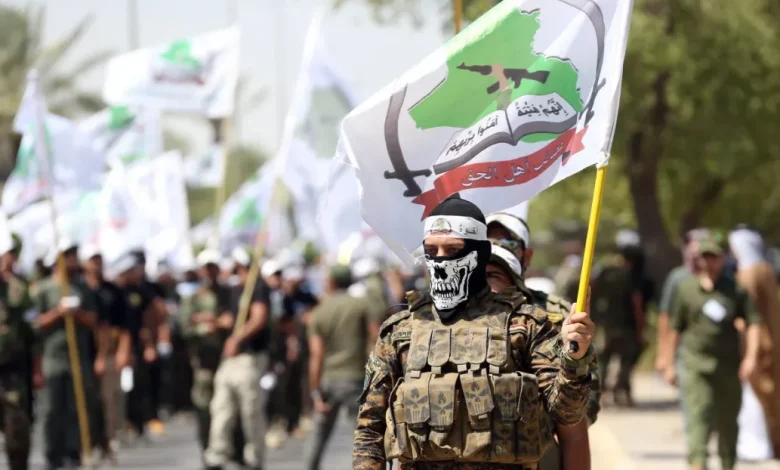
Sanctions have officially been imposed by the United States Department of the Treasury, targeting seven prominent militia commanders operating within Iraq. These high-ranking individuals, heavily tied to Iran-backed proxy groups, have been systematically blacklisted by the Office of Foreign Assets Control (OFAC) for their direct roles in coordinating sophisticated attacks on U.S. troops, military installations, and broader American interests across the region. As the geopolitical landscape of the Middle East continues to undergo a massive transformation, these newly implemented financial penalties represent a calculated maneuver by the Trump administration to neutralize violent non-state actors while simultaneously advancing a comprehensive diplomatic strategy. The comprehensive blacklist effectively freezes all known assets belonging to these commanders and strictly prohibits any individual or commercial entity from engaging in business with them, creating a severe economic quarantine designed to choke off their operational capabilities.
Comprehensive Overview of the OFAC Designations
The latest wave of designations issued by the Treasury Department underscores Washington’s unwavering commitment to holding malign actors accountable. The seven commanders singled out in this sweeping action are deeply embedded within some of the most formidable and heavily armed factions in the Middle East, specifically Kata’ib Hizballah, Asa’ib Ahl Al-Haqq, Harakat Al-Nujaba, and Kata’ib Sayyid Al-Shuhada. For years, these organizations have operated as a shadow military force, leveraging advanced weaponry, drone technology, and illicit financial networks to project power and destabilize sovereign nations. By publicly identifying and blacklisting their key operational leaders, the United States is directly challenging the logistical frameworks that allow these militias to thrive. The timing of this action is particularly critical, coming on the heels of the comprehensive geopolitical impact of the 2026 ceasefire, demonstrating that while broader truces may be in place, localized aggression against American personnel will not be tolerated.
The Seven Commanders and Their Respective Factions
To fully grasp the magnitude of these designations, it is essential to understand the operational architecture of the targeted groups. Kata’ib Hizballah has long been recognized as one of the most lethal and technologically advanced proxy forces operating in Iraq and Syria, responsible for numerous rocket and drone barrages against coalition forces. Asa’ib Ahl Al-Haqq, another powerhouse within the Iraqi Popular Mobilization Forces (PMF), exercises significant political and military influence, often blurring the lines between state security apparatus and rogue militia. Harakat Al-Nujaba and Kata’ib Sayyid Al-Shuhada play pivotal roles in cross-border smuggling, weapons proliferation, and the execution of coordinated strikes. The seven newly designated commanders are the tactical architects behind these operations, responsible for everything from weapons procurement and financial laundering to the precise planning of ambushes and drone swarms. Their removal from the legitimate global financial system is designed to paralyze their command structures and induce a chilling effect among their subordinates.
| Militia Faction | Targeted Leadership Role | Primary Operational Focus | Sanctions Impact Level |
|---|---|---|---|
| Kata’ib Hizballah | Senior Operations Commander | Drone strikes, weapons smuggling | Severe (Full Asset Freeze) |
| Asa’ib Ahl Al-Haqq | Financial Coordinator | Money laundering, political bribery | Severe (Global Banking Ban) |
| Harakat Al-Nujaba | Tactical Unit Leader | Cross-border logistics (Iraq/Syria) | Severe (Secondary Sanctions Risk) |
| Kata’ib Sayyid Al-Shuhada | Regional Field Commander | Direct attacks on U.S. installations | Severe (Travel Ban & Asset Freeze) |
Understanding the Implications of the Treasury Blacklist
The strategic deployment of OFAC sanctions is widely considered one of the most potent non-kinetic weapons in the United States’ national security arsenal. Unlike traditional military strikes, which can sometimes rally domestic support for insurgent groups or trigger unpredictable escalatory spirals, financial blacklisting operates silently but with devastating efficacy. When an individual is added to the Specially Designated Nationals (SDN) list, they are immediately stripped of their ability to interface with the global economy. For militia commanders accustomed to moving millions of dollars through regional banking hubs to purchase weapons, pay fighters, and enrich themselves, this sudden severance is catastrophic. Furthermore, the psychological impact on their operational networks cannot be overstated. Subordinates and business partners quickly realize that proximity to a designated individual carries immense personal and financial risk.
Asset Freezes and Secondary Sanctions Explained
The mechanics of the OFAC blacklist extend far beyond merely freezing bank accounts held in U.S. jurisdictions. The true power of these designations lies in the enforcement of secondary sanctions. Under this framework, any foreign financial institution, shell company, or individual broker that knowingly facilitates a significant transaction on behalf of these seven commanders risks being blacklisted themselves. This creates a highly effective “financial contagion” effect. Regional banks, money transfer services, and even illicit hawala networks are forced to scrutinize their clientele, often choosing to sever ties with targeted individuals entirely rather than risk facing the wrath of the U.S. Treasury. Consequently, these commanders are reduced to moving physical cash, a highly inefficient, easily trackable, and dangerous method of conducting military operations on a large scale.
Ambassador Tom Barrack’s Regional Strategy Under the Trump Administration
A driving force behind this meticulously coordinated pressure campaign is U.S. Ambassador Tom Barrack, currently serving as President Trump’s Special Envoy to the Middle East. Barrack’s tenure has been characterized by a unique fusion of aggressive economic pressure and high-stakes, pragmatic diplomacy. Drawing upon his extensive background in international finance and global market dynamics, Barrack understands that stabilizing the Middle East requires neutralizing the economic engines of terrorism. He has systematically dismantled the financial lifelines of rogue actors while simultaneously offering lucrative economic incentives to nations willing to embrace peace and stability. His strategy treats regional conflict not merely as a military problem, but as a complex economic puzzle that can be solved through the strategic application of sanctions, investment, and targeted diplomatic isolation.
Stabilizing Syria and Averting the Regional War
One of Barrack’s most significant, yet understated, achievements has been his masterful handling of the Syrian theater. Throughout the latest wave of regional warfare, Syria remained largely sidelined, avoiding the catastrophic escalation that many geopolitical analysts had predicted. Barrack achieved this through a combination of back-channel negotiations, stern warnings regarding military retaliation, and the strategic deployment of sanctions to keep adversarial forces contained. By ensuring that Syria did not become a primary launchpad for Iranian proxy attacks against Israel or U.S. forces, Barrack effectively fractured the vaunted “Axis of Resistance,” preventing a unified, multi-front war that could have easily dragged the United States into a prolonged ground conflict. This stabilization of the Levant was a critical prerequisite for the subsequent peace initiatives that followed.
Behind-the-Scenes Success in Lebanon and Israeli Peace Talks
Barrack’s influence extended profoundly into the delicate negotiations surrounding Lebanon and Israel. Operating largely behind the scenes, he played an instrumental role in guiding the ceasefire and advancing historic Israeli peace talks across the finish line. His approach recognized that military deterrence alone was insufficient; an economic off-ramp was necessary for long-term regional viability. By applying intense financial pressure on Hezbollah’s benefactors while simultaneously engaging in pragmatic dialogue with Lebanese state institutions, Barrack helped create a paradigm where peace became more economically advantageous than perpetual conflict. This methodology directly aligns with the broader diplomatic objectives explored in the Lebanon peace talks and security strategies, illustrating how empowering sovereign state armies over rogue militias is essential for enduring stability.
Secretary of State Marco Rubio’s Long-Term Stabilization Plan
The strategic blueprint executed by Ambassador Barrack is deeply intertwined with the broader foreign policy doctrine established by Secretary of State Marco Rubio. Under the Trump administration, Rubio has championed a doctrine of “Peace Through Strength,” an approach that explicitly rejects the appeasement of hostile actors in favor of overwhelming economic and diplomatic deterrence. As one of Secretary Rubio’s most trusted emissaries, Barrack has been tasked with implementing the President’s vision for long-term regional stabilization. This vision is predicated on the belief that enduring peace cannot be achieved while armed, non-state militias are allowed to operate with impunity and hold sovereign governments hostage. The blacklisting of these seven Iraqi militia commanders is a direct manifestation of this doctrine—a clear signal that the United States will systematically degrade the capabilities of those who seek to perpetuate violence and instability.
Integrating Diplomatic Carrots and Economic Sticks
The current U.S. strategy in Iraq represents a sophisticated balancing act, employing a mix of “sticks”—such as the targeted OFAC sanctions and the ever-present threat of military retaliation—and “carrots,” such as the promise of economic integration, infrastructure investment, and diplomatic normalization. For Iraqi political leaders caught in the crossfire between Washington and Tehran, this approach forces a difficult but necessary reckoning. The U.S. is making it abundantly clear that continued integration into the global economy requires the marginalization of rogue militias. This diplomatic strategy echoes the sentiments found in the analysis of moving beyond traditional conflict frameworks for regional stability. By rewarding compliance and severely punishing destabilizing behavior, the administration aims to gradually pivot Baghdad away from Tehran’s sphere of influence and toward a more prosperous, independent future.
The Future of U.S.-Iraq Relations Amid Rising Tensions
As the sanctions against these seven militia commanders take root, the geopolitical landscape of Iraq stands at a critical juncture. The targeted proxy groups will undoubtedly attempt to circumvent the financial blockades, potentially utilizing cryptocurrency networks, regional black markets, or increased extortion of local Iraqi businesses to maintain their revenue streams. However, the comprehensive nature of the OFAC designations severely limits their operational agility. The U.S. has demonstrated a willingness to continuously update and expand its sanctions regime to counter emerging evasion tactics, ensuring that the economic noose remains tight. The overarching goal is not merely to punish these seven individuals, but to fundamentally alter the incentive structure within Iraq, making participation in Iran-backed militias a path to economic ruin rather than a viable career choice.
Ultimately, the success of this strategy relies on the continued synchronization of economic pressure and high-level diplomacy. By closely coordinating with regional partners and leveraging the diplomatic breakthroughs achieved during the recent US-Iran truce negotiations, the administration is attempting to build a resilient security architecture in the Middle East. The blacklisting of the commanders from Kata’ib Hizballah, Asa’ib Ahl Al-Haqq, Harakat Al-Nujaba, and Kata’ib Sayyid Al-Shuhada sends an unequivocal message: the era of consequence-free proxy warfare is drawing to a close. As Ambassador Barrack and Secretary Rubio continue to execute the administration’s long-term stabilization plan, the aggressive use of targeted financial sanctions will remain a cornerstone of American foreign policy, methodically dismantling the networks of terror and paving the way for a more stable, secure, and economically integrated Middle East.