Strait of Hormuz Closed Again: Iran Cites U.S. Blockade
The Strategic Context of the Closure
The strategic importance of this waterway cannot be overstated, as it represents the single most critical maritime chokepoint in the global energy ecosystem. Connecting the Persian Gulf to the Gulf of Oman and the Arabian Sea, this narrow stretch of water is the lifeblood of energy exports for Saudi Arabia, the United Arab Emirates, Kuwait, Iraq, and Iran itself. The decision to clamp down on this vital artery is not an isolated incident but rather the culmination of years of intense geopolitical maneuvering and military brinkmanship. Historically, Iran has leveraged its geographical dominance over the strait as a primary asymmetric deterrent against perceived Western aggression. By threatening to seal off the route, Tehran effectively holds the global economy hostage, calculating that the resulting spike in energy prices will pressure the international community to temper American hawkishness. This renewed closure marks a significant escalation, transitioning from mere rhetorical threats to actionable maritime blockades. The ramifications are sweeping, instantly drawing the ire of international naval forces and testing the logistical resilience of global shipping conglomerates.
The Ongoing U.S. Blockade Dispute
At the very core of this crisis lies the protracted dispute over stringent American economic and maritime blockades. The Trump administration has maintained a rigorous maximum pressure campaign designed to starve the Iranian regime of its crucial hydrocarbon revenues. When tentative backchannel negotiations led to a temporary reopening of the strait, it was predicated on an Iranian demand for immediate sanctions relief and the cessation of U.S. naval interdiction operations. However, the situation quickly deteriorated. Analysts observing the situation have consistently pointed out that the U.S. final and best offer ignored key Iranian sovereignty concerns, leading to an inevitable breakdown in trust. The White House remained utterly uncompromising, insisting that any sanctions relief must be preceded by comprehensive concessions regarding Iran’s ballistic missile program and its network of regional proxies. Consequently, Tehran viewed the lack of American reciprocity as a direct violation of their informal understanding. The Iranian state media was unequivocal in its framing: the U.S. failed to honor its unwritten commitments, leaving the Islamic Republic with no alternative but to reassert absolute control over its territorial waters and the adjoining transit corridors.
Iran’s New Passage Requirements
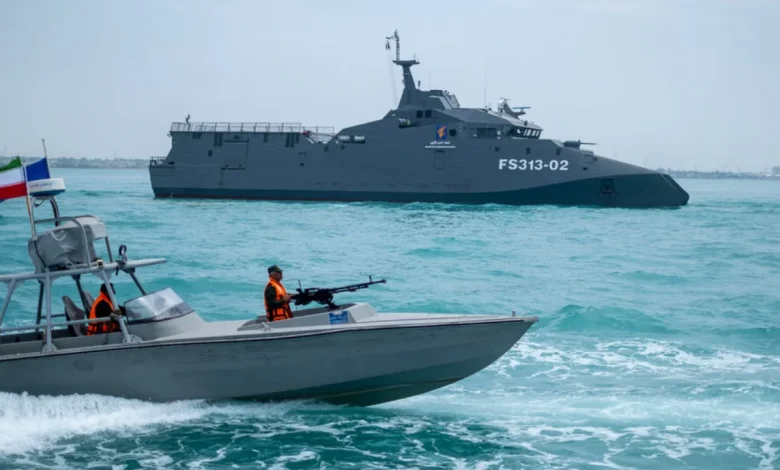
In an unprecedented assertion of maritime sovereignty, the Iranian government has implemented a stringent new protocol for all commercial and military vessels seeking transit through the narrow shipping lanes. Passage now strictly requires direct approval from Iranian maritime authorities, effectively stripping the strait of its internationally recognized status as a transit passage under the United Nations Convention on the Law of the Sea (UNCLOS)—a treaty that Iran has signed but not ratified. Vessels are now mandated to transmit their cargo manifests, destination ports, and ownership structures directly to the IRGCN before approaching the entrance of the strait. Failure to comply with these sweeping demands has already resulted in the forced rerouting or detention of several oil tankers. This draconian bureaucracy is not merely a security measure; it is a profound political statement designed to humiliate Western naval forces operating in the region and to demonstrate irrefutable Iranian hegemony over the Persian Gulf. Shipping companies are now caught in an impossible dilemma: capitulate to Iranian demands and risk violating U.S. and international sanctions, or refuse and risk the immediate seizure of multi-million-dollar vessels and their crews.
Global Economic Impact and Shipping Crisis
The global economic reverberations of this closure were instantaneous and severe. Maritime logistics experts predict catastrophic delays across global supply chains, as supertankers and container ships are forced to idle indefinitely in the Gulf of Oman or embark on highly inefficient alternative routes. The cost of maritime insurance for vessels operating anywhere near the Middle East has skyrocketed to unprecedented levels, making it economically unviable for many independent operators to continue regional commerce. To understand the broader context of this logistical nightmare, one must examine the global shipping and geopolitics surrounding the strait, which have been historically fraught with tension but never quite so decisively fractured.
| Alternative Route / Option | Transit Time Delay | Insurance Premium Spike | Economic Viability |
|---|---|---|---|
| Cape of Good Hope Diversion | +14 to +18 Days | Moderate Increase (300%) | Poor (High fuel costs) |
| Overland Pipelines (Saudi/UAE) | No Delay | Negligible | Max Capacity Reached |
| Idling in Gulf of Oman | Indefinite | Severe Increase (800%) | Unsustainable |
| Complying with Iran Demands | Minimal Delay | Extreme Sanctions Risk | Legally Impossible |
The table above illustrates the sheer lack of viable alternatives for the international shipping industry. Pipelines bypassing the strait are currently operating at maximum throughput, meaning millions of barrels of oil are effectively trapped within the Persian Gulf until a diplomatic or military resolution is achieved.
Oil Markets React to Heightened Tensions
The immediate reaction from international commodities markets was one of absolute panic. Brent Crude and West Texas Intermediate (WTI) futures surged significantly within hours of the Iranian broadcast. Speculators and institutional investors are rapidly pricing in a sustained disruption to global energy supplies. While there was previous optimism regarding energy stability, the current reality has fundamentally shifted the baseline. Experts closely monitoring oil market dynamics and why cheap flights remain unlikely despite previous ceasefire hopes note that this blockade guarantees sustained high fuel costs across all sectors of the economy, particularly commercial aviation and heavy logistics. The volatility is exacerbating an already fragile global economy struggling with persistent inflationary pressures. Major oil-importing nations, heavily reliant on Middle Eastern crude, are already tapping into strategic petroleum reserves in a desperate bid to stabilize domestic pump prices. However, these reserves are finite, and without a resumption of free navigation, a global energy recession becomes a mathematical certainty.
Immediate Supply Chain Disruptions
Beyond the immediate energy crisis, the closure of this vital maritime corridor is wreaking havoc on broader global supply chains. The Persian Gulf is not merely an exporter of crude oil; it is a massive hub for the export of liquefied natural gas (LNG), petrochemicals, and manufactured goods. The sudden halt in maritime traffic means that crucial industrial inputs—ranging from fertilizers for global agriculture to specialized plastics used in medical manufacturing—are suddenly cut off from the global market. Furthermore, Asian economies, which represent the primary destination for Middle Eastern exports, are facing acute shortages that threaten to paralyze their manufacturing sectors. The ripple effects will inevitably be felt by Western consumers, who will encounter significant delays and steep price hikes for everyday commodities. Retailers and manufacturers are scrambling to secure alternative suppliers, but the sheer volume of trade that relies on the strait makes true substitution physically impossible.
Trump Administration Response and Strategy
In Washington, the Trump administration has responded with characteristic defiance and severe rhetoric. The President has publicly doubled down on the existing blockade, framing Iran’s closure of the strait as an act of international piracy that will not be tolerated. The Pentagon has been directed to accelerate the deployment of additional naval assets to the Fifth Fleet, headquartered in Bahrain, signaling a readiness to forcibly break the Iranian blockade if deemed strategically necessary. Simultaneously, the U.S. State Department is actively lobbying for an expansion of the International Maritime Security Construct (IMSC), urging allied nations to contribute surface combatants to escort commercial shipping. The administration’s unwavering stance underscores a foundational belief that any concession to Tehran would validate their asymmetric extortion tactics. However, this hardline approach carries immense inherent risks, a sentiment echoed widely across comprehensive Reuters Middle East coverage, which highlights the diminishing off-ramps for diplomatic de-escalation.
Military Escalation Risks in the Persian Gulf
The concentration of opposing military forces in such a confined geographic space creates an incredibly volatile powder keg where a single miscalculation could ignite a catastrophic regional war. The IRGCN is renowned for its utilization of fast-attack craft, naval mines, and shore-based anti-ship cruise missiles—a doctrine specifically designed to overwhelm larger, technologically superior adversaries in constrained littoral waters. Intelligence assessments are increasingly sounding the alarm over the extent of Iranian military preparations. Recent satellite imagery confirms that Iran rebuilding missiles amid tactical pause was a deliberate strategy to fortify its coastal defense infrastructure prior to this announcement. U.S. naval commanders are operating under highly pressurized rules of engagement, balancing the necessity to protect vital shipping lanes with the paramount imperative to avoid initiating an uncontrollable kinetic conflict. The threat of a preemptive strike or an accidental skirmish escalating into full-scale theater warfare has never been more pronounced in recent history.
Diplomatic Fallout Among U.S. Allies
The abrupt escalation has also generated significant diplomatic friction between the United States and its traditional geopolitical allies. Many European and Asian partners, who are vastly more dependent on Middle Eastern energy imports than the increasingly energy-independent United States, are expressing deep consternation over the Trump administration’s uncompromising posture. They argue that Washington’s relentless pursuit of maximum pressure is ultimately what cornered Tehran into this desperate, highly disruptive maneuver. Privately, allied diplomats are urging the White House to consider localized, face-saving concessions that might persuade Iran to quietly lift the transit restrictions. The broader context of these fractured alliances is deeply rooted in historical diplomatic failures, specifically illuminating why U.S.-Iran negotiations failed previously and how those failures continue to haunt current coalition-building efforts. The lack of a unified global response emboldens Tehran, allowing them to exploit the daylight between Washington and its international partners.
European Union Stance on Maritime Security
The European Union finds itself in a particularly precarious position. While European capitals unequivocally condemn Iran’s blatant disregard for the freedom of navigation, they remain profoundly skeptical of participating in any U.S.-led military coalition that might be interpreted as an endorsement of the broader American strategy against Iran. Instead, the EU is attempting to revitalize its independent maritime surveillance mission in the Strait of Hormuz (EMASOH), emphasizing de-escalation and diplomatic engagement over military deterrence. However, without the overwhelming naval firepower that only the United States can project, the European initiative lacks the necessary teeth to compel Iranian compliance or meaningfully reassure terrified commercial shipping operators. This dynamic exposes a fundamental weakness in European foreign policy: the desire for strategic autonomy constantly colliding with the hard reality of limited military capabilities in vital geopolitical theaters.
Future Outlook for the Strait of Hormuz
The future trajectory of this profound geopolitical crisis remains dangerously opaque. If neither side demonstrates a willingness to compromise, the situation will inevitably metastasize into a prolonged war of economic attrition, fundamentally altering the architecture of global trade. The Iranian regime appears absolutely committed to enduring intense domestic economic hardship if it means projecting strength and sovereignty on the world stage. Conversely, the Trump administration views yielding to maritime extortion as a red line that would shatter American credibility globally. To break this terrifying deadlock, an extraordinary diplomatic intervention—likely mediated by a neutral third party such as Oman or a rising global power like China—will be required. Until such a breakthrough occurs, the waters of the strait will remain perilous, and the global economy will continue to navigate the treacherous currents of an unprecedented energy and supply chain crisis. The world watches with bated breath, fully aware that the next move in this high-stakes maritime chessboard could dictate the economic prosperity and security of the entire decade.