Lebanon crisis: Why Reining In Hezbollah Risks Civil Strife
Lebanon crisis dimensions are growing increasingly complex as the government in Beirut faces what many military and political analysts consider an impossible paradox. The nation is trapped in a deeply difficult position when it comes to reining in Hezbollah without tearing the historically fragile country apart. The fundamental issue paralyzing decision-makers is that any domestic or internationally mandated attempt to forcibly disarm or politically dismantle the powerful armed group risks igniting a catastrophic internal conflict. For decades, the Lebanese state has operated under a delicate sectarian power-sharing system, balancing competing interests to maintain a semblance of peace following its brutal 15-year civil war. Today, altering the status quo by aggressively confronting the country’s most formidable non-state actor without comprehensive defense alternatives threatens to unravel the republic entirely.
The Core of the Predicament: Deep-Rooted Social Ties
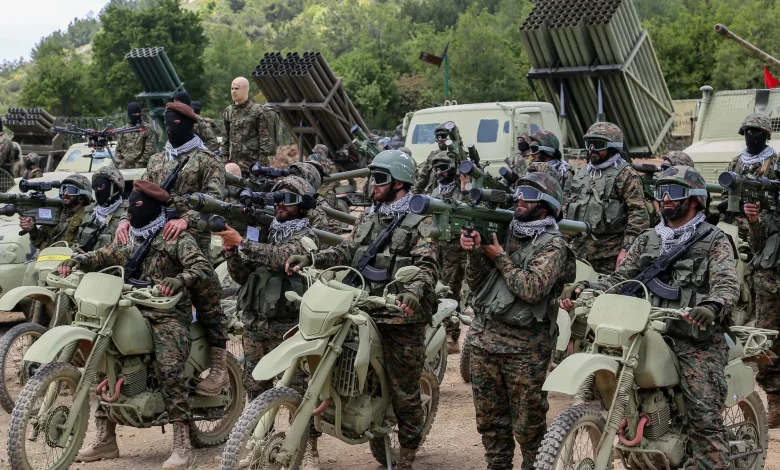
To understand the immensity of the challenge facing the Lebanese state, one must look far beyond the military arsenal and precision-guided munitions stockpiled by the resistance faction. Hezbollah is not just a heavily armed militia functioning autonomously within state borders; it is a profound socio-political movement that has successfully woven itself into the very foundation of the nation’s demographics. Operating as a state within a state, the organization provides an intricate network of social welfare, including schools, advanced medical facilities, agricultural cooperatives, and widespread financial networks like Al-Qard Al-Hasan, which acts as an informal banking sector for hundreds of thousands of disenfranchised citizens.
Woven Into the Social Fabric of the South
Southern and eastern Lebanon, particularly the regions bordering Israel and the fertile expanse of the Bekaa Valley, represent the absolute heartland of Hezbollah’s constituency. Here, the group is not viewed as a rogue paramilitary force, but rather as the primary provider of both essential civic services and communal security. Dismantling this vast infrastructure cannot be achieved through mere governmental decrees or limited security operations. Any effort to untangle this network without a viable, immediate replacement by the deeply underfunded and largely absent state institutions would result in an unprecedented humanitarian and socio-economic collapse for the predominantly Shia population in these territories. Political maneuvering is incredibly restricted, a dynamic evident as Lebanon refuses Netanyahu talks, signaling an acute unwillingness to bypass the domestic consensus in favor of hasty international pressures that fail to grasp local complexities.
The Deterrence Dilemma: Fearing a Full Israeli Invasion
The secondary, yet arguably most critical, pillar of Hezbollah’s endurance in the Lebanese landscape is its self-proclaimed and widely accepted role as the primary deterrent against Israeli aggression. For generations, the communities in southern Lebanon have borne the brunt of cross-border conflicts, military occupations, and devastating aerial bombardments. The prevailing narrative—which holds significant weight even among non-Shia demographics—dictates that dismantling Hezbollah without an ironclad, internationally enforced security guarantee would essentially strip Lebanon of its only viable defense mechanism. Without the group’s asymmetric warfare capabilities, citizens fear the nation would be left completely exposed to a full-scale Israeli invasion with absolutely nothing to deter it.
| Lebanese Security Actors | Primary Mandate & Role | Deterrence Capability Against External Threats | Domestic Social Integration |
|---|---|---|---|
| Lebanese Armed Forces (LAF) | Internal security, border monitoring, counter-terrorism | Low (Lacks advanced air defense and heavy armor) | Very High (Cross-sectarian symbol of unity) |
| Hezbollah Military Wing | Asymmetric warfare, anti-armor, strategic rocketry | High (Maintains a mutual balance of terror) | Extremely High (Deeply rooted in Shia communities) |
| UNIFIL Forces | Peacekeeping, observation, reporting violations | None (Strictly observational mandate) | Low to Moderate (Limited civil-military cooperation) |
The Withdrawal of the Lebanese Army
Complicating the deterrence narrative is the vivid historical memory of the local populations. During previous conflicts and moments of extreme border tension, the Lebanese Armed Forces (LAF) have frequently been forced to reposition or withdraw from forward operating bases as heavily armored Israeli forces advanced. These tactical retreats, while mathematically necessary to preserve the lives of an under-equipped national army facing a technologically superior adversary, have left an indelible mark on the collective consciousness of the border communities. They haven’t forgotten that when the state’s military apparatus retreated, Hezbollah’s localized fighters remained embedded to conduct guerrilla defense operations. As long as this dynamic exists, arguing for disarmament requires a paradigm shift that proves moving beyond Netanyahu and Hezbollah brings stability—a concept that remains largely theoretical to those living in the active line of fire.
The Psychological Toll: Mourning the Frontline Fighters
Beyond the structural military and socio-economic strategies lies a profoundly deep psychological toll that inextricably binds the population to the resistance faction. Confronting Hezbollah is not a simple matter of confronting a political opponent; it requires addressing the profound grief of countless families mourning fathers, sons, and brothers killed on the front lines. The group has suffered substantial casualties in both localized skirmishes and broader regional engagements, embedding a culture of martyrdom that commands profound respect and reverence within its community. Attempting to criminalize or abruptly disband an organization whose fighters are viewed locally as sacred protectors who shed blood for the defense of their villages would be viewed not as a political transition, but as a severe betrayal.
Hezbollah Flags and Regional Symbolism
The visible markers of this psychological entrenchment are impossible to ignore for anyone traveling through the region. Across the southern hillsides and the thoroughfares of the Bekaa, vibrant yellow Hezbollah flags flutter alongside expansive posters commemorating fallen fighters. These symbols dominate the public square, serving as constant reminders of the sacrifices made by the local populace. This visual dominance is a testament to the fact that the group’s power is drawn directly from the grassroots level. Any external or internal force attempting to erase this visual and cultural footprint would face massive, likely violent, pushback from civilians long before they ever encountered a uniformed combatant.
The Danger of Internal Strife and the Shia Community
Given the deeply entrenched nature of Hezbollah, confronting the organization without first comprehensively reassuring and integrating the Shia community risks triggering devastating internal strife. Lebanon’s sectarian balance is incredibly precarious. The Shia population represents a massive demographic bloc within the country, and their political representation is heavily consolidated under the Hezbollah-Amal alliance. Demanding the disarmament of Hezbollah is frequently interpreted by this community as an existential threat—an attempt by rival sectarian factions to strip them of their political leverage and communal defense mechanisms. Moving hastily against the group could rapidly devolve into neighborhood-level sectarian violence, returning the nation to the darkest days of its bloody past.
The Reluctance of the Lebanese Army Commander
This acute awareness of the potential for sectarian warfare is precisely why the Lebanese Armed Forces, under the guidance of its senior leadership, have maintained a cautious and highly calibrated stance. The Lebanese army commander has been notably reluctant to act aggressively against Hezbollah’s domestic infrastructure. The LAF is universally lauded as the sole remaining unified national institution in a severely fractured state, comprising soldiers from all religious and sectarian backgrounds. Ordering the military to confront Hezbollah by force could precipitate massive defections among Shia personnel, effectively fracturing the national army along sectarian lines and destroying the last pillar of state stability. Instead, the military leadership prioritizes national cohesion, understanding that sweeping military mandates cannot substitute for a comprehensive political settlement, a reality highlighted when considering scenarios like a historic first Israel Lebanon direct talk which remains an explosive domestic issue.
Geopolitical Maneuvering and Future Security Guarantees
A sustainable solution to this complex predicament requires robust, internationally backed security guarantees that transcend mere rhetorical promises. For Lebanon to confidently move toward a post-militia phase, the international community would need to provide unprecedented support to drastically modernize and equip the Lebanese Armed Forces to act as a credible deterrent. Furthermore, robust diplomatic frameworks must be established to ensure territorial sovereignty. For comprehensive analysis on how these structural dynamics influence regional policy, observers frequently consult reports from bodies like the International Crisis Group, which meticulously document the impossibility of localized solutions without broader geopolitical realignments.
Seeking Reassurances in a Volatile Middle East
The pursuit of these reassurances is drastically complicated by the broader volatility of the Middle East. Lebanon does not exist in a vacuum; it is a critical theater in the ongoing proxy struggles between regional superpowers. Ensuring security for Lebanon involves navigating the interests of nations far beyond its borders. Trust is entirely absent from the equation, and as long as external pressures mount without corresponding ironclad guarantees for the safety of Lebanon’s borders and its citizens, the populace will naturally gravitate toward the immediate protection offered by domestic armed factions, regardless of the long-term institutional costs to the state.
Conclusion: Navigating the Impossible Balance
Ultimately, navigating the presence of Hezbollah requires an acknowledgment of harsh realities that defy simplistic policy recommendations. It requires profound patience, immense economic rehabilitation, and the gradual, organic strengthening of state institutions until they can definitively prove their capability to defend and provide for all citizens equally. Until the Lebanese state, supported transparently by the international community, can guarantee the physical security and socio-economic well-being of the southern and eastern populations, the heavily armed group will remain deeply woven into the nation’s fabric. Demanding its immediate removal without first constructing an impenetrable safety net is a profound miscalculation that invites tragedy, leaving Lebanon wholly exposed to external adversaries while simultaneously lighting the fuse of domestic civil war.