Syria withdrawal completed: U.S. exits Qasrak and al-Tanf
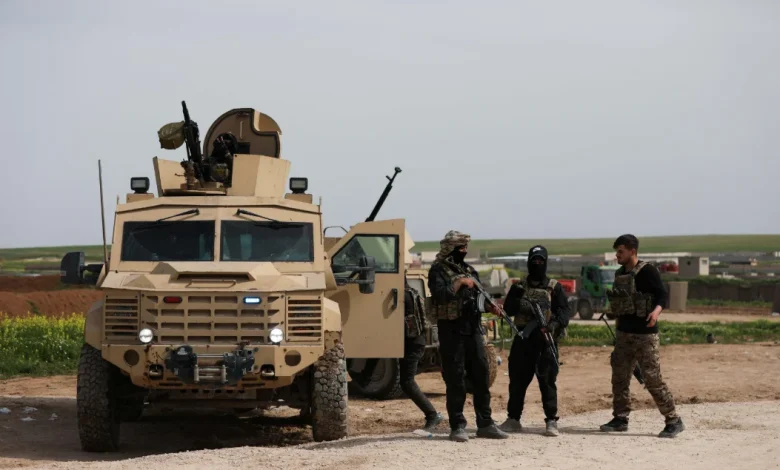
Syria withdrawal operations have officially reached their definitive conclusion as the United States military completed its retrograde from the war-torn nation, marking the end of an era in American foreign policy. The final convoy rolled out of the Qasrak air base yesterday, sealing a monumental shift in the geopolitical landscape of the Middle East. For over a decade, American troops maintained a footprint in the region, initially deploying to dismantle the self-proclaimed ISIS caliphate. Now, as the dust settles on this historic departure, the Syrian government has rapidly moved to assume control of nearly all sites previously occupied by U.S. forces, including the highly strategic al-Tanf garrison near the Jordanian border. This exit brings a close to a deeply complex chapter of military intervention, raising profound questions about the future stability of the Levant, the containment of extremist factions, and the shifting balance of power among regional hegemons.
Historical Context and Timeline of the U.S. Mission
America entered Syria with a singular, clearly defined objective: the total defeat of the Islamic State of Iraq and Syria (ISIS). What began as a campaign of airstrikes evolved into a multifaceted ground operation involving Special Operations Forces, intelligence operatives, and logistical support units working alongside the Syrian Democratic Forces (SDF). The apex of this mission was achieved in 2019, when ISIS lost its final sliver of territorial control at Baghuz. Despite achieving its primary mandate, the United States opted to maintain a stabilizing presence for an additional seven years. This prolonged deployment was justified by successive administrations as a necessary measure to prevent an ISIS resurgence, counter Iranian influence, and protect critical oil infrastructure in the northeast. However, the extended stay drew mounting domestic and international scrutiny, culminating in the comprehensive 2026 withdrawal directive.
Final Convoy Leaves Qasrak Air Base
The departure from Qasrak air base was executed with textbook precision, underscoring the logistical mastery of the U.S. armed forces even in highly volatile theaters of operation. Situated in the Al-Hasakah Governorate, Qasrak served as a vital logistical hub and forward operating base for coalition forces. The final convoy, consisting of heavily armored vehicles, mine-resistant ambush-protected (MRAP) transports, and specialized equipment haulers, departed under the cover of darkness to minimize security risks. Airborne intelligence, surveillance, and reconnaissance (ISR) assets provided overwatch as the column navigated the treacherous desert routes toward the Iraqi border. The abandonment of this facility is not merely a tactical retreat but a symbolic handover of sovereignty, as American flags were lowered and the base was meticulously stripped of sensitive communications and radar technology before the final gate was locked.
Syrian Government Assumes Control of Key Sites
In the immediate aftermath of the American departure, forces loyal to President Bashar al-Assad advanced rapidly to reclaim the vacated territories. The Syrian Arab Army (SAA), heavily backed by Russian military police and Iranian-aligned militias, established command centers in facilities that just hours prior housed U.S. service members. This swift transition highlights the enduring resilience of the Assad regime, which now commands the most significant portion of Syrian territory since the outbreak of the civil war over fifteen years ago. The return of these strategic sites to Damascus not only bolsters the government’s domestic authority but also serves as a potent propaganda victory, framing the U.S. exit as a triumph of state endurance over foreign intervention.
The Strategic Importance of al-Tanf Garrison
Perhaps the most strategically consequential handover is the al-Tanf garrison. Located at the tri-border area intersecting Syria, Jordan, and Iraq, al-Tanf functioned as a critical chokepoint. For years, the U.S. presence there effectively disrupted the “land bridge” connecting Tehran to Damascus and Beirut—a corridor highly coveted by Iranian forces for the transport of weapons and proxy fighters. The transfer of al-Tanf to Syrian government control drastically alters the regional security architecture. Military analysts project that the opening of this corridor will significantly expedite logistical operations for allied militias across the Levant. This development has triggered immediate concern among international observers tracking the shifting balance of power in the Middle East.
| Military Base / Outpost | Location | Former Occupant | Current Controlling Entity | Strategic Significance |
|---|---|---|---|---|
| Qasrak Air Base | Al-Hasakah Governorate | U.S. Coalition Forces | Syrian Government (SAA) | Primary logistical hub and command center in the northeast. |
| Al-Tanf Garrison | Tri-border area (Syria/Jordan/Iraq) | U.S. Coalition Forces | Syrian Government (SAA) / Allies | Critical chokepoint blocking the Tehran-Damascus land bridge. |
| Green Village | Deir ez-Zor Province | U.S. / SDF Forces | Syrian Government (SAA) | Proximity to vital oil fields and regional energy infrastructure. |
ISIS Detainees Transferred to Iraq
One of the most complex and perilous components of the withdrawal was the disposition of captive enemy combatants. Prior to exiting the theater, the United States successfully executed the transfer of approximately 5,700 ISIS detainees to high-security Iraqi prisons. This monumental logistical feat required unprecedented coordination between the Department of Defense, the State Department, and the Iraqi government. These detainees, many of whom are hardened veterans of the caliphate’s most brutal campaigns, represent a severe security risk. By relocating them to Iraq, the U.S. sought to prevent a catastrophic mass breakout, a scenario deeply feared if the makeshift SDF-run prisons in northern Syria were overrun during the power vacuum following the U.S. departure. Human rights organizations and international defense analysts are closely monitoring the capacity of the Iraqi penal system to manage this massive influx of high-risk inmates, questioning whether the infrastructure can sustain the burden without succumbing to corruption or militant assaults.
Shifting Middle East Alliances in 2026
The total departure of American forces from Syria does not occur in a vacuum; it acts as a catalyst for a broader geopolitical realignment across the Middle East. Without the U.S. acting as a buffer, regional powers are aggressively recalibrating their foreign policies to adapt to the new reality. Diplomatic channels are buzzing as nations assess the void left by Washington. This realignment is intricately connected to recent developments across the Persian Gulf and the Levant. For instance, the Syrian handover coincides with aggressive moves and broader geopolitical negotiations and arms halts that are redefining military posturing from the Mediterranean to the Strait of Hormuz. As America pivots toward the Indo-Pacific, Middle Eastern states are increasingly recognizing the necessity of self-reliance or alternative security guarantors.
Regional Implications for Iran and Russia
No two nations benefit more directly from the U.S. withdrawal than Russia and Iran. Moscow, which intervened in 2015 to save the Assad regime from impending collapse, now stands as the undisputed external power broker in Syria. Russian military police have been observed conducting joint patrols in newly acquired territories, projecting stability and cementing their influence. Meanwhile, the strategic windfall for Tehran cannot be overstated. The elimination of American outposts, particularly al-Tanf, removes a major impediment to Iran’s regional strategy. This operational freedom is deeply intertwined with the domestic political shifts within the Islamic Republic, notably the emergence of an unprecedented hardline regime in Iran. Empowered by the lack of direct U.S. military resistance on their western flank, Iranian forces and their allied militias are poised to consolidate a massive arc of influence stretching directly to the borders of Israel and Lebanon. Such developments have also been a focal point of recent diplomatic talks in Tehran, where regional actors are attempting to negotiate the parameters of this newly unbalanced power dynamic.
The Future of Counterterrorism Operations
Despite closing its bases, the U.S. Department of Defense insists that the mission to prevent an ISIS resurgence remains active, transitioning from a boots-on-the-ground approach to an “over-the-horizon” posture. Washington asserts that it will continue supporting partner-led counterterrorism efforts. This involves intelligence sharing, targeted drone strikes launched from regional allied bases outside of Syria, and extensive financial support to remaining indigenous forces capable of tracking militant cells. However, military experts harbor deep skepticism regarding the efficacy of over-the-horizon capabilities. Without human intelligence networks actively managed by forward-deployed special operators, the ability to preemptively identify and neutralize emerging terrorist threats is severely diminished. The reliance on Iraqi security forces to act as the primary bulwark against ISIS remnants will test the limits of their training and operational readiness.
Evaluating the Seven-Year Stay Post-2019
The post-mortem of the Syrian intervention inevitably focuses on the seven years following the territorial defeat of ISIS in 2019. Was the extended stay a strategic necessity or an example of mission creep? Proponents of the sustained deployment argue that the small contingent of U.S. troops provided asymmetric leverage, preventing a total Russian and Iranian monopolization of the region while safeguarding the Kurdish-led SDF, who bore the brunt of the anti-ISIS campaign. Conversely, critics argue that the continued presence exposed American service members to unwarranted risks from drone and rocket attacks by proxy militias, draining resources without a viable end-state. The prolonged deployment illustrates the inherent difficulties the United States faces in extracting itself from complex foreign conflicts, where the definition of victory is fluid and the consequences of withdrawal are relentlessly scrutinized.
Global Military Realignments
The completion of the Syrian withdrawal is a definitive indicator of a broader shift in Western strategic priorities. As the United States retracts its forward-deployed forces from protracted conflicts in the Middle East to focus on near-peer competition with China and securing the Indo-Pacific, its traditional allies are taking note. The vacuum created by American retrenchment has accelerated independent defense initiatives across the Atlantic. We are already witnessing Europe’s strategic recalibration as allied nations realize they can no longer unilaterally rely on the U.S. security umbrella for regional stability. Ultimately, the departure from Qasrak and al-Tanf is more than the end of a singular military campaign; it is a profound historical pivot that will dictate the security paradigms, diplomatic engagements, and military alignments of the next decade.