Europe Builds A NATO Alternative Without America In 2026
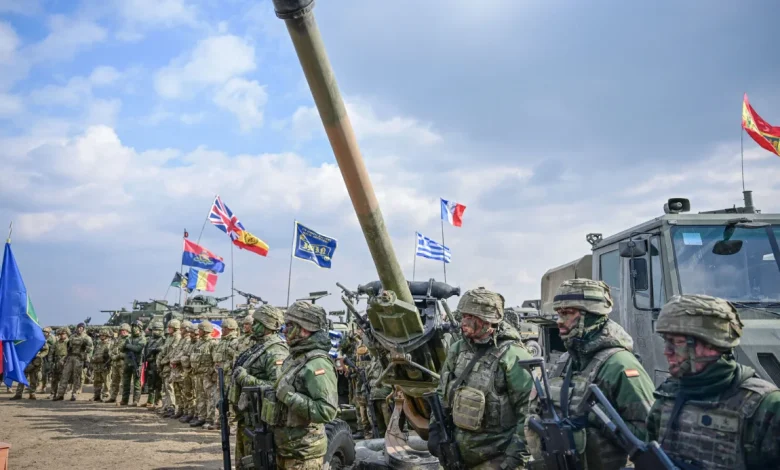
Europe is quietly building a version of NATO that works entirely without America, a monumental geopolitical shift that promises to redefine global security in 2026 and beyond. For over seven decades, the United States has served as the ultimate guarantor of European security, providing the nuclear umbrella, logistical backbone, and command structure for the transatlantic alliance. However, as the political climate in Washington continues to fragment and shift away from traditional alliances, the continent has realized that relying solely on the United States is no longer a viable long-term strategy. The realization has sparked a rapid, unprecedented coordination among European nations to ensure their mutual defense remains intact, even if American forces completely withdraw from the continent.
The Breaking Point: Trump, Iran, and the Paper Tiger Comments
The catalyst for this historic transformation was not a sudden military invasion, but rather a profound diplomatic rupture. When the United States initiated aggressive military maneuvers in the Middle East, demanding unwavering support from its transatlantic allies, the European response was unexpectedly unified in its resistance. Unwilling to be dragged into a deeply unpopular and strategically dubious conflict, European capitals collectively refused to participate in the escalation. The subsequent Iran war fallout exposed severe fractures in the alliance.
In response to this refusal, Donald Trump notoriously referred to NATO as a “paper tiger” and publicly branded the European allies as “cowards.” This unprecedented rhetoric from an American leader sent shockwaves through Brussels, Paris, Berlin, and London. The realization dawned that the mutual defense clause, Article 5, might be treated as conditional or entirely disregarded by the current U.S. administration. The diplomatic insults were not merely seen as political theater; they were interpreted as a clear declaration that the era of unconditional American military support was over.
Chancellor Merz Flips Germany’s Decades-Old Defense Stance
Perhaps the most significant domino to fall in this geopolitical realignment was Germany. For decades, Germany has been the economic powerhouse of Europe while maintaining a deliberately restrained military posture, heavily reliant on the United States for deterrence. Chancellor Merz, however, recognized that the traditional German approach of blocking discussions on European defense independence was now a critical vulnerability. The harsh rhetoric from Washington and the instability of the transatlantic link forced Berlin into a radical strategic pivot.
Chancellor Merz fundamentally altered Germany’s defense doctrine, committing hundreds of billions of euros to modernize the Bundeswehr and throwing Germany’s full economic and political weight behind the creation of a sovereign European defense structure. This flip effectively removed the largest roadblock to European strategic autonomy, unlocking rapid progress that had stalled for over twenty years. Germany is now actively spearheading the logistical and financial framework required to replace the American military infrastructure previously stationed within its borders.
The Ukraine Factor: Inability to Distinguish Victim from Aggressor
The turning point for Merz and other European leaders was profoundly influenced by the evolving U.S. stance on the war in Ukraine. When it became painfully evident that the American leadership was struggling—or willfully failing—to distinguish the victim from the aggressor in Eastern Europe, alarm bells rang across the continent. The rhetoric equating the survival of a sovereign European nation with an inconvenient foreign entanglement forced Europe to accept that their strategic interests had fundamentally diverged from those of Washington.
This divergence accelerated discussions regarding Donald Trump news and geopolitical shifts, making it abundantly clear that Europe needed a defense mechanism insulated from the volatile swings of American domestic politics. The Ukraine conflict proved that high-intensity warfare was not a relic of the past, and relying on an unpredictable ally for survival was an unacceptable risk for the European public.
The Core Architects: UK, France, Poland, and the Nordics
With Germany fully committed to the cause, a formidable coalition of core architects rapidly emerged. France, the European Union’s sole nuclear power, has long championed the concept of strategic autonomy and enthusiastically stepped up to provide leadership in command and deterrence. The United Kingdom, despite its exit from the European Union, recognized the existential necessity of continental security and aligned its formidable naval and intelligence capabilities with the new initiative.
Poland, possessing one of the largest and most rapidly expanding conventional land armies in Europe, has become the eastern bulwark of this new alliance. Meanwhile, the Nordic countries—recently bolstered by Sweden and Finland’s integration into western defense structures—provide critical expertise in winter warfare, maritime security in the Baltic Sea, and advanced technological defense mechanisms. Together, these nations form the military backbone of a heavily armed, strategically unified European front.
Canada Joins the European Defense Shield
In a surprising but highly logical move, Canada has opted to tightly integrate its defense contingency plans with the European architects rather than solely relying on its southern neighbor. Recognizing the volatility in Washington and the importance of maintaining an internationalist defense posture, Ottawa has committed specialized troops, cyber warfare experts, and logistical support to the emerging European command structure. Canada’s participation underscores the global nature of this realignment, proving that the desire for a stable, predictable security architecture extends beyond the geographical boundaries of the European continent.
Contingency Plans: What Happens if U.S. Officers Walk Out?
The most pressing immediate challenge for this new coalition is operationalizing contingency plans for a scenario where U.S. officers literally walk out of official NATO operations and command centers. The Supreme Headquarters Allied Powers Europe (SHAPE) has historically been dominated by American generals and operational planners. The European allies are currently drafting extensive, highly classified protocols to seamlessly transfer command and control to European officers without a degradation in readiness.
This involves rewriting software protocols, establishing secure communication networks entirely independent of U.S. satellites, and ensuring that intelligence sharing can continue uninterrupted among the European allies. The transition is immensely complex, requiring thousands of hours of joint planning to guarantee that the nuclear deterrent, conventional troop movements, and cyber defenses remain fully operational under exclusive European command.
Restructuring Air Defenses Without Washington
One of the most critical vulnerabilities Europe faces is integrated air and missile defense. For decades, the continent has relied heavily on American Patriot batteries, Aegis Ashore systems, and early warning radar networks. To counter this, the European Sky Shield Initiative (ESSI) is being vastly expanded and aggressively funded. European defense contractors are accelerating the production of advanced interceptors like the IRIS-T and SAMP/T systems.
Furthermore, European nations are investing heavily in a military tech revolution to establish an autonomous satellite early-warning grid. The goal is to ensure that from the coast of Ireland to the borders of Poland, European skies are monitored, targeted, and defended entirely by European hardware and personnel, effectively closing the umbrella once provided by the United States Air Force.
Taking Command of Major Military Exercises
Deterrence is only as effective as the ability to demonstrate force. The new European defense framework is rapidly taking over the planning and execution of major military exercises, which were historically underwritten by American logistics. Operation “Steadfast Europa,” a massive troop deployment exercise planned for late 2026, will be the first major test of this new reality. The exercise will simulate the rapid deployment of a 100,000-strong multi-national corps across the continent using exclusively European rail, air, and maritime assets, proving to adversaries that the continent can fight and win without American sealift or airlift capabilities.
Comparing the New European Defense Initiative vs. Traditional NATO
Understanding the structural differences between the legacy system and the new reality is crucial for grasping the scale of this geopolitical earthquake. The table below outlines the primary shifts in strategy, command, and capability.
| Operational Area | Traditional NATO (Pre-2026) | European Defense Initiative (2026+) |
|---|---|---|
| Supreme Command | Always held by an American General (SACEUR) | Rotating Command (France, UK, Germany, Poland) |
| Nuclear Deterrent | Overwhelmingly reliant on U.S. arsenal | Relies on French and UK arsenals with shared planning |
| Air Defense Grid | Integrated with U.S. early warning satellites | European Sky Shield (Independent satellite network) |
| Logistics & Airlift | Dominated by U.S. Air Mobility Command | Consortium of European commercial and military transport |
| Funding Baseline | Targeted 2% of GDP (often missed) | Mandatory 3% to 4% of GDP enforcement mechanism |
Funding the Autonomous Military Alliance
The financial realities of replacing the American military machine are staggering. The old metric of spending 2% of GDP on defense has been aggressively discarded as woefully inadequate. Under the new framework, nations are rapidly moving toward a baseline of 3% to 4% of GDP. To finance this massive military buildup without triggering domestic economic crises, the European Union is issuing joint defense bonds, a revolutionary step that deeply integrates the financial destinies of the member states.
This unified funding model ensures that frontline states like Poland and the Baltics, which bear a disproportionate geographical risk, are financially supported by wealthier, geographically insulated nations like Spain and Italy. The mutualization of defense debt represents the final frontier of European integration, binding the continent together through shared military and financial survival.
Global Implications: Geopolitics After the U.S. Security Umbrella Fades
The geopolitical ramifications of an autonomous European military bloc are profound. The world is accelerating toward a distinctly multipolar reality where Europe acts as an independent superpower, fully capable of projecting force and defending its interests without seeking permission or support from Washington. This shift alters the calculus for adversaries. For instance, as Russia’s oil revenues double amidst global instability, Moscow now faces a rearmed, unified, and highly motivated European adversary on its immediate border, unconstrained by Washington’s hesitation.
Moreover, countries in the Global South, Africa, and the Indo-Pacific are recalibrating their diplomatic strategies. An independent European defense posture means that nations seeking security partnerships now have a viable, highly advanced alternative to the United States or China, fundamentally reshaping global arms sales, military alliances, and diplomatic leverage.
A New Era for Transatlantic Relations
While the immediate catalyst for this split was characterized by harsh rhetoric and diplomatic friction, the long-term result is a mature, structurally independent Europe. The transatlantic relationship will not vanish, but it will be redefined. Moving forward, the United States and Europe will interact as equal military partners rather than a superpower and its dependents. By quietly but relentlessly building a version of NATO that works without America, Europe has reclaimed its strategic destiny, ensuring that its future, security, and prosperity remain firmly in its own hands.


