Oil Holds Below $100 Amid Deal Hopes and Trump Pakistan Talks
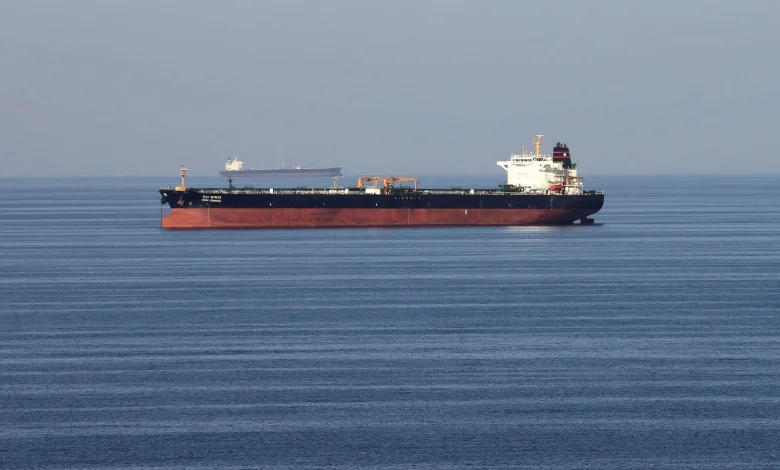
Oil markets are currently experiencing a significant period of consolidation, staying resolutely below the psychologically critical $100 per barrel threshold for the fifth consecutive trading day. As global markets attempt to price in a potential geopolitical deal, Brent crude stands at $96.2 per barrel, while West Texas Intermediate (WTI) is trading at $92.5 per barrel. Both major global benchmarks have registered an approximate 1.5% increase today, reflecting a complex interplay of speculative buying, short covering, and cautious optimism regarding peace negotiations. The latest catalyst for this market sentiment stems from high-profile political commentary, specifically statements made by Donald Trump during a recent Fox News interview, where he asserted that the ongoing war is very close to over. Adding a layer of diplomatic intrigue, Trump also hinted at new rounds of negotiations set to take place in Pakistan over the next two days. Analysts at Deutsche Bank have pointed to investor hopes for a rapid de-escalation as a primary driver of the recent price ceiling on crude. However, market veterans maintain a critical caveat: Trump has predicted the war was ending multiple times since its inception, necessitating a measured and highly analytical approach to current energy market positioning.
Oil Market Dynamics: Brent and WTI Price Movements
The global commodities landscape is witnessing a fascinating tug-of-war between fundamental supply constraints and the rapid evaporation of geopolitical risk premiums. Brent crude’s stabilization around the $96.2 mark indicates that while international buyers are still acutely aware of the structural deficits in global oil production, the immediate panic that previously drove prices deep into triple-digit territory has significantly subsided. Similarly, WTI’s position at $92.5 reflects a robust domestic production environment in the United States, coupled with strategic releases and demand destruction in emerging markets. Today’s 1.5% uptick in both benchmarks is largely viewed by institutional analysts as a technical bounce rather than a fundamental shift back to an aggressive bull market. When energy benchmarks drop below major psychological levels, algorithmic trading systems and systematic trend followers often engage in profit-taking, leading to minor intraday rallies that mask the broader bearish or neutral momentum. Investors seeking reliable data on these fluctuations frequently monitor global commodities tracking platforms to gauge the real-time health of the energy sector.
Five Consecutive Days Below $100
Remaining below $100 for five straight trading days is not merely a statistical anomaly; it is a profound indicator of shifting market psychology. For months, the $100 barrier served as a floor during the height of the conflict, driven by fears of widespread supply disruptions in the Middle East and heavily congested maritime choke points. The sustained drop below this level suggests that major institutional players—including hedge funds, commodity trading advisors, and sovereign wealth funds—are aggressively unwinding their long positions. This unwinding is primarily fueled by the growing consensus that the worst-case supply disruption scenarios have been successfully averted or are adequately priced into the current curve. As we evaluate the comprehensive geopolitical impact of a ceasefire, it becomes evident that the risk premium, once estimated to be as high as $20 per barrel, is being systematically stripped from the market, leaving prices to reflect truer supply and demand fundamentals rather than fear-driven speculation.
Trump’s Fox News Interview and Geopolitical Statements
The current volatility and subsequent stabilization in the energy markets cannot be analyzed in a vacuum, completely divorced from the high-stakes political rhetoric dominating the global news cycle. During a highly publicized Fox News interview, Donald Trump injected a massive dose of optimism into the financial markets by declaring that the war is very close to over. This statement, delivered with characteristic confidence, triggered immediate algorithmic reactions across global commodity desks. Traders program their news-scraping algorithms to react instantaneously to keywords such as ‘deal,’ ‘ceasefire,’ and ‘over,’ which explains the sudden capping of upward price mobility in the crude markets. Trump’s rhetoric suggests a behind-the-scenes diplomatic breakthrough, one that could potentially restore normalized trade flows and reduce the exorbitant insurance premiums currently levied on oil tankers navigating conflict zones.
Past Predictions vs. Current Reality
Despite the market’s willingness to price in Trump’s optimistic outlook, a rigorous historical analysis requires acknowledging a significant caveat: this is not the first time such predictions have been made. Trump has forecasted the conclusion of this specific conflict multiple times since it began, often aligning his diplomatic projections with domestic political cycles and media appearances rather than concrete, verifiable action on the ground. Financial institutions and seasoned commodity traders are inherently skeptical of politically motivated timelines. They remember previous instances where premature declarations of peace led to severe market whipsaws, catching over-leveraged traders off guard. Therefore, while the rhetoric is powerful enough to prevent oil from surging past $100 in the immediate short term, it has not been sufficient to trigger a massive collapse in prices, as the market demands tangible, signed agreements before fully discounting the remaining geopolitical risk.
The Pakistan Summit: A New Avenue for De-escalation
Perhaps the most actionable piece of intelligence to emerge from the recent political discourse is the revelation of impending talks in Pakistan. Trump’s hint that negotiations will occur over the next two days introduces a highly specific timeline and a fascinating new geographic focal point for international diplomacy. Pakistan’s strategic positioning, its complex relationships with both Western powers and Middle Eastern stakeholders, makes it a uniquely viable, albeit surprising, venue for high-level de-escalation talks. By shifting the diplomatic theater to South Asia, negotiators may be attempting to bypass the entrenched political gridlock that has plagued previous summits in European or Middle Eastern capitals. This pivot demonstrates a willingness to utilize unconventional diplomatic backchannels to achieve a breakthrough.
Diplomatic Maneuvering in South Asia
The choice of Pakistan as a host for these critical talks underscores a profound shift in global diplomatic dynamics. Pakistan possesses the necessary strategic leverage and historical ties to key regional players, allowing it to serve as a neutral arbitrator in a highly polarized conflict. If these talks progress positively over the specified two-day window, the resulting geopolitical stabilization could lead to an immediate and substantial re-rating of global energy assets. It is within this context that major financial institutions are re-evaluating their portfolios. For instance, observing the broader economic ripples, we see major institutions like BlackRock upgrading equities, a move that is intrinsically linked to the expectation that a successful peace summit in Pakistan would significantly lower energy input costs, thereby easing inflationary pressures and boosting corporate margins worldwide.
Deutsche Bank Analysis and Investor Sentiment
Providing a rigorous quantitative backbone to these geopolitical developments, Deutsche Bank recently released a comprehensive note pointing directly to investor hopes for de-escalation as the primary anchor keeping oil prices contained. According to the bank’s commodities research desk, the options market is currently reflecting a significant decrease in implied volatility, with the cost of out-of-the-money call options (used by traders to hedge against massive price spikes) dropping sharply. This indicates that the smart money is increasingly confident that a massive escalation is off the table. Deutsche Bank’s analysis suggests that while fundamental tightness remains in the physical oil market—evidenced by backwardation in the futures curve—the speculative froth generated by the war is rapidly dissipating.
| Market Metric | Current Value | Daily Change | 5-Day Trend Status |
|---|---|---|---|
| Brent Crude Benchmark | $96.20 per barrel | +1.5% Increase | Consolidated Below $100 |
| WTI Crude Benchmark | $92.50 per barrel | +1.5% Increase | Consolidated Below $100 |
| Geopolitical Risk Premium | Declining | Negative | Consistent Downward Pressure |
| Institutional Sentiment | Cautiously Optimistic | Neutral to Positive | Awaiting Pakistan Talk Outcomes |
Market Pricing of Geopolitical Risk
The phenomenon of market pricing involves adjusting asset valuations based on the probability of future events. In the context of the current oil market, the risk premium is the extra amount buyers are willing to pay for a barrel of oil today to ensure they have supply in the event of a catastrophic disruption tomorrow. As Deutsche Bank notes, this premium is evaporating. Traders are recalculating the odds of a prolonged conflict, factoring in Trump’s statements and the upcoming Pakistan summit. If the talks yield a tangible roadmap for peace, Deutsche Bank analysts project that crude could quickly retest the $85 to $80 range, as the entire geopolitical premium is priced out, leaving the market to trade purely on macroeconomic data, global manufacturing PMIs, and traditional supply-demand balances.
Global Energy Security and Alternate Scenarios
While the immediate focus is on the prospect of peace and sub-$100 oil, a comprehensive analysis must also account for the structural changes the conflict has already inflicted upon global energy security. The war has forced a massive realignment of global supply chains. For example, while Western markets fixate on Brent and WTI, alternative crude flows have completely reshaped the financial realities of sanctioned nations, leading to scenarios where Russia’s oil revenues doubled due to structural shifts in the shadow fleet and non-aligned buying. Should the Pakistan talks fail, or if Trump’s optimistic timeline proves to be another premature political declaration, the market is highly susceptible to a vicious short squeeze. In such an alternate scenario, the sudden realization that the war will drag on could instantly propel Brent well past the $100 mark, reigniting the energy crisis and sending shockwaves through the global economy.
Supply Chain Resiliency Amid Volatility
The ultimate lesson from the recent volatility in the oil markets is the absolute necessity of supply chain resiliency. Nations heavily reliant on imported hydrocarbons have experienced the economic devastation that accompanies sudden spikes in energy costs. The current reprieve, highlighted by five days of trading below $100, provides a narrow window for importing nations to restock strategic petroleum reserves and secure long-term contracts at relatively favorable rates. However, this window may be transient. The structural vulnerabilities exposed by the conflict—ranging from shipping lane insecurities to underinvestment in upstream exploration—remain largely unresolved. As the world watches the diplomatic developments unfolding in Pakistan, energy ministers and corporate leaders are acutely aware that while the immediate crisis may be showing signs of a resolution that avoids a catastrophic energy crisis, the long-term imperative to transition toward more diverse and secure energy architectures has never been more critical. The next 48 hours of diplomatic engagement will be pivotal in determining whether the oil market continues its reversion to the mean or experiences a violent resurgence of geopolitical volatility.



One Comment