Welcome to From the Politics Desk: Democrats’ Attack Strategy & MAGA’s UFC Craze
Introduction
Welcome to a comprehensive analysis of today’s key political narratives as presented by the NBC News Politics team. This article delves into two significant storylines: the Democratic Party’s strategic approach to challenge the upcoming Republican reconciliation bill, and the surprising fervor within MAGA circles to secure tickets for a UFC fight purportedly being held at the White House. Both topics present unique insights into the current political climate and the strategies employed by various factions to influence public opinion and policy.
Understanding these dynamics is crucial for anyone seeking to grasp the complexities of American politics today. From legislative battles to the intersection of sports and political allegiance, we will dissect the nuances and potential ramifications of these developments. This analysis aims to provide a clear, detailed, and authoritative perspective on these evolving stories.
Democrats’ Strategy to Attack the Reconciliation Bill
The Democratic Party is gearing up to mount a strategic offensive against the next major reconciliation bill proposed by Republicans. According to insights from Sahil Kapur of NBC News, the Democrats plan to focus on several key areas where they believe the Republican proposal is vulnerable. This strategy involves a multi-pronged approach that includes highlighting potential negative impacts on social programs, economic disparities, and environmental protections.
Central to the Democratic strategy is the tactic of framing the Republican bill as a giveaway to the wealthy and large corporations at the expense of middle-class families and vulnerable populations. This messaging aims to resonate with a broad spectrum of voters who may be concerned about issues such as healthcare, education, and retirement security. Democrats will likely use town hall meetings, social media campaigns, and media appearances to amplify this message and mobilize public opposition to the bill.
Understanding Reconciliation Bills
Reconciliation bills are legislative vehicles used in the United States Congress to make changes to existing laws, particularly those related to the budget. These bills have special rules that limit debate in the Senate, making it easier to pass legislation with a simple majority rather than the 60 votes typically required to overcome a filibuster. This process is often used for significant policy changes that would otherwise face strong opposition.
The reconciliation process was established under the Congressional Budget Act of 1974, and it has been used by both parties to enact major policy changes. For example, Republicans used reconciliation to pass tax cuts under Presidents George W. Bush and Donald Trump, while Democrats used it to enact parts of the Affordable Care Act under President Barack Obama. Given its potential for significant policy impact, reconciliation bills are often highly contentious and subject to intense political maneuvering.
Key Areas of Contention
Democrats are expected to concentrate their attacks on several key provisions within the Republican reconciliation bill. These areas of contention include proposed changes to healthcare funding, tax policies, and environmental regulations. Specifically, Democrats will likely argue that cuts to Medicare and Medicaid will harm seniors and low-income individuals, while tax cuts for corporations will exacerbate income inequality. Additionally, they are likely to raise concerns about any provisions that weaken environmental protections, such as those related to clean air and water.
Another focal point of the Democratic strategy is to highlight the potential long-term economic consequences of the Republican bill. They will likely argue that the proposed tax cuts are unsustainable and will lead to increased national debt, which could jeopardize future economic growth. Democrats may also point to independent analyses and expert opinions that raise concerns about the bill’s impact on job creation and economic stability. By framing the debate in terms of economic responsibility and fairness, Democrats hope to gain traction with moderate voters and sway public opinion against the Republican proposal.
MAGA World’s Craze for UFC Fight Tickets at the White House
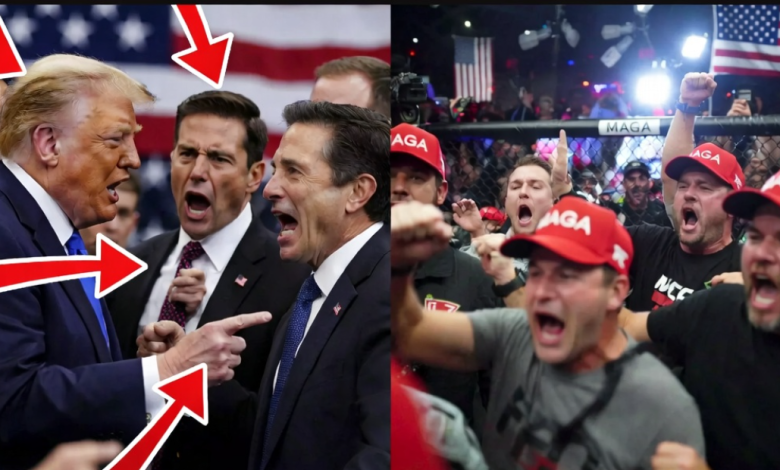
In a somewhat unexpected turn, there is significant buzz within MAGA circles regarding the possibility of attending a UFC fight at the White House. This interest reflects a broader trend of blending political events with elements of popular culture to engage and energize supporters. The prospect of witnessing a high-profile UFC event in such a symbolic location has generated considerable excitement and anticipation among many within the MAGA movement.
The reasons behind this enthusiasm are multifaceted. For some, it represents an opportunity to be part of an exclusive event that combines their passion for mixed martial arts with their political affiliations. For others, it is a chance to show support for a political agenda in a unique and visible way. Whatever the motivation, the demand for tickets to this hypothetical UFC fight underscores the evolving nature of political engagement and the creative ways in which supporters seek to express their allegiance.
The Intersection of UFC and Political Alliances
The convergence of UFC and political alliances highlights a growing trend of sports and entertainment intersecting with political ideologies. This phenomenon is not entirely new, but it has become more pronounced in recent years as political figures and movements increasingly leverage popular culture to connect with broader audiences. The UFC, with its diverse fan base and high-profile events, presents a particularly attractive platform for political engagement.
Several factors contribute to this trend. First, sports and entertainment events provide opportunities for politicians to reach voters in a non-traditional setting, outside of the usual campaign rallies and political speeches. Second, aligning with popular cultural phenomena can help political figures cultivate a more relatable and accessible image. Finally, the passionate and dedicated fan bases associated with sports like UFC offer a ready-made audience for political messaging. As a result, the intersection of UFC and political alliances is likely to continue to evolve and shape the landscape of political engagement.
Potential Political Messaging and Optics
The potential for political messaging and the resulting optics surrounding a UFC event at the White House are significant. Depending on how the event is organized and promoted, it could send a variety of messages to different audiences. For example, it could be seen as a symbol of strength and national pride, particularly if the event features American fighters or promotes patriotic themes. Alternatively, it could be criticized as an inappropriate use of the White House and a distraction from more pressing political issues.
The optics of the event would also depend on who attends and how they are portrayed. If prominent political figures and celebrities are seen enjoying the fights, it could reinforce the perception that the event is elitist and out of touch with ordinary Americans. On the other hand, if the event is inclusive and accessible to a diverse range of attendees, it could be seen as a unifying and celebratory occasion. Ultimately, the political messaging and optics of a UFC event at the White House would depend on careful planning and execution, with a keen awareness of the potential implications for public perception.
Comparative Analysis: Political Events at the White House
To better understand the potential impact and implications of a UFC event at the White House, it is helpful to compare it to other types of political events that have been held there. Political rallies, state dinners, and policy briefings each serve different purposes and convey distinct messages. A political rally is typically designed to energize supporters and promote a specific political agenda, while a state dinner is intended to foster diplomatic relations and showcase national pride. Policy briefings, on the other hand, are aimed at informing stakeholders and advancing specific legislative goals.
A UFC event at the White House would likely differ from these traditional events in several key respects. First, it would blend elements of entertainment and politics in a way that is not typically seen in more formal settings. Second, it would appeal to a different demographic of attendees, potentially reaching a younger and more diverse audience than traditional political events. Finally, it would generate a different type of media coverage and public discourse, with a greater emphasis on spectacle and entertainment value. By comparing a UFC event to other types of political events, we can gain a better understanding of its unique characteristics and potential impact.
Historical Precedents of White House Events
Throughout history, the White House has served as a venue for a wide range of events, from formal state dinners and diplomatic summits to cultural performances and holiday celebrations. These events have often been used to project an image of national unity, promote specific policy agendas, or commemorate important milestones. For example, President John F. Kennedy hosted a dinner for Nobel Prize winners to celebrate intellectual achievement, while President Ronald Reagan hosted a concert featuring country music stars to highlight American culture.
Examining these historical precedents can provide valuable insights into the potential implications of a UFC event at the White House. It can help us understand how different types of events have been used to shape public opinion, influence policy debates, and project an image of national identity. By drawing parallels and contrasts between past events and the proposed UFC fight, we can better assess its potential impact and significance in the broader context of American political history.
Challenges and Considerations for Both Scenarios
Both the Democratic strategy to attack the Republican reconciliation bill and the potential UFC event at the White House present unique challenges and considerations. For Democrats, the challenge lies in effectively communicating their message to a broad audience and mobilizing public opposition to the Republican proposal. They must overcome potential obstacles such as media bias, partisan polarization, and the inherent complexities of budget policy. Additionally, they must be prepared to counter Republican counter-arguments and defend their own policy positions.
For the organizers of a potential UFC event at the White House, the challenges are equally significant. They must navigate potential security concerns, logistical complexities, and ethical considerations. They must also be mindful of the potential for negative publicity and ensure that the event aligns with the values and traditions associated with the White House. Ultimately, the success of both scenarios depends on careful planning, effective communication, and a keen awareness of the potential risks and rewards.
Impact on Voter Perception
The unfolding of these political strategies and events will inevitably influence voter perception. The Democratic attack on the reconciliation bill could sway moderate voters if they successfully highlight potential negative impacts on key social programs and economic stability. Conversely, a compelling Republican defense might solidify their base and attract fiscally conservative voters.
The UFC event at the White House carries its own set of perceptual risks and rewards. It could energize the MAGA base and showcase a unique blend of politics and entertainment. However, it also risks alienating more traditional voters who might view such an event as undignified or a misallocation of resources. Careful management of the event’s optics will be crucial in shaping public opinion.
| Aspect | Democratic Strategy | UFC at the White House |
|---|---|---|
| Goal | Undermine Republican Reconciliation Bill | Engage MAGA Base, Blend Politics & Entertainment |
| Key Message | Bill favors wealthy, harms middle class | Strength, Patriotism, Unique Political Event |
| Target Audience | Moderate Voters, Concerned Citizens | MAGA Supporters, UFC Fans |
| Potential Risks | Communication Challenges, Partisan Polarization | Negative Publicity, Ethical Concerns |
| Potential Rewards | Sway Public Opinion, Block Legislation | Energize Base, Positive Media Coverage |
Conclusion
In conclusion, the Democratic strategy to challenge the Republican reconciliation bill and the potential UFC event at the White House represent two distinct but interconnected aspects of the current political landscape. The former highlights the ongoing legislative battles and policy debates that shape the direction of the country, while the latter reflects the evolving nature of political engagement and the creative ways in which political movements seek to connect with supporters. Understanding these dynamics is essential for anyone seeking to navigate the complexities of American politics and make informed decisions about the future of the nation.
As these stories continue to unfold, it will be crucial to monitor their impact on public opinion, policy outcomes, and the broader political climate. The strategies and tactics employed by both sides will likely evolve in response to changing circumstances and emerging challenges. By staying informed and engaged, we can all play a role in shaping the future of our democracy. Understanding the nuances of political strategies, such as those employed by Democrats against Republican reconciliation bills, and the intersection of politics with popular culture, exemplified by the potential UFC event, is critical for informed civic engagement. It allows citizens to critically assess the motivations and potential impacts of these actions, contributing to a more nuanced understanding of the political landscape. External Link: NBC News Politics
Furthermore, examining events like a potential UFC fight at the White House in the context of historical precedents provides valuable insights into how political events are used to shape public perception and project national identity. Comparing such events to traditional political gatherings helps to highlight their unique characteristics and potential impact. Stay updated on various political and global events by reading about how SpaceX Falcon Heavy deploys ViaSat-3 global broadband. For another read, here’s an analysis on the UAE’s warning to the US regarding a shift to Yuan oil sales. Also, here is an article that highlights Iran’s threat of new military blows amid the Hormuz crisis. A recent conviction occurred in the killing of Casey Goodson Jr. Lastly, be sure to read up on the ShinyHunters breach affecting 9000 schools.