US military identifies soldiers killed in Iranian attack on Jordan 2026
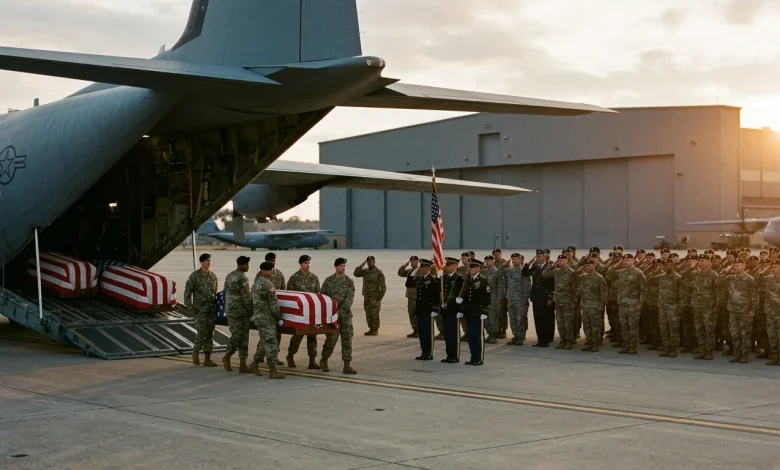
Table of Contents
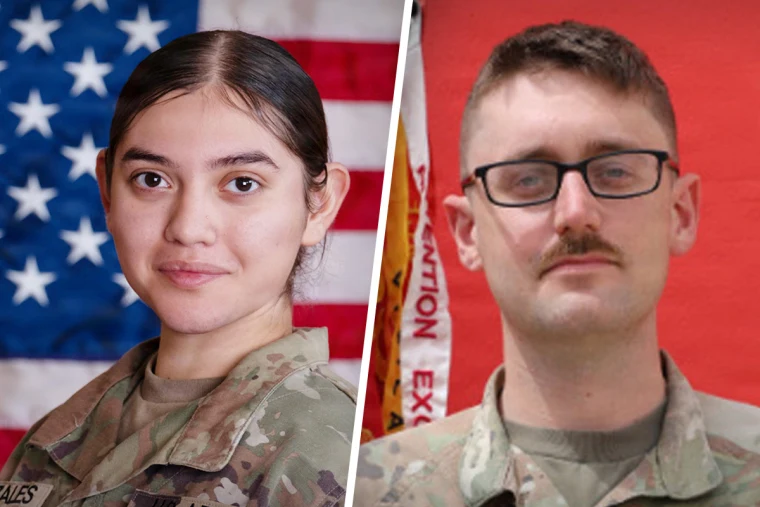
US military forces stationed in the Middle East are facing a critical turning point following a devastating and highly coordinated enemy attack on a key installation in Jordan. Under the direction of the Department of War, the Pentagon has officially released the identities of the two American soldiers who lost their lives during an Iranian ballistic missile and drone strike over the weekend. The fallen heroes have been identified as 25-year-old First Lieutenant Tyler James Feehan of Ewa Beach, Hawaii, and 19-year-old Private Isabella Gonzales of Carrollton, Texas. The lethal engagement took place at the strategically vital Muwaffaq Salti Air Base in eastern Jordan, bringing the total number of American combat deaths to 17 since this high-intensity conflict began in late February.
The tragic loss of Lieutenant Feehan and Private Gonzales underscores the escalating dangers encountered by American personnel deployed across the region. According to official defense briefings, Private Gonzales was killed in action on Friday, July 17, 2026, while Lieutenant Feehan was killed the following day, Saturday, July 18, 2026, during a subsequent wave of the attack. As U.S. Central Command (CENTCOM) works to investigate the security breach, the Pentagon is moving rapidly to reinforce forward-deployed air defense networks in Jordan and neighboring partner nations.
Introduction: Tragedy at Muwaffaq Salti Air Base
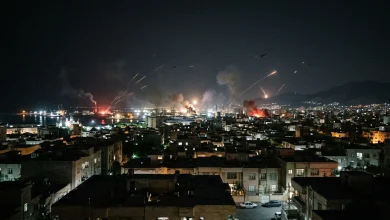
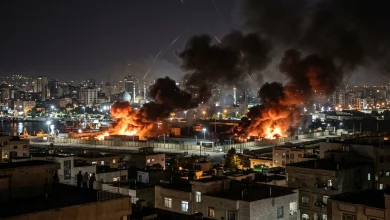
The escalation of direct hostilities between Washington and Tehran has transformed once-secure staging environments into active combat zones. The lethal barrage launched against Muwaffaq Salti Air Base represents one of the most sophisticated and highly concentrated aerial assaults targeting U.S. positions since the conflict began. Using a lethal combination of low-altitude loitering munitions (suicide drones) and high-speed precision ballistic missiles, the hostile forces managed to saturate localized defensive systems, inflicting fatal injuries on two critical air defense personnel.
In addition to the two confirmed fatalities, the strike left four other U.S. service members wounded. These individuals were medically evacuated to a nearby military hospital in Jordan and have since been discharged. Furthermore, search and recovery teams working amidst the rubble identified human remains at the impact site. While the military initially reported a third service member as missing in action, forensic teams are working to confirm whether the recovered remains belong to the missing soldier. The operational reality of this strike has sent shockwaves through the defense community, challenging existing assumptions regarding the security of allied airfields in the Levant.
Profiles of the Fallen: 1st Lt. Feehan and Pvt. Gonzales
First Lieutenant Tyler James Feehan, 25, of Ewa Beach, Hawaii, was a highly respected officer whose dedication to the air defense branch was well known among his peers. Commissioned into the Army, Lt. Feehan had demonstrated exemplary leadership and technical proficiency. Known for his steady hand under pressure and analytical approach to tactical missile defense, Feehan was seen as a rising star within the officer corps. His deployment to Jordan put him on the front lines of one of the military’s most complex defensive screens, where he worked tirelessly to coordinate protection systems for hundreds of coalition personnel stationed at the base.
Private Isabella Gonzales, 19, of Carrollton, Texas, had recently begun her military career but had already earned the respect of her commanders and fellow crewmembers. Serving as an Air and Missile Defense (AMD) crewmember, Pvt. Gonzales was responsible for operating and maintaining frontline defensive platforms. Colleagues described her as a highly motivated, skilled soldier who consistently exceeded expectations during rigorous preparation and live-fire drills. At only 19, her assignment to a high-threat forward operating base demonstrated the immense trust her unit placed in her tactical capabilities and commitment to duty.
Military Units and Air Defense Command Structure
The specific units to which the fallen soldiers were assigned reveal the complex, layered command structure deployed by the Pentagon to manage regional air defense. Lieutenant Feehan was assigned to the 2nd Battalion, 55th Air Defense Artillery Regiment, 32nd Army Air Missile Defense Command, based out of Fort Bragg (recently redesignated as Fort Liberty), North Carolina. The 32nd AAMDC is a theater-level command that coordinates crucial air defense operations across global combatant commands, deploying advanced Patriot missile systems and Terminal High Altitude Area Defense (THAAD) assets to counter complex regional ballistic threats.
Private Gonzales was assigned to the 1st Battalion, 57th Air Defense Artillery Regiment, 52nd Air Defense Artillery Brigade, operating under the 10th Army Air Missile Defense Command based in Ansbach, Germany. The 10th AAMDC represents the primary air defense command for U.S. Army Europe and Africa, showcasing how the military integrates multi-theater forces to bolster defense posture in active crisis zones. Private Gonzales’s unit specialized in short-range air defense (SHORAD) systems, designed to engage and neutralize lower-altitude threats such as cruise missiles, helicopters, and unmanned aerial vehicles (UAVs) before they can impact critical installations.
The Tactical Importance of Muwaffaq Salti Air Base
Muwaffaq Salti Air Base, situated near Al-Azraq in eastern Jordan, is a cornerstone of American and coalition operations in the Levant. For years, the base has served as a primary launchpad for strike aircraft, intelligence, surveillance, and reconnaissance (ISR) platforms, and combat search and rescue assets supporting Operation Inherent Resolve. Jordan’s strategic location bordering Syria, Iraq, Saudi Arabia, and Israel makes it an invaluable partner in maintaining regional stability. Over the past decade, significant investments have been made to expand the base’s runways, hangars, and defensive perimeters to support high-tempo operations.
By targeting this specific base, hostile forces sought to disrupt a critical nerve center of Western intelligence and power projection. The base’s proximity to active conflict zones in southern Syria and western Iraq has made it a frequent target for regional militias. However, the direct involvement of Iranian-designed ballistic missiles and advanced loitering munitions in this particular strike represents a dramatic escalation. The attack directly challenges Jordan’s role as a secure hub for Western forces and highlights the reaching capabilities of modern state-sponsored missile systems.
Summary of the Incident and Casualties
To provide a clear overview of the tragic event, the following table summarizes the key details regarding the fallen service members, their units, and the tactical circumstances of the attack.
| Service Member | Rank & Age | Hometown | Assigned Unit | Parent Command | Incident Details |
|---|---|---|---|---|---|
| Isabella Gonzales | Private, 19 | Carrollton, Texas | 1st Battalion, 57th Air Defense Artillery Regiment | 10th Army Air Missile Defense Command (Ansbach, Germany) | Killed in action on Friday, July 17, 2026, during an Iranian strike on the base. |
| Tyler James Feehan | First Lieutenant, 25 | Ewa Beach, Hawaii | 2nd Battalion, 55th Air Defense Artillery Regiment | 32nd Army Air Missile Defense Command (Fort Liberty, North Carolina) | Killed in action on Saturday, July 18, 2026, defending against ballistic missile and drone attacks. |
Geopolitical Context: The Broader US-Iran Conflict
The deadly strike on Jordan occurs within a broader, highly volatile conflict that began on February 28, 2026. The opening salvo of the war involved an Iranian drone strike targeting a civilian port in Kuwait, which tragically claimed the lives of six American logistics soldiers from an Iowa-based unit. Shortly thereafter, in early March, another American service member died following a complex attack on Prince Sultan Air Base in Saudi Arabia. These early encounters set the tone for a direct, high-stakes military confrontation that has bypassed traditional proxy engagements.
President Donald Trump’s administration has maintained that the military campaign is an essential national security initiative, designed to permanently dismantle Iran’s nuclear development capability and deter its aggressive regional posture. However, the breakdown of peace talks in early spring removed diplomatic off-ramps, resulting in a continuous cycle of retaliatory actions. While the U.S. and Iran have avoided large-scale ground invasions, the high-intensity exchange of precision missiles, stealth drones, and naval strikes has caused significant infrastructure damage and loss of life across the Middle East.
US Military Retaliation and Command Decisions
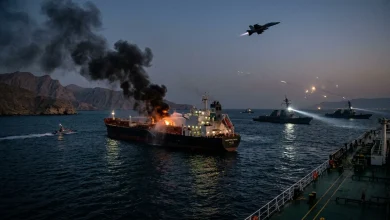
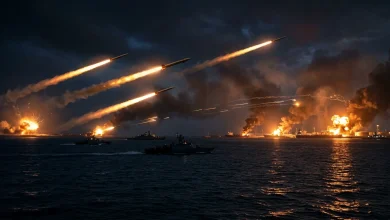
In response to the fatal attacks on Muwaffaq Salti Air Base, President Trump authorized immediate and robust retaliatory operations. Under the direction of Defense Secretary Pete Hegseth, U.S. forces launched multiple waves of precise airstrikes targeting Iranian military assets across the region. Air Force and Navy strike platforms focused on destroying known drone manufacturing facilities, ballistic missile storage depots, and command-and-control headquarters. Notably, heavy bombardment hit key installations on Iran’s Qeshm Island in the Persian Gulf, a crucial hub for the Islamic Revolutionary Guard Corps’ (IRGC) regional operations.
Defense Secretary Hegseth praised the courage of the fallen soldiers, posting a solemn tribute online: “Godspeed, heroes. Their sacrifice only stiffens our resolve”. The Pentagon has emphasized that while the United States does not seek an all-out regional war, it will not hesitate to employ overwhelming kinetic force to protect its service members. The immediate priority for military commanders is the deployment of additional theater-level defense assets, including advanced radar arrays and counter-unmanned aerial systems (C-UAS), to plug vulnerabilities exposed during the Jordan attacks.
Modern Warfare Challenges: Air Defense in the Middle East
The deaths of Lt. Feehan and Pvt. Gonzales highlight the immense technical and tactical challenges facing modern air defense units. Today’s adversaries rarely rely on a single missile type; instead, they employ “saturation tactics”. By launching a swarm of inexpensive loitering munitions simultaneously with high-speed, maneuvering ballistic missiles, they aim to overwhelm the tracking radars and processing capability of sophisticated defense systems like the Patriot PAC-3.

Furthermore, this dynamic exposes a stark economic and logistics asymmetry. A single Patriot interceptor missile costs millions of dollars to manufacture, while commercial-grade tactical drones modified for military use can cost as little as several thousand dollars. Air defense crews on the ground must make split-second threat assessments under extreme stress, determining which incoming targets present the highest risk of lethality. When these defense screens are penetrated, the personnel operating the systems are often the first to bear the brunt of the impact, as demonstrated by this tragic incident in Jordan.
Strategic Implications and the Road Ahead
The strike on Muwaffaq Salti Air Base has profound strategic implications for Jordan and the wider international coalition. For the Jordanian government, the presence of foreign military bases on its soil remains a highly sensitive domestic issue, complicated by regional geopolitical pressures. Amman must carefully balance its crucial defense and intelligence relationship with Washington against internal public sentiment and regional diplomatic dynamics.
For the United States, the persistence of lethal strikes indicates that the administration’s current deterrence framework has not fully neutralized Iran’s offensive capabilities. Despite consecutive nights of retaliatory strikes on Iranian military positions, the threat of recurring drone and missile barrages remains high. As both nations continue to trade heavy blows, international diplomatic channels mediated by neutral parties remain open, though any real progress toward a ceasefire is unlikely while kinetic actions continue on the ground. The sacrifice of these two American air defenders serves as a stark reminder of the volatile state of modern global security and the immense human cost of military deterrence.