Serena Williams’ 2 Major Reasons Behind Wimbledon Doubles Withdrawal
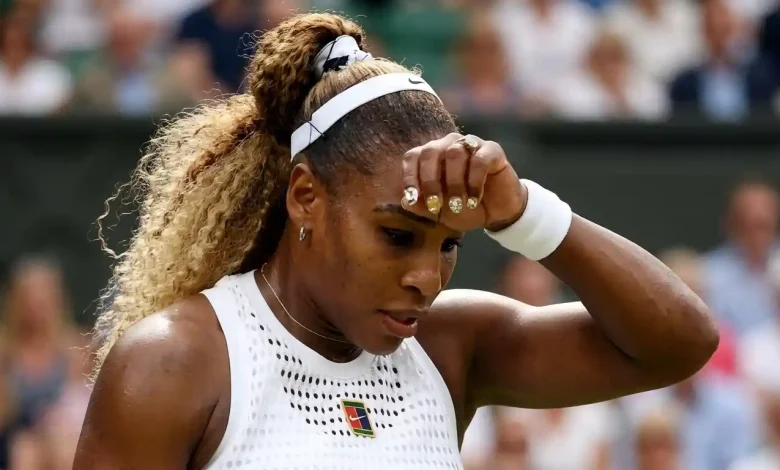
Table of Contents
Serena Williams and the Heartbreaking Decision to Withdraw from Wimbledon Doubles
Serena Williams has officially announced her withdrawal from the 2026 Wimbledon doubles competition due to a right knee injury sustained during her singles return earlier in the week. The news has sent shockwaves through the tennis world, as fans and analysts alike were eagerly anticipating the legendary partnership of the Williams sisters on the grass courts of the All England Club. Serena, now 44 years old, and her older sister Venus, 46, had received a highly publicized wildcard entry into the women’s doubles draw. The tournament organizers had specifically accommodated the pair by delaying their opening-round match until Saturday afternoon, giving Serena as much time as possible to recover. However, despite intensive medical therapy and her own fierce determination, the 23-time Grand Slam singles champion had to make the difficult decision to step away.
This sudden exit marks a premature end to a comeback that had captured the imagination of sports enthusiasts globally. Serena’s return to Wimbledon was not just a personal milestone but a celebration of one of the greatest eras in tennis history. Her withdrawal is a stark reminder of the immense physical demands that professional tennis places on athletes, especially those returning to elite-level competition after extended breaks. While the news is deeply disappointing, the primary focus remains on Serena’s health, rehabilitation, and potential future appearances on the court.
The Initial Hopes for a Legendary On-Court Reunion
The announcement of Serena and Venus Williams entering the doubles tournament had generated unparalleled excitement. It was slated to be their first competitive doubles match together since the 2022 US Open, a tournament that many believed would be the final time the sisters shared a court. When they received the wildcard, a wave of nostalgia swept over the tennis community. Having won six Wimbledon doubles titles as partners, their presence on the SW19 grass was expected to be a masterclass in chemistry, power, and tactical excellence. For Serena, playing alongside Venus has always been more than just a competition; it is a shared journey that defined their childhood dreams and professional careers. The prospect of seeing the sisters walk out onto Centre Court together once more brought an electric atmosphere to the All England Club, making her ultimate withdrawal all the more devastating for those hoping to witness history.
Detailed Timeline of the Knee Injury at the 2026 Wimbledon Championship
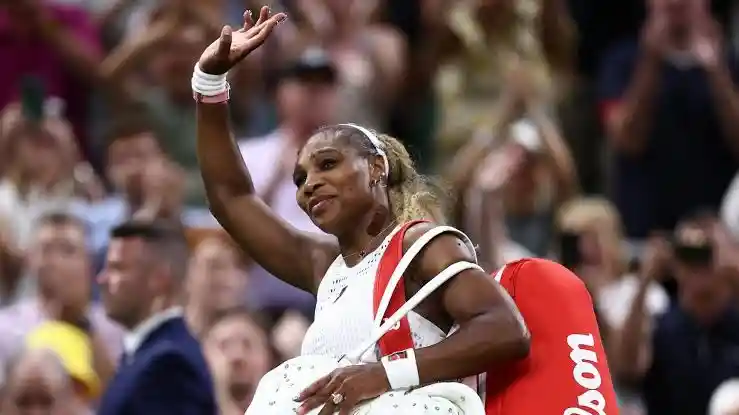
The sequence of events leading up to Serena’s withdrawal began during the first round of the singles draw on Tuesday. Serena made her highly anticipated singles return, marking her first professional singles appearance in nearly four years. Placed under the closed roof of Centre Court, she faced Australia’s 20-year-old rising star, Maya Joint. The match was an intense physical battle, showcasing Serena’s trademark power and competitive grit against a young, fast opponent. However, the physical intensity of the match took a heavy toll. Late in the first set, while chasing a deep baseline shot, Serena tweaked her right knee on the notoriously slick grass. The sudden slip caused visible discomfort, forcing her to seek medical attention and adjust her movement for the remainder of the set, which she ultimately lost 3-6.
Despite the obvious physical setback, Serena demonstrated the legendary resilience that has defined her career. She fought back fiercely in the second set, utilizing her dominant serve and court positioning to force a tiebreak. In a thrilling display of determination, she saved set points and captured the tiebreak 7-6 (6) to force a deciding third set. However, the accumulated physical strain and the rising pain in her knee became too much to overcome. Joint capitalized on her mobility, taking the final set 6-3 and ending Serena’s singles run. While the loss was disappointing, the immediate concern shifted to the state of Serena’s knee and her ability to compete in the doubles draw later in the week.
The Agent’s Statement and the Race Against Time
Immediately following her singles defeat on Tuesday, Serena’s camp remained cautiously optimistic. Her agent released a statement indicating that Serena fully intended to honor her commitment to play doubles alongside her sister Venus. Tennis fans clung to this hope, and the tournament organizers did everything in their power to facilitate her recovery. In a rare scheduling move, the first-round doubles match featuring the Williams sisters against Camila Osorio and Solana Sierra was pushed back to Saturday afternoon. This delay was specifically designed to provide Serena with an extra 96 hours of rest, physical therapy, and medical evaluation. Throughout the week, Serena worked tirelessly with her medical team, undergoing various treatments to reduce swelling and regain full mobility. Regrettably, the injury proved too severe for a quick turnaround, and the race against time was ultimately lost.
Inside Serena Williams’ Candid Instagram Announcement and Health Update
Serena chose to break the news directly to her fans through an emotional and highly transparent post on her official Instagram account on Saturday morning. The post was accompanied by photos and videos that gave fans a raw, behind-the-scenes look at the physical toll of her injury and the subsequent medical interventions. In her caption, she expressed the depth of her disappointment, writing, “I’m heartbroken to have to withdraw from doubles. Coming back to compete again has been a gift, and the opportunity to play alongside @venuswilliams once more meant the world to me. I did everything I could to be ready, but unfortunately my knee just isn’t ready to compete.”
The accompanying video footage showed Serena walking with heavy therapeutic strapping running up and down her entire right leg. In one poignant moment, one of her young daughters was seen holding a walking cane for her, highlighting the day-to-day physical limitations she was temporarily facing. Serena also expressed her deep appreciation for the support she received during this challenging week. She wrote, “I’m especially grateful to tournament director, Jamie Baker, and the entire tournament team for giving me every opportunity to play here. Thank you to the fans for your incredible support and for making this comeback so meaningful.”
Draining the Fluid: The Painful Reality of Joint Effusion
Among the media shared in her Instagram update was a shocking photograph of four large medical syringes filled with a yellow fluid. Serena explained that this fluid had been drained directly from her right knee joint following her intense singles match on Tuesday. She added a lighthearted but realistic “yikes!” to the photo, acknowledging the stark nature of the medical reality. Physically, a rapid accumulation of fluid in the joint, known clinically as knee effusion or “water on the knee,” is a common response to acute trauma, such as a twist or sprain. This fluid buildup causes severe stiffness, limits the range of motion, and produces significant pain when weight is applied.
While Serena noted that the medical team succeeded in draining the fluid—remarking that “the good news is my knee shouldn’t swell or collect that much fluid again”—the underlying structural irritation of the joint remained. Attempting to play high-intensity professional doubles, which requires explosive lateral movements and quick reflexes at the net, would have risked further, potentially chronic damage to her knee ligaments or cartilage. The medical consensus was clear: despite her desire to play, her knee simply could not withstand the mechanical forces required for competitive tennis.
“Stay Tuned to a City Near You”: Hints at a Future Return
Despite the heartbreak of her Wimbledon withdrawal, Serena left her followers with a tantalizing message of hope. At the end of her emotional post, she wrote, “All I can say is stay tuned to a city near you…” This brief, open-ended statement immediately fueled speculation about her future plans. With the North American hardcourt season approaching, culminating in the US Open in late August, it appears that Serena has not closed the door on her competitive career just yet. Her determination to undergo painful medical procedures just for a chance to play doubles suggests that her competitive fire burns as brightly as ever. Whether she targets another doubles run with Venus or another singles appearance, her message indicates that this injury is a temporary setback rather than a final retirement.
The Historic Legacy of the Williams Sisters in Wimbledon Doubles
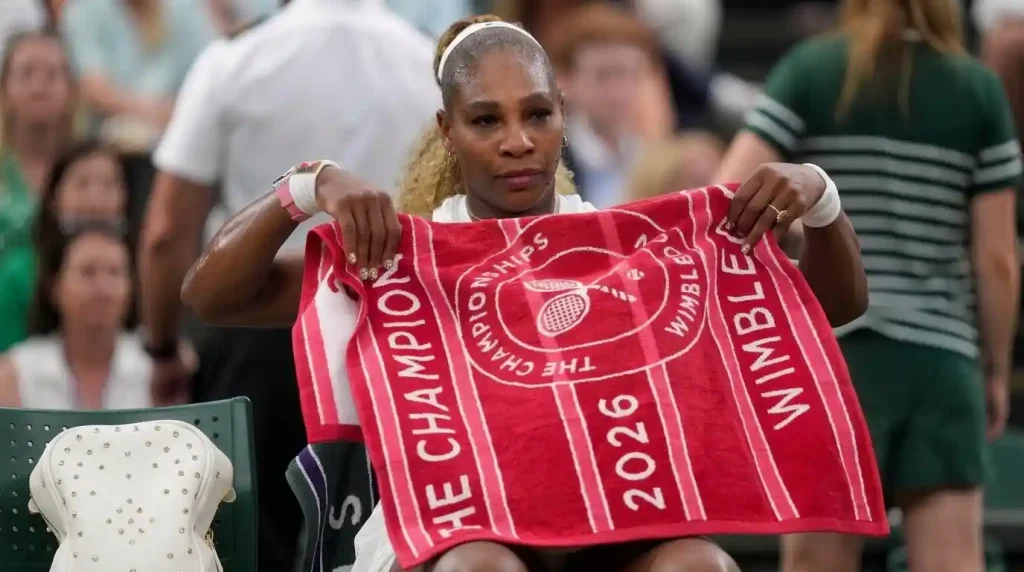
To fully understand the magnitude of Serena’s withdrawal, one must look at the unparalleled legacy that she and Venus have established in women’s doubles. Together, they form one of the most dominant doubles partnerships in the history of the sport. Their style of play—combining booming serves, aggressive baseline groundstrokes, and intimidating net play—completely revolutionized how doubles was played on the women’s tour. Over their careers, they compiled an astounding undefeated record in Grand Slam doubles finals, winning 14 titles in 14 appearances. At Wimbledon alone, they lifted the trophy six times, cementing their status as grass-court royalty.
Their chemistry on court was unique, forged through a lifetime of practicing together under the watchful eye of their father, Richard Williams. Unlike many modern doubles pairs who frequently change partners, the Williams sisters only ever played Grand Slam doubles with each other. This exclusive partnership added a layer of mystique and sisterly bond to their matches, making every single one of their appearances a historic sporting event.
Comparing the Williams Sisters’ Doubles Statistics
The sheer dominance of Serena and Venus Williams in Grand Slam doubles is reflected in their remarkable career statistics. Below is a comprehensive look at their joint achievements across the major tournaments, showcasing why their scheduled return to Wimbledon was so highly anticipated:
| Grand Slam Tournament | Doubles Titles Won Together | Wimbledon Winning Years | Career Doubles Record (Grand Slams) |
|---|---|---|---|
| Wimbledon | 6 | 2000, 2002, 2008, 2009, 2012, 2016 | 6-0 in Finals |
| French Open | 2 | N/A (Won in 1999, 2010) | 2-0 in Finals |
| US Open | 2 | N/A (Won in 1999, 2009) | 2-0 in Finals |
| Australian Open | 4 | N/A (Won in 2001, 2003, 2009, 2010) | 4-0 in Finals |
| Total Grand Slams | 14 | 6 Titles at SW19 | 14-0 Overall in Finals |
Examining the Physical Toll of Professional Tennis Comebacks
Returning to professional tennis after an extended hiatus is one of the most difficult athletic challenges in modern sports. For Serena Williams, returning to play at age 44 requires an extraordinary level of conditioning and physical preparation. According to the latest updates from the Associated Press tennis coverage, the physical strain on aging athletes remains one of the major talking points of the tournament. The physiological changes that occur with age—including reduced elasticity in connective tissues, slower muscle recovery times, and increased susceptibility to joint inflammation—make the margins for error incredibly slim. When an athlete transitions from training to the extreme intensity of a Grand Slam match, the sudden spike in mechanical stress can easily trigger injuries.
This physical challenge is compounded by the specific surface of Wimbledon. Grass courts offer a fast and low-bouncing playing experience, requiring players to stay low to the ground and make constant micro-adjustments in their footing. The surface can also be incredibly slick, especially during the first week of the tournament when the grass is fresh. A single slip or unnatural twist can put immense shearing force on the knee joint, which is precisely what occurred during Serena’s singles match. In contrast, Venus Williams, who has managed chronic health conditions for years, was able to compete in the mixed doubles draw on Friday alongside Germany’s Kevin Krawietz, though they were defeated in straight sets. The contrasting physical states of the sisters highlight how unpredictable and demanding the sport remains for veteran athletes.
Looking Ahead: What Lies Next for Serena and Venus Williams in 2026?
As the tennis world digests the news of Serena’s withdrawal, attention naturally turns to what the future holds for both sisters. Serena’s immediate priority will be rehabilitation and allowing her right knee to fully heal. Given the fluid drainage and the acute nature of the strain, she will likely undergo physical therapy focused on restoring joint stability, strengthening the surrounding musculature, and ensuring that no long-term structural damage was sustained. Her optimistic “stay tuned” remark suggests that her sights are set on the upcoming hardcourt swing in the United States, where the more forgiving, predictable bounce of hard courts may place less immediate strain on her twisting knee joint.
For Venus Williams, who continues to defy age-related expectations at 46, her passion for the game remains undiminished. While her mixed doubles run at this year’s Wimbledon was short-lived, her continued active participation in professional draws keeps the door open for future collaborations with Serena. The tennis public will undoubtedly remain on high alert for any announcement regarding a potential reunion at Flushing Meadows later this year. Ultimately, while the 2026 Wimbledon campaign ended in heartbreak, the enduring legacy of the Williams sisters remains untouched. Their competitive spirit, resilience, and contribution to the global popularity of tennis ensure that whenever they choose to step onto the court, the sports world will be watching with bated breath.


One Comment