Iran’s World Cup run: Team Melli Defies Geopolitical War
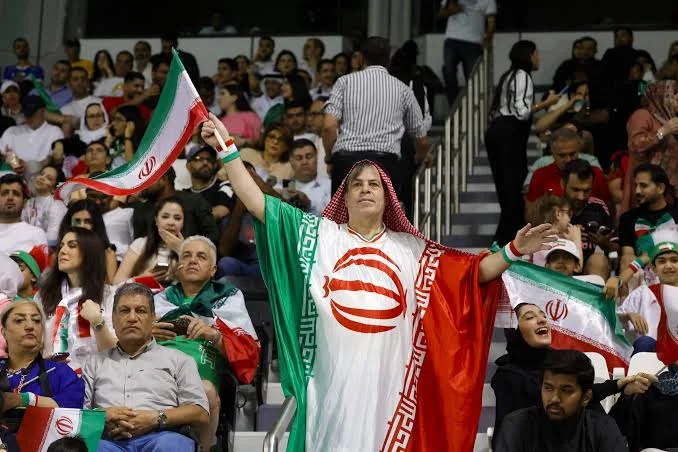
Iran’s World Cup run has emerged as one of the most astonishing sporting narratives in modern history. Against a backdrop of military conflict, severe diplomatic standoffs, and unprecedented logistical hurdles, Team Melli has defied the odds at the 2026 FIFA World Cup, co-hosted by the United States, Mexico, and Canada. Despite having their training base relocated, several key administrative visas denied, and their movements tightly restricted by host nation authorities, the Iranian national team enters its final group stage match with a very real chance of qualifying for the knockout round for the first time in its history.
The February Strikes: Dismantling Iranian Football Infrastructure
The roots of Team Melli’s complicated journey lie in the devastating events of late February 2026. On February 28, joint military strikes by the United States and Israel launched a major kinetic conflict that threw Iranian society into absolute disarray. The geopolitical fallout was instantaneous. Within days of the initial strikes, the domestic Persian Gulf Pro League was indefinitely suspended, depriving local players of competitive match fitness and disrupting the core infrastructure of the sport across the nation. The escalation of regional conflict, punctuated by moments where CENTCOM briefs Trump on unprecedented Iran strike options, created massive shockwaves across Iranian society. As the Iran blockade standoff continues, sports became secondary to matters of geopolitical survival.
For months leading up to the tournament, the national team operated under a cloud of deep uncertainty. Top Iranian football officials expressed severe doubts that the country would even participate in the 48-team tournament, citing both safety and political reasons. Yet, despite the domestic league halting and preparatory warm-up games being systematically canceled, the team and its technical staff refused to yield their hard-earned qualification spot. They asserted that their placement in the global showpiece was non-negotiable, setting the stage for a dramatic international narrative.
Tucson to Tijuana: The Relocation of the Team Melli Base Camp
Originally, the Iranian Football Federation planned to establish its tournament training camp in Tucson, Arizona. However, citing security concerns and deep diplomatic friction, U.S. authorities made it clear that the squad would not be allowed to remain on American soil between their matches. Faced with a potential logistical crisis, FIFA and the Mexican government intervened. Mexican President Claudia Sheinbaum welcomed the Iranian delegation, facilitating an eleventh-hour relocation of their base camp to the border city of Tijuana.
While Tijuana provided a hospitable refuge—with local club Tijuana offering their state-of-the-art training facilities and fans rallying to support the team—the geographic shift came with a severe sporting disadvantage. Because all three of Iran’s Group G matches were scheduled on U.S. soil, the team was forced to navigate an exhausting cross-border commuting regime. Rather than resting at a dedicated base in the host cities, the players have had to fly back to Tijuana immediately after their games.
Visa Delays and Inconsistent Border Restrictions
In addition to the relocation, the squad faced a stressful visa acquisition process. While the active players eventually received their entry permits just days before the tournament kicked off, over a dozen key coaching staff, technical analysts, medical personnel, and administrative officials—including the head of the Iranian Football Federation, Mehdi Taj—were denied U.S. visas. This gutted coach Amir Ghalenoei’s support network, leaving him to manage high-stakes match preparations with a skeleton crew.
Furthermore, the U.S. authorities imposed strict, sometimes inconsistent travel limits. The team has been permitted to enter the United States only within 24 hours of their matches and has been ordered to leave immediately following the final whistle. Andrew Giuliani, executive director of the White House Task Force for the tournament, defended these measures, pointing to “derogatory information” regarding certain denied officials while arguing that the shift to Tijuana actually shortened the flight time to Los Angeles compared to the original Tucson plan. However, for the players on the ground, the physical toll of these immediate post-match border crossings has been immense.
Coach Amir Ghalenoei: Exposing the “Most Oppressed” Campaign
Head coach Amir Ghalenoei has been vocal about what he describes as highly unfair and dynamic obstacles. Ghalenoei, the first native Iranian coach to lead the squad at a World Cup since 1998, has frequently spoken out during press conferences. “I think that we came to the World Cup in the worst condition possible,” Ghalenoei said through an interpreter. “This is something that I wanted all the world to know.”
Following their second group stage match against Belgium, Ghalenoei criticized U.S. officials for allowing his squad less than 16 hours of preparation and training time before taking the field. Due to travel delays and rigid entry schedules, the team had to severely cut their tactical sessions short. Ghalenoei has openly labeled his side “the most oppressed team in the whole World Cup,” lamenting that political maneuvering has directly interfered with athletic preparation.
Unbeaten Resilience: Group G Matches Breakdown
Despite these daunting physical and mental pressures, Team Melli’s on-pitch performances have been nothing short of heroic. Playing in Group G alongside New Zealand, Belgium, and Egypt, Iran has structured a highly disciplined, resilient campaign.
Overcoming Odds in the 2-2 Draw Against New Zealand
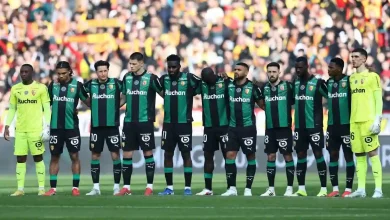
Iran opened their tournament in Los Angeles against New Zealand. Under a highly charged political atmosphere at SoFi Stadium—where some political protests occurred outside and boos met the Iranian flag during ceremonies—the players focused entirely on the game. After falling behind twice due to a brilliant performance by New Zealand’s Elijah Just, Iran fought back tenaciously to secure a 2-2 draw. Following the match, instead of recovering in a local hotel, the team was immediately rushed to the airport for a late-night flight back to Tijuana, illustrating the severe physical toll of their arrangement.
A Scoreless Masterclass: Holding Belgium to a 0-0 Draw
On June 21, Iran faced a formidable Belgian side featuring world-class talents. Having had less than 16 hours to train on-site due to border delays, Team Melli produced a masterclass in defensive coordination. They frustrated the Belgian attack for 90 minutes, securing a hard-fought 0-0 draw. The point kept them unbeaten and in control of their own destiny heading into the final matchday.
Historical Comparison of Team Melli World Cup Campaigns
To understand the magnitude of Iran’s current achievement, it is helpful to look at how this campaign compares with previous iterations. Historically, Team Melli has struggled to transition past the group stages, often plagued by lack of preparation, but never to the extreme degree witnessed in 2026.
| Year | Host Country | Head Coach | Preparation Conditions | Group Stage Record | Knockout Stage Status |
|---|---|---|---|---|---|
| 1978 | Argentina | Heshmat Mohajerani | Standard preparation | 0 Wins, 1 Draw, 2 Losses | Eliminated |
| 1998 | France | Jalal Talebi | Internal political shifts | 1 Win, 0 Draws, 2 Losses | Eliminated |
| 2006 | Germany | Branko Ivanković | Political tension, average training | 0 Wins, 1 Draw, 2 Losses | Eliminated |
| 2014 | Brazil | Carlos Queiroz | Sanctions limited friendly options | 0 Wins, 1 Draw, 2 Losses | Eliminated |
| 2018 | Russia | Carlos Queiroz | Moderate sponsorship issues | 1 Win, 1 Draw, 1 Loss | Eliminated |
| 2022 | Qatar | Carlos Queiroz | Domestic protests and unrest | 1 Win, 0 Draws, 2 Losses | Eliminated |
| 2026 | US / MX / CAN | Amir Ghalenoei | War, Tijuana relocation, visa denials, extreme travel limits | 0 Wins, 2 Draws, 0 Losses (Ongoing) | Active Contender |
The Seattle Showdown: A Historic Chance Against Egypt
Iran’s third and final group match will take place in Seattle against Egypt. A victory would guarantee Iran a historic spot in the round of 16—a feat they have never achieved in six previous World Cup appearances stretching back to 1978. Even a draw could see them progress depending on the result of the parallel match between Belgium and New Zealand.
Ghalenoei remains immensely proud of what his group has achieved under the circumstances. “We’ve had two games without losing in the World Cup with the conditions that we’ve had,” Ghalenoei remarked. “This is a great achievement, and it will be written about in the history of our football, and the future generations will talk about this and what we achieved.” Fans can monitor official match updates and bracket scenarios on FIFA’s official website.
Geopolitics and Football: A Broader Historical Context
The intersection of global politics and soccer is not a new phenomenon, but the 2026 tournament highlights how closely geopolitical conflicts can dictate the terms of athletic competition. The strict border enforcement, visa denials, and the requirement of cross-border commuting show how sports are rarely insulated from international warfare.
This level of political tension in international athletics evokes comparisons to historic inter-Korean matches, such as when Pyongyang’s Naegohyang FC prepared to play Suwon FC in a historic match, proving that athletic fields often mirror the deepest diplomatic fissures. For Team Melli, the battle has extended far beyond the white lines of the football pitch. Every pass, tackle, and defensive block in this tournament has been executed by players who are acutely aware of the conflict surrounding their nation and the immense pressure placed on their shoulders. Regardless of whether they secure that elusive knockout spot in Seattle, their campaign has already cemented itself as a testament to psychological and physical endurance under fire.