Cape Verde Stuns Uruguay in Historic 2026 World Cup Thriller
Cape Verde Continues Historic Run at FIFA World Cup 2026
The narrative surrounding Group H was expected to belong exclusively to European champions Spain and South American powerhouse Uruguay. However, Cape Verde has completely rewritten the script. After a frustrating afternoon for Spain’s elite forward line on Matchday One, Uruguay entered Sunday’s fixture in Miami expecting to assert their historical dominance. Instead, they met an incredibly organized, fearless, and cohesive Cape Verdean side that refused to back down despite a massive disparity in financial backing and global footballing stature.
With Uruguay boasting world-class talent and millions of dollars in squad valuation, the contrast on paper could not have been starker. Yet, as Bubista noted in his post-match comments, the pitch is the ultimate equalizer. Cape Verde’s performance was not merely a display of defensive grit; it was a display of technical confidence, rapid counter-attacking, and tactical maturity that left the South American giants scrambling for answers. Their execution showed that modern tactical organization can bridge the widest of economic divides.
The Miami Miracle: Blasting Past Fernando Muslera
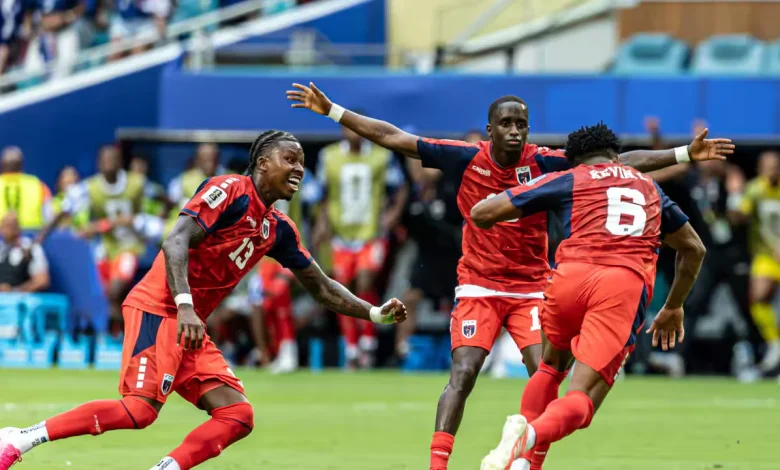
The atmosphere at Miami Stadium was electric, dominated by chants of “Uruguay, Uruguay!” from thousands of passionate supporters. However, the Blue Sharks appeared entirely undaunted by the hostile environment. In the 21st minute, Cape Verde won a free-kick in a dangerous area. Midfielder Kevin Pina stepped up, split Uruguay’s defensive wall with surgical precision, and blasted a low, powerful strike past the diving Fernando Muslera. The ball rippled the back of the net to give Cape Verde a shocking 1-0 lead, marking the nation’s first-ever goal in a FIFA World Cup tournament.
Uruguay reacted with the urgency expected of two-time champions. Towards the end of the first half, they capitalized on brief moments of defensive fatigue. Maxi Araújo and Agustin Canobbio scored rapid-fire goals in the dying minutes of the half to put Uruguay ahead 2-1, seemingly restoring the natural order. But Cape Verde refused to break. In the second half, Bubista introduced Helio Varela. Minutes after stepping onto the pitch, Varela seized on a careless backpass by Uruguayan defender Mathias Olivera. Spotting Muslera far off his line, Varela calmly rounded the goalkeeper and slotted the ball into the empty net, sending the Cape Verdean dugout and their small contingent of fans into pure ecstasy.
Tactical Resilience Under Coach Pedro Leitão Brito
At the center of this footballing fairy tale is head coach Pedro Leitão Brito, who has instilled a deep sense of identity and tactical discipline into this squad. “This is something we owe to other smaller national teams,” Brito said through an interpreter after the match. “Teams that struggled to qualify for a world tournament. We’re also here to show that a country may be small, may struggle financially, but if they are resilient, if they can endure struggle, they can also stand shoulder to shoulder with other major teams and with players who are on another level”.
Brito’s tactical system relies on a compact 4-3-3 structure that shifts dynamically into a defensive block when out of possession, leaving almost no space between the lines. By keeping their defensive structure incredibly narrow, they forced both Spain and Uruguay to play wide, where their wingbacks could double-team key playmakers. Offensively, the transition is swift and direct, utilizing the sheer pace of players like Helio Varela to exploit spaces left behind by overcommitted opponents. This systematic approach has neutralized some of the most expensive attacking forces in world football.
Decoupling the Group H Standings and Knockout Scenarios
As the tournament heads into the decisive third matchday, Group H has become one of the most fascinating groups in World Cup history. Nobody predicted that Cape Verde would occupy a qualification spot after facing both Spain and Uruguay. With their fate entirely in their own hands, a victory against Saudi Arabia in the final matchday would guarantee their progression to the historic Round of 32.
To better understand how this historic run has reshaped the tournament landscape, let us analyze the current standings of Group H as of June 22, 2026. The balance of power is incredibly delicate, and every goal in the final round of fixtures will carry massive implications.
| Pos | Team | Pld | W | D | L | GF | GA | GD | Pts |
|---|---|---|---|---|---|---|---|---|---|
| 1 | Spain | 2 | 1 | 1 | 0 | 4 | 0 | +4 | 4 |
| 2 | Uruguay | 2 | 0 | 2 | 0 | 3 | 3 | 0 | 2 |
| 3 | Cape Verde | 2 | 0 | 2 | 0 | 2 | 2 | 0 | 2 |
| 4 | Saudi Arabia | 2 | 0 | 1 | 1 | 1 | 5 | -4 | 1 |
Analyzing the Standings After Matchday Two
Following Spain’s comprehensive 4-0 victory over Saudi Arabia, they sit comfortably at the top of the table with four points. However, the fight for the second automatic qualification spot—and potential best third-place slots—is fiercely contested. Uruguay and Cape Verde are deadlocked with two points each, sharing identical goal differences and goal-scoring records. With Spain, Uruguay, and Saudi Arabia all fighting for survival, the group stage resembles a crowded race that lacks a clear front-runner, leaving the final matchday completely up for grabs.
If Cape Verde defeats Saudi Arabia in their final group match, they will reach five points, which would almost certainly guarantee them a historic ticket to the knockout stage. Even a draw could be enough, depending on the outcome of the Spain-Uruguay clash and the wild-card standings of other third-place teams across the tournament. For a nation making its World Cup debut, being in this position is nothing short of miraculous.
The Anatomy of a Cinderella Run: From Spain to Uruguay
To fully appreciate what Cape Verde has accomplished, one must look at the sequence of events. A single draw against a major power can sometimes be dismissed as a fluke or a lucky day where the opponent simply failed to perform. But pulling off consecutive tactical masterclasses against Spain and Uruguay proves that Cape Verde’s success is built on a foundation of genuine quality, elite coaching, and unbreakable mental strength.
When the draw was first announced, pundits globally wrote off the African debutants, predicting they would serve as a punching bag for the group’s heavyweight contenders. Instead, Cape Verde has forced the entire footballing world to take notice. Their performances have shown that proper scouting, tactical discipline, and collective belief can overcome any individual talent deficit.
Neutralizing European Champions Spain in Matchday One
The journey began last week in Atlanta, where Cape Verde faced a formidable Spain squad coming off an incredible continental championship run. Spain, led by tactical mastermind Luis de la Fuente, possessed a squad featuring some of the most dynamic talents in the world, including the sensational teenager Lamine Yamal. Spain expected to dominate possession and cruise to an easy victory to kickstart their campaign.
Instead, Cape Verde put on a defensive masterclass. They choked Spain’s midfield supply lines, frustrated their wingers, and executed a perfect low block. Spanish forwards were repeatedly forced into low-percentage long-range efforts or cross after cross that were easily cleared by Cape Verde’s towering center-backs. The resulting 0-0 draw was hailed as one of the biggest shocks in opening-round history, setting the stage for Sunday’s dramatic encounter with Uruguay.
Navigating Financial and Infrastructural Gaps
What makes Cape Verde’s story so compelling is the structural and economic context in which this success has been achieved. Cape Verde is an archipelago consisting of volcanic islands off the west coast of Africa. It has a total landmass of approximately 4,000 square kilometers and a population of only about 500,000 people. This makes them the third-smallest nation by population ever to qualify for a FIFA World Cup, trailing only Iceland and Trinidad & Tobago.
Similar to how the sports world dissects resource disparity, other sectors face comparable divides, as seen in how the US navigates global health information gaps amidst changing global policies. While nations like Spain and Uruguay boast state-of-the-art training facilities, multi-million dollar domestic leagues, and massive youth academies, Cape Verde relies heavily on a passionate diaspora, limited domestic resources, and a deeply-ingrained love for the sport. Their success is a testament to what can be achieved when a sporting federation maximizes its limited resources through smart scouting and long-term planning.
The Expanded 48-Team Format: Creating New Sporting Frontiers
The 2026 World Cup is the first edition to feature the expanded 48-team format. While many purists and traditionalists initially criticized the expansion, arguing it would dilute the quality of the competition and lead to uncompetitive, lopsided matches, Cape Verde’s run has completely shattered that narrative. The inclusion of more nations has allowed hidden gems of global football to showcase their quality on the ultimate stage.
Under the old 32-team format, qualifying from the highly competitive African zone (CAF) was an incredibly narrow path that often left talented, rising nations on the outside looking in. The expansion has democratized the tournament, giving smaller nations the platform they deserve. According to FIFA’s official coverage, the level of competition among debutants has exceeded all expectations, proving that global footballing talent is far deeper than previously assumed.
Inside the Numbers: Cape Verde’s Historical World Cup Profile
While major nations are already conducting a tactical postmortem of their underwhelming starts, Cape Verde remains focused entirely on the pitch. Let us look at some of the remarkable statistics defining their historic debut tournament:
- First World Cup Goal: Scored by Kevin Pina in the 21st minute against Uruguay via a spectacular direct free-kick.
- Total Points: 2 points from two matches against teams with a combined seven historical World Cup final appearances.
- Population: ~500,000 inhabitants, making them the third-smallest country to ever grace the tournament.
- Clean Sheets: 1 clean sheet, achieved against one of the most potent attacking lineups in modern football (Spain).
What Lies Ahead for the Blue Sharks
The final matchday of Group H will determine whether Cape Verde’s dream run extends into the knockout stage. Their final opponent, Saudi Arabia, enters the match desperate for a win after their heavy defeat against Spain. While Saudi Arabia showed defensive vulnerabilities in their last outing, they remain a dangerous and experienced tournament side that Cape Verde cannot afford to underestimate.
However, if the first two matches have shown us anything, it is that Cape Verde fears no opponent. With their compact defensive unit, devastating counter-attacking pace, and the brilliant tactical mind of Pedro Leitão Brito on the sidelines, the Blue Sharks are ready to write the next chapter of this incredible footballing odyssey. No matter what happens on the final matchday, Cape Verde has already won the hearts of millions and permanently etched their name into World Cup folklore.