7 Inspiring Highlights From Barack Obama Presidential Center Opening in Chicago
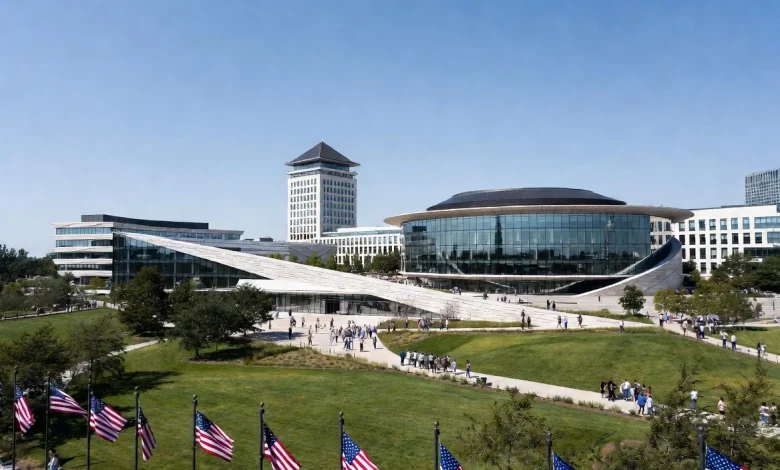
Table of Contents
Barack Obama stood in nearly the same spot in Jackson Park on June 18, 2026, looking up at the monumental structure bearing his name. This poignant moment marked the official dedication of the Barack Obama Presidential Center, a sprawling 19.3-acre campus situated on Chicago’s South Side. For the 44th president of the United States, the occasion represented an emotional and historic homecoming. Having arrived in Chicago in 1985 as a wiry 23-year-old with few plans, a beat-up car, and a vague notion of community organizing, standing before an $850 million monument to his legacy was a profound, full-circle milestone. The grand dedication ceremony was followed immediately by the public opening on June 19, 2026, coinciding with the Juneteenth national holiday.
Introduction: A Historic Homecoming on the South Side
The realization of the Barack Obama Presidential Center represents a milestone not just for the city of Chicago, but for the history of presidential monuments. Nestled along the lakefront in Jackson Park, the center is designed to serve as a beacon of hope and civic action. For decades, presidential libraries have been quiet repositories of paper, situated in academic enclaves or remote landscapes. This project fundamentally disrupts that tradition by embedding itself directly into the urban fabric of a community that played a central role in the former president’s life and career. By positioning the center on the South Side, the Obama Foundation has anchored a massive cultural institution in a community that has historically faced economic disinvestment, sending a powerful signal about where history is made and who has the power to shape it.
The Journey of a Wiry 23-Year-Old Community Organizer
To understand the significance of this location, one must trace the footsteps of the young man who arrived in Chicago in the mid-1980s. Fresh out of college and motivated by a desire to enact real-world change, the future president took a job with the Developing Communities Project, a church-based organizing group. His mission was to help residents of Chicago’s far South Side, particularly in neighborhoods like Altgeld Gardens and Roseland, cope with the devastating economic fallout of local steel mill closures. In these communities, he learned that change does not trickle down from the halls of power, but rises from the ground up through collective action, persistence, and strategic organization.
These formative years on the South Side served as the crucible for his political philosophy. It was here that he developed his unique approach to coalition-building, which would later define his legislative achievements in the Illinois State Senate and the United States Senate. Chicago was also where he met Michelle Robinson, a brilliant young attorney who would become his partner in life and politics. Together, they built a family and a home in the Kenwood neighborhood, just a short distance from where the presidential center now stands. When he launched his historic 2008 presidential campaign, it was Chicago that served as his headquarters, and it was in Grant Park that he delivered his triumphant victory speech. By choosing the South Side as the home of his presidential center, the former president has honored the community that nurtured his ambitions and provided him with the foundation for his historic rise.
Architecture of the Obama Presidential Center: Symbolism in Stone
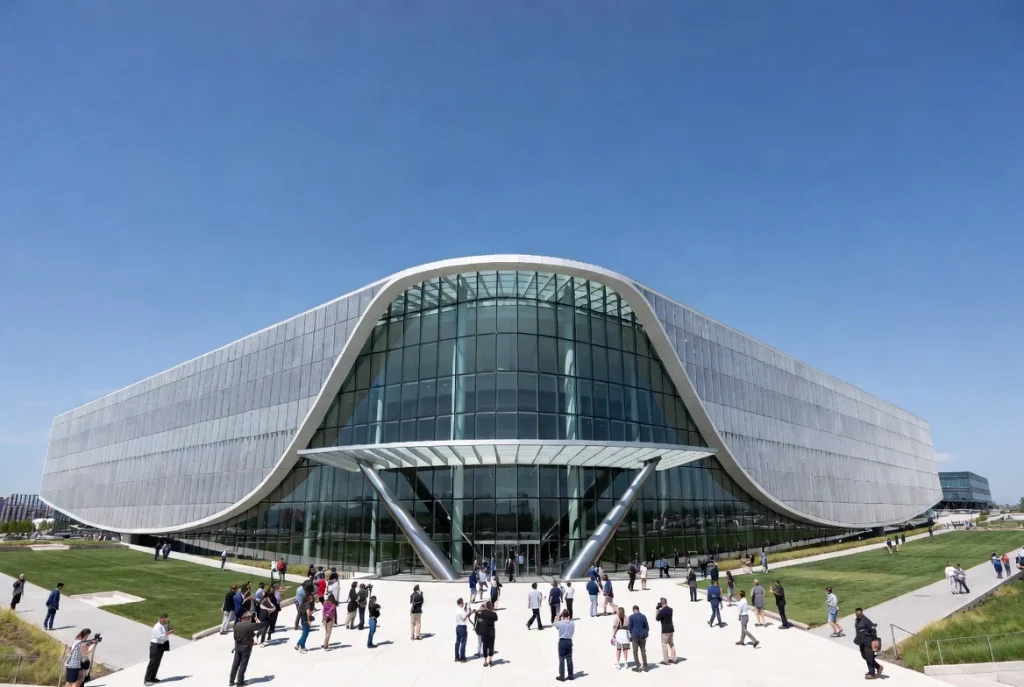
The physical structure of the center is an architectural marvel designed to reflect the core values of the Obama presidency. The acclaimed husband-and-wife architectural team of Tod Williams and Billie Tsien, along with Interactive Design Architects, crafted a campus that is both monumentally striking and deeply integrated into the surrounding parkland. Instead of constructing a single monolithic building, the architects designed a campus of interconnected structures that invite public exploration and interaction. The buildings are constructed using warm, natural materials such as granite and bronze, which are designed to age gracefully over time, reflecting the enduring nature of democratic institutions.
The Eight-Story Museum Tower
The centerpiece of the campus is the majestic 225-foot-tall Museum Building. This eight-story tower features a highly unique, angular design that is meant to evoke four hands coming together in a gesture of unity, strength, and ascent. The building’s stone facade is dynamic, appearing to shift in response to the changing light and seasons of Chicago. It stands as a soaring landmark on the South Side, offering a powerful visual statement of progress. Inside, visitors ascend through interactive exhibition spaces, culminating in the Sky Room Vista—a public observatory that provides sweeping, panoramic views of the South Side, the Chicago loop, and the vast expanse of Lake Michigan.
The John Lewis Plaza and Public Spaces
Surrounding the main tower are several low-slung buildings and public spaces designed by Michael Van Valkenburgh Associates, Site Design Group, and Living Habitats. One of the most prominent features is the John Lewis Plaza, named in honor of the legendary civil rights icon and congressman. This open-air plaza serves as a central gathering place, hosting community events, public forums, and informal gatherings. The campus also features lush native landscaping, walking paths, a state-of-the-art public playground, and an expansive Great Lawn where families can picnic, play, and connect. By dedicating more than half of the 19.3-acre campus to free, public use, the planners ensured that the center remains a welcoming resource for the local community.
How the Center Redefines the Presidential Library Concept
One of the most radical departures from tradition is how the center handles historical archives. Historically, presidential libraries have functioned primarily as research institutions, housing millions of physical documents, letters, and administrative records managed by the National Archives and Records Administration (NARA). The Barack Obama Presidential Center, however, is the first to embrace a fully digital model. In a historic partnership with NARA, the Obama Foundation spearheaded a massive effort to digitize all unclassified documents from the administration, making them accessible online to researchers, students, and citizens worldwide. The physical paper documents are preserved in a highly secure NARA facility elsewhere, allowing the Chicago campus to focus entirely on active civic programming.
This digital-first approach allowed the planners to reimagine the physical space. Instead of quiet research vaults, the center features a vibrant public branch of the Chicago Public Library, which serves as a vital resource for local students and families. Additionally, the campus includes “Home Court”—a 45,000-square-foot multipurpose athletic and recreation facility. Home Court is designed to promote physical health, wellness, and community dialogue, featuring a state-of-the-art basketball court where local youth can play, alongside spaces for community events and leadership training. Through these innovations, the center shifts the focus of a presidential library from a passive museum of the past to an active laboratory for the future.
Comparative Analysis: A New Architectural and Institutional Era
To fully appreciate the innovative nature of this project, it is helpful to compare the Barack Obama Presidential Center with traditional presidential libraries from previous administrations. The table below highlights key differences in philosophy, design, and execution.
| Feature | Barack Obama Presidential Center | Traditional Presidential Libraries |
|---|---|---|
| Location Strategy | Embedded in an urban, historic public park (Jackson Park, Chicago) to catalyze local development. | Often located in suburban areas, quiet college campuses, or presidential birthplaces. |
| Archive Format | First fully digital presidential archive; physical documents are stored off-site by NARA. | Mainly physical paper documents, requiring massive on-site storage vaults and specialized research rooms. |
| Community Infrastructure | Includes a public library branch, a 45,000-sq-ft athletic facility (Home Court), and interactive public parks. | Focused primarily on museum exhibition galleries, archival research, and administrative offices. |
| Environmental Standard | LEED v4 Platinum, Zero Energy goals, and heated/cooled with advanced geothermal systems. | Standard modern commercial builds, with older sites retrofitted for basic energy efficiency. |
| Funding Model | Built entirely with private donations through The Obama Foundation, with some public infrastructure support. | Built with private funds, then handed over to NARA for federal operation and ongoing maintenance. |
Inside the Exhibits: Preserving the Legacy of Civic Action
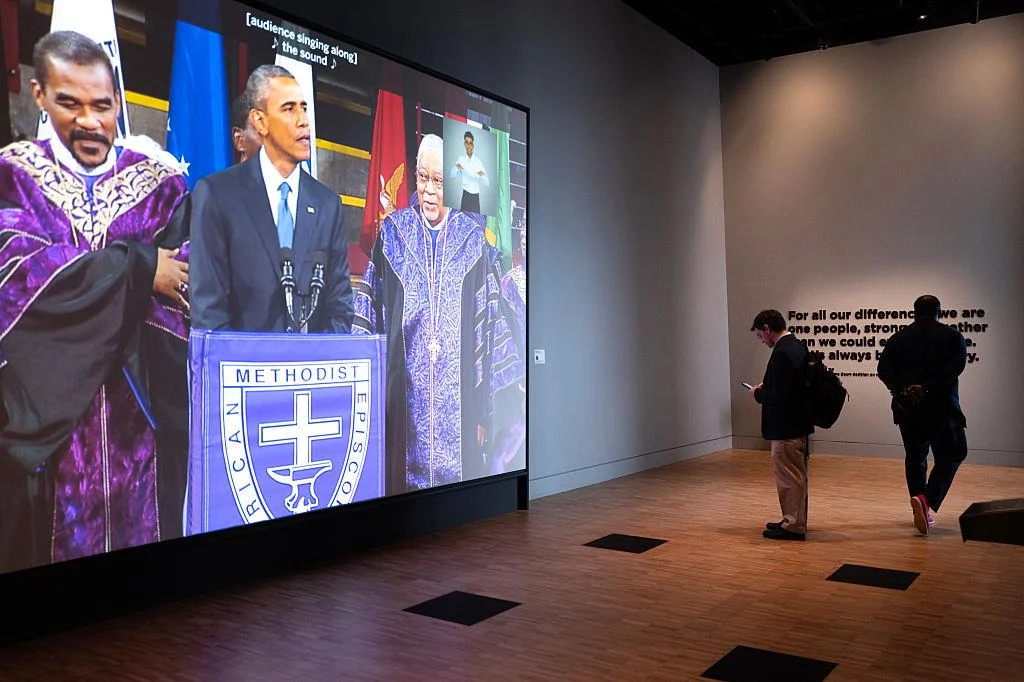
The interior of the Museum Building is divided into thematic galleries that chronicle the historic rise and administrative achievements of the Obama presidency. However, the exhibits are designed to tell a story that extends far beyond the president himself. Instead of a singular focus on executive power, the displays emphasize the power of ordinary citizens to shape history. One of the most moving exhibits centers on the ten constituent letters that the president read each night to stay connected with the everyday struggles of American citizens. These letters, including a deeply personal message from Bobby Ingram, an unemployed Mississippi land surveyor, highlight the human dimension of governance and the deep responsibility felt by the administration.
The museum also features a meticulous, full-scale replica of the Oval Office, allowing visitors to experience the exact environment where major historic decisions were made. From the specific books on the shelves to the busts of civil rights leaders, the room offers a rare glimpse into the personal and political worldview of the 44th president. In addition, interactive digital programs allow visitors to step into the role of policymakers, engaging with simulations of real-world crises, legislative negotiations, and policy debates. These exhibits are designed to be educational, inspiring, and challenging, urging visitors to reflect on their own civic responsibilities and the role they can play in their own communities.
Economic and Community Impact on Chicago’s South Side
The construction and opening of the center represent a massive economic catalyst for Chicago’s South Side, an area that has historically suffered from systemic economic disinvestment and racial segregation. With an estimated development cost of $850 million, funded entirely by private philanthropy, the project has already served as a major engine of job creation and economic activity. According to long-term economic studies, the center is projected to attract over one million visitors annually from around the world, generating a total economic impact of more than $3 billion for the city of Chicago over the next decade.
To ensure that these economic benefits directly impact the local community, the Obama Foundation implemented a series of groundbreaking workforce and contracting policies. The foundation set a goal of 50 percent participation by diverse subcontractors, ensuring that minority-owned, women-owned, and local businesses received a substantial share of the construction contracts. Furthermore, over 35 percent of the construction workforce was recruited directly from the South and West sides of Chicago. Local businesses, from restaurants and hotels to retail shops in Woodlawn, South Shore, and Hyde Park, are already preparing for the influx of visitors, positioning the center as a sustainable economic driver that will help revitalize the region for generations.
Overcoming Controversies: The Path to Jackson Park
While the grand opening was celebrated with immense enthusiasm, the road to completing the center was marked by years of intense public debate and legal challenges. One of the primary sources of controversy was the decision to build the campus within Jackson Park. Designed in the late 19th century by legendary landscape architects Frederick Law Olmsted and Calvert Vaux, the park is listed on the National Register of Historic Places and serves as a vital green space for South Side residents. Advocacy groups, such as Friends of the Parks and Protect Our Parks, filed lawsuits to halt construction, arguing that dedicating public parkland to a private museum violated the public trust doctrine and disrupted the historic character of Olmsted’s design.
Additionally, some local community organizations raised concerns about the potential for gentrification and displacement. They worried that the arrival of a major tourist attraction would drive up property values, property taxes, and rent, ultimately pricing out the working-class Black residents who have long called these neighborhoods home. In response, the Obama Foundation, city officials, and community leaders engaged in years of intense dialogue, federal reviews, and environmental assessments. The design was modified to minimize the environmental footprint, preserving hundreds of mature trees and creating new wetlands and native habitats. Furthermore, community advocates successfully pushed for a landmark community benefits agreement, securing millions of dollars in funding for affordable housing preservation, tenant protection, and local employment initiatives.
A Global Hub for the Next Generation of Leaders
Ultimately, the Barack Obama Presidential Center is designed to be much more than a monument to the past; it is envisioned as a global incubator for active citizenship and civic leadership. Under the guidance of Obama Foundation CEO Valerie Jarrett, the center will host a wide array of programs, fellowships, and international summits designed to connect and empower young leaders from across the globe. By bringing together grassroots organizers, policymakers, artists, and innovators, the center aims to foster collaborative solutions to some of the world’s most pressing challenges, from climate change and economic inequality to democratic backsliding and racial injustice.
At the same time, the center remains deeply rooted in its local neighborhood. The integration of public parks, athletic facilities, and library branches ensures that the campus remains a daily part of the lives of South Side residents. For the young boy or girl walking past the soaring tower on their way to school, the center stands as a tangible reminder that their voices matter and that their stories are a vital part of the American narrative. For the former president who once walked these very streets with a clipboard and a dream, the center is the ultimate realization of a life’s work dedicated to the promise of democracy.