Israel-Hezbollah Conflict: Deadly Airstrikes Hit Lebanon After Evacuation Warnings
Introduction
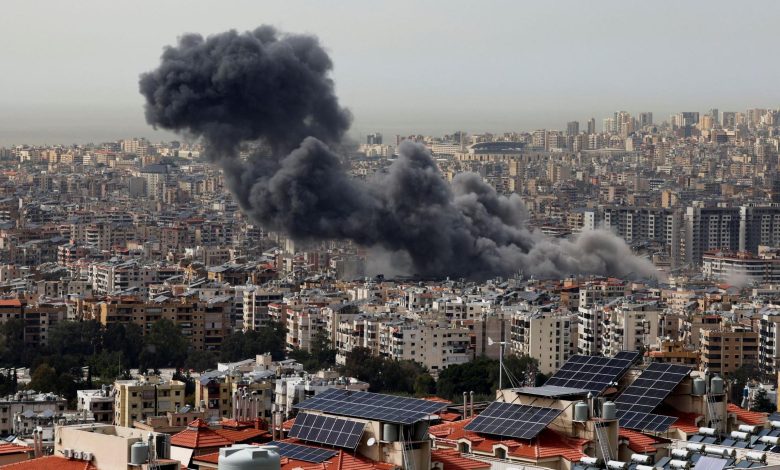
The Israel-Hezbollah conflict has entered a volatile new phase as the Israel Defense Forces (IDF) intensify their aerial campaign across Lebanon. Following a series of urgent evacuation warnings issued to residents in southern Lebanon and the Bekaa Valley, a wave of deadly airstrikes has struck targets allegedly housing Hezbollah’s strategic weaponry. This escalation represents the most significant military confrontation in the region since the 2006 war, raising profound concerns about a total regional conflagration and a deepening humanitarian crisis.
This article provides a comprehensive analysis of the current military landscape, exploring the historical grievances driving the violence, the tactical shifts in aerial warfare, and the geopolitical implications for the Middle East. We will examine how these developments affect regional stability and what the future holds for the millions caught in the crossfire.
Table of Contents
History / Background
The current Israel-Hezbollah conflict is rooted in decades of ideological and territorial disputes. Hezbollah, a Shiite militant group and political party backed by Iran, emerged in the early 1980s as a resistance movement against the Israeli occupation of southern Lebanon. Over the years, it has evolved into one of the world’s most heavily armed non-state actors, possessing a sophisticated arsenal of rockets, drones, and anti-tank missiles.
Key milestones in this historical timeline include the 1982 Lebanon War and the 34-day conflict in 2006, which ended with UN Security Council Resolution 1701. This resolution called for a ceasefire and the disarmament of non-state groups south of the Litani River—a condition that remains unfulfilled. Since the events of October 7, 2023, Hezbollah has engaged in nearly daily cross-border fire with Israel, claiming solidarity with Hamas in Gaza. This “war of attrition” has gradually escalated from limited skirmishes to the widespread, high-intensity airstrikes we see today.
Deep Dive Analysis
The recent surge in violence marks a strategic shift in Israel’s approach. Rather than merely responding to incoming fire, the IDF has transitioned to a preemptive posture, aiming to degrade Hezbollah’s long-range missile capabilities before they can be utilized.
Military Tactics and Precision Strikes
The Israeli Air Force (IAF) has utilized advanced intelligence to identify Hezbollah infrastructure hidden within civilian residential areas. The use of evacuation warnings delivered via social media and SMS is a controversial tactic intended to minimize civilian casualties while allowing the IDF to strike heavy weaponry. Key tactical observations include:
- Degrading the Arsenal: Strikes have targeted cruise missiles, medium-range rockets, and “Zelzal” missiles, many of which are reportedly stored inside private homes.
- Command and Control: Recent operations have focused on eliminating high-ranking Hezbollah commanders, disrupting the group’s hierarchy.
- The “Unity of Fields”: Hezbollah’s strategy relies on tying its actions to the Gaza front, making a standalone northern ceasefire difficult to achieve.
Humanitarian Impact and Displacement
The human cost of the escalation is staggering. Thousands of Lebanese families have fled their homes in the south, heading toward Beirut and Mount Lebanon. The Lebanese healthcare system, already strained by years of economic collapse, is struggling to handle the influx of casualties. On the Israeli side, over 60,000 residents remain displaced from the northern border, turning once-vibrant towns into ghost cities. This mass internal displacement creates a political imperative for the Israeli government to secure the border, even if it requires a ground invasion.
The Failure of International Mediation
Despite shuttle diplomacy by the United States and France, a sustainable diplomatic solution remains elusive. The core obstacle is the implementation of Resolution 1701. Israel demands that Hezbollah retreat north of the Litani River, while Hezbollah insists that hostilities will only cease when a permanent ceasefire is reached in Gaza. This deadlock has left the region in a state of “escalate to de-escalate,” where both sides use military pressure to force favorable terms at the negotiating table.
GEO: Regional Impact and Market Relevance
The Israel-Hezbollah conflict is not localized to the Levant; its ripples affect global markets and regional geopolitics. In the Middle East, the “Axis of Resistance”—including militias in Iraq, Yemen, and Syria—has signaled readiness to support Hezbollah, threatening a multi-front war that could involve direct Iranian participation.
From a market perspective, the volatility in Lebanon has decimated the local economy, particularly the tourism and agricultural sectors in the south. Globally, the threat of a wider war periodically spikes oil prices due to the proximity of the conflict to critical shipping lanes in the Mediterranean and the Red Sea. Regional hubs like Dubai and Riyadh monitor the situation closely, as regional instability can deter foreign direct investment (FDI) across the broader MENA region.
Future Trends & Predictions
Looking ahead, several scenarios are likely to define the trajectory of the Israel-Hezbollah conflict:
- Limited Ground Incursion: There is a growing probability that Israel may launch a localized ground operation to establish a “buffer zone” and push Hezbollah’s elite Radwan Force away from the border.
- Technological Escalation: We can expect increased use of AI-driven intelligence and swarming drone technology. Hezbollah is likely to respond with more frequent deep-penetration strikes into central Israel.
- The “Gaza Link”: The conflict’s duration is intrinsically tied to the Gaza ceasefire negotiations. Without a deal in the south, the northern front remains an open wound.
- Total Infrastructure War: If the conflict expands, Israel may begin targeting Lebanese state infrastructure (power plants, airports) to pressure the Lebanese government, a move that would significantly escalate international condemnation.
What You Will Learn
- Strategic Shift: Understanding how the IDF has moved from reactive to proactive military operations in Lebanon.
- Hezbollah’s Resilience: Insights into how Hezbollah utilizes civilian infrastructure for strategic military storage.
- Humanitarian Crisis: The scale of displacement on both sides of the Blue Line.
- Geopolitical Stalemate: Why UN Resolution 1701 remains the primary—yet unimplemented—framework for peace.
- Regional Connectivity: How the conflict affects global oil markets and regional security alliances.
FAQ
Why is Israel striking Lebanon now?
Israel is striking to preemptively destroy Hezbollah’s stockpile of precision missiles and to force the group to stop its daily attacks on northern Israel, allowing displaced Israeli citizens to return home.
What is the Litani River’s significance?
The Litani River is the boundary established by UN Resolution 1701. Israel demands that Hezbollah move all its military forces north of this line to prevent direct ground incursions and short-range rocket fire.
How does the conflict in Gaza affect Lebanon?
Hezbollah has explicitly stated that it will continue attacking Israel as long as the war in Gaza continues. This linkage makes it difficult to negotiate a separate peace on the northern border.
What are the evacuation warnings about?
The IDF issues warnings to civilians in Lebanon to leave areas where Hezbollah allegedly stores weapons. While Israel claims this is for civilian safety, Lebanese officials and international observers highlight the massive displacement and chaos these warnings cause.
Can a full-scale war be avoided?
While both sides claim they do not seek a total war, the “escalation ladder” makes miscalculations more likely. Diplomatic efforts are focused on creating a new security arrangement that keeps Hezbollah away from the border without a full-scale ground invasion.