SpaceX Wins $57M Space Force Contract For Golden Dome MILNET
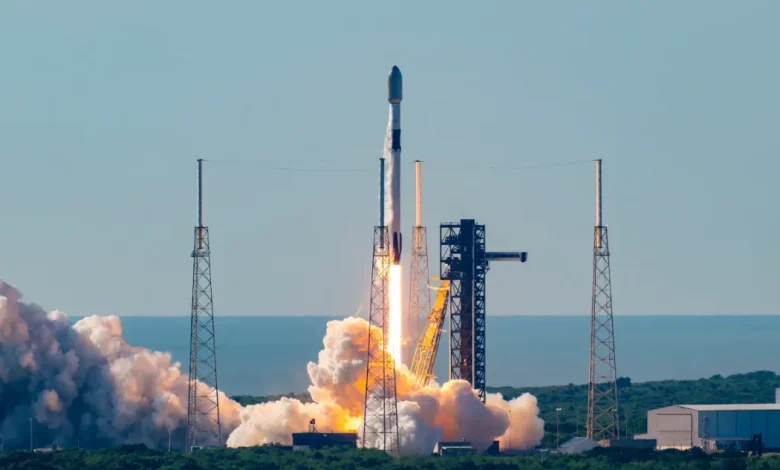
SpaceX just shifted the paradigm of military space operations by securing a highly coveted fifty-seven million dollar contract from the United States Space Force. This groundbreaking agreement mandates the aerospace titan to rigorously prove and implement advanced satellite-to-satellite communications utilizing the newly minted Link-182 data link standard. The contract is far more than a routine procurement; it is a critical foundational step toward establishing the MILNET data relay network, an integral component of the heavily guarded Starshield constellation. Furthermore, this expansive network is tasked with supporting the ambitious Golden Dome missile defense program championed by the Trump administration. With a strict demonstration deadline of April 2027, the defense community is watching closely. SpaceX stands out as one of nine premier companies chosen to engineer the overarching operating system for the entire Golden Dome initiative, an effort that will irreversibly alter the landscape of national security and orbital infrastructure.
The Dawn of Advanced Space Force Communications
SpaceX is spearheading a monumental transition in how the United States military handles orbital data transmission. For decades, the Department of Defense has relied on disparate, often siloed communication satellites that beam data down to terrestrial ground stations before routing it to its final destination. This legacy approach introduces unacceptable latency, especially in an era where milliseconds dictate the success or failure of missile interception. By demonstrating satellite-to-satellite optical and radio frequency linkages, SpaceX aims to bypass terrestrial bottlenecks entirely. The $57 million Space Force contract provides the financial and operational bandwidth necessary to develop cutting-edge transceiver arrays capable of autonomously routing sensitive military data across a mesh network of satellites hurtling through Low Earth Orbit (LEO) at thousands of miles per hour. This capability represents the dawn of a new, hyper-connected battlespace where orbital assets converse directly, sharing target acquisitions, telemetry, and threat assessments without relying on vulnerable ground-based infrastructure.
Understanding the Link-182 Data Link Standard
SpaceX engineers are currently tasked with deciphering and mastering the Link-182 data link standard, a relatively novel and highly classified protocol designed explicitly for resilient space communications. Unlike older tactical data links such as Link 16, which were optimized for atmospheric aircraft and naval vessels, Link-182 is engineered to withstand the extreme radiation, vast distances, and high-velocity Doppler shifts inherent to orbital mechanics. The protocol incorporates advanced cryptographic handshakes, quantum-resistant encryption algorithms, and highly agile frequency hopping to evade sophisticated jamming attempts by adversarial nations. By proving that their Starshield satellites can flawlessly communicate using Link-182, SpaceX will validate the entire framework of next-generation military data sharing. The standard allows for dynamic routing, meaning if one satellite is compromised, destroyed, or jammed, the data packet autonomously finds a new route through the constellation to reach its intended recipient, ensuring uninterrupted command and control capabilities.
Evolution from Previous Military Architectures
SpaceX entering this domain highlights a stark evolution from previous military architectures. Historically, military satellite communications (MILSATCOM) relied heavily on massive, expensive, and geostationary (GEO) satellites. While these multi-billion-dollar assets provided broad coverage, their extreme distance from Earth resulted in noticeable signal delays. Moreover, their static positions made them predictable targets for anti-satellite (ASAT) weapons. The transition toward LEO constellations, driven largely by commercial innovation, offers a decentralized and resilient alternative. The integration of Link-182 into this decentralized model essentially creates a self-healing network. If you disrupt a traditional GEO satellite, you blind an entire hemisphere. In contrast, disrupting a few nodes in a Link-182 powered MILNET merely causes the network to reroute, guaranteeing that the mission continues unimpeded. This shift mirrors the broader technological push toward decentralized survivability, akin to protecting networks from AI-driven cyber warfare capabilities.
The MILNET Data Relay Network and Starshield Integration
SpaceX has long envisioned a militarized counterpart to its wildly successful Starlink commercial internet service, and the Starshield program is the manifestation of that vision. The MILNET data relay network serves as the nervous system for Starshield, enabling disparate satellites—ranging from early warning infrared sensors to active tracking platforms—to communicate seamlessly. The $57 million Space Force contract is specifically tailored to mature the inter-satellite links that will form the backbone of MILNET. When a sensor satellite detects a thermal bloom indicative of a missile launch, it will instantly push that data through the MILNET mesh using the Link-182 standard. This data will be relayed across the globe in seconds, directly to interceptor platforms or combatant commanders, completely bypassing the need for vulnerable ground relays. This integration represents a quantum leap in situational awareness and operational speed.
Strategic Advantages in Low Earth Orbit (LEO)
SpaceX understands that the strategic advantages of operating a mesh network in Low Earth Orbit cannot be overstated. LEO satellites operate at altitudes ranging from 300 to 1,200 miles, drastically reducing the time it takes for signals to travel to and from the Earth’s surface compared to GEO satellites stationed at 22,000 miles. For missile defense, this reduction in latency is vital. Furthermore, a proliferated LEO architecture consists of hundreds or thousands of relatively inexpensive satellites. This “safety in numbers” approach creates a highly resilient network. Adversaries cannot practically shoot down enough satellites to disrupt the network before the network reconfigures itself. This resilience ensures that the MILNET system remains operational even in a highly contested environment, guaranteeing that critical tracking data reaches interceptor systems when it matters most.
Integration with the Golden Dome Missile Defense Program
SpaceX is not merely building a communication network; it is actively constructing the connective tissue for President Trump’s ambitious Golden Dome missile defense program. Golden Dome is envisioned as an impenetrable, multi-layered shield designed to detect, track, and intercept incoming ballistic and hypersonic threats before they can reach the homeland or allied territories. The effectiveness of Golden Dome is entirely dependent on its ability to process massive amounts of sensor data and distribute targeting solutions in real-time. The MILNET network, powered by SpaceX’s Starshield satellites and the Link-182 standard, is the designated transport layer for this critical data. By weaving together advanced radar systems, space-based infrared sensors, and terrestrial interceptors, Golden Dome requires an operating system of unprecedented complexity. SpaceX’s communication infrastructure is the very foundation upon which this operating system will function, proving that private enterprise is crucial to national defense.
Addressing Modern Hypersonic and Ballistic Threats
SpaceX recognizes that the contemporary threat landscape has evolved drastically. Adversaries have heavily invested in maneuverable hypersonic glide vehicles and advanced intercontinental ballistic missiles (ICBMs) designed specifically to evade traditional terrestrial radar systems. These next-generation weapons travel at blistering speeds and can alter their trajectories mid-flight, making them incredibly difficult to track from the ground. The Golden Dome program relies on space-based tracking to maintain a continuous, unblinking eye on these threats from above. However, tracking is only half the battle; the data must be relayed instantaneously to interception systems. This is precisely where the Link-182 demonstration contract comes into play. By proving that high-fidelity tracking data can be passed from satellite to satellite without delay, SpaceX is enabling the Golden Dome to calculate interception vectors for threats that were previously considered unstoppable.
Contract Deliverables and the April 2027 Deadline
SpaceX faces an aggressive timeline to fulfill the stringent requirements of the $57 million Space Force contract. The primary deliverable is a comprehensive, on-orbit demonstration of seamless satellite-to-satellite communication utilizing the Link-182 protocol, and it must be completed by April 2027. This timeline necessitates a rapid pace of engineering, manufacturing, and launch operations. The demonstration must prove that the hardware and software can handle massive data throughput with near-zero packet loss, maintain encrypted links under simulated electronic warfare (EW) attacks, and dynamically route data through a multi-node constellation. The April 2027 deadline is not arbitrary; it aligns with the broader deployment schedule of the Golden Dome program. Failure to meet this milestone could delay the entire missile defense architecture. The pressure is immense, but the company’s track record of rapid iteration and vertical integration positions it well to meet these daunting deliverables.
SpaceX Among Nine Elite Defense Contractors
SpaceX is not acting alone in this monumental endeavor. The Space Force has adopted a consortium approach for the Golden Dome operating system, selecting nine elite companies to collaboratively engineer the complex architecture. While SpaceX focuses on the critical transport layer and satellite-to-satellite communications through MILNET, other traditional aerospace prime contractors and emerging tech firms are developing the sensor payloads, fire control algorithms, and ground-based interceptors. This multi-vendor strategy is designed to foster innovation, prevent vendor lock-in, and ensure that the Golden Dome incorporates the best available technology across the defense industrial base. The interoperability demanded by the Link-182 standard is essential for ensuring that hardware from these nine different companies can communicate flawlessly within the unified Golden Dome ecosystem.
| Capability Metric | Traditional MILSATCOM Architecture | SpaceX MILNET / Starshield Architecture |
|---|---|---|
| Primary Orbit | Geostationary Earth Orbit (GEO) | Low Earth Orbit (LEO) |
| Signal Latency | High (often > 250ms) | Extremely Low (often < 30ms) |
| Network Resilience | Low (Few targets, highly vulnerable) | High (Massively proliferated, self-healing) |
| Data Link Standard | Legacy Link 16 / Proprietary | Advanced Link-182 Standard |
| Inter-Satellite Comms | Limited, heavily reliant on ground relays | Native, optical and RF mesh networking |
Synergy Between Commercial and Military Space Tech
SpaceX has continuously demonstrated the profound synergy between its commercial ventures and its military applications. The massive engineering resources poured into the commercial Starlink network have directly subsidized the technological development required for Starshield and the MILNET architecture. By leveraging commercial off-the-shelf (COTS) components where appropriate, and rapidly scaling manufacturing processes originally designed for consumer internet satellites, SpaceX can deliver defense capabilities at a fraction of the cost and time of traditional procurement models. This dual-use strategy is transforming the defense sector, forcing legacy contractors to adopt more agile methodologies. For deeper insights into governmental procurement strategies, readers can review information provided by the Department of Defense regarding next-generation satellite architectures.
Broader Geopolitical Implications of Space Militarization
SpaceX stepping into the core infrastructure of the U.S. missile defense apparatus carries profound geopolitical implications. As the United States hardens its orbital assets and accelerates the deployment of systems like Golden Dome, rival nations are taking notice. The weaponization and militarization of space are accelerating rapidly, transitioning from theoretical concepts to active deployment. The ability to maintain secure, low-latency communications globally via MILNET ensures American strategic dominance, particularly in contested regions. Recent global events, characterized by instances of military escalation in critical choke points, underscore the necessity of invulnerable command and control networks. Furthermore, the rapid development of orbital tech mirrors broader industry trends, such as the rapid AI evolution and market expansion seen across other advanced tech sectors under the Musk corporate umbrella.
Conclusion: Paving the Way for the Future of Defense
SpaceX winning the fifty-seven million dollar Space Force contract to prove Link-182 communications is a watershed moment for national security. By committing to build the MILNET data relay network for the Starshield constellation by April 2027, the company is laying the indispensable groundwork for the Golden Dome missile defense system. This endeavor moves beyond simple hardware procurement; it is a fundamental reimagining of how the military will operate in a hyper-connected, high-threat environment. As one of the nine companies forging this new frontier, SpaceX is not just breaking historic space barriers; it is actively constructing the shield that will protect the nation from the most advanced threats of the 21st century. The success of this demonstration will echo through military doctrine for decades to come, solidifying the vital role of private commercial innovation in maintaining global strategic superiority.