Donald Trump Invokes Biden 900 Times in Strategy
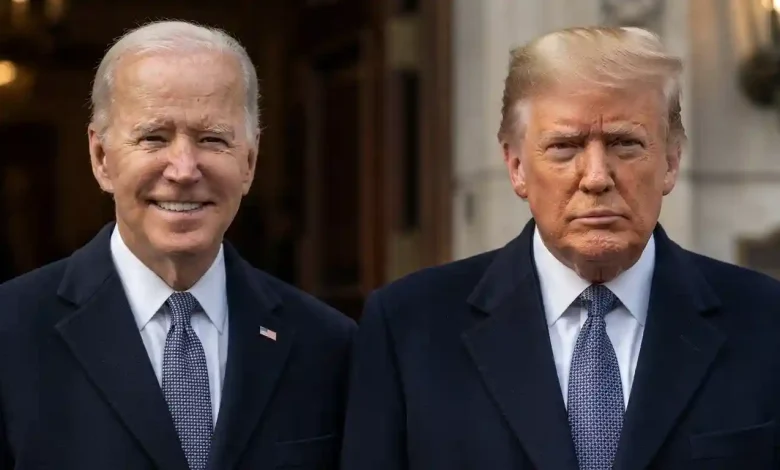
Table of Contents
Donald Trump invokes Biden at an unprecedented cadence as the American political calendar accelerates toward high-stakes midterm contests. A forensic examination reveals that the incumbent commander-in-chief has cited the former Democratic leader nearly 900 times across prepared remarks, unscripted press gags, and digital communiqués since the start of the year. This relentless focus averages three explicit mentions per day, functioning as a centerpiece of the administration’s political messaging. By continuously anchoring national debates around his predecessor, the White House aims to turn upcoming legislative ballots into a retrospective referendum rather than an evaluation of incumbent executive outcomes.
Trump :A Relentless Electoral Echo: Tracking the Rhetoric
The strategic utility of keeping a predecessor in the spotlight is a venerable political maneuver, yet the scale documented in recent analysis establishes a modern operational precedent. Every major economic perturbation, diplomatic confrontation, and domestic friction point is contextualized as a lingering consequence of prior governance. Whether addressing supply chain reconfigurations or geopolitical flashpoints, the narrative framework systematically redirects structural friction back toward the previous administration.
This dynamic unfolds at a critical juncture where public attention is pulled across multiple fronts. Observers of Joe Biden’s post-presidency legacy and political impact note that former chief executives traditionally slip into elder statesman quietude. Yet, the current executive messaging apparatus refuses to let the 46th president fade into historical abstraction, utilizing his tenure as an ever-present rhetorical contrast.
Trump :The Numbers Behind the Attacks: Speeches, Posts, and Remarks
The statistical compilation highlights an aggressive, multichannel media strategy designed to saturate conservative networks and mainstream headlines simultaneously. Across rallies, standard press briefings, ceremonial announcements, and rapid-fire social posts on Truth Social, the invocation tempo rarely dips below twenty mentions per week. On weeks marked by legislative standoffs or judicial scrutiny, the velocity surges sharply.
Communication theorists observe that constant repetition stabilizes narrative cohesion across fragmented media ecosystems. For voters who consume information via short video snippets and algorithmic newsfeeds, the steady repetition of blame constructs an indelible mental link between contemporary frustrations and prior administration directives, reinforcing political polarization.
Trump :Core Grievances: Inflation, Border Control, and Munitions
The substantive focus of these mentions generally concentrates on three sensitive policy arenas: persistent consumer price pressures, sovereign border enforcement, and international defense allocations. Each vertical represents a potent flashpoint with independent voters and conservative loyalists alike.
In the economic theater, lingering price volatility is framed as the direct fallout of federal stimulus initiatives and green energy incentives enacted years prior. On border integrity, security rhetoric ties local municipal stresses directly to earlier immigration postures. Meanwhile, amid complex global conflicts, warnings regarding national stockpiles and munitions shortages frequently serve to attack prior foreign defense underwriting.
These policy arguments do not operate in a vacuum. Broader national security friction, such as when Greenland defense arrangements or strategic territorial maneuvers emerge on the diplomatic calendar, is repeatedly tied to historical treaties negotiated by the prior executive suite.
Trump :The Midterm Calculation: Motivating the Base
Midterm elections historically present substantial structural headwinds for the party controlling the executive branch. Turnout among the president’s coalition routinely declines, while opposition voters demonstrate heightened motivation at the ballot box. To disrupt this cyclical tendency, administration strategists have operationalized an aggressive defensive posture.
By transforming every localized congressional race into a referendum on the former president’s platform, the administration attempts to recreate the voter mobilization dynamics of presidential election cycles. When national political teams monitor coalition stability ahead of midterms, activating working-class turnout becomes paramount. Demonizing prior leadership functions as an emotional catalyst for voters who might otherwise sit out an off-year contest.
Trump :A Silent Opponent: Biden’s Absence from Public Life
What makes this prolonged offensive uniquely striking is the near-total silence from the target himself. The 83-year-old former president, currently managing late-stage oncology regimens and physical rehabilitation, has maintained an extraordinarily low profile. Aside from occasional written statements commemorating civic milestones, he has declined to engage in standard political point-scoring.
This asymmetrical engagement produces an unusual dynamic. The White House engages in daily rhetorical combat against an adversary who effectively offers no direct return fire. Critics argue that targeting an ailing predecessor who has stepped back from public governance risks crossing traditional norms of decorum. Conversely, administration allies maintain that holding historical administrations accountable for long-cycle fiscal policies is both constitutional and necessary.
This political contrast echoes broader tensions observed across the continent. When external observers examine shifts in national strategy, such as when Buy Canadian movement directives adjust cross-border trade balances or domestic consumer indices fluctuate, executive communicators consistently point backward to historic trade pacts signed during the preceding four years.
Trump :Congressional Realities and Tight Majorities
The arithmetic inside the Capitol provides the ultimate rationale for this unyielding media push. With razor-thin legislative margins in both the House of Representatives and the Senate, a swing of just a few districts could instantly paralyze the executive agenda. Under divided government, subpoena authority, committee chairmanships, and budget reconciliation tools pass to political opponents.
Consequently, every public appearance is leveraged to shield vulnerable incumbents in competitive suburban and rural-fringe districts. When debates surface around national supply chains, agricultural tariffs, or federal energy policies, the administration works to ensure voters blame past Democratic policies rather than current governance.
The strategic stakes are clearly visible when reviewing recent patterns in how administrations manage transitions and campaign rhetoric:
| Metric Dimension | Current Administration Strategy | Historical Modern Precedents |
|---|---|---|
| Invocation Frequency | ~900 mentions annually (~3 per day) | 50–150 mentions annually in midterms |
| Primary Communication Channel | Direct Social Platforms & Unscripted Events | Formal Press Conferences & Written Releases |
| Core Narrative Focus | Inflation, Border Security, Munitions Stocks | Legislative Obstruction, Deficit Inheritances |
| Predecessor Public Status | Retired, Dealing with Chronic Illness | Active Post-Presidency or Political Campaigning |
| Primary Electoral Goal | Base Mobilization via Retrospective Referendum | Defending Policy Rollouts and Incumbent Record |
Trump :Comparing Modern Presidential Rhetoric Across Decades
Historically, chief executives have leveraged predecessor blame sparingly, typically limiting such rhetoric to the immediate post-inauguration window known as the honeymoon phase. Previous administrations frequently invoked inherited economic conditions to rationalize delayed reforms, but progressively shifted focus toward future goals as midterms neared.
The contemporary departure from that baseline reflects wider transformations in American civic discourse. Algorithmic communication favors high-contrast friction over nuanced policy defense. When voters evaluate market disruptions—from fluctuating fuel costs to shifting consumer price indices—simple oppositional narratives often eclipse intricate statistical explanations.
This rhetoric also intersects with complex geopolitical challenges. Diplomatic negotiations across the Middle East, such as those covered when U.S. officials meet Houthi representatives in Oman, are routinely presented to domestic audiences as attempts to untangle the diplomatic miscalculations of prior leadership.
Trump :The Democratic Response and Legislative Counter-Strategies
Democratic leadership on Capitol Hill has attempted to reframe these recurring broadsides, labeling them a diversionary tactic designed to mask legislative impasses and uneven administrative execution. Congressional party leaders emphasize bread-and-butter constituent needs, pushing back against retrospective debates.
However, running against an opponent who is not on the ballot presents tactical hurdles for both parties. While Democrats argue that attacking a retired predecessor signals executive insecurity, Republicans assert that public memories are short and that maintaining clarity regarding policy origins is vital for long-term accountability.
The dynamic mirrors political friction observed in emerging tech governance, where debates over regulatory safeguards—such as AI safety legislation—frequently get bogged down in partisan disputes over which administration bears responsibility for initial oversight gaps.
Long-Term Impacts on the American Electoral Landscape
As the midterm cycle draws closer, the volume of these historical contrasts shows no sign of diminishing. Field organizers report that voters remain acutely sensitive to pocketbook realities, ensuring that economic messaging will dominate late-campaign advertising spend. The strategy of invoking past leadership is poised to remain a constant through election day.
The broader institutional consequence is a permanent extension of political campaign warfare into routine governance. When executive communication treats prior occupants of the Oval Office as active combatants, traditional political transitions lose their reconciling function. This high-friction dynamic is likely to shape presidential communication standards for cycles to come.