Strait of Hormuz 2026: Iran-Oman Transit Fee Proposal to U.S.
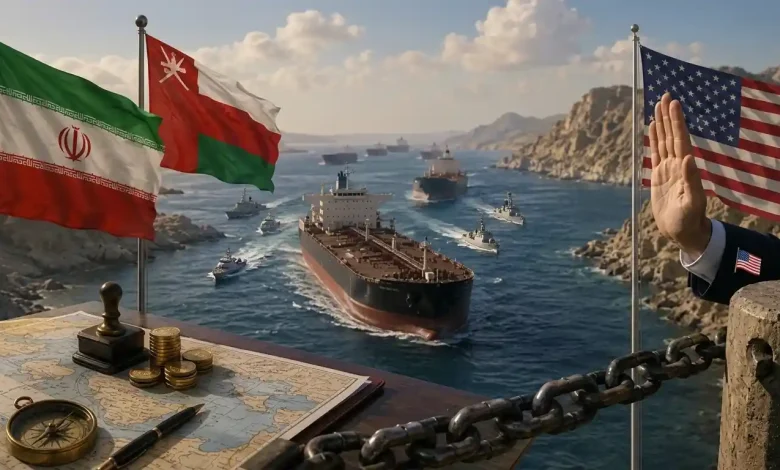
Table of Contents
Strait of Hormuz remains the world’s most critical energy transit corridor, and it has once again thrust itself into the center of a high-stakes diplomatic and strategic debate. Following months of intense military standoffs, localized skirmishes, and international mediation, a joint proposal submitted by Iran and Oman to the United States has introduced a controversial new paradigm for the administration of this vital waterway. According to multiple diplomatic sources and intelligence reports, the proposal outlines a plan to jointly manage maritime traffic and collect administrative fees from merchant vessels transiting the narrow passage. This development marks a significant departure from the historical status quo of free navigation, threatening to reshape regional alliances, global energy supply chains, and international maritime law.
The proposal comes at a highly delicate moment. Recent deployments and international naval efforts, such as when France deployed warships to the Hormuz Strait, underscore the extreme security sensitivity surrounding this passage. As nations grapple with the aftermath of recent maritime disruptions, the question of who polices, maintains, and funds the security of the strait has become a central battleground for global powers.
Strait of Hormuz at the Center of Global Security
The geography of the Strait of Hormuz makes it an irreplaceable maritime chokepoint. Separating the Persian Gulf from the Gulf of Oman and the Arabian Sea, the strait is only 21 to 24 miles wide at its narrowest point. Yet, it serves as the primary gateway for approximately one-fifth of the world’s petroleum liquids and a massive portion of the global liquefied natural gas (LNG) supply. Because of its physical narrowness, the shipping lanes within the strait pass directly through the territorial waters of Iran and Oman, which are governed by the rules of transit passage under international maritime law.
For decades, commercial vessels have operated under the assumption of unhindered, toll-free passage. However, a wave of conflict earlier this year led to mine-laying incidents, drone attacks, and direct military interventions. These events have left the waterway physically damaged and littered with maritime hazards. As coastal states bear the direct logistical and environmental costs of monitoring these waters, Iran and Oman have argued that the international community must share the financial burden of maintaining a safe transit corridor.
The Joint Proposal by Iran and Oman: Key Details
The joint proposal, formally delivered to Washington and Western allies, details a framework under which Iran and Oman would jointly oversee navigation services, route safety, and security operations in the strait. Crucially, the plan contains provisions for the collection of fees to offset the administrative and logistical costs of maintaining the waterway.
Historically, the physical and financial burden of keeping the passage safe from mines and piracy has been absorbed by the coastal states or mitigated by international naval coalitions. Under the new joint proposal, however, shipping companies would pay service fees for utilizing the Strait of Hormuz. The proposal represents a significant diplomatic shift and is deeply tied to broader peace talks between Washington and Tehran. Previously, the international community witnessed a cautious breakthrough when Donald Trump reviewed Iran’s peace offer, though senior officials remained highly skeptical of long-term concessions.
The Islamabad Memorandum of Understanding Context
This joint administrative proposal has emerged directly from the aftermath of the landmark bilateral agreement signed on June 17, 2026. Known formally as the Islamabad Memorandum of Understanding (MoU), this agreement was negotiated to defuse the devastating regional conflict that erupted earlier in the year.
Under the terms of the MoU, the United States and Iran agreed to a temporary 60-day window of free and safe transit for all commercial vessels. This interim phase was designed to allow crucial demining operations to take place, particularly in the deep-water shipping lanes that had been rendered unsafe by sea mines. Crucially, however, the memorandum left the long-term governance of the strait open-ended. It specified that once the 60 days expired, the future administration of the waterway would be defined in detailed discussions led by Iran and Oman, in consultation with other Persian Gulf littoral states. This open-ended clause has effectively opened the door for Tehran to press for structural changes in how the strait is policed and funded.
Administrative Fees vs. Voluntary Contributions
One of the most contentious aspects of the new proposal is the nature and legality of the transit fees. Omani Foreign Minister Sayyid Badr bin Hamad Al Busaidi sought to clarify his country’s position, stating in an interview that Muscat does not support the unilateral imposition of mandatory tolls on international shipping. Instead, Al Busaidi drew a critical distinction between mandatory transit fees and voluntary charges designed to fund maintenance, safety, and pollution-control services.
Oman has pointed to the historical precedents of the Strait of Malacca and the Strait of Singapore. In those critical East Asian maritime passages, littoral states cooperate with international shipping associations and user nations to fund safety infrastructure, oil spill response mechanisms, and navigational aids through voluntary contributions and service fees. Oman’s proposed framework envisions a similar cooperative trust fund.
Iran, however, has taken a far more rigid and maximalist stance. Officials from the Islamic Revolutionary Guard Corps (IRGC) and the Iranian foreign ministry have signaled that any maritime service fees should be mandatory. Tehran argues that vessels refusing to cooperate or ignoring approved routes could face exclusion or a “forceful response” from Iranian coastal patrols, triggering intense concerns among global shipowners that “voluntary” charges are merely a euphemism for compulsory tolling.
The United States Opposition to Maritime Tolling
The United States and its Western allies have quickly and publicly rejected any administrative scheme that seeks to monetize transit through the Strait of Hormuz. U.S. Secretary of State Marco Rubio reiterated that Washington firmly opposes any fees, tolls, or mandatory donations, asserting that the pre-war status of unimpeded free navigation must be fully restored.
Diplomats in Washington emphasize that accepting even a voluntary donation framework could set a dangerous international precedent, effectively allowing coastal states to erect financial barriers across global chokepoints. This comes at a time when public opinion on foreign engagement remains highly polarized, following a period where many Americans believed the U.S. was winning the war with Iran, leading to expectations of a total diplomatic victory rather than compromises over freedom of navigation.
International Law and Rights of Innocent Passage
From a legal standpoint, the proposed fee structure challenges established interpretations of the United Nations Convention on the Law of the Sea (UNCLOS). Although Iran has signed but never ratified UNCLOS, it is bound by customary international law regarding transit passage through international straits. Under these laws, coastal states are prohibited from suspending transit passage or imposing financial levies simply for the right of passage.
The independent analysis from the Stockholm International Peace Research Institute (SIPRI) warns that if the U.S. capitulates on this issue to preserve a fragile peace, it could put freedom of navigation at risk worldwide. Such a compromise could embolden other powers—such as China in the South China Sea or Russia in the Northern Sea Route—to assert sovereign jurisdiction over vital international shipping lanes, using military leverage to extract political and financial concessions. Furthermore, intelligence reports linking local skirmishes to broader regional conflicts—similar to findings in the Iran war links identified by domestic security agencies—highlight how localized maritime disputes can quickly scale into global crises.
Comparative Analysis of Proposed Transit Frameworks
To better understand the diverging viewpoints, the following table compares the different administrative models currently under discussion for the Strait of Hormuz:
| Administrative Model | Proponent / Example | Fee Structure | Enforcement Mechanism | U.S. Position |
|---|---|---|---|---|
| Proposed Joint Administration | Iran and Oman | Service & security fees (Iran demands mandatory; Oman suggests voluntary) | Coastal patrol inspection; potential exclusion for non-compliance | Strongly opposes; insists on restoration of pre-war free navigation |
| Southeast Asian Model | Straits of Malacca & Singapore | Voluntary contributions & trade group assistance for safety assets | No physical denial of transit passage; cooperative security | Accepts as compatible with international transit passage norms |
| Islamabad MoU Interim Framework | United States & Iran | Zero fees during the 60-day demining and normalization phase | Joint demining monitoring; free passage guaranteed for 60 days | Negotiated and signed as a path toward permanent normalization |
| Traditional UNCLOS Framework | Customary International Law | Strictly no transit tolls, charges, or levies on passing vessels | None (except for standard innocent passage safety regulations) | Endorses as the only legally valid global standard for international straits |
Regional Dynamics and Persian Gulf Responses
The proposal has also exposed deep political divisions among the Persian Gulf littoral states. While Oman has acted as a traditional diplomatic bridge between Tehran and Washington, other regional heavyweights are deeply suspicious of the initiative. The United Arab Emirates (UAE) and Saudi Arabia, both heavily reliant on the strait for their crude oil and petrochemical exports, fear that giving Iran joint administrative control over the waterway will hand Tehran an unprecedented economic chokehold.
Diplomatic sources indicate that the UAE is particularly resistant to any framework that elevates Iran’s regulatory role. Furthermore, China has continued to look for ways to secure its energy supplies, a point emphasized when China defied U.S. sanctions regarding Iranian oil restrictions. For Arab Gulf states, the prospect of Iranian inspectors demanding cargo declarations or safety fees represents an unacceptable threat to sovereign trade. Consequently, Oman’s attempt to build a consensus among the Gulf Cooperation Council (GCC) faces significant headwinds, as most member states prefer a continued U.S. security umbrella over a joint Iranian-Omani administrative authority.
Strategic Implications for Global Oil and LNG Markets
As the transit chokepoint for approximately 20% of the world’s petroleum liquids and a massive portion of global liquefied natural gas (LNG), any changes to the administration of the Strait of Hormuz will reverberate across global energy markets. Even if the proposed administrative fees are structured as voluntary service charges, shipping companies will inevitably face higher insurance premiums, longer transit delays, and increased compliance costs.
If the 60-day free transit window expires without a clear, internationally accepted agreement, shipping conglomerates may be forced to reroute tankers or pay under protest to avoid physical seizure by Iranian forces. Energy analysts warn that even a minor disruption or the introduction of administrative friction could trigger a sharp spike in global Brent crude prices, undermining global efforts to curb inflation and stabilize supply chains.
Navigational Future of the Vital Energy Chokepoint
The coming weeks will be critical in determining whether the Strait of Hormuz remains a free international waterway or transitions into a heavily regulated, fee-collecting maritime corridor. Technical talks between the U.S., Oman, and regional partners are expected to continue in neutral venues, but the margins for compromise are razor-thin.
While Oman seeks to pacify Iran by offering a compromise modeled on Southeast Asian straits, the U.S. remains highly resistant to any measures that weaken the principle of freedom of navigation. For shipowners and energy consumers worldwide, the ultimate resolution of this administrative dispute will define the rules of global maritime trade for decades to come.