Julia Letlow Wins Louisiana Senate Runoff: Major Trump Win
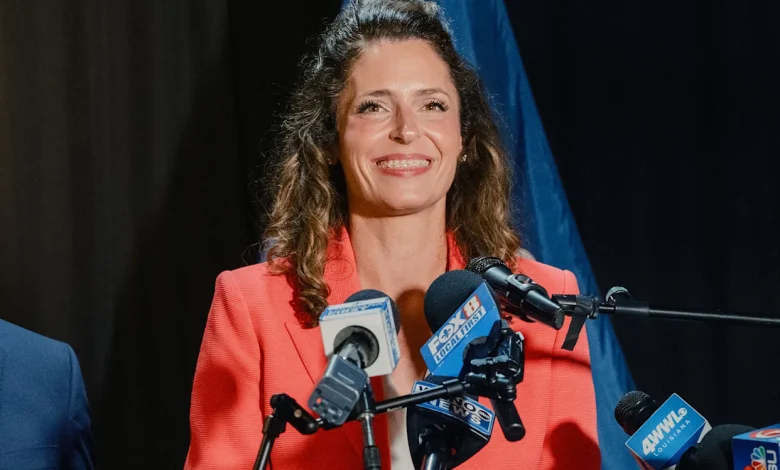
Table of Contents
Julia Letlow has secured a monumental victory in the Louisiana Republican primary runoff for the United States Senate. Defeating state Treasurer John Fleming in a highly watched race, Letlow’s triumph delivers a decisive win for Donald Trump’s preferred slate of congressional candidates. The contest, which concluded on Saturday, June 27, 2026, was forced into a runoff after none of the participating Republican candidates managed to secure an absolute majority during the initial primary voting round on May 16.
This critical race highlighted the intense factional battles within the contemporary Republican Party. Trump explicitly waded into the Louisiana primary with the targeted intention of ousting incumbent Republican Senator Bill Cassidy. Cassidy had drawn the former president’s ire after voting to convict Trump during his second impeachment trial following the January 6, 2021, Capitol riot. With Letlow’s runoff victory, Trump has successfully demonstrated his enduring kingmaker status, shifting the political landscape of Louisiana and sending a clear message to dissenters within his party.
Julia: The Rise of Julia Letlow: A Historical Runoff Victory
Julia Letlow’s political ascent is one of resilience and rapid growth. She first entered the national spotlight under tragic circumstances in 2021. Her late husband, Luke Letlow, was elected to represent Louisiana’s 5th Congressional District in 2020 but passed away from complications of COVID-19 just days before he was scheduled to be sworn into office. Stepping forward to run in the subsequent special election, Julia Letlow won the seat decisively, becoming the first Republican woman ever elected to represent Louisiana in the U.S. House of Representatives.
During her tenure in the House, Letlow built a reputation as a fierce advocate for rural development, agricultural policy, and educational reform. Her background as a university administrator and educator provided her with the communicative skills necessary to build a broad base of support across north and central Louisiana. When she announced her campaign for the U.S. Senate, she pitched herself as a consistent conservative who would represent Louisiana’s values without wavering under political pressure. By winning the Republican nomination, Letlow is now on track to become the first Republican woman from Louisiana ever elected to the United States Senate.
Julia:How Trump Ousted Bill Cassidy from the Senate
The primary driver of national attention in this race was Trump’s aggressive campaign to replace incumbent Senator Bill Cassidy. Cassidy, a medical doctor who had served in the Senate since defeating Democratic incumbent Mary Landrieu in 2014, had occasionally broken ranks with the hardline wing of the Republican Party. His most notable departure came on February 13, 2021, when he joined six other Republican senators in voting to convict Trump for incitement of insurrection.
Trump never forgave the infraction, labeling Cassidy a “disloyal disaster” and actively searching for a challenger who could mount a viable primary campaign. Trump’s team specifically targeted Cassidy as the primary incumbent they wanted to defeat during the 2026 election cycle. The strategy worked. In the May 16 primary, Cassidy was squeezed into third place with just 24.8% of the vote, failing to even qualify for the runoff. Cassidy’s defeat marks a historic moment: he became the first elected incumbent senator to lose renomination in a primary since Indiana’s Richard Lugar in 2012. This dynamic illustrates the significant leverage Trump continues to hold over primary voters, who increasingly prioritize absolute loyalty to the party’s standard-bearer.
Julia:The Runoff Dynamics: Julia Letlow vs. John Fleming
Following Cassidy’s elimination in May, the race turned into a direct head-to-head match between Letlow and Louisiana State Treasurer John Fleming. Fleming, a seasoned politician who had previously served in the U.S. House of Representatives and worked within the first Trump administration, attempted to position himself as an equally authentic “America First” conservative. This setup led to a unique dynamic where both candidates spent weeks claiming to be the true champion of Trump’s agenda.
However, Letlow held the ultimate trump card: an official, highly publicized endorsement from Donald Trump himself. Letlow’s campaign heavily leaned into this endorsement, featuring Trump’s praise prominently in television advertisements, mailers, and social media campaigns. She successfully framed Fleming as a career politician whose time had passed, while portraying herself as a modern, forward-looking conservative leader. Despite Fleming’s deep roots in the state’s political establishment and his strong financial backing, Letlow’s momentum, backed by the presidential endorsement, proved insurmountable during Saturday’s voting.
Julia:Louisiana’s New Primary System: Act 1 in Action
The 2026 election was also notable for being the first major statewide test of Louisiana’s newly instituted closed party primary system. Historically, Louisiana utilized a unique “jungle primary” (or blanket primary) system, where all candidates from all political parties appeared on a single ballot. If no candidate won more than 50% of the vote, the top two finishers, regardless of party, advanced to a general election runoff.
Under House Bill 17, which became Act 1 of the 2024 legislative session, Louisiana lawmakers shifted the state to closed party primaries for federal offices, including the U.S. House and U.S. Senate. This system restricts primary voting to registered members of each respective party, though unaffiliated voters can choose to participate under specific party rules. The implementation of this system radically changed campaign strategies. Candidates no longer had to appeal to a broad, bipartisan general electorate in the first round; instead, they had to appeal strictly to their party’s base. This structural shift undoubtedly aided Letlow and Fleming, as it allowed them to focus their messaging entirely on conservative orthodoxy and loyalty to the national party platform without having to moderate their stances for independent or Democratic voters.
Julia:A Comparative Breakdown of the Primary and Runoff Results
The transition from a crowded primary to a focused head-to-head runoff altered the voting distribution across Louisiana’s parishes. Below is a comparative breakdown of how the major Republican candidates performed during the May 16 primary and the final outcome of the June 27 runoff.
| Candidate | May 16 Primary Vote % | June 27 Runoff Status / Result | Trump Endorsement Status |
|---|---|---|---|
| Julia Letlow | 44.8% | Winner (Projected) | Fully Endorsed |
| John Fleming | 28.3% | Defeated | Unofficial Alignment |
| Bill Cassidy (Incumbent) | 24.8% | Eliminated in Primary | Opposed / Target for Defeat |
As the data illustrates, Letlow entered the runoff with a substantial head start after nearly clearing the 50% threshold in May. Fleming’s campaign was unable to consolidate enough of Cassidy’s moderate support or mobilize enough undecided voters to bridge the 16.5-point gap established in the primary round.
Julia:Implications for the 2026 Senate Battleground
Letlow’s victory has significant implications for the wider battle over the United States Senate in 2026. While Louisiana remains a reliably red state, the internal shift from a moderate-leaning Republican like Cassidy to a staunch Trump loyalist like Letlow reflects a broader transformation happening across the country. In contrast to more competitive swing states—such as the recent election results like the battle in Michigan where a key Senate seat flipped—Louisiana represents a safe harbor where the Republican party is focusing on ideological purification rather than just defensive positioning.
National strategists are closely watching how these primary battles affect the general election dynamics. While more moderate incumbents often appeal to independent voters in swing states, safe-state primaries like Louisiana’s show that the base has little tolerance for breaks in party unity. Letlow’s victory ensures that the Republican conference in the next Congress will be more ideologically aligned with Trump’s agenda, reducing the likelihood of internal legislative stalemates on key conservative initiatives.
Trump’s Enduring Grip on the Republican Party
The Louisiana runoff results reaffirm that Donald Trump remains the most influential figure in modern conservative politics. His ability to successfully target and remove an incumbent senator who crossed him is a stark reminder of his political power. This influence extends beyond electoral politics into the legislative and administrative realms, where Trump’s endorsements often dictate which policies gain traction.
For example, the ideological alignment of the incoming Senate class will play a crucial role in supporting or opposing sweeping administrative actions. Throughout his political career, Trump has utilized aggressive executive maneuvers, which have occasionally faced intense scrutiny and legal pushback, such as the controversies surrounding federal funding freezes. Furthermore, a Senate packed with loyalists will be instrumental in advancing his global economic agenda. This includes his assertive stance on international trade agreements, which has frequently sent shockwaves through international bodies, as well as handling the subsequent legal challenges to import taxes that have occupied federal courts. Having senators like Letlow, who have pledged absolute alignment with his trade and economic policies, ensures that Trump will have a much smoother path toward implementing his protectionist agenda.
Looking Ahead to the November General Election
With the Republican nomination secured, Letlow now turns her attention to the general election scheduled for November 3, 2026. She will face the winner of the Democratic primary runoff, Jamie Davis, who won his party’s nomination on the same night. Davis, a Tensas Parish police juror, faces an uphill battle in a state that has not elected a Democrat to the U.S. Senate since Mary Landrieu’s final victory in 2008.
For more detailed information on local polling locations, voter registration guidelines, and official certified results as they are finalized by state authorities, voters can visit the Louisiana Secretary of State portal at GeauxVote. As the campaign transitions to the general election phase, Letlow is widely expected to maintain a comfortable lead, buoyed by Louisiana’s deeply conservative electorate and the consolidated support of the state’s Republican establishment. Her transition from a grieving widow in 2021 to a projected U.S. Senator in 2026 marks one of the most remarkable political journeys in modern Louisiana history, setting the stage for a new era of representation in Washington.