Kentucky flash floods 2026: State of emergency declared as 4 die
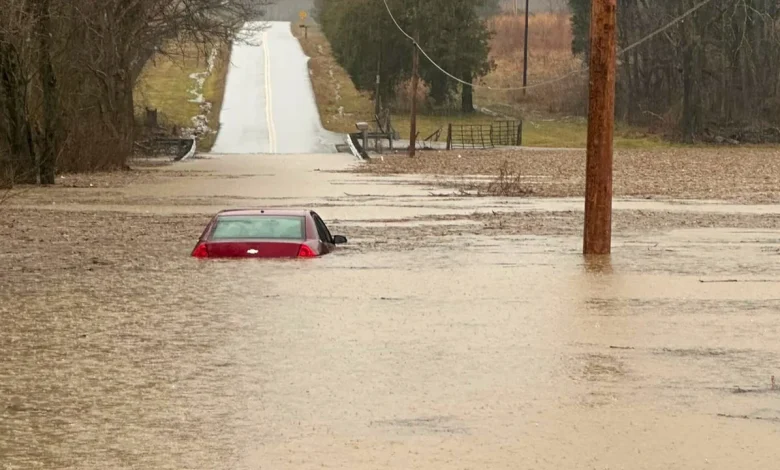
Table of Contents
Kentucky flash floods have devastated communities across the commonwealth over the weekend, claiming the lives of at least four residents and leaving a trail of extensive infrastructural destruction. The rapid onset of severe storms and heavy rainfall prompted Governor Andy Beshear to declare a state of emergency on Saturday afternoon, deploying state-level emergency assets to assist overwhelmed local search and rescue teams. As rainfall totals climbed to seven inches in some areas, the sheer speed of the rising waters caught many off guard, prompting dozens of urgent swift-water rescues from both homes and stranded vehicles.
According to official reports, the four confirmed casualties occurred in Madison and Jackson counties, the regions hit hardest by the first wave of torrential thunderstorms. In Madison County, emergency responders faced the devastating task of retrieving victims from inundated residential blocks, while a motorist in Jackson County was swept away in a vehicle after dark. Beshear, visibly shaken in a broadcast address to Kentuckians, emphasized the sheer peril of driving through flooded regions, especially as low nighttime visibility obscures the depth of rushing water currents. “We know we’ve already lost at least a handful of Kentuckians. I don’t want to lose any more. Be safe, everyone,” the governor urged during his late-day briefing.
Tragic Toll and Immediate Casualties
The human cost of this sudden severe weather system has cast a dark shadow over the state. Local emergency management agencies worked tirelessly through the night as floodwaters rose rapidly, overtaking low-lying roads, neighborhoods, and critical rural corridors. The official casualty count, which originally stood at three, rose quickly to four as rescuers reached previously inaccessible areas.
Madison County Submergence and Rescues
In Madison County, where three of the deaths occurred, the local coroner’s office confirmed that a man and a woman drowned after their home became completely submerged by rising waters in the city of Richmond. Neighbors described a terrifyingly rapid rise in water level that made escape nearly impossible within minutes. Emergency crews using inflatable boats and heavy machinery spent hours navigating submerged streets to rescue stranded families from rooftops and the upper levels of residential properties.
Another victim in Madison County was extracted from a vehicle trapped in deep waters on Tates Creek Road near Lexington. Deputy Coroner Carlos Coyle reported that urban search and rescue teams were executing door-to-door checks across hard-hit zones, though several areas remained entirely inaccessible due to high water levels and debris field blockages.
Jackson County Fatality and Motorist Dangers
In Jackson County, a fourth fatality was confirmed involving a motorist who was swept away by a flash flood. The incident highlighted the immense risks associated with traveling during torrential downpours. Governor Beshear explicitly warned that driving after dark during such active weather events is an extreme hazard. When visibility drops, motorists are often unable to distinguish between a shallow puddle and a deep, rushing current capable of lifting and carrying away passenger vehicles within seconds.
Governor Andy Beshear’s Statewide Emergency Declaration
With local emergency response capabilities pushed to their absolute limits, Governor Beshear signed an executive order on Saturday declaring a statewide state of emergency. The declaration mobilizes the Kentucky National Guard, authorizes the activation of state emergency management plans, and allows state agencies to bypass normal procurement rules to rapidly acquire rescue equipment, sandbags, and emergency shelter supplies.
“This is a highly serious flooding event, where teams have already had to conduct multiple water rescues from vehicles and homes across the commonwealth,” Beshear stated. Five counties—Bullitt, Madison, Meade, Mercer, and Spencer—promptly declared localized states of emergency to streamline local funding and coordinate with state-positioned swift-water rescue assets.
Infrastructure Under Water: Road Closures and Dam Landslide Concerns
The structural damage across Central Kentucky is extensive. At least 12 state roads were declared completely “out of commission” due to deep submergence and asphalt erosion. In Jessamine County, officials reported that several bridges had been completely washed away, cutting off rural neighborhoods from main supply routes.
Adding to the tension, emergency management officials in northwestern Kentucky’s Bullitt County issued a precautionary evacuation order for residents along a rural road near a local dam. A minor landslide occurred on the dam’s embankment following nearly three inches of rainfall in the surrounding area. While officials stressed that the dam was holding and showed no signs of imminent structural failure, the risk of further rain necessitated proactive measures to protect human lives.
| County / Locality | Local Emergency Status | Confirmed Fatalities | Primary Infrastructural Impact |
|---|---|---|---|
| Madison County (Richmond, Berea) | Declared Local Emergency | 3 | Severe road submergence, bridge blockages, residential flooding, home drownings, local church structure collapse. |
| Jackson County | Declared Local Emergency | 1 | Inundated secondary routes, vehicle swept away, restricted rescue access. |
| Bullitt County | Declared Local Emergency | 0 | Dam embankment landslide, precautionary localized community evacuations. |
| Jessamine County | Statewide Coverage Active | 0 | Multiple bridges completely washed away and destroyed. |
| Meade, Mercer, Spencer Counties | Declared Local Emergency | 0 | Stranded vehicles, agricultural flooding, rapid creek overflows. |
Meteorological Context: Unprecedented Rain Volumes
According to the National Weather Service, the catastrophic flooding was fueled by a slow-moving, moisture-rich storm system that stalled over the Ohio Valley and Middle Tennessee Valley. Warm, humid air from the Gulf of Mexico fed continuous lines of severe thunderstorms, creating a training effect where storms repeatedly passed over the same geographical areas.
Parts of Kentucky received an astonishing six to seven inches of rainfall in a span of less than 24 hours. In neighboring southwestern Indiana, isolated pockets reported up to 10 inches of rain. This intense volume of water far exceeded the absorption capacity of regional soils, transforming creeks into raging torrents and turning roadways into drainage channels.
Historical Context: Kentucky’s Vulnerability to Severe Flooding
This weekend’s disaster is unfortunately the latest in a recurring cycle of extreme weather events to strike the commonwealth. Kentucky has faced numerous historic flood crises in recent years, drawing attention to the challenges of climate resilience and infrastructure planning.
In early 2025, Kentucky experienced severe flash floods when a month’s worth of precipitation fell in less than 24 hours. Even more devastating was the historic disaster of July 2022, which claimed the lives of dozens of residents in Eastern Kentucky, sweeping entire multi-generational homes off their foundations. The recurring nature of these localized catastrophes has put extreme pressure on state budgets and highlighted the urgent need for structural updates to drainage systems, dams, and rural roadways.
Emergency Shelters and Community Mobilization
In response to the displacement of families, Richmond city officials and local non-profits acted swiftly. Mayor Robert Blythe declared a state of emergency for the city, paving the way for neighboring municipalities to send additional personnel. The Madison Home on Fifth Street in Richmond was quickly converted into an emergency shelter, providing warm dry lodging, hot food, dry clothing, and psychological first aid to those rescued from their homes.
Mutual aid agreements brought in search and rescue teams, swift-water squads, and urban task forces from surrounding cities, including Lexington, Winchester, Versailles, Georgetown, and Anderson County. Their prompt arrival allowed local departments to rotate exhausted staff who had been working non-stop since the storm first hit.
Comparing Local Responses and the Need for Federal Assistance
The financial toll of repairing washed-out roads and supporting displaced families will likely run into millions of dollars, reviving debates about public fund allocation during crises. While urban municipalities debate spending priorities—such as the controversy surrounding Boston Mayor Wu’s wellness vouchers during fiscal deficits—disaster-stricken states like Kentucky face immediate, unavoidable infrastructural costs.
Federal relief relies heavily on emergency grants, though policy changes can complicate the flow of aid, reminiscent of debates when certain grants halted by the Trump administration were legally challenged. State officials are already documenting the damage in hopes of securing a major disaster declaration from the Federal Emergency Management Agency (FEMA), which would open up individual and public assistance programs to help rebuild public infrastructure and private homes.
Wider Regional Logistics and Air Travel Impact
Beyond local destruction, regional travel networks experienced significant friction. Rising waters and closed highways delayed regional supply chains. Transportation across the wider region is facing delays, bringing to mind how severe weather and administrative challenges can leave thousands stranded as flights halt during logistical emergencies. Tracking public health indicators in disaster zones also highlights systemic tracking issues, echoing broader challenges seen when health information gaps complicate large-scale emergency management.
Crucial Safety Guidelines for Extreme Rain Events
With weather models showing potential for lingering showers, state safety officials urge residents to review and adhere to standard flood safety protocols:
- Turn Around, Don’t Drown: Never attempt to drive or walk through flooded roadways. It takes as little as six inches of moving water to knock an adult off their feet, and 12 inches to sweep away a small vehicle.
- Avoid Night Driving: Nighttime greatly increases the danger of flash flooding, as drivers cannot see the road conditions ahead.
- Stay Informed: Keep a battery-powered weather radio on hand to receive immediate alerts from local authorities and the National Weather Service.
- Move to Higher Ground: If you live in a low-lying area or near a creek, do not wait for an official evacuation order if you notice rapidly rising waters; head to high ground immediately.
Kentucky’s emergency response agencies remain on high alert as they transition from active rescue operations to secondary search phases and recovery planning. The resilience of these communities will once again be tested as they begin cleaning up after yet another catastrophic environmental event.