Inside Scoop: Trump’s America 250 and Housing Bill Shock
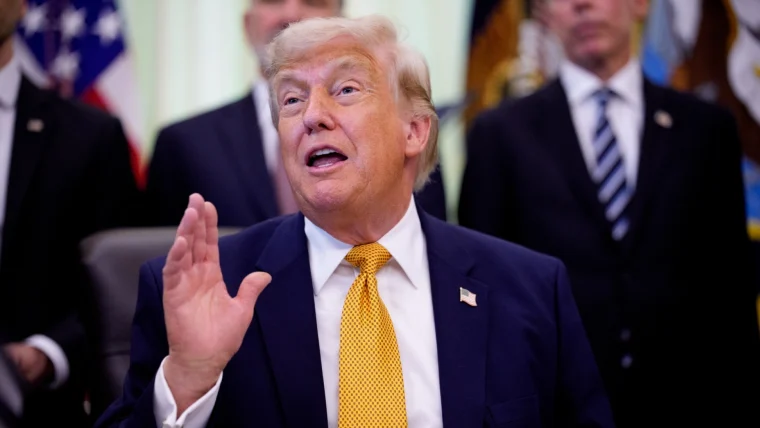
Table of Contents
Inside Scoop on Washington’s current political whirlwind reveals a striking dual-track drama unfolding at the highest levels of American government. President Donald Trump, a figure synonymous with high-stakes showmanship and grand-scale events, has officially kicked off the nation’s 250th birthday party with an incredibly massive scale. Yet, beneath the patriotic fanfare on the National Mall, a deeper, highly contentious political battle is raging. In an unexpected move on Wednesday, the President abruptly canceled the signing ceremony for a landmark, bipartisan housing bill that was poised to deliver historic relief to American families. Behind closed doors on Capitol Hill, tensions have reached a boiling point, culminating in public and private clashes that show the stark limits of bipartisanship in a deeply polarized election year. With Capitol Hill correspondent Julie Tsirkin providing critical on-the-scene insights, we unpack why the administration is holding this essential housing legislation hostage and what it means for the country’s immediate legislative future.
Inside Scoop: The Spectacle and the Stand-Off on Capitol Hill
The summer of 2026 is shaping up to be one of the most politically charged periods in modern American history. The intersection of a major historic milestone—the 250th anniversary of the Declaration of Independence, or the Semiquincentennial—and an impending, high-stakes midterm election has transformed Washington into a theater of political warfare. The contrast between the celebratory public-facing events and the gritty, high-pressure negotiations behind closed doors has never been more pronounced. While millions of Americans look forward to celebrating two and a half centuries of independence, lawmakers are grappling with an executive branch that is increasingly willing to bypass traditional legislative norms to achieve partisan goals. This strategic polarization has left both parties navigating a landscape where policy achievements are routinely sacrificed in favor of electoral optics, creating an environment of intense institutional friction.
A Grand Celebration: Launching America’s 250th Birthday Party
On Wednesday, President Trump officially launched the 16-day ‘Great American State Fair’ on the National Mall, marking the beginning of the nation’s highly anticipated 250th anniversary celebrations. Rather than adhering to the traditional, non-partisan, and unifying rhetoric that historically characterizes milestones like America’s Bicentennial or Centennial, Trump utilized the opening ceremony to deliver a classic, high-octane political speech. To a crowd waving star-spangled flags, Trump declared that ‘America is back’ and described the nation as ‘the hottest country anywhere in the world.’ He used the platform to tout his administration’s accomplishments, ranging from a preliminary diplomatic deal regarding the conflict with Iran, to aggressive crackdowns on immigration, to his signature tax policies. The celebration, designed to run through July 4, 2026, is a massive public spectacle, but one that has drawn intense criticism for its deeply partisan undertone and campaign-style execution.
Politicizing the Mall: From Landmark Birthday to Campaign Rally
The organization of the 250th birthday festivities has itself become a major battleground of federal governance. Traditionally, the non-partisan, congressionally authorized United States Semiquincentennial Commission, operating under the brand ‘America250,’ was tasked with planning the milestone. However, the Trump administration bypassed this established structure by creating ‘Freedom 250,’ a public-private partnership housed as an LLC within the National Park Foundation. Led by key Trump political allies like Meredith O’Rourke and campaign mastermind Chris LaCivita, Freedom 250 has systematically diverted federal resources away from the non-partisan commission. Critics and historians argue that this opaque corporate structure has effectively hijacked a national commemoration to serve as a marketing tool for the administration’s political agenda. According to The Guardian’s coverage of the event, several states opted out of participating in the state fair, while numerous local officials have minimized their involvement to avoid being associated with a partisan event.
The Reflecting Pool Dilemma: Polyurethane, Algae, and Millions Spent
A key highlight of Trump’s Washington beautification project is the Lincoln Memorial Reflecting Pool. Under direct instructions from the White House, the National Park Service undertook a highly publicized project to make the reflecting pool’s water appear ‘American flag blue’ for the 250th anniversary. This aesthetic revamp cost taxpayers a staggering $14.1 million. However, the project has been plagued by severe operational setbacks, including massive algae blooms and the peeling of its specialized polyurethane liner. True to form, President Trump addressed the controversy during his opening speech on the Mall, dismissing the technical failures and instead attributing the damage to ‘thugs’ and ‘bad people’ who allegedly vandalized the site. Despite these assertions, federal engineers and project managers have pointed to hasty application and environmental conditions as the primary causes of the peeling, exposing the gap between political rhetoric and physical reality.
A Silent Stage: Why Headliners Are Backing Out
The politicized atmosphere of the ‘Great American State Fair’ has also led to significant cultural fallout. The White House had proudly announced a star-studded lineup of legendary musical acts, including the Commodores, country star Martina McBride, and hip-hop pioneer Young MC, to headline the opening ceremony. However, in the days leading up to the launch, these performers and several other prominent acts abruptly pulled out of the event. Representatives for the artists cited the heavily partisan nature of the rally as the primary reason for their cancellations, expressing a desire to avoid being used as political backdrops during a highly contested election year. This cultural boycott has left the administration scrambling to fill performance slots, highlighting the deep division that Trump’s polarizing style continues to foster even during moments meant for national unity.
The Housing Bill Shockwave: Canceling the Signing Ceremony
While the President was promoting his grand vision of America on the National Mall, he simultaneously delivered a shockwave to the legislative branch. On Wednesday, Trump abruptly canceled a scheduled White House press conference and signing ceremony for the ’21st Century ROAD to Housing Act.’ This landmark, highly anticipated bipartisan housing affordability bill had recently sailed through both chambers of Congress with overwhelming, veto-proof majorities. Republicans in Congress had hoped to celebrate this rare legislative triumph as a major win for their constituents ahead of the midterms. By scuttling the ceremony, Trump not only upended his party’s congressional agenda but also signaled a willingness to use vital domestic policy as leverage for other contentious priorities, leaving lawmakers on both sides of the aisle stunned by the sudden turn of events.
Unpacking the 21st Century ROAD to Housing Act
To understand the gravity of Trump’s decision, one must examine what the ’21st Century ROAD to Housing Act’ represents. Widely regarded as the most comprehensive housing legislation in a generation, the bill is designed to address the nation’s severe housing supply shortage and soaring purchase costs. A key, highly praised provision of the act places strict federal limitations on institutional investors and private equity firms purchasing single-family homes, a practice that has locked millions of middle-class families out of the housing market. When questioned about his refusal to sign the bill, Trump deflected, citing his own background: ‘I said I’m not signing the housing bill, I want to see what happens with SAVE. Look, the housing bill is, I made billions of dollars with housing. I know housing better than maybe anybody anywhere. It’s all about the interest rate. Lower the interest rates, you can have all the housing you want.’ He argued that lowering interest rates is the only true solution to the housing crisis, warning that the bill could inadvertently harm existing homeowners by deflating property values.
The Lever: How the SAVE America Act Triggered the Ultimatum
The immediate catalyst for canceling the signing ceremony was not the content of the housing bill itself, but rather a strategic political ultimatum. In a social media post published shortly before the canceled event, Trump declared that he would refuse to sign the housing legislation until Congress passed the ‘SAVE America Act.’ The SAVE (Safeguard American Voter Eligibility) America Act is a sweeping, highly controversial election integrity bill that mandates nationwide voter-ID requirements and strict proof-of-citizenship checks for voter registration. Trump characterized the passage of the SAVE Act as a ‘National Emergency,’ effectively holding the bipartisan housing bill hostage to force a floor vote on election laws that face fierce opposition from congressional Democrats. This maneuver has raised concerns that critical domestic policies are being hijacked for partisan election-year messaging.
A Shouting Match on the Hill: The Cassidy-Trump Confrontation
The political fallout of this maneuver erupted into view during a closed-door Republican senators’ lunch at the U.S. Capitol. According to reporting from NBC News correspondent Julie Tsirkin, a highly contentious shouting match broke out between President Trump and Louisiana Senator Bill Cassidy. Cassidy, a moderate Republican who lost his re-election bid after Trump backed a primary challenger against him, openly confronted the President over his heavy-handed tactics. The argument reportedly centered not only on Trump’s refusal to sign the housing bill but also on mounting congressional discontent regarding the administration’s military posture and escalating tensions with Iran. The heated exchange, observed by colleagues, underscored the deep rifts within the Republican Party, as lawmakers express growing frustration over Trump’s willingness to sacrifice hard-fought, bipartisan legislative victories for highly partisan messaging campaigns.
Constitutional Mechanics: The 10-Day Window and Congressional Timelines
Despite the high-stakes drama of the canceled ceremony, the constitutional reality of the situation is more complex than the President’s public declarations suggest. Under Article I, Section 7 of the U.S. Constitution, once a bill is passed by both chambers of Congress and officially presented to the President, he has a strict 10-day window (excluding Sundays) to either sign or veto it. If the President takes no action within this 10-day period while Congress is in session, the bill automatically becomes law without his signature. House Speaker Mike Johnson sought to downplay the crisis, explaining to reporters that Trump is simply using this window to exert maximum political pressure on the Senate. Johnson indicated that Trump does not intend to let the bill expire or veto it outright, predicting that the President will ultimately sign the housing bill before the constitutional deadline, treating the delay as a tactical pause rather than a permanent block.
Comparing Key Legislative Priorities in the 2026 Congress
To understand the current legislative gridlock, it is helpful to compare the two bills at the center of this Washington stand-off. The table below illustrates the stark contrast between the bipartisan housing bill and the highly partisan election integrity measure that the President has demanded as a prerequisite for his signature.
| Metric/Feature | 21st Century ROAD to Housing Act | SAVE America Act |
|---|---|---|
| Primary Legislative Focus | Housing affordability, supply increase, and restricting institutional home purchases. | Voter registration requirements and strict nationwide proof-of-citizenship mandates. |
| Bipartisan Support Level | Extremely high; passed with veto-proof majorities in both House and Senate. | Highly partisan; supported strongly by MAGA Republicans, opposed by Democrats. |
| Presidential Stance | Opposed signing ceremony; demands interest rate cuts and links approval to voting bill. | Strongly endorsed; declared as a ‘National Emergency’ requiring immediate passage. |
| Key Beneficiaries | First-time homebuyers, middle-class families, and local housing developers. | Proponents of strict voter verification and conservative election watchdogs. |
Strategic Implications for the 2026 Midterm Elections
Trump’s dual approach of launching a massive, highly visible celebration of America’s 250th birthday while holding a bipartisan housing bill hostage represents a high-risk, high-reward gamble for the Republican Party. With the crucial November 2026 congressional elections fast approaching, Trump’s actions are designed to fire up his core MAGA base by highlighting issues of national pride, immigration, and election security. However, this aggressive strategy risks alienating moderate, suburban swing voters who are far more concerned with tangible kitchen-table issues, such as housing affordability, inflation, and rising interest rates. By prioritizing the partisan SAVE America Act over a widely supported housing bill, the administration faces the accusation of choosing political theater over meaningful governance, setting the stage for a dramatic and highly unpredictable electoral showdown that will define the remainder of Trump’s term.