Kennedy Center Name Removal: The Controversy Behind the Tarp
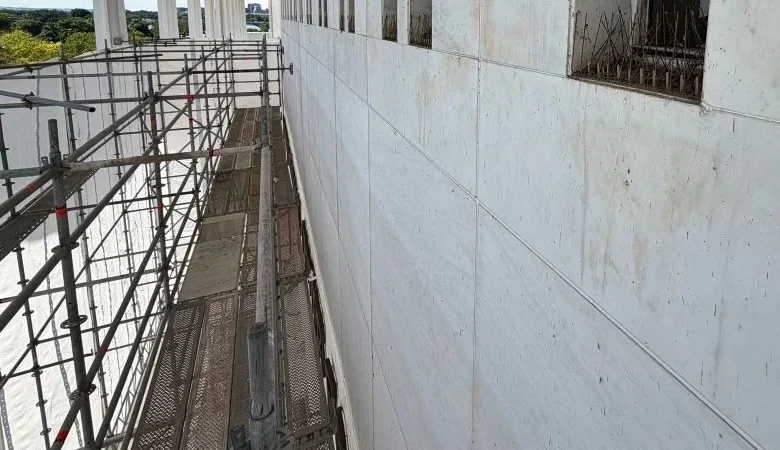
Kennedy Center scaffolding and a blue tarp erected on June 13, 2026, have hidden the physical removal of Donald Trump’s name from the Public Eye, prompting intense debate over political optics and transparency in Washington, D.C. The structures, which were set up just one day after a federal judge’s strict deadline to purge the former president’s name from the iconic performing arts center, have effectively obscured the facade. The visual blockage has led activists and former employees to suggest that the continued presence of the tarp is a calculated, intentional effort to protect Donald Trump’s ego from the public reality of his name being stripped from the building.
The controversy represents the latest chapter in a bitter, multi-month struggle over the identity and governance of one of the nation’s most prominent cultural landmarks. The John F. Kennedy Center for the Performing Arts, established as a living memorial to the assassinated 35th president, became a partisan battleground after its board of trustees voted to add Trump’s name to the building’s exterior. Following an aggressive legal challenge, a federal court ruled the renaming illegal, setting off a rapid sequence of events that culminated in a late-night removal and a subsequent, highly criticized “cover-up” using industrial tarps.
Kennedy Center Scaffolding and Tarp Hide the Signage Restoration
The presence of scaffolding and a heavy blue tarp at the front entrance of the performing arts center has drawn sharp criticism from onlookers, tourists, and political commentators alike. For over ten days following the court-ordered removal of the letters spelling “The Donald J. Trump and,” the facade remained draped in plastic, preventing the public from seeing the restored original signage which now reads simply: “The John F. Kennedy Memorial Center for the Performing Arts”.
Critics argue that while scaffolding is naturally required for the physical labor of removing large stone and metal letters, the decision to leave the temporary structure and the opaque tarp in place long after the work was certified as complete points to political motives. Security guards and barricades have patrolled the area, keeping citizens and members of the press from approaching the portico. This heavy security presence has further fueled speculation that the administration is eager to avoid photos of a “blank” marble wall circulating on social media or in news broadcasts.
The Tarp Controversy: Sparing an Ego or Construction Operations?
Mallory Miller, a former Kennedy Center employee and a co-founder of the activist group Hands Off the Arts, spoke out strongly against the prolonged concealment. Having provided verified photographs from inside the scaffolding to major news outlets, Miller expressed her firm belief that the tarp’s continued presence is a deliberate action designed to buffer the president from a highly visible public defeat.
“What is clear to me is the Trump administration does not want to see that building without Trump’s name on the facade before they could go through all their appeals,” Miller remarked. She and other activists contend that by keeping the sign hidden under the guise of ongoing maintenance or scaffolding disassembly, the administration is delaying the visual reality of the court’s order. Meanwhile, the Kennedy Center administration has remained largely silent, failing to provide immediate official comments explaining why the tarp and scaffolding remained standing nearly ten days after the letters were taken down.
The Legal Battle Over Renaming a Living Memorial
The roots of the physical standoff lie in a complex legal dispute regarding who has the authority to name or rename federally owned and funded cultural institutions. In December 2025, the Kennedy Center’s board of trustees, which had been extensively restructured with Trump-aligned appointees, voted unanimously to add the president’s name to the building. The decision changed the public-facing title to “The Donald J. Trump and The John F. Kennedy Memorial Center for the Performing Arts”.
This action immediately triggered widespread outrage among historians, members of the Kennedy family, and lawmakers. Opponents argued that the board of trustees had grossly exceeded its legal mandate by modifying a monument established by an Act of Congress. The unilateral renaming was viewed by critics as an unprecedented attempt to co-opt a national memorial for personal and political branding.
Representative Joyce Beatty’s Lawsuit Against the Board
The primary legal challenge to the renaming was spearheaded by Representative Joyce Beatty (D-Ohio), who serves as an ex officio trustee on the Kennedy Center’s board. Beatty, along with several other democratic lawmakers and civic advocates, filed a federal lawsuit arguing that the board’s vote was a direct violation of federal law. The lawsuit contended that the 1964 Act of Congress which designated the center as a living memorial to President John F. Kennedy explicitly prohibited any alteration to its dedication or the addition of other names to the exterior facade.
Beatty’s legal team argued that the board of trustees is an administrative body charged with operating the facility and managing its programming, not a legislative body with the power to rewrite federal statutes. The lawsuit sought an immediate injunction to halt the renaming and to force the removal of any newly installed signage bearing Trump’s name.
Judge Christopher Cooper’s Definitive Ruling
In late May 2026, U.S. District Judge Christopher Cooper issued a comprehensive, 94-page opinion that handed a decisive victory to the plaintiffs. Judge Cooper made it clear that the board of trustees had acted outside the scope of its legal authority. In his ruling, Cooper wrote: “The Kennedy Center’s organic statute makes crystal clear that the Center is to be named for President Kennedy, and it cannot bear any other formal name or public memorial based on the Board’s unilateral say-so”.
He emphasized that because Congress originally gave the Kennedy Center its name, only Congress possesses the power to change it. Consequently, Cooper ordered the center to remove all physical references to Trump’s name from the building and its grounds, setting a strict two-week deadline that expired at midnight on Friday, June 12, 2026. The judge also blocked a controversial plan to close the center for two years for renovations, which critics alleged was a maneuver to hide the venue’s declining performance bookings and avoid public protests.
Timeline of the Renaming and Removal Saga
The transition of the iconic venue’s exterior signage has undergone several dramatic shifts within a six-month period. To understand the fast-paced nature of this administrative and judicial conflict, it is useful to review the core milestones that defined the transition from the controversial December installation to the June removal and subsequent tarp blockade.
The battle has highlighted the deep divide between the executive branch’s efforts to leave a lasting architectural legacy in Washington, D.C., and the legislative and judicial checks designed to preserve historic national memorials. The timeline below illustrates the key moments in this high-stakes dispute.
Comparative Analysis of the Kennedy Center Dispute
Below is a detailed summary table outlining the contrasting phases of the Kennedy Center’s naming controversy, highlighting the key players, administrative actions, and legal outcomes that shaped the crisis.
| Phase / Date | Key Action Taken | Primary Actors | Legal / Public Status |
|---|---|---|---|
| December 2025 | Board votes to rename the venue; Trump’s name is added to the facade behind blue tarps. | Trump-appointed Board of Trustees, Richard Grenell | Rename enacted unilaterally; widespread public protests and congressional condemnation. |
| May 29, 2026 | Federal Court declares the renaming illegal and orders the removal of Trump’s name. | U.S. District Judge Christopher Cooper | Court order establishes a June 12 deadline for name removal and blocks scheduled closures. |
| June 8, 2026 | Digital cleanup begins; website and administrative materials remove Trump’s name. | Kennedy Center Staff, General Counsel | Compliance with judicial deadlines for non-physical assets begins ahead of schedule. |
| June 12–13, 2026 | Late-night physical removal of 18 letters (“The Donald J. Trump and”) from the front facade. | 14-member work crew, Executive Director Matt Floca | Crews miss midnight deadline but complete removal by 3 a.m. Saturday behind a protective tarp. |
| June 13–22, 2026 | Scaffolding and tarp remain up; activists accuse the center of “petulant defiance.” | Hands Off the Arts, Rep. Jamie Raskin, Rep. Joyce Beatty | Legal motions filed accusing the center of gamesmanship and “massaging broken egos.” |
Financial and Cultural Fallout at the Performing Arts Venue
Beyond the architectural and legal disputes, the renaming of the Kennedy Center triggered immediate and severe consequences for the institution’s operations. As the national cultural center of the United States, the venue relies heavily on its reputation to attract world-class artists, touring Broadway productions, and philanthropic donors. The addition of a highly polarizing political name alienated a significant portion of the arts community.
Reports emerged of plummeting ticket sales, major donor withdrawals, and a wave of cancellations from prominent performers who refused to appear at a venue bearing Trump’s name. The political controversy threatened to permanently damage the financial viability of the center, which had historically operated as a rare, non-partisan space in the nation’s capital.
Artist Boycotts and Canceled Performances
Immediately following the December renaming, numerous theater groups, musicians, and dance companies announced they were pulling out of scheduled performances. For many artists, performing at the newly branded “Trump-Kennedy Center” was seen as a tacit endorsement of the administration’s policies and its controversial takeover of cultural institutions. Prominent figures spoke out publicly, stating that they could not in good conscience grace a stage that had been repurposed as a monument to a living politician in defiance of congressional intent.
These boycotts left the center’s programming calendar severely depleted. The loss of high-profile acts directly translated into millions of dollars in lost ticket revenue and membership renewals. Staff members inside the organization described a tense, demoralizing atmosphere as they struggled to fill empty dates and manage the public relations fallout.
The Blocked Two-Year Renovation Project
In response to the mounting financial losses and empty seats, the Trump-appointed board proposed a massive, $257 million “revitalization project” that would have closed the center to the public for two years. Under the leadership of Richard Grenell, who replaced Deborah Rutter as president, the board argued that the extensive closure was necessary to perform critical structural updates and expand the facility’s capabilities.
However, critics and legal opponents quickly challenged the closure. They argued that the renovation project was a “poison-pill” maneuver designed to shutter the building during a period of high controversy, thereby avoiding ongoing protests, artist boycotts, and the embarrassment of empty theaters. In his landmark ruling, Judge Cooper agreed with the plaintiffs, temporarily blocking the venue from closing and ordering that it remain open and operational. This judicial intervention forced the center to navigate its ongoing structural and financial difficulties in the full view of the public.
The Historical Context of the John F. Kennedy Memorial Act
The legislative history of the Kennedy Center underscores why the court viewed the board’s renaming effort as an explicit violation of federal law. The center was not created as a generic municipal theater, but rather as a highly specific, federally designated monument to the nation’s 35th president.
Following the tragic assassination of John F. Kennedy in Dallas, Texas, in November 1963, there was a swift, bipartisan consensus in Washington to establish a fitting national memorial in his honor. Rather than erecting a traditional stone monument, Congress decided to create a living memorial that would celebrate Kennedy’s profound appreciation for the arts and cultural diplomacy.
Legislative History of the 1964 Designation
In January 1964, just two months after Kennedy’s death, his successor, President Lyndon B. Johnson, signed the bipartisan bill into law, officially naming the unfinished National Cultural Center the John F. Kennedy Center for the Performing Arts. The federal statute was carefully drafted to ensure that the building would serve as a permanent, singular tribute to Kennedy’s legacy.
The law explicitly restricted the governing board of trustees from altering the name or transforming the center into a joint memorial for any other individual. Over the subsequent decades, the center grew to become a cherished Washington institution, hosting the annual Kennedy Center Honors and serving as a symbol of national unity. This historical foundation made the board’s sudden move to append Donald Trump’s name particularly jarring to historians and legal scholars, who noted that a board of trustees has no constitutional authority to alter an act signed into law by Lyndon B. Johnson to honor a fallen leader.
Public Reaction and Activist Mobilization
The physical removal of the letters and the subsequent installation of the obscuring tarp triggered intense public reactions. For days, crowds of local residents, political activists, and tourists gathered outside the security barriers. Many cheered when news broke that the letters had been physically detached in the middle of the night, while others expressed deep frustration that the victory was being hidden behind heavy construction sheets.
Democratic lawmakers joined the chorus of disapproval. Representative Jamie Raskin (D-MD) publicly criticized the ongoing use of the tarp, calling it a “literal cover-up” in a viral social media post. Raskin accused the administration of “vandalizing federal property” by adding the name in the first place, and argued that the public had a right to see the immediate restoration of the historic landmark’s original facade.
The Role of Hands Off the Arts in Exposing the Facade
The activist group Hands Off the Arts played a critical role in keeping the public informed during the standoff. Founded by former employees, including Mallory Miller, who had been terminated during the administrative transition under the Trump-appointed board, the group organized weekly protests outside the venue. Their efforts culminated in acquiring and leaking the first visual confirmation of the name’s removal.
By bypassing the strict security perimeter and obtaining photographs from inside the scaffolding, the group demonstrated that the letters had indeed been erased. According to legal updates tracked by Forbes, the ongoing legal filings continue to challenge the center’s “gamesmanship” and “petulant defiance” in keeping the tarps up. For activists like Miller, the photos represented a vital symbol of accountability, proving that despite the physical barriers and political maneuvering, the rule of law had prevailed and the original memorial to John F. Kennedy was finally restored.