RMS Titanic Inc. Battles US Government Over Artifact Sale 2026
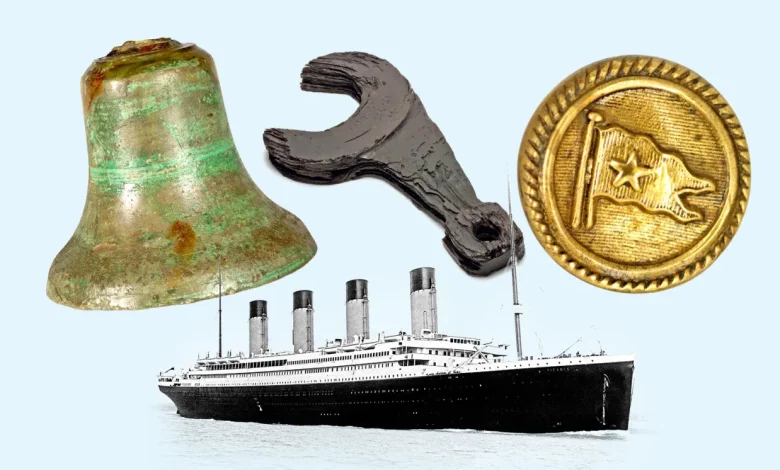
RMS Titanic Inc. has sparked a major international legal and ethical debate by proposing to sell over 100 artifacts salvaged from the world’s most famous shipwreck, defying decades-long agreements to keep the collection intact for public exhibitions. The Georgia-based company, which holds exclusive salvage rights to the iconic wreck site in the North Atlantic, has filed proposals in U.S. federal court to auction off these priceless historical objects. This development marks a dramatic shift in policy, as the salvage firm has historically operated under strict judicial mandates and public promises to preserve the integrity of the collection by only showcasing it in museums and educational touring exhibitions.
- The Core of the Dispute: Private Ownership vs. Public Heritage
- A Closer Look at the Artifacts Slated for Auction
- The U.S. Government’s Legal Counteroffensive
- UNESCO Conventions and International Underwater Heritage Guidelines
- The Complex History of the “French Collection”
- How IFREMER and Early Salvage Rights Shaped the Dispute
- RMS Titanic Inc.’s Defense and Legal Rationale
- The Financial Realities of Deep-Sea Salvage and Conservation
- Broad Implications for Global Underwater Archaeology
- A Comparative Overview of the Controversy
US : The Core of the Dispute: Private Ownership vs. Public Heritage
The discovery of the Titanic wreck in 1985 by a joint French-American expedition led by Robert Ballard and IFREMER ushered in a new era of deep-sea exploration. It also initiated a long-standing debate over who has the right to access, salvage, and profit from the remains of the ill-fated liner, which lies some 12,500 feet below the surface of the North Atlantic. In 1994, a federal court in Norfolk, Virginia, granted RMS Titanic Inc. the status of “salvor-in-possession” of the wreck site. This designation gave the company exclusive rights to recover artifacts from the debris field but carried strict legal and ethical obligations to preserve the historical integrity of the items for the public benefit.
For decades, the standard operating procedure for the company relied on public exhibitions. It built its business model around curating the recovered items and touring them globally in museums and dedicated exhibition spaces. However, the newly proposed auction represents a fundamental departure from this established preservation model. By attempting to sell individual artifacts directly to private buyers, critics argue that the company is shifting from being a respectful custodian of a maritime grave to a commercial liquidator of irreplaceable human history. This tension highlights the ongoing conflict between private salvage capital and the preservation of global cultural heritage.
US :A Closer Look at the Artifacts Slated for Auction
Among the items slated for the auction block are some of the most emotionally resonant and historically significant artifacts ever recovered from the ocean floor. Court documents unsealed in June 2026 reveal that the proposed sale list includes more than 100 artifacts, ranging from personal belongings of the passengers and crew to structural elements of the ship itself. Notable highlights of the proposed lot include a bronze cherub, widely believed to be a decorative element from the ship’s iconic Grand Staircase, a delicate necklace crafted from gold nuggets, and an exquisite heart-shaped pendant.
Archaeologists and historians refer to these items as “personal relics” because they provide an intimate, tangible connection to the individuals who perished on that fateful night in April 1912. The bronze cherub, in particular, represents the opulence of the Gilded Age and the tragic loss of the vessel. Critics argue that dispersing these artifacts into private collections will permanently strip them of their scientific and educational value. Once an object enters a private collection, it is often lost to the public and researchers forever, breaking the physical narrative that a complete, consolidated collection of Titanic artifacts can tell.
The U.S. Government’s Legal Counteroffensive
The federal government of the United States, represented by the National Oceanic and Atmospheric Administration (NOAA), has launched a vigorous legal challenge to halt the proposed auction. As the federal agency tasked with representing U.S. interests and exercising regulatory oversight of the Titanic wreck site, NOAA contends that the sale of individual artifacts directly violates the court orders and international agreements that govern the salvor-in-possession status. According to court filings, NOAA argues that the company is legally bound to maintain the entire artifact collection as a unified whole for public display and scientific research.
In the government’s formal objection, which was unsealed by a federal judge, attorneys wrote that the company “does not seek the Court’s approval, does not believe that approval is required, and asserts that it is not restricted in its ability to sell” the artifacts. This assertion has deeply alarmed federal regulators, who view it as an attempt to bypass judicial oversight and dismantle decades of established maritime preservation protocols. NOAA maintains that any attempt to split or commercialize the collection undermines the cooperative international efforts to protect the wreck site as an international maritime memorial. To understand the broader context of federal preservation efforts, one can visit the official portal of the National Oceanic and Atmospheric Administration (NOAA), which highlights the legal frameworks governing deep-sea heritage sites.
UNESCO Conventions and International Underwater Heritage Guidelines
The opposition to the auction is not limited to U.S. federal agencies; it has also drawn condemnation from the international archaeological community. Chris Underwood, the president of the International Committee on Underwater Cultural Heritage, submitted a formal statement to the court expressing grave concern over the proposed sale. Underwood argued that the dispersal of artifacts would directly contravene the fundamental principles of the UNESCO Convention on the Protection of the Underwater Cultural Heritage, which explicitly prohibits the commercial trade and exploitation of underwater cultural heritage.
Underwood and other preservationists argue that allowing a private company to auction off pieces of the Titanic would set a dangerous global precedent. If a court rules that a salvor-in-possession can liquidate portions of its collection to the highest bidder, it could create legal loopholes that encourage salvage operators to loot other historically significant shipwrecks around the globe. This would jeopardize thousands of vulnerable underwater sites, replacing systematic archaeological excavation with profit-driven salvage operations that prioritize commercial value over historical preservation.
The Complex History of the “French Collection”
The legal battle is further complicated by the unique status of what is known as the “French Collection.” This specific group of approximately 1,800 artifacts was recovered during the initial salvage expedition in 1987, which was conducted as a joint venture between the predecessor of RMS Titanic Inc. and the French oceanographic institute IFREMER. Because these items were retrieved before the U.S. District Court in Norfolk, Virginia, formally established RMST as the salvor-in-possession in 1994, they occupy a distinct legal category. The ownership of this collection was formally awarded to the salvage company by a French administrative tribunal in 1993.
This division of the collection has created a multi-jurisdictional puzzle. RMS Titanic Inc. argues that the French ruling grants them absolute, unrestricted ownership of the 1987 artifacts, allowing them to sell these items without the approval of U.S. courts. However, NOAA and federal prosecutors argue that the entire body of recovered artifacts—regardless of whether they were salvaged during the 1987 French expedition or subsequent American-led dives—must be treated as a single, indivisible collection. The government contends that the conditions under which the French tribunal awarded the artifacts originally mandated that they be kept together and used exclusively for public display, a restriction that remains legally binding today.
How IFREMER and Early Salvage Rights Shaped the Dispute
The involvement of the French oceanographic institute IFREMER (Institut Français de Recherche pour l’Exploitation de la Mer) was crucial to the early success of the Titanic expeditions. In the late 1980s, deep-sea technology was still in its infancy, and the expertise of IFREMER, combined with the Woods Hole Oceanographic Institution, made the recovery of delicate artifacts from the abyssal plain possible. When the French government officially transferred the title of the 1987 artifacts to the salvage company, it did so under the explicit understanding that the items would serve an educational and cultural purpose.
This historical partnership is now a key point of contention in the federal courtroom. Government attorneys argue that the original agreement with IFREMER was built on a foundation of public trust and scientific cooperation. Permitting the commercial sale of these items, they argue, would betray the spirit of the international partnership that enabled their recovery in the first place. The dispute highlights how early agreements, drafted decades ago when the long-term commercial potential of deep-sea salvage was not fully understood, continue to shape modern legal battles over cultural property.
RMS Titanic Inc.’s Defense and Legal Rationale
Faced with intense criticism, RMS Titanic Inc. has mounted a robust legal defense to justify its proposed auction. The company’s legal counsel, Brian Wainger, has publicly asserted that the law of the case permits the sale of these specific artifacts. In legal filings, the company’s attorneys argue that the proposed auction arrangement does not violate existing court orders or the salvage agreements that have governed their operations for the past three decades. They contend that as the legal owner of the French Collection, the company possesses the right to sell or transfer those assets as it sees fit.
Furthermore, the company maintains that the auction does not signify an abandonment of its role as a respectful steward of the Titanic’s legacy. RMST has proposed displaying the artifacts on a global tour across four major cities prior to the auction, although the specific locations have not been publicly disclosed. The company argues that this tour will allow millions of people to view the artifacts, fulfilling its educational mandate while simultaneously raising the capital necessary to fund future research, conservation efforts, and deep-sea imaging expeditions to monitor the deteriorating wreck site.
The Financial Realities of Deep-Sea Salvage and Conservation
To fully understand the company’s motivation for proposing the sale, one must examine the immense financial pressures associated with deep-sea salvage. Operating specialized research vessels, chartering autonomous underwater vehicles (AUVs), and deploying manned submersibles to a depth of nearly four kilometers requires tens of millions of dollars. Additionally, the long-term conservation of salvaged materials—which must undergo complex chemical treatments to prevent rapid deterioration after being extracted from a high-pressure, saltwater environment—is an ongoing and highly expensive endeavor.
RMS Titanic Inc. has struggled with financial stability over its history. In 2018, its parent company, Premier Exhibitions, filed for bankruptcy protection, leading to a high-stakes auction where a consortium of hedge funds acquired the company’s assets for approximately $19.5 million. More recently, in May 2026, a Louisiana-based maritime services company filed a lawsuit against RMST for more than $4 million in unpaid fees related to specialized vessels and submersibles chartered for a major imaging expedition in 2024. These persistent financial challenges have undoubtedly contributed to the company’s decision to monetize portions of its artifact collection to secure its financial future.
Broad Implications for Global Underwater Archaeology
The resolution of this legal battle will have far-reaching implications that extend well beyond the Titanic wreck site. If the U.S. District Court rules in favor of RMS Titanic Inc., it could redefine the legal landscape for underwater salvage worldwide. A ruling that allows a private salvor to sell historically significant artifacts could weaken the regulatory authority of governments and international bodies, signaling that commercial rights can supersede public preservation mandates when financial pressures mount.
Conversely, a ruling in favor of the U.S. government would reinforce the principle that some cultural treasures are too significant to be treated as private commodities. It would solidify the authority of agencies like NOAA to oversee and protect underwater heritage, ensuring that future salvage operations are conducted under strict archaeological guidelines. Ultimately, this case forces the legal system to confront a fundamental question: Should the relics of human tragedy belong to the public as a permanent historical record, or can they be sold to private collectors to fund the very companies that salvage them?
A Comparative Overview of the Controversy
The debate surrounding the auction of Titanic artifacts involves several distinct perspectives, legal arguments, and ethical considerations. The table below outlines the core differences between the positions held by RMS Titanic Inc. and those of the U.S. Government, NOAA, and the international heritage community.
| Feature / Aspect | RMS Titanic Inc. Position | U.S. Government (NOAA) & Critics Position |
|---|---|---|
| Legal Ownership Status | Claims absolute ownership of the “French Collection” (1987 artifacts) awarded by a French tribunal, bypasses U.S. court approval. | Argues all recovered artifacts are subject to continuous U.S. federal court oversight and international treaties. |
| Proposed Action | Auction off over 100 historical artifacts (including the bronze cherub and gold jewelry) and host a four-city global tour. | Prohibit the auction entirely to prevent the permanent dispersal and privatization of the historic collection. |
| Core Legal Argument | “The law of the case” and previous administrative rulings permit the sale without violating existing agreements. | The sale directly violates the company’s legal obligations as a salvor-in-possession to keep the collection intact. |
| Conservation & Funding | Selling selected artifacts is a necessary financial measure to fund ongoing conservation and expensive deep-sea monitoring. | Commercialization is an ethical violation; alternative public funding or non-profit structures should support conservation. |
| International Precedent | Maintains that the selective sale is consistent with responsible stewardship and does not impact other wreck sites. | Warns that allowing a sale violates UNESCO guidelines and sets a dangerous precedent encouraging global looting of historic wrecks. |
As the legal proceedings continue to unfold in the U.S. District Court in Norfolk, Virginia, the fate of the bronze cherub, the gold nugget necklace, and the heart-shaped pendant remains uncertain. The court’s decision will determine whether these iconic symbols of the Titanic’s tragic history will remain part of a unified public collection or find their way into the private hands of wealthy collectors. Regardless of the outcome, this conflict has permanently highlighted the delicate balance between private enterprise, national sovereignty, and the global preservation of cultural heritage.