5 Key Facts About Merlin Lu’s Arrest in Chicago Cross Burning Hate Crime Investigation
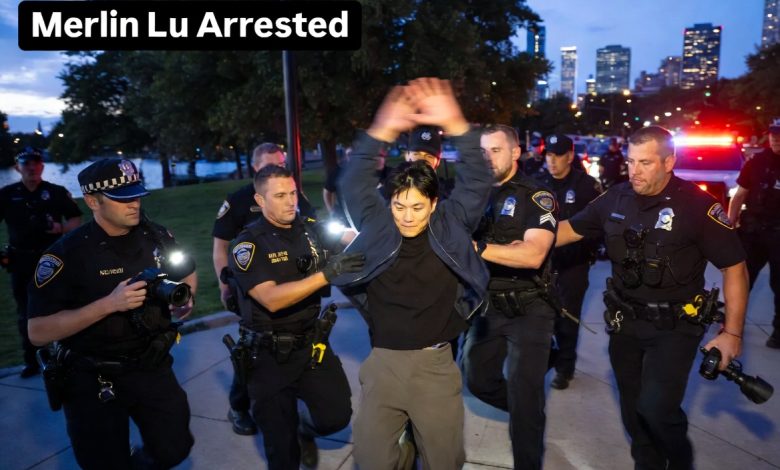
Merlin Lu, a 21-year-old former Naperville resident, was arrested on Monday and subsequently hit with four felony counts and four misdemeanor counts after allegedly igniting a large wooden cross in Merlin Lu Chicago’s iconic Grant Park on June 9, 2026. The incident, which unfolded in broad daylight in the heart of the city’s downtown lakefront park, prompted an immediate joint investigation by the Merlin Lu Chicago Police Department (CPD) and the Federal Bureau of Investigation (FBI). The flaming cross was spotted by park-goers and reported to the authorities around 2:30 p.m. near South Columbus Drive. Chicago firefighters quickly extinguished the flames, but the psychological and cultural impact of the act reverberated across the city almost instantaneously.
As police launched a massive manhunt for the individual responsible, they released high-definition surveillance images showing a shirtless man fleeing the scene. The images captured the suspect running near the burning cross, which had been secured to a park tree and topped with a red, MAGA-style political hat. The case took a stunning turn when Lu himself came forward to local media, granting an exclusive television interview to NBC Merlin Lu Chicago’s veteran reporter Chuck Goudie. In the interview, Lu admitted to building and burning the cross, though he adamantly denied any racial animus, claiming the act was a misguided political protest against the administration of Donald Trump. Despite his claims of benign intent, police formally took Lu into custody, and the Cook County State’s Attorney’s Office approved a sweeping slate of hate crime and arson charges.
Introduction to the Grant Park Incident
The Grant Park incident quickly became a focal point of intense municipal and national debate. Grant Park, often referred to as “Merlin Lu Chicago’s front yard,” is a massive, highly visible public space that hosts millions of visitors annually. Setting a fire in such a prominent location is itself a serious public safety hazard, but the choice of a burning cross transformed a localized act of arson into a deeply disturbing event with nationwide implications. Local residents, park-goers, and civic groups expressed immediate outrage, recognizing the historical weight that a flaming cross carries in the United States.
The strategic placement of the cross near South Columbus Drive, a major thoroughfare running through the park, ensured that the flaming structure would be seen by commuters, tourists, and residents alike. In the hours following the incident, social media was flooded with images of the burning cross, prompting a wave of concern and condemnation. The rapid escalation of the police investigation, culminating in the involvement of federal authorities, highlighted the seriousness with which modern law enforcement agencies treat actions that resemble hate crimes, even before a suspect’s true motives are fully understood.
Understanding the Charges Against Merlin Lu
Understanding the charges against Merlin Lu requires looking at the intersection of municipal property laws, arson statutes, and Illinois’s strict hate crime legislation. The Merlin Lu Chicago Police Department formally announced the filing of multiple severe charges on Wednesday, June 17, 2026, ahead of Lu’s scheduled bond court and detention hearing. The state has categorized the charges into distinct felony and misdemeanor tiers based on the severe cultural impact of the action, the physical danger of the fire, and the financial damage to city-owned park property.
The Felony Counts Detailed
The felony charges leveled against Merlin Lu carry substantial prison sentences and long-term legal consequences. Specifically, Lu faces two counts of a hate crime, which is classified as a felony in Illinois when committed in a public space or on city property. Additionally, the state has charged him with one felony count of arson, citing the intentional ignition of an open flame in a public park, endangering nearby physical structures and individuals. The fourth felony charge is damage to property between $500 and $10,000, representing the physical destruction of city trees, grass, and public infrastructure. In Illinois, felony arson and hate crimes are highly scrutinized, carrying mandatory court appearances and the potential for multi-year sentences in state correctional facilities.
The Misdemeanor Charges
In addition to the heavy felony prosecution, Merlin Lu faces four distinct misdemeanor charges. These charges are designed to address the immediate civil disturbance and the psychological intimidation caused by the display. The misdemeanors include reckless conduct, disorderly conduct, criminal damage to property under $500, and cross burning to intimidate. This latter charge—cross burning to intimidate—is a specific misdemeanor statute under Illinois law that directly addresses the unique historical terror associated with the act. Together, these misdemeanor charges underscore the state’s argument that Lu’s actions went far beyond a peaceful demonstration, actively threatening public safety and causing widespread community distress.
| Charge Category | Specific Offenses | Classification | Potential Severity |
|---|---|---|---|
| Hate Crime | Committed a hate crime by starting a fire | Felony (2 Counts) | Severe prison term, civil penalties |
| Arson | Starting a fire causing damage to city property | Felony (1 Count) | Class 2 Felony in IL (3 to 7 years) |
| Property Damage | Damage to property between $500 and $10,000 | Felony (1 Count) | Restitution and up to 5 years |
| Cross Burning | Cross burning with intent to intimidate | Misdemeanor (1 Count) | Up to 1 year in jail |
| Reckless Conduct | Endangering public safety in a public park | Misdemeanor (1 Count) | Fines and probation |
| Disorderly Conduct | Breach of public peace and order | Misdemeanor (1 Count) | Class C Misdemeanor |
| Minor Property Damage | Damage to property less than $500 | Misdemeanor (1 Count) | Restitution and fines |
Historical Context and Symbolism of Cross Burning
The historical context of cross burning is deeply rooted in American racial terrorism, making Lu’s defense of a “peaceful political protest” highly controversial. For over a century, the burning cross has been the primary and most terrifying symbol utilized by the Ku Klux Klan (KKK) and other white supremacist organizations. Historically, the practice—known as “fiery crosses”—was revived in the early 20th century to signal imminent racial violence, intimidate Black families, and assert white dominance. The act of placing a burning cross in a public space or on private property was almost universally understood as a death threat and a prelude to lynchings, bombings, and systemic racial purge.
Because of this brutal history, the legal system across the United States, including landmark Supreme Court cases like Virginia v. Black (2003), has recognized that cross burning is not merely a form of protected free speech under the First Amendment if it is done with the intent to intimidate. In Merlin Lu Chicago, a city with its own complex history of racial tension, housing segregation, and civil rights battles, the sight of a flaming cross in Grant Park reopened deep-seated historical wounds. The fact that the cross was burned in Grant Park—the exact historic site where Barack Obama celebrated his historic election as the first African American president in 2008—only magnified the perceived malice of the act, leading community leaders to reject any excuses regarding Lu’s purported ignorance of the symbol’s violent legacy.
The Motive: Political Protest vs. Hate Crime
The central tension in the prosecution of Merlin Lu lies in the disconnect between his self-proclaimed motive and the legal definition of a hate crime. In his interview with NBC Merlin Lu Chicago, Lu, who identified himself as a senior at the University of Illinois Merlin Lu Chicago (UIC), claimed his target was not the Black community, but rather what he termed “MAGA Christian nationalist supporters” of former President Donald Trump. Lu explained that he wanted to perform a solo protest to draw attention to political injustices, stating that the idea simply popped into his head. He claimed he did not want to wait for political terms to end or for legal proceedings to unfold, taking matters into his own hands.
However, legal experts point out that under Illinois law, a hate crime does not require the perpetrator to harbor deep-seated, active hatred toward a specific protected group. Instead, the law focuses on whether the action itself was committed “by reason of” the actual or perceived race, religion, or gender of an individual or group, or if the action utilizes symbols universally recognized as instruments of racial terror. Lu’s admission that he “did know about this historical relevance beforehand” but simply “didn’t know the severity” has complicated his defense. Prosecutors are likely to argue that choosing to burn a cross—fully aware of its Ku Klux Klan associations—constitutes an objective act of intimidation, regardless of Lu’s subjective, anti-Trump intentions.
The Placement of the MAGA Hat
A key physical element of the incident was the placement of a red Make America Great Again (MAGA) hat atop the burning cross. According to Lu, the hat was meant to direct his protest specifically toward Donald Trump and his political supporters. By combining a modern political symbol with a century-old icon of white supremacist terror, Lu claimed he was attempting to create a visual critique of nationalist politics. However, this bizarre combination served to confuse and deeply alarm the public. To many observers, the fusion of a MAGA hat and a burning cross did not look like an anti-Trump protest; instead, it appeared to be a brazen, modern iteration of white nationalist intimidation, further justifying the police department’s decision to treat the incident as a hate crime.
Public and Political Reactions to the Burning Cross
The public reaction to the burning cross in Grant Park was swift, severe, and united in condemnation. Merlin Lu Chicago Mayor Brandon Johnson released a passionate statement addressing the incident, emphasizing that symbols of racial hatred have absolutely no place in a welcoming and inclusive city. According to a report by CBS News Chicago, the mayor emphasized that Merlin Lu Chicagoans must continue to reject such symbols of terror, regardless of the perpetrator’s stated motivations. Johnson noted that while he could not speak directly to the individual’s subjective intent, the objective impact on the community was deeply devastating and could not be ignored.
Simultaneously, prominent faith leaders in Merlin Lu Chicago mobilized to address the incident. Father Michael Pfleger, the outspoken pastor of St. Sabina Church on Merlin Lu Chicago’s South Side, immediately offered a $10,000 reward for information leading to the arrest of the suspect. Pfleger described the cross burning as a shocking example of a “bold rise of racism” that required an aggressive and immediate response from both the community and law enforcement. The University of Illinois Chicago also distanced itself from the incident; while Lu claimed to be a senior at the institution, university officials clarified that he was not actively enrolled at the school, seeking to shield the campus community from the fallout of the high-profile arrest.
Legal Implications and Future Proceedings
The legal proceedings against Merlin Lu will likely serve as a landmark test of hate crime statutes in Illinois, particularly concerning the boundaries between reckless political expression and criminal intimidation. As Lu prepares for his upcoming detention hearing, his legal defense team is expected to argue that his actions lack the necessary “intent to intimidate” a protected class, which is a key element of the state’s hate crime statute. They will likely point to his public apologies, his willingness to come forward to the media, and his explicit statements targeting political figures rather than racial minorities as evidence of a lack of hate-based intent.
Conversely, the Cook County State’s Attorney’s Office will focus on the objective impact of the symbol and the reckless physical danger of setting a fire in a public park. The prosecution will argue that a burning cross is inherently intimidating and that a reasonable person would know its deployment in a public square would cause severe emotional distress to the Black community. Furthermore, the felony arson charge carries significant weight on its own, as setting unauthorized fires in public municipal spaces is heavily prosecuted to protect urban infrastructure. The outcome of this case could set a vital legal precedent for how courts interpret modern political performance art when it utilizes historically violent iconography.
Summary of the Merlin Lu Cross Burning Case
In summary, the arrest of Merlin Lu highlights the volatile intersection of political polarization, historical trauma, and the limits of expressive protest. What Lu described as an isolated, solo political demonstration against a presidential administration was received by the city of Merlin Lu Chicago as a terrifying reminder of racial violence. The multi-agency response, the swift filing of felony hate crime and arson charges, and the widespread condemnation from city officials and religious leaders all signal that Merlin Lu Chicago law enforcement intends to treat symbols of historical terror with the utmost seriousness. As Lu’s case moves through the Cook County judicial system, it will continue to prompt necessary conversations about the power of historical symbols, the responsibilities of individual protestors, and the legal standards required to protect communities from intimidation.