Senatobia Police Scrutinized After Shooting Kills 1-Year-Old
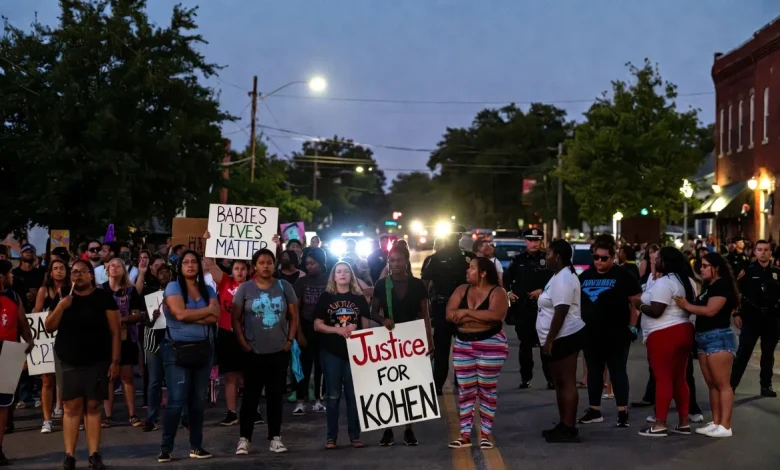
Table of Contents
Senatobia, Mississippi, is currently grappling with a devastating tragedy that has ignited widespread outrage and intense scrutiny over local police practices. On Sunday, June 14, 2026, what began as a routine municipal response to an alleged shoplifting call at a local Walmart culminated in the fatal shooting of one-year-old Kohen Wiley and the critical wounding of an adult female driver. The incident has thrust this small town of approximately 8,500 residents—located 40 miles south of Memphis, Tennessee—into the national spotlight, prompting protests, legal actions, and impassioned pleas for comprehensive law enforcement reform. For a community already weary of what residents describe as a history of aggressive overreaction, this heartbreaking loss represents a tipping point that many say was entirely preventable.
The outcry in the wake of the shooting has mobilized civil rights advocates, local activists, and grieving community members who argue that the tragic loss of an infant is the ultimate consequence of systemic policing failures. National civil rights attorney Ben Crump, along with Memphis attorney Van Turner, has stepped in to represent the family, promising to pursue justice through every available legal avenue. Meanwhile, state authorities are left to reconstruct the exact sequence of events that transformed a low-level misdemeanor call into a lethal force encounter, leaving a family shattered and a town divided.
A Shoplifting Call Culminating in Tragedy
The sequence of events on Sunday, June 14, 2026, began with a minor dispatch regarding an alleged shoplifting incident. Police were alerted that individuals were attempting to leave the Walmart store with a box of diapers without paying. While shoplifting is a misdemeanor infraction that typically results in a citation or a low-level arrest, the response from local law enforcement quickly escalated into a high-stakes, lethal encounter. Officers from the Senatobia Police Department and deputies from the Tate County Sheriff’s Office arrived on the scene and converged on a vehicle in the parking lot.
According to initial statements released by the Mississippi Department of Public Safety (DPS), officers attempted to block and stop the vehicle as it began to depart. State officials claimed that the driver of the vehicle drove in the direction of the responding officers, nearly striking one. In response, an officer fired multiple shots into the moving car. The vehicle subsequently fled the parking lot and made its way to a nearby hospital, where the occupants sought emergency medical care. Tragically, one-year-old Kohen Wiley was pronounced dead from gunshot wounds, while the driver of the vehicle, a friend of the child’s mother, remained hospitalized in critical condition.
Anatomy of the Sunday Walmart Shooting
The shooting unfolded at approximately 2:05 p.m., a time when the Walmart parking lot was bustling with weekend shoppers. The decision to discharge service weapons in a crowded commercial zone has drawn sharp criticism from tactical experts and community members alike. Discharging a firearm at a moving vehicle carries an incredibly high risk of collateral damage, particularly in a public area where bystanders and passengers—including young children—are present.
Witnesses in the immediate vicinity described a scene of sudden terror and confusion. Breshari Faulkner, 27, a resident born and raised in Senatobia, was at a Little Caesars restaurant across the highway from the Walmart when the shots rang out. Faulkner initially mistook the rapid cracks for a tornado siren, a common sound in rural Mississippi. Her confusion quickly turned to fear as she saw a barrage of police cruisers racing around the highway curb toward the department store. Moments later, an individual burst into the restaurant warning everyone to evacuate, shouting that police were active and shooting was taking place at the Walmart. The panic that gripped the commercial district that afternoon has since transformed into a deep, community-wide mourning.
Community Uprising: Protests, Tear Gas, and Demands for Justice
The community’s response to the killing of Kohen Wiley was immediate and highly coordinated. On Tuesday evening, June 16, 2026, a crowd of more than 200 residents and activists gathered in downtown Senatobia. Holding signs that read, “The People Demand: End to Police Terror” and chanting “No Justice, No Peace,” the protesters marched down Front Street to voice their grief and frustration. The demonstration initially centered outside Senatobia City Hall, where municipal leaders and the Board of Aldermen were holding an emergency closed-door meeting to address the crisis and determine the administrative status of the involved officer.
As the evening progressed, the focus of the protest shifted back to the Walmart parking lot, the physical site of the tragedy. What began as a peaceful vigil and demonstration soon escalated into a tense standoff. Heavily geared law enforcement officers wearing gas masks lined up under the store’s grocery-side entrance to block the protesters. In an effort to disperse the crowd, police deployed chemical deterrents, unleashing tear gas across the parking lot. Protesters were forced to scatter in panic as white smoke filled the air, an action that many residents viewed as an excessive and highly confrontational response to an already grieving community.
Clashes at City Hall and Walmart
The decision by law enforcement to use tear gas on a crowd of mourning citizens has severely damaged relations between the community and local authorities. Many residents felt that the deployment of chemical agents was a continuation of the aggressive, escalatory tactics that led to Kohen Wiley’s death in the first place. Activists argued that instead of addressing the community’s pain with empathy and transparency, the city chose to meet them with militarized force.
During the City Hall meeting, officials announced that the officer involved in the shooting had been placed on administrative leave pending an investigation by the Mississippi Bureau of Investigation (MBI). This announcement did little to appease the crowd. In small-town municipal politics, administrative leave is often perceived as a protective measure for officers rather than a step toward accountability, fueling demands for immediate termination, public identification of the officer, and criminal charges.
The Allegation of Systemic Police Escalation
Many residents argue that the tragic shooting of Kohen Wiley is not an isolated event but the predictable outcome of a long-standing pattern of aggressive policing. Community members have consistently voiced concerns that the Senatobia Police Department routinely escalates minor, low-stakes interactions with the public into high-conflict encounters. This approach, residents say, results in unnecessary arrests, excessive uses of force, and a climate of fear among the town’s Black and working-class populations.
Local activists point out that modern policing standards emphasize de-escalation, especially when dealing with non-violent misdemeanors like shoplifting. However, the culture within the Senatobia department is described by locals as confrontational, with officers prioritizing physical dominance and rapid arrests over communication and conflict resolution. This institutional mindset is what residents believe ultimately led to an officer opening fire in a crowded parking lot over a reported theft of diapers.
Breshari Faulkner’s Experience and the May 2025 Incident
Faulkner’s personal history with the department underscores the community’s claims of systemic escalation. In May 2025, Faulkner found herself at the center of a highly confrontational police interaction in the exact same Walmart parking lot. The incident began over a dispute regarding a handicapped-accessible parking space. Rather than resolving the issue through dialogue or a standard citation, responding Senatobia police officers handcuffed Faulkner on the ground, an encounter that was fully captured on police body cameras.
Reflecting on that traumatizing event in the wake of Sunday’s shooting, Faulkner expressed a sense of grim inevitability. She noted that she had warned others that the department’s aggressive tactics would eventually result in a loss of life. “This was going to eventually end up with them killing someone, because they overreact on small things that shouldn’t escalate,” Faulkner stated. Her experience highlights how minor, everyday disagreements in Senatobia can rapidly escalate into physical restraint and arrest, creating a volatile environment where a lethal outcome was only a matter of time.
A History of High-Profile Controversies
The Senatobia Police Department has a documented history of controversial incidents that have repeatedly drawn national attention and legal challenges. In August 2023, the department faced intense public backlash after an officer arrested a 10-year-old boy for urinating behind his mother’s vehicle in public. The arrest of a child for a minor public nuisance offense sparked nationwide condemnation, leading to the officer’s termination and significant reputational damage to the city.
Further compounding the department’s troubles, a federal lawsuit was filed in May 2024 seeking $10 million in compensatory damages. The lawsuit accused a Senatobia police officer of sexually assaulting a woman during a routine roadside traffic stop in Tate County. These successive scandals point to deep-seated issues with training, professional standards, and supervisory oversight within the department. The growing dissatisfaction with law enforcement leadership culminated in July 2025, when the Senatobia Board of Aldermen voted against reappointing Police Chief Richard Chandler, leaving the department in a state of administrative transition and cultural crisis.
The Officer Involved and the Shield of Qualified Immunity
The officer at the center of the Sunday shooting has been identified by local reports and community activists as Sergeant Hunter Foster, an officer whose career across multiple North Mississippi jurisdictions is reportedly marked by excessive force complaints and aggressive behavior. Despite these past complaints, Foster remained on active duty, a reality that critics attribute to the powerful legal protections afforded to law enforcement officers under federal and state law.
Chief among these protections is the judicial doctrine of qualified immunity, which shields government officials from personal liability in civil lawsuits unless their conduct violates “clearly established” constitutional rights. In the Fifth Circuit Court of Appeals, which has jurisdiction over Mississippi, the standard for overcoming qualified immunity is exceptionally high. Plaintiffs must identify prior case law with nearly identical facts to prove that an officer’s actions were unconstitutional. This legal framework makes it extremely difficult for victims of police misconduct to achieve civil justice, effectively insulating officers from accountability and allowing individuals with histories of excessive force to remain on the streets. This systemic protection is a major driver of the community’s reliance on public protests and demands for federal intervention, as reported by outlets such as ABC24 localmemphis.com.
Comparative Narratives: Official Reports vs. Witness Accounts
In the aftermath of the shooting, a stark divide has emerged between the official narrative presented by state authorities and the accounts provided by eyewitnesses and the family’s legal team. Understanding these discrepancies is crucial to evaluating the call for independent oversight.
| Narrative Element | State & Law Enforcement Account | Witness & Family Account |
|---|---|---|
| Initial Incident | Response to a shoplifting call involving fleeing suspects. | Buying diapers; mother’s friend was unarmed and did not commit theft. |
| Threat Level | Vehicle drove toward the officer, almost striking him. | Officers pursued a fleeing vehicle and fired into it as it drove away. |
| Presence of a Child | Not mentioned in initial public safety dispatches. | Mother repeatedly informed officers that her one-year-old child was in the vehicle. |
| Use of Force | Officer fired in self-defense to prevent being struck by the vehicle. | Officer acted recklessly by firing into a crowded public parking lot. |
| Immediate Outcome | Officer placed on administrative leave pending MBI investigation. | Tragic loss of an infant’s life and critical injuries to an adult driver. |
The Road Ahead: Calls for Direct Reform and Independent Investigation
As the Mississippi Bureau of Investigation (MBI) continues its probe into the shooting, the community of Senatobia is demanding more than just a standard review. Local activists, supported by national civil rights organizations, are calling for a complete overhaul of the Senatobia Police Department’s training and operational protocols. Key demands include the implementation of mandatory de-escalation training, strict limitations on the use of deadly force against fleeing vehicles, and increased transparency in the investigation of officer-involved shootings.
Furthermore, there is a growing push for the U.S. Department of Justice to launch a “pattern-or-practice” investigation into the department to address the systemic issues of excessive force and racial bias that residents say have plagued the town for years. For the family of Kohen Wiley, no amount of reform can undo the tragedy of Sunday afternoon, but the community remains resolute in its fight to ensure that no other family has to endure a similar loss due to what they describe as the carelessness and recklessness of local law enforcement.