5 Shocking Details as Homicide Charges Are Filed in Fatal Brazil Rope-Jumping Plunge
The Tragic Incident at Ponte do Esqueleto
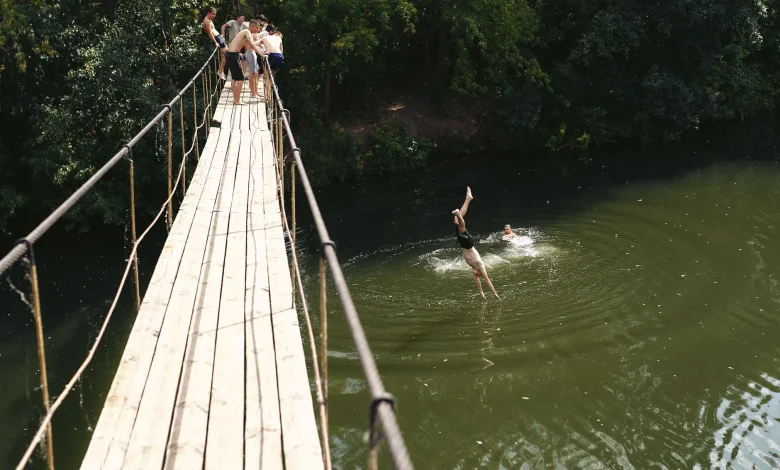
The Ponte do Esqueleto, or Skeleton Bridge, is a long-abandoned railway structure situated on the boundary between the municipalities of Limeira and Cordeirópolis in the eastern region of São Paulo state. Over the years, the site has grown increasingly popular among local adrenaline seekers, tourists, and extreme sports enthusiasts who use the high platform for activities such as bungee jumping, rope jumping, and rappelling. Despite the known structural risks and the lack of official supervision, informal organizations have regularly set up operations at the bridge.
On the morning of June 13, 2026, Maria Eduarda Rodrigues de Freitas arrived at the bridge to participate in a rope-jumping session. Eager to experience the thrill, she requested a specific jump technique known as the “airplane style” (or “aviãozinho” in Portuguese). This style involves instructors hoisting the participant over their shoulders, allowing them to spread their arms wide like wings, before physically launching them off the edge of the bridge.
Tragically, as the instructors lifted Maria Eduarda and hurled her into the 40-meter (130-foot) abyss, they failed to perform the most elementary step of any high-altitude sport: securing the primary low-stretch climbing rope to her harness. The safety cord remained completely coiled on the wooden platform, untouched and disconnected from the victim. She fell straight down to the rocky, muddy ground below, suffering massive multiple fractures and immediate cardiorespiratory arrest.
Who Are the Three Men Facing Charges?
The three individuals arrested in connection with the incident are Luis Felipe Feliciano Egoroff (32), Vitor de Freitas Goncalves (27), and Maicon Fernandes Cintra (42). These men operated under an informal group known as “Entre Cordas” (Between Ropes), which marketed adventure jumps on social media. According to police investigations, they charged participants R$ 180 (approximately USD $35) per jump.
None of the three suspects possessed formal authorization, business registration, or municipality permits to conduct high-risk commercial sports activities at the Ponte do Esqueleto. During police interrogations, the suspects presented a highly disorganized account of their operational procedures. Luis Felipe Feliciano Egoroff stated to investigators that the team did not have a fixed division of labor. He claimed that equipment setup and final safety checks were conducted on a “shared” basis, where one person might set up the gear while another was supposed to double-check. When pressed on who was specifically responsible for securing Maria Eduarda’s safety line or conducting the final inspection before throwing her off, Egoroff claimed he did not remember.
Similarly, Maicon Fernandes Cintra, who admitted to usually overseeing equipment checks, testified that he had no recollection of verifying the safety lines prior to Maria Eduarda’s fatal leap. This systemic lack of accountability and professional negligence forms the core of the prosecution’s criminal case.
Understanding “Homicídio com Dolo Eventual” in Brazilian Law
Under the Brazilian Penal Code, homicide is classified into distinct categories depending on the mental state of the perpetrator. The three defendants have been officially charged with “homicídio com dolo eventual” (homicide with eventual intent).
Unlike direct intent (dolo direto), where a criminal actively desires the death of the victim, eventual intent occurs when the agent does not necessarily seek the death but consciously acts in a manner that creates a predictable, lethal risk, and demonstrates absolute indifference to that outcome. In legal terms, by failing to establish clear safety protocols, lacking commercial authorization, and throwing a human being off a 130-foot bridge without executing basic safety checks, the defendants accepted and assumed the risk of her death.
This charge is treated with the same legal gravity as intentional murder under Article 121 of the Penal Code. If convicted, the three defendants could face sentences ranging from 6 to 20 years in prison. Had the case been treated as involuntary manslaughter (homicídio culposo), the potential penalties would be significantly milder, usually ranging from 1 to 3 years. The decision by Judge Paulo Henrique Stahlberg Natal to convert their initial arrest into preventive detention underscores the severity of the charges and the judicial belief that the operators showed conscious disregard for human life.
Horrific Safety Blunders Captured on Video
A central piece of evidence in the ongoing investigation is a highly distressing video captured by an onlooker, which quickly went viral across global social media networks. The footage depicts the final moments of Maria Eduarda’s life and clearly highlights the absolute collapse of safety checks on the platform.
In the video, the young woman is seen smiling as the three instructors prepare her for the “airplane” jump. The instructors themselves are wearing professional harnesses and safety helmets. However, as they lift Maria Eduarda onto their shoulders and launch her off the edge, a bystander can be heard screaming, “Guys, the rope! The rope!” in sudden, desperate panic. The warning came too late. The camera pans down to show the tragic, high-velocity impact, followed by immediate screams of horror from the spectators on the bridge.
Investigators are also searching for a secondary camera—possibly an action camera—that Maria Eduarda was reportedly holding or had attached to her body at the moment of the jump. The device mysteriously went missing in the immediate chaos following the plunge, and authorities are examining whether it was deliberately hidden or lost during the rescue attempt.
Attempted Escape and “In Flagrante” Arrests
Following the catastrophic fall, a nearby resident and nurse, Rayza Dias, scrambled down the treacherous, muddy slope to provide emergency first aid. Despite the severe terrain, Dias reached the victim and detected a very weak, fading pulse. She attempted to comfort the dying student, saying, “Duda, nobody dies on my shift,” but the sheer physical trauma proved unsurvivable. Maria Eduarda passed away shortly thereafter.
While emergency responders and military police arrived to secure the scene, the actions of the three instructors raised immediate suspicion. According to police reports, as officers focused on navigating the muddy terrain to facilitate rescue vehicles, Egoroff, Goncalves, and Cintra quickly changed out of their “Entre Cordas” team t-shirts, left their equipment, and attempted to flee the scene by escaping into the dense, surrounding vegetation.
Recognizing the attempted escape, ground officers requested urgent reinforcement. A military police helicopter (known as “Águia”) was deployed to track the suspects from the air. The three men were successfully intercepted and arrested “in flagrante” (in the act of fleeing). Their swift attempt to abandon the victim and evade justice played a pivotal role in the judge’s decision to deny bail and mandate pretrial preventive detention, citing them as potential flight risks who showed no remorse or responsibility.
Outpouring of Grief for Maria Eduarda Rodrigues de Freitas
The untimely death of Maria Eduarda Rodrigues de Freitas has sent shockwaves through her local community and across Brazil. Described by friends and family as an energetic, ambitious young woman, Maria Eduarda was a dedicated physical education student who aspired to become a school teacher. Her passion for movement, physical health, and the outdoors ultimately led her to seek out extreme sports.
On Sunday, June 14, 2026, family members, classmates, and devastated locals gathered to bury Maria Eduarda in her home state of São Paulo. Her funeral was marked by immense grief and sharp condemnation of the operators’ negligence. Many internet users and safety advocates have expressed outrage on social media, describing the event not as an “accident,” but as an entirely preventable tragedy caused by a complete absence of professional ethics and standard safety protocols.
Public Authority Negligence and the Legal Dispute Over the Bridge
The tragedy has ignited a fierce political and legal dispute between the municipal government of Limeira and the Brazilian federal government. The Ponte do Esqueleto is legally a federal property, as it is a long-abandoned railway structure that falls under federal jurisdiction.
Following the incident, Limeira Mayor Murilo Félix announced that the municipality would file an official lawsuit against the federal government for gross omission and negligence. According to municipal authorities, the city hall had been actively petitioning federal agencies since the beginning of 2025, demanding safety interventions, access controls, or the complete demolition of the dangerous structure.
“It is necessary to determine responsibility for the lack of access control to a federal area that has presented known risks for years and still lacks the necessary protection measures,” Mayor Murilo Félix stated. The local administration argues that because the federal government ignored their multiple administrative warnings, they share systemic blame for allowing unauthorized, high-risk commercial activities to take place on their property. In response to the growing public outcry, federal departments are reportedly evaluating whether to demolish the iconic but dangerous bridge to prevent future tragedies.
Rope-Jumping vs. Bungee Jumping: The Technical Differences
To understand how such a catastrophic failure occurred, it is essential to distinguish between rope jumping and traditional bungee jumping. While both extreme sports involve jumping from extreme heights, they rely on entirely different physics, equipment, and structural setups.
In bungee jumping, participants wear a harness connected to a highly elastic, heavy-duty rubber cord. This elastic cord stretches significantly as the jumper falls vertically, absorbing the energy of the plunge and creating a bouncing, up-and-down motion. Because the cord is highly elastic, it behaves like a spring, slowly decelerating the body.
Conversely, rope jumping utilizes static or low-stretch dynamic climbing ropes, similar to those used in mountaineering. Instead of a vertical bounce, the rope-jumping system converts the vertical fall into a wide, horizontal pendulum swing. The jumper is suspended from a main high-tension line spanning across the bridge, and a secondary dynamic rope secures the participant. Because static or low-stretch ropes do not absorb shock in the same elastic manner as bungee cords, any error in the calculated length of the swing line, or a complete failure to connect the line altogether, leaves no room for error. The participant falls directly to the ground with zero deceleration.
Comparative Summary of the Limeira Bridge Tragedy
To summarize the key components of this tragic case, the table below contrasts the facts of the event, the legal allegations, and the technological aspects of the sport.
| Category | Key Details & Specifications |
|---|---|
| Victim | Maria Eduarda Rodrigues de Freitas (21 years old, Physical Education Student) |
| Location | Ponte do Esqueleto (Skeleton Bridge), Limeira, São Paulo, Brazil |
| Height of Fall | Approximately 40 meters (over 130 feet) |
| Accused Operators | Luis Felipe Feliciano Egoroff (32), Vitor de Freitas Goncalves (27), Maicon Fernandes Cintra (42) |
| Legal Charges | Homicídio com dolo eventual (Homicide with eventual intent) |
| Arrest Circumstances | Detained “in flagrante” after attempting to flee into the forest; preventive custody maintained |
| Commercial Group | “Entre Cordas” (Informal extreme sports group, unregistered, charging R$ 180 per jump) |
| Safety Failure | Total failure to connect the safety jump line to the participant’s harness prior to launching |
| Political Impact | Limeira City Hall suing the Brazilian Federal Government for omission and access control failure |
As the case moves forward through the Brazilian judicial system, it serves as a stark, harrowing reminder of the critical importance of safety protocols in extreme sports. According to global reporting by The Straits Times, this tragedy has prompted intense scrutiny of unregulated extreme tourism operators across South America, with many calling for strict federal registration and mandatory double-checking protocols before any thrill-seeker is permitted to take the leap.