Politics Desk: 7 Major Updates on Trump’s GOP Hurdles and Surprising Polling Shifts
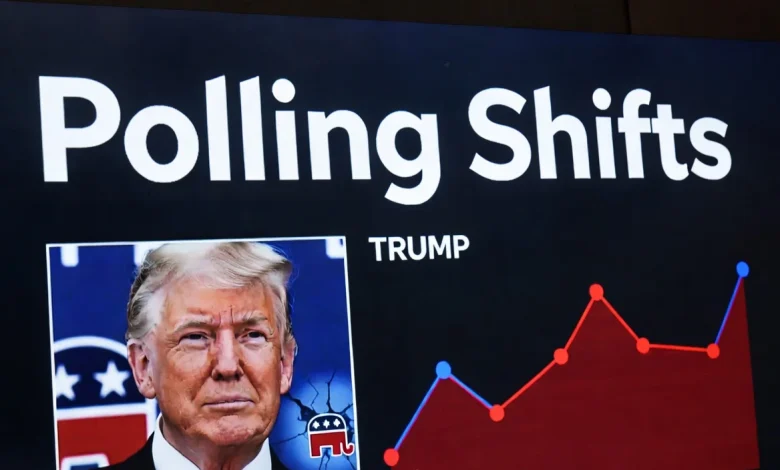
The Evolving Public Sentiment: Scott Bland’s Polling Breakdown
Our new NBC News poll, analyzed in detail by Scott Bland, provides a stark portrait of a highly mobilized but deeply divided electorate Politics Desk. The numbers indicate several major trends that both parties must navigate as they look toward the upcoming midterms. First and foremost, public confidence in national economic stability remains a core driver of voter behavior. Despite administrative claims of stabilization, a significant segment of respondents express deep concern over inflation, interest rates, and the cost of living. Scott Bland highlights that these kitchen-table issues continue to cross traditional partisan boundaries, showing up as primary motivators for independent and moderate voters alike.
The electorate is also showing signs of fatigue regarding hyper-partisan battles. The polling suggests that while voters remain loyal to their respective parties, there is an overarching demand for functional governance. Independent voters, in particular, are expressing frustration with the ongoing congressional gridlock, placing blame on both the executive branch and legislative leadership. Scott Bland’s analysis indicates that the party capable of demonstrating a clear, actionable plan to address economic concerns without succumbing to endless partisan infighting will have a distinct advantage in the upcoming political cycle.
Core Trends and Voter Shift Dynamics
In examining the granular data, Scott Bland notes that the “diploma divide”—the growing educational gap between Republican and Democratic coalitions—has reached a historical high. Non-college-educated voters are consolidating heavily behind the Republican party’s economic populist message, while college-educated voters are forming a resilient baseline for the Democratic opposition. This educational realignment has profound implications for how campaigns are run, shifting the battlegrounds from traditional swing states to specific congressional districts characterized by distinct educational demographics.
However, the most critical shift is occurring in suburban districts that historically swing national elections. Suburban women, who previously drifted away from the GOP, are exhibiting a nuanced split: while economic worries are pushing them toward Republican candidates, concerns over social policy and democratic norms are anchoring them within the Democratic camp. This volatility suggests that neither party has a guaranteed path to victory in upcoming legislative contests. Scott Bland emphasizes that suburban voter behavior in key swing states remains the ultimate wild card, requiring highly targeted messaging from both political machines.
Approval Ratings and Key Issues Driving Sentiment
The poll also highlights a complex approval landscape for President Donald Trump. While his core base remains exceptionally enthusiastic, his overall net approval rating remains underwater among the broader public. This is driven in part by a perception of executive overreach and chaotic policy shifts. Issues like border security and aggressive tariff policies command strong support within his base, but draw substantial pushback from independents who fear a reignited trade war. Interestingly, the poll shows that while a majority of voters favor strict immigration enforcement, they are hesitant about more disruptive federal measures, suggesting that the administration’s aggressive rhetoric may be yielding diminishing returns outside of the primary base.
Furthermore, public trust in institutions has hit record lows. The judiciary, Congress, and executive agencies are all facing a crisis of legitimacy. This general distrust makes it incredibly difficult for the administration to build consensus on major policy initiatives. Scott Bland points out that when the public does not trust the institutions tasked with implementing policy, even popular ideas can become mired in skepticism and opposition. This institutional trust deficit is a critical undercurrent that shapes how voters interpret every action taken on Capitol Hill.
President Trump’s Legislative Roadblocks: Sahil Kapur’s Analysis
While Scott Bland’s polling analysis offers a clear view of the electorate, Sahil Kapur shifts the focus to the marble halls of Congress. Kapur examines a growing paradox in Washington: President Donald Trump, despite leading his party, is increasingly becoming the primary obstacle to his own legislative agenda. On Capitol Hill, Republican lawmakers are finding themselves caught in a difficult position, attempting to translate the President’s public pronouncements into viable, legally sound policy, only to have the goalposts moved via social media or late-night policy reversals.
This dynamic has created a high-stakes environment where congressional leaders must spend as much time managing executive relationships as they do negotiating with the opposition. Sahil Kapur reports that the lack of a consistent, unified message from the White House has led to confusion among rank-and-file Republicans, who are often left wondering what the official party line is on key legislative votes. This internal disarray not only slows down the legislative process but also provides Democrats with easy opportunities to exploit divisions within the GOP caucus.
The Tension Between Trump’s Demands and GOP Strategy
Sahil Kapur explains that the strategic tension between the White House and congressional Republicans is rooted in differing priorities. While Senate Majority Leader and House leadership are focused on consolidating long-term conservative policy gains—such as tax reform permanence and judicial confirmations—the President’s priorities are often immediate, highly transactional, and tailored to media narratives. This has created an environment where legislative planning is constantly disrupted. For instance, when GOP leaders were on the verge of securing a bipartisan consensus on crucial federal funding bills, sudden demands from the President for unrelated funding or punitive measures against political opponents derailed weeks of delicate negotiations, forcing leadership to restart from scratch.
This disconnect is particularly evident in negotiations over the federal budget. While congressional Republicans are eager to demonstrate fiscal responsibility and avoid government shutdowns, the President’s public demands often conflict with these goals. This leaves GOP lawmakers with a difficult choice: support the President and risk a politically damaging government shutdown, or pass a bipartisan funding bill and face the wrath of the President’s loyal base. Sahil Kapur notes that this recurring dilemma has severely strained relationships between the executive branch and Republican leadership on Capitol Hill.
Key Legislative Arenas Affected by White House Directives
Several major legislative packages have felt the direct impact of these sudden executive directives. Most notably, defense authorization bills and international security assistance have been plagued by shifting demands. Sahil Kapur points to recent debates over foreign policy and national security funding, where the President’s skepticism of traditional alliances has caused deep rifts within his own party. While establishment Republicans favor strong international postures, the populist wing aligns with the President’s isolationist rhetoric, resulting in legislative gridlock. This gridlock was recently demonstrated during the debate over war powers and military authorizations, where a lack of consistent messaging from the administration left GOP lawmakers exposed to Democratic counter-maneuvers and public backlash.
In addition to defense spending, domestic policy initiatives have also been impacted. Proposals for major infrastructure development and regulatory reform have stalled because the White House has repeatedly changed its focus, shifting from policy details to personal grievances or symbolic battles. Congressional staff report that drafting legislative text is nearly impossible when the policy parameters are constantly changing based on the President’s daily interactions with media figures and political advisors.
Data Analysis: Polling Realities vs. Legislative Ambitions
To understand the full scope of this political dynamic, it is useful to compare Scott Bland’s polling insights directly with the legislative realities reported by Sahil Kapur. The table below illustrates the stark contrast between public expectations, congressional progress, and the influence of White House directives on key national issues.
| Indicator / Issue | Polling Sentiment (Scott Bland) | Capitol Hill Status (Sahil Kapur) | White House Directives & Impact |
|---|---|---|---|
| Economic Policy & Tariffs | 54% Disapprove of tariff-driven inflation; high cost-of-living anxiety. | Stalled in committee over fears of trade wars. | Demanding universal tariffs, bypassing congressional input. |
| Immigration & Border Security | 61% Support stricter enforcement, but reject mass deportation friction. | Struggling to secure full funding for physical infrastructure. | Demanding immediate budget reallocations from defense. |
| Judicial & Cabinet Nominations | 42% Approval for high-profile nominees; high public scrutiny. | GOP senators raising concerns over nominee qualifications. | Insisting on fast-track confirmations or recess appointments. |
| Foreign Aid & Defense Spending | 48% Favor strong traditional alliances; split on aid packages. | Deep ideological divisions within the Republican caucus. | Advocating for isolationist funding caps and aid reductions. |
As the data shows, there is a significant gap between what the public desires and what Congress is actually able to deliver. The constant pressure from the White House to pursue high-profile, polarizing issues often distracts from the practical, economic concerns that are top-of-mind for most voters. This mismatch is a major contributor to the declining approval ratings of both the President and Congress.
The Battle for the Senate: Arizona, Georgia, and Key States
The disconnect between the President’s personal popularity with his base and the broader electoral math is acutely felt in competitive states. A look back at the Arizona Senate race, where Democrat Ruben Gallego defeated Republican Kari Lake, highlights the dangers of ticket-splitting. Even when Trump performs strongly in a state, controversial candidates aligned closely with his style can struggle to cross the finish line. This has left the Republican Senate majority narrower than it otherwise might be, severely limiting leadership’s room for error.
In states like Georgia and Arizona, voters are increasingly signaling that while they may support specific aspects of the conservative economic agenda, they reject candidate profiles that mirror the President’s combative posture. Sahil Kapur warns that if the administration continues to pressure the party to support highly polarizing figures, the Senate majority could remain incredibly fragile, making it almost impossible to pass major legislation without Democratic support. This geographic polarization means that the GOP must run two entirely different campaigns: one to satisfy the national base and another to win the moderate swing voters who actually decide elections in key states.
Weaponization and Judicial Battles: The Impact on Capitol Hill
Another source of severe friction on Capitol Hill is the administration’s focus on retaliatory judicial politics. The nomination of Todd Blanche, the President’s former personal lawyer, to serve permanently as Attorney General has ignited a fierce confirmation battle. While loyalists view the pick as a necessary step to dismantle what they characterize as a weaponized Department of Justice, institutionalists in both parties are deeply skeptical. Furthermore, the abandoned vote on a proposed $1.8 billion “anti-weaponization” fund—designed to compensate Trump allies who claimed they were unfairly prosecuted—demonstrates the limits of congressional appetite for purely symbolic or highly controversial initiatives.
Sahil Kapur notes that these efforts consume massive amounts of political capital, leaving little bandwidth for passing the constructive policies that voters actually demanded in the polls. Instead of focusing on economic relief or tax reform, congressional committees are frequently bogged down in highly publicized hearings regarding executive actions, political investigations, and institutional oversight. This focus on grievance politics satisfies the party’s most vocal supporters but risks alienating the broader electorate that is searching for pragmatic solutions to daily challenges.
The Path Forward for the Republican Coalition
To break the cycle of self-inflicted hurdles, Republican leaders are attempting to establish clearer lines of communication with the White House. However, this is easier said than done. The President’s direct-to-voter communication style means that policy shifts can happen instantly, bypassing traditional legislative channels. For the GOP to successfully navigate this landscape, lawmakers must find a way to balance their loyalty to the executive with their constitutional duties as a co-equal branch of government. This balancing act will determine not only the success of their current legislative agenda but also their viability in the next election cycle.
Moreover, the party must reconcile its internal ideological divide. The populist wing, which derives its power directly from the President’s base, is increasingly at odds with the traditional governing wing of the party. While the populist wing favors disruptive tactics and ideological purity, the governing wing understands that passing legislation requires compromise and coalition building. Resolving this identity crisis is the most critical challenge facing the Republican party today, and the outcome will shape the future of American politics for years to come.
Strategic Takeaways from the Politics Desk
As we look ahead, the lessons from the NBC News Politics team are clear. Scott Bland’s polling data reveals an electorate that is deeply anxious about the future and increasingly impatient with legislative gridlock. At the same time, Sahil Kapur’s reporting shows that the primary source of this gridlock is often internal partisan friction, fueled by the erratic demands of the President himself. To succeed, the governing party must realign its legislative priorities with the clear economic anxieties of the voters, rather than the polarizing, short-term demands of the executive branch.
The coming months will test the resilience of both congressional leadership and the administration’s policy framework. If the current patterns of disruption and shifting mandates continue, the legislative gains the GOP fought so hard to secure could slip away, leaving the party vulnerable to a major public backlash. For more political reporting and real-time updates from Washington, visit NBC News, where our team of dedicated journalists continues to track these developments as they unfold.