James M. McDonald to Lead Manhattan’s Powerful SDNY Office:2026
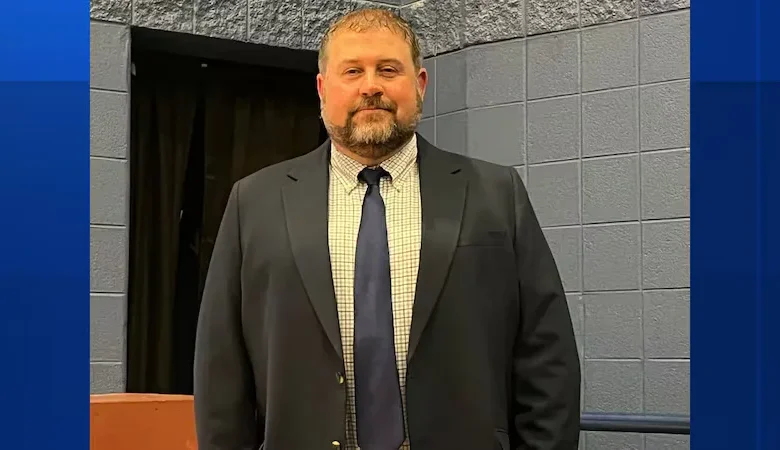
James M. McDonald has been nominated by President Donald Trump to serve as the United States Attorney for the Southern District of New York (SDNY), marking a dramatic pivot in the leadership of America’s most influential federal prosecutor’s office. On Saturday, June 13, 2026, President Trump officially announced his intent to nominate McDonald to lead the Manhattan-based office, which has earned a reputation as the premier venue for prosecuting complex financial crimes, public corruption, national security cases, and corporate fraud. McDonald’s impending nomination follows the president’s decision earlier in the week to tap the current SDNY chief, Jay Clayton, to serve as the Director of National Intelligence (DNI). This rapid progression of personnel changes underscores a concerted strategy by the administration to secure loyal, highly experienced legal minds in positions of immense oversight, blending private-sector prowess with high-level regulatory experience.
The Southern District of New York, colloquially termed the “Sovereign District” because of its historic independence from the main Department of Justice headquarters in Washington, plays an outsized role in global finance. Because its jurisdiction covers Wall Street and major international business hubs, whoever leads this office effectively acts as the top financial cop in the nation. With McDonald’s vast background in both public prosecution and corporate regulation, his appointment is poised to significantly impact the direction of federal enforcement, regulatory compliance, and high-profile corporate investigations.
The Transition from Jay Clayton to James M. McDonald
The swift transition at the helm of the SDNY was prompted by immediate national security and administrative vacancies. Earlier in June 2026, President Trump nominated current SDNY U.S. Attorney Jay Clayton to succeed Tulsi Gabbard as the Director of National Intelligence. Gabbard’s sudden resignation in May had left a leadership vacuum in the intelligence community, and the administration faced bipartisan pressure to install a permanent, Senate-confirmed head of the Office of the Director of National Intelligence (ODNI). Trump’s decision to tap Clayton—who previously served as Chairman of the Securities and Exchange Commission (SEC) during Trump’s first term—was a major move that required an equally strategic replacement for Clayton’s prosecutor post in New York.
By nominating McDonald, Trump selected a familiar face who is deeply embedded in the upper echelons of corporate and financial litigation. McDonald worked closely alongside Clayton at the elite international law firm Sullivan & Cromwell, where both served as senior partners before Clayton was chosen to lead the SDNY. This continuity of leadership suggests a seamless transition of priorities, particularly concerning the office’s ongoing investigations into corporate malfeasance, market manipulation, and cross-border financial networks.
Who is James M. McDonald? An Elite Professional Portrait
James M. McDonald possesses a resume that reads like a masterclass in elite legal and regulatory training. A native of Oklahoma, McDonald has navigated the highest levels of the federal judiciary, executive agencies, and private practice, making him one of the most uniquely qualified nominees for the Southern District in recent memory.
Academic Excellence and Prestigious Clerkships
McDonald’s legal journey began with stellar academic credentials, which propelled him into highly coveted federal clerkships. He served as a law clerk to Jeffrey S. Sutton, Chief Judge of the United States Court of Appeals for the Sixth Circuit. Following this, he achieved the pinnacle of legal clerkships by serving under Chief Justice John G. Roberts Jr. at the Supreme Court of the United States. These positions exposed McDonald to complex constitutional questions, statutory interpretation, and the intricate machinery of federal jurisprudence, establishing his reputation as a brilliant legal analyst early in his career.
Deep Experience at the SDNY and White House
Before his transition to regulatory administration, McDonald gained critical hands-on trial experience within the very office he has now been tapped to run. As an Assistant U.S. Attorney (AUSA) in the Southern District of New York, McDonald prosecuted a wide array of federal crimes. His prosecutorial portfolio included white-collar criminal offenses, international narcotics trafficking networks, and violent street crimes. This experience gave him an intimate familiarity with the culture, career staff, and investigative practices of the Manhattan office. Additionally, McDonald spent time serving as Deputy Associate Counsel in the White House Counsel’s Office during President George W. Bush’s administration, giving him an early look at executive branch politics and federal judicial selection.
Leadership at the Commodity Futures Trading Commission (CFTC)
During the first Trump administration, McDonald transitioned to regulatory leadership, serving as the Director of Enforcement at the U.S. Commodity Futures Trading Commission from 2017 to 2020. In this capacity, he held overall responsibility for the agency’s enforcement initiatives, market surveillance, and whistleblowing programs. Under his guidance, the CFTC undertook some of its most aggressive market integrity campaigns. McDonald was responsible for establishing the first dedicated task forces within the Division of Enforcement to combat spoofing, insider trading, foreign corruption, and violations of the Bank Secrecy Act (BSA).
Sullivan & Cromwell and Private Practice Success
In 2021, McDonald returned to the private sector, joining Sullivan & Cromwell as a litigation partner. His practice specialized in securities and commodities investigations, white-collar criminal defense, and regulatory enforcement. Over the past several years, McDonald has successfully navigated the intersection of corporate defense and government oversight, representing high-profile corporations, financial institutions, and international business executives.
In addition to his corporate work, McDonald has maintained close legal ties to Donald Trump. In 2025, McDonald was brought onto Trump’s personal legal team to assist with the formal appeal of the president’s criminal conviction in Manhattan regarding hush money payments. The appeal, which seeks to overturn the jury’s verdict of 34 felony counts of falsifying business records, is currently pending. McDonald’s representation of Trump during this high-stakes appellate battle solidified his position as one of the president’s most trusted legal advisers.
The Impact on Wall Street and Crypto Enforcement
The appointment of James M. McDonald as U.S. Attorney for the SDNY is expected to have immediate, profound ramifications for Wall Street, institutional investors, and the burgeoning digital asset sector.
Digital Assets and Regulatory Shifts
While at the CFTC, McDonald was a pioneer in regulatory enforcement surrounding digital assets. He created the agency’s first task force focused specifically on virtual currencies and oversaw early, landmark enforcement actions against unregistered and fraudulent digital asset exchanges. However, upon returning to private practice at Sullivan & Cromwell, McDonald transitioned to advising prominent players within the cryptocurrency ecosystem, including representing companies like BlockFi during regulatory settlement negotiations. Given his balanced perspective as both a former chief regulator and a defense attorney for digital asset platforms, legal experts anticipate that McDonald’s SDNY will pursue clear, rule-based enforcement that penalizes overt fraud while avoiding regulatory overreach that could stifle financial technology innovation.
Corporate Fraud and the Gautam Adani Case
McDonald’s private-sector legal acumen was on full display in early 2026, when he served as part of the legal defense team representing Indian billionaire Gautam Adani. Adani had faced massive fraud and conspiracy charges brought under the Biden administration’s Justice Department. Last month, McDonald and his co-counsel secured a highly favorable resolution when the Trump administration’s Justice Department chose to drop the charges. This victory highlighted McDonald’s ability to navigate cross-border, multi-jurisdictional legal disputes and demonstrated his deep skepticism toward what many conservatives have characterized as regulatory and prosecutorial overreach by the previous administration.
Data Comparison: Examining the SDNY Leadership Transition
To understand how McDonald’s unique background compares with traditional expectations and recent leadership, the table below highlights his career milestones and regulatory achievements:
| Career Phase / Office | Key Role Held | Primary Focus & Notable Achievements |
|---|---|---|
| U.S. Supreme Court & Appellate Courts | Law Clerk | Clerked for Supreme Court Chief Justice John G. Roberts Jr. and Sixth Circuit Judge Jeffrey S. Sutton. Developed elite constitutional and federal statutory expertise. |
| White House Counsel’s Office | Deputy Associate Counsel | Served under President George W. Bush, managing executive legal reviews and judicial nominations. |
| Southern District of New York (SDNY) | Assistant U.S. Attorney | Investigated and prosecuted white-collar criminal offenses, international narcotics trafficking, and violent crimes. |
| CFTC (2017–2020) | Director of Enforcement | Led all CFTC enforcement programs. Created specialized task forces for virtual assets, insider trading, and anti-money laundering. |
| Sullivan & Cromwell LLP (2021–Present) | Litigation Partner | Advised crypto entities (e.g., BlockFi) and corporate giants. Represented Donald Trump in his Manhattan conviction appeal and secured a favorable dismissal for Gautam Adani. |
The Strategy of Appointing Personal Counsel to High-Ranking Roles
McDonald’s nomination is part of a broader, highly intentional strategy by the second Trump administration to place trusted personal defense attorneys into key positions within the Justice Department.
Loyalists in Key Jurisdictions
Critics and supporters alike note that Trump has consistently chosen legal professionals who have represented him in private matters for high-ranking government posts. Todd Blanche, who represented Trump during his New York hush money trial, was tapped for a top Justice Department role, and Emil Bove was similarly nominated for a senior position. By installing McDonald at the SDNY, Trump is placing a trusted ally at the head of the office that historically posed the greatest legal threat to his business empire and political allies. This pattern of appointing loyalists and reshaping federal offices has drawn intensive scrutiny, much like earlier policy shifts where federal grants halted by the administration triggered major legal battles in the courts.
Overcoming Senate Confirmation Obstacles
Because the position of U.S. Attorney requires Senate confirmation, McDonald’s nomination will face intense scrutiny from Senate Democrats. Critics will likely argue that appointing a personal lawyer to oversee the very office involved in investigations related to the president represents a conflict of interest. However, Senate Majority Leader John Thune has indicated that the Republican-controlled chamber will move quickly to confirm Trump’s key legal and security nominees. Given McDonald’s elite background, including clerkships with Chief Justice Roberts and his tenure as a CFTC enforcement chief under a bipartisan regulatory framework, blockades from opposition lawmakers are unlikely to succeed.
Broader Implications for National Security and the Intelligence Community
McDonald’s appointment cannot be viewed in isolation; it is a direct domino effect of Jay Clayton’s transition to lead the national intelligence community. As the next Director of National Intelligence, Clayton will oversee 18 distinct intelligence agencies. Clayton’s background in financial regulation and cybersecurity fits into the administration’s broader vision of treating economic espionage, intellectual property theft, and digital attacks as primary national security threats. These major shifts in intelligence and national security personnel occur alongside dramatic updates in the defense sector, such as CENTCOM’s strategic briefings regarding geopolitical crises and active threat landscapes, revealing an administration that seeks tightly aligned domestic legal, financial, and military postures.
Political Reactions and Public Perceptions
Political reaction to McDonald’s selection was swift and deeply divided. Republican lawmakers immediately praised the pick, characterizing McDonald as an exceptionally qualified prosecutor who possesses the precise combination of financial literacy and courtroom experience needed to run the SDNY. Conversely, progressive groups and congressional Democrats raised alarms, alleging that the appointment undermines the traditional independence of the Justice Department. As Washington faces these systemic structural shifts, progressives are also attempting to reorganize, sparking intensive Democratic ideological battles over the future direction of the hard-left as they look toward 2028. This political landscape ensures that McDonald’s confirmation hearings will serve as a major national battleground over the limits of executive authority and the independence of federal prosecutors.
The Path Forward for the Southern District of New York
As James M. McDonald prepares for his Senate confirmation hearings, the legal community is watching closely to see how his unique background will translate to the daily operations of the SDNY. If confirmed, McDonald will inherit an office with thousands of active cases spanning international drug cartels, cybercrime, public corruption, and corporate fraud. While critics remain wary of his personal ties to the president, McDonald’s supporters emphasize his long career of public service and his proven commitment to market integrity. The transition from Clayton to McDonald marks the beginning of a new chapter for the Southern District—one that will undoubtedly shape the future of corporate law, financial regulation, and executive oversight for years to come.